Best Trees for Small Surrey Gardens
Choosing a tree for a small garden depends on more than appearance. Discover compact trees suited to Surrey gardens, plus tips on mature size, soil and position.
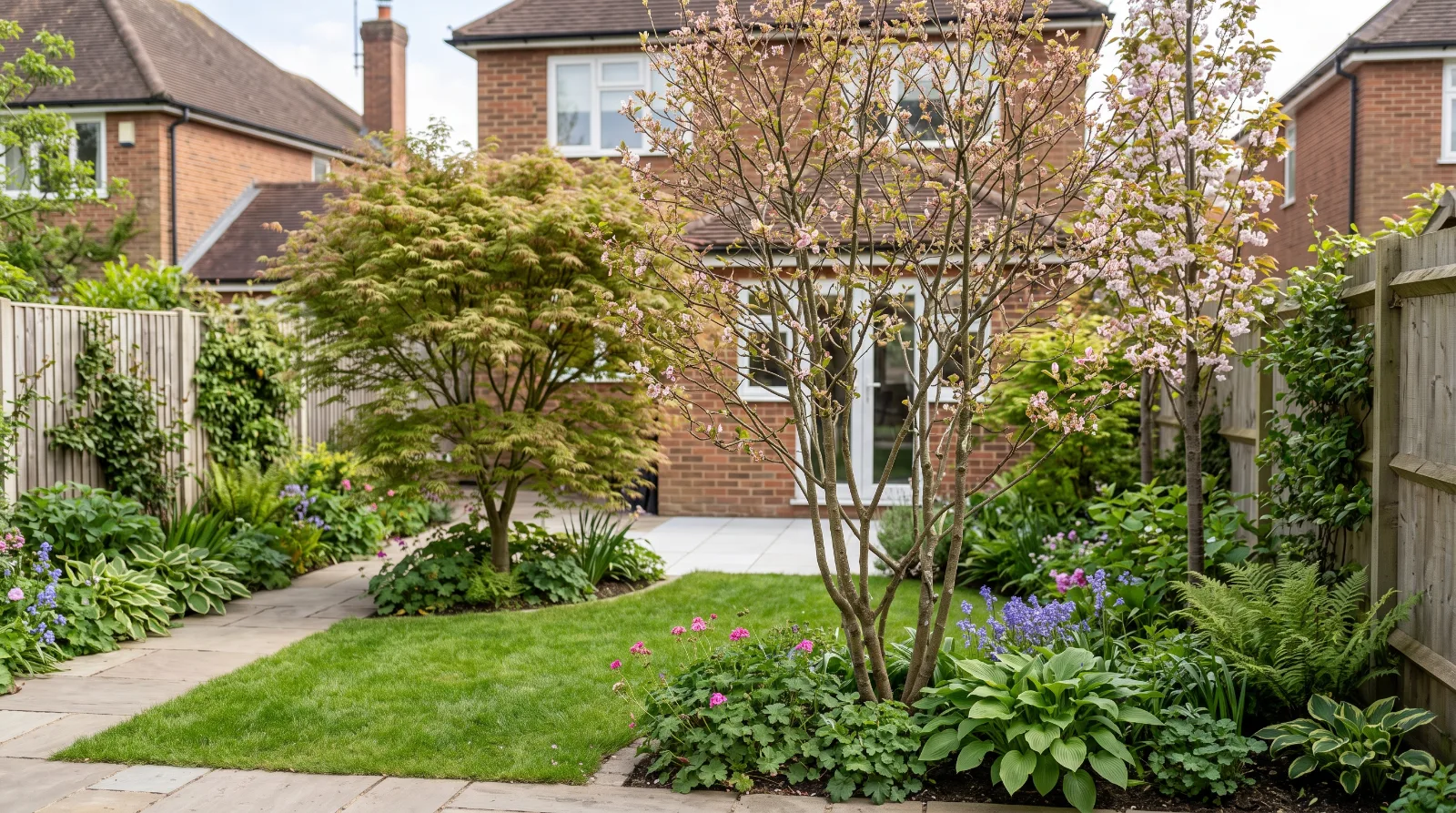
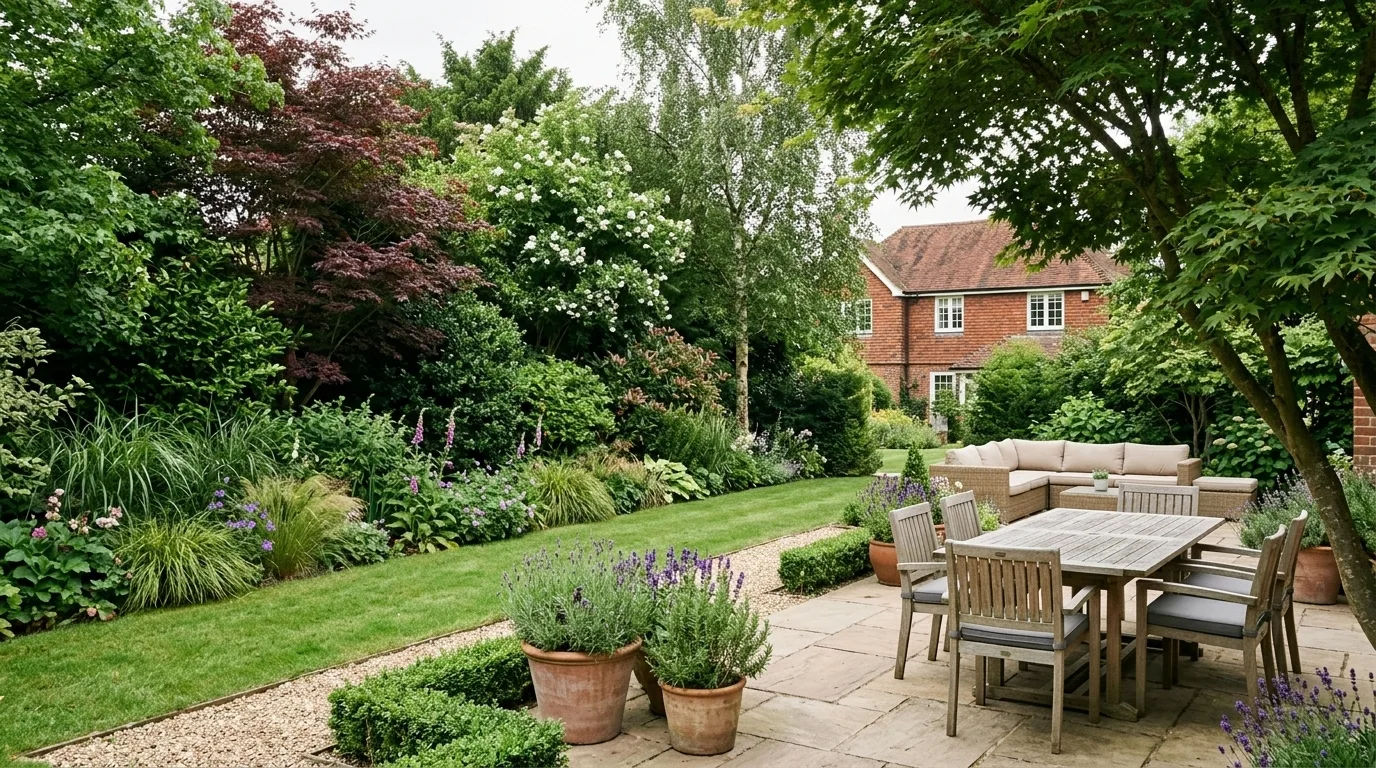
A small garden does not mean you have to miss out on the structure, colour and seasonal interest that trees can provide. The key is choosing a tree that is naturally suited to the available space rather than relying on regular pruning to keep a vigorous tree under control.
For Surrey gardens, the choice can be particularly varied. The county has areas of clay, chalk, sand and gravel, so soil and drainage can differ significantly from one garden to another.
A well-chosen small tree can provide blossom in spring, foliage colour in autumn, screening, shade and year-round structure without overwhelming the garden.
What Makes a Tree Suitable for a Small Garden?
The most important thing to consider is not the size of the tree when you buy it, but its eventual height and spread.
Some trees sold as small ornamental trees can still reach several metres in height and width when mature. The shape of the canopy also matters. A narrow, columnar tree can work where a broad spreading tree would take up too much space.
Before choosing a tree, consider:
Mature height
Mature spread
Canopy shape
Rooting characteristics
Soil and drainage
Amount of sunlight
Distance from buildings and boundaries
How much maintenance you want to do
A tree that naturally remains compact is usually a better choice than planting a large, fast-growing species and trying to keep it small through repeated pruning.
1. Amelanchier
Amelanchier is one of the strongest options for a smaller garden because it provides interest across several seasons.
Depending on the variety, it can produce delicate spring flowers, attractive foliage, berries and strong autumn colour. Some compact forms stay around 4–5 metres, while narrower cultivars can have a much smaller spread.
It works particularly well in gardens where you want a tree to act as a feature rather than simply provide shade.
Best for:
Spring blossom, autumn colour and year-round interest.
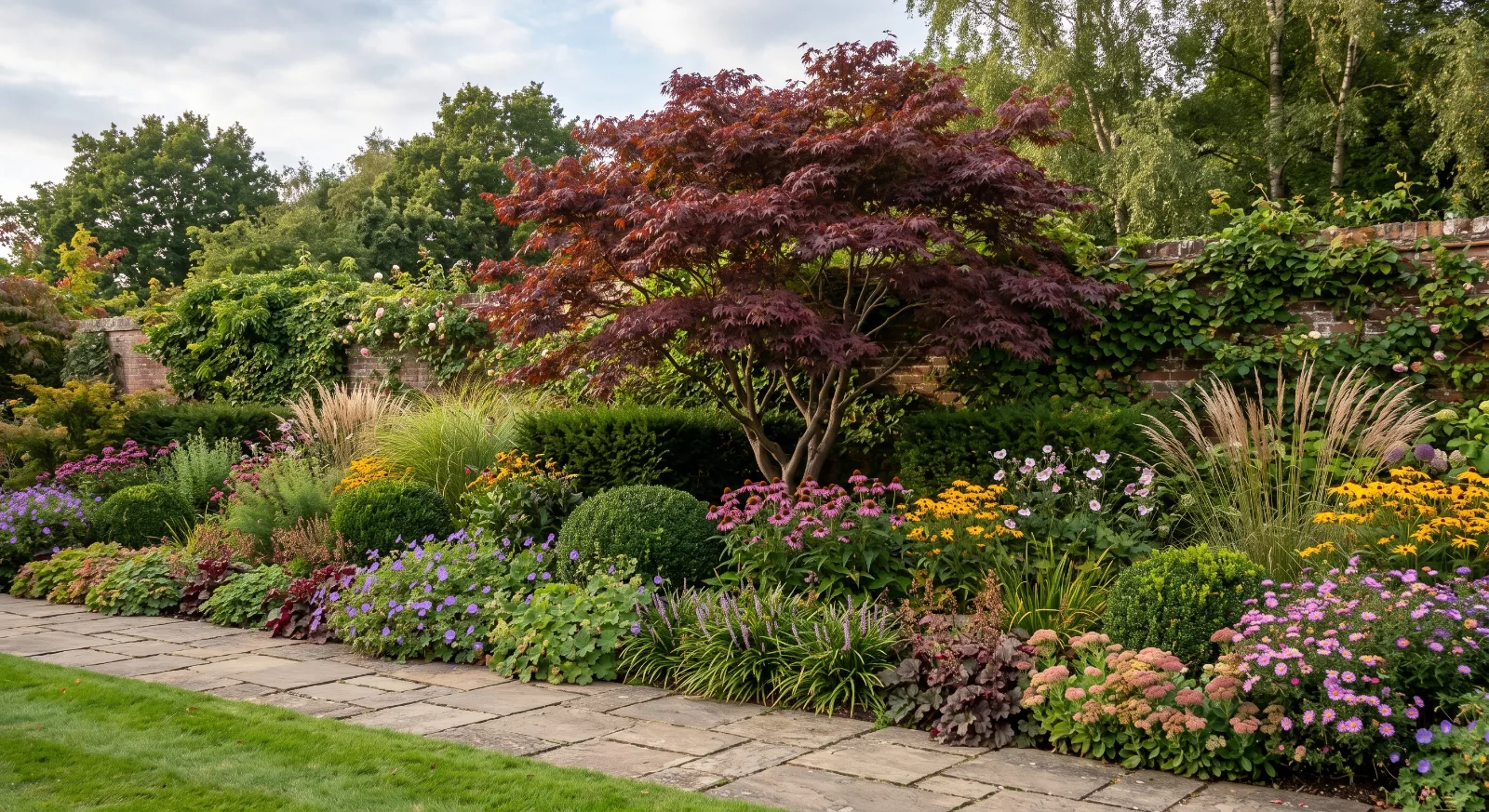
2. Japanese Maple
Japanese maples are excellent for smaller gardens where foliage is the main attraction.
Their finely divided leaves and relatively graceful form can add a strong focal point without making the garden feel dominated by a large canopy. Some forms are also suitable for positions with partial shade.
They can work particularly well near patios, seating areas or other places where the foliage can be appreciated at close range.
Best for:
Colourful foliage, smaller spaces and sheltered gardens.
3. Acer griseum
Also known as paperbark maple, Acer griseum is valued for its unusual peeling bark and rich autumn colour.
It is one of the smaller trees commonly recommended for restricted garden spaces, although the eventual size still needs to be considered when selecting a position.
Its bark gives the tree interest even when it has lost its leaves, making it useful where you want a feature that works beyond the summer months.
Best for:
Autumn colour and winter structure.
4. Prunus 'Amanogawa'
If space is narrow but you still want spring blossom, a columnar flowering cherry can be an excellent option.
Prunus 'Amanogawa' has a naturally upright form, allowing it to introduce height without requiring the same amount of horizontal space as a spreading ornamental tree.
This makes it particularly useful alongside fences, narrow lawns or in gardens where every metre of space matters.
Best for:
Narrow gardens and spring blossom.
5. Magnolia
A compact magnolia can provide a strong focal point without needing a huge garden.
Magnolia stellata cultivars are among the smaller options, with some reaching roughly 3–4 metres in height and around 2.5 metres in spread. They are known for their attractive spring flowers and can work well as a standalone feature.
The main consideration is giving the tree enough room to develop its natural form rather than planting it where surrounding structures will quickly restrict it.
Best for:
Spring flowers and feature planting.
6. Crab Apple
Crab apples can combine flowers, foliage and decorative fruit in one relatively compact tree.
They are also useful where wildlife interest is important. The Woodland Trust lists crab apple among suitable small-garden options and notes that it can work in front gardens, courtyards and patio settings.
Different cultivars vary considerably in eventual size, so the specific variety should always be checked rather than choosing based solely on the common name.
Best for:
Blossom, fruit and wildlife value.
7. Cercis 'Forest Pansy'
Cercis canadensis 'Forest Pansy' is another attractive option for a smaller garden, particularly when strong foliage colour is wanted.
It can reach around 4–5 metres, with a spread of roughly 3 metres, so it is better suited to a garden with some room around the tree rather than an extremely tight courtyard.
Its coloured foliage helps create contrast against green planting and lawns.
Best for:
Feature planting and strong foliage colour.
Comparing Small Garden Trees
Tree | Main feature | Approx. mature size | Good for |
|---|---|---|---|
Amelanchier | Blossom and autumn colour | Around 4m+ depending on variety | All-round interest |
Japanese maple | Decorative foliage | Varies by cultivar | Patios and smaller spaces |
Acer griseum | Bark and autumn colour | Small ornamental tree | Feature planting |
Prunus 'Amanogawa' | Upright blossom | Approx. 8m high, 3m spread | Narrow spaces |
Magnolia stellata | Spring flowers | Around 3–4m | Feature tree |
Crab apple | Flowers and fruit | Varies by cultivar | Wildlife and front gardens |
Cercis 'Forest Pansy' | Coloured foliage | Approx. 4–5m | Larger small gardens |
Approximate sizes vary according to cultivar, soil, climate and growing conditions, so always check the specific tree before planting.
Think About the Soil Before Planting
The same tree will not perform identically in every garden.
This is particularly relevant in Surrey because the county has a wide variety of underlying soils and geology. Areas influenced by London Clay can have heavier soils, while parts of west and north-west Surrey have sandy soils associated with the Bagshot and related beds.
Before planting, consider whether the soil is:
Heavy and clay-based
Sandy and free-draining
Chalky or alkaline
Compact or poorly drained
Dry or exposed
Improving the planting area may help, but choosing a species suited to the existing conditions is often the better starting point.
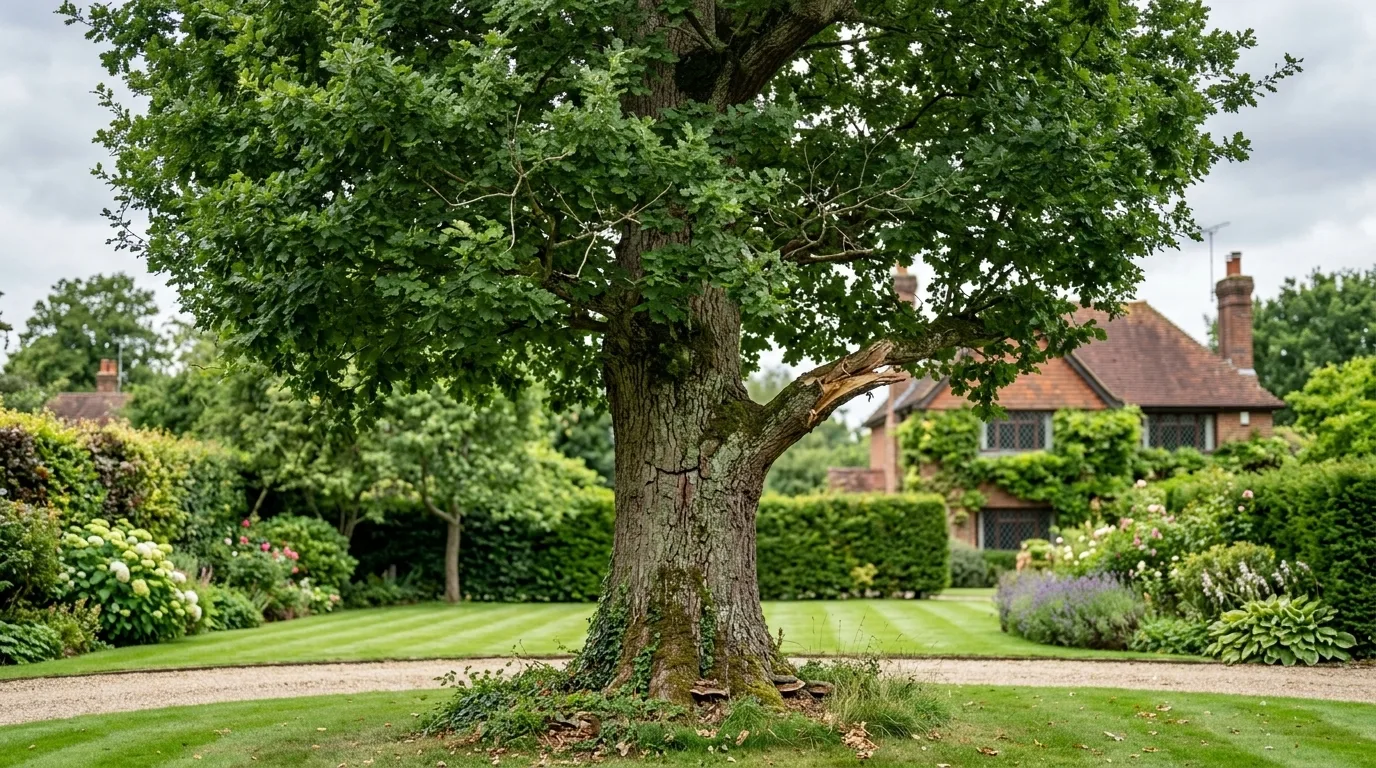
Avoid Planting Too Close to Buildings
A tree may look small when newly planted, but its canopy and root system will develop over time.
Planting close to a house, wall, patio or boundary can create problems when the tree reaches maturity. Branches may become restricted, roots can interfere with hard landscaping in some situations, and the canopy may end up blocking windows or taking over a small garden.
The available space should therefore be judged by the tree's mature dimensions, not the size of the plant at the nursery.
Think About the Shape as Well as the Size
Two trees with a similar height can have very different effects on a garden.
A narrow tree such as a columnar cherry can introduce height while using relatively little horizontal space. A weeping tree can create a lower, softer canopy, while a broader ornamental tree may become the main focal point of the garden.
This is why tree selection should form part of the overall garden design rather than being treated as a last-minute planting decision.
Small Trees Can Still Make a Big Difference
A well-placed tree can completely change the character of a small garden.
It can draw the eye upwards, provide seasonal colour, soften boundaries and create a focal point without taking over the space. The best choice depends on more than appearance: mature size, soil, light levels, drainage and the relationship with surrounding buildings and planting all need to be considered.
For Surrey gardens, the right tree is not necessarily the smallest tree available. It is the tree that can grow naturally into the space without becoming a problem later.
If you are planning a new planting scheme or want to introduce a specimen tree into a smaller Surrey garden, Surrey Oak Landscapes can help select and install trees that work with the garden's layout, soil conditions and overall design.
About the author