Signs Your Tree Needs Professional Attention
Worried about a tree in your garden? Discover the signs that may indicate your tree needs professional attention, including cracks, dead branches, fungal growth and storm damage.
Trees can add shade, privacy, character and value to a garden, but they also need to be monitored as they grow and change.
Sometimes a tree that looks perfectly healthy from a distance can have damaged branches, decay, root problems or other issues that are much easier to spot up close. Catching potential problems early can help protect the tree and reduce the chance of more serious issues developing.
Not every unusual feature means that a tree needs to be removed or heavily pruned. Trees naturally age, shed branches and respond to damage in different ways. However, there are certain warning signs that are worth having professionally assessed.
Dead or Broken Branches
Deadwood is one of the easiest things to notice when looking at a mature tree.
An occasional dead branch is not necessarily a sign that the whole tree is unhealthy. Trees naturally shed some branches as they age. However, larger dead branches, broken limbs or significant amounts of deadwood can warrant closer inspection, particularly when they are above areas used by people or close to buildings and other property.
After strong winds, it is also worth checking whether branches have been broken, partially split or left hanging within the canopy.
A tree surgeon can assess the condition of the branches and determine whether pruning or further investigation is appropriate.
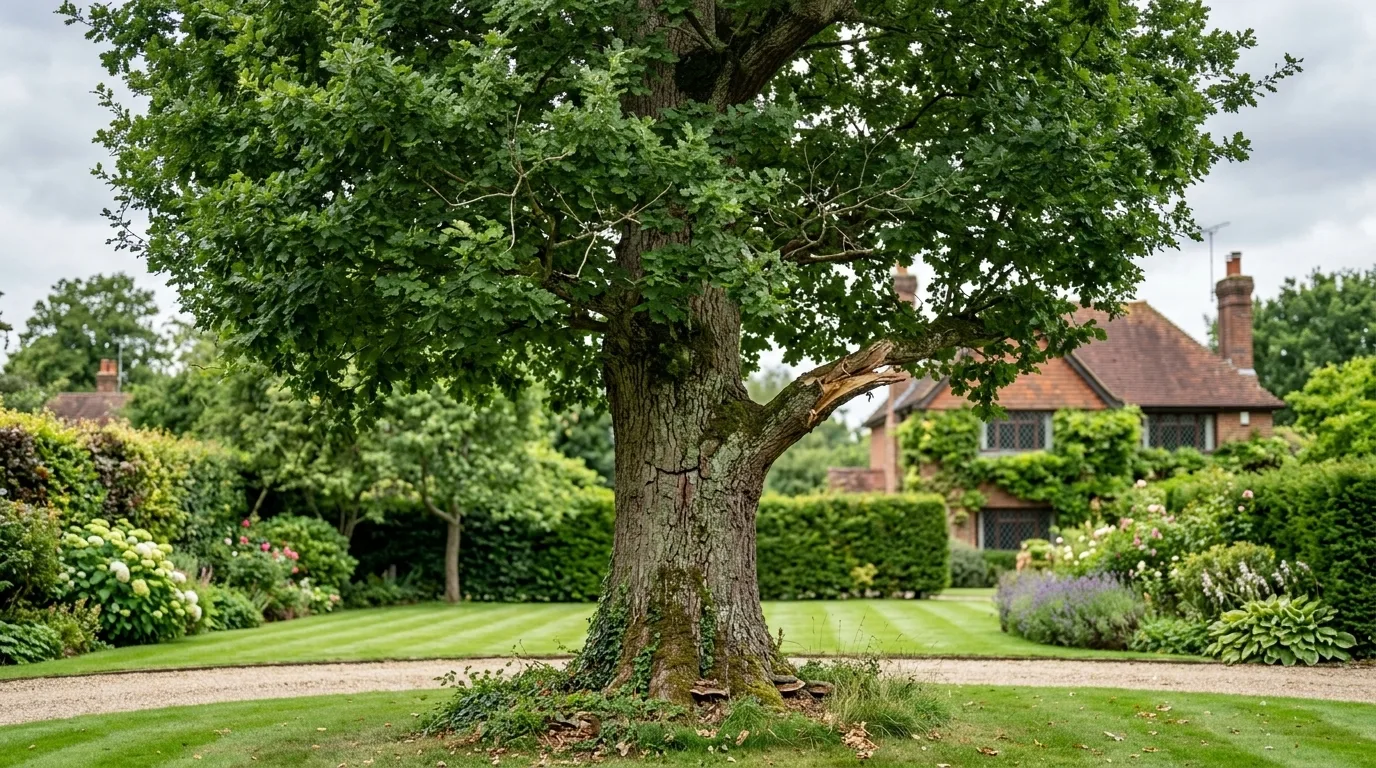
Cracks in the Trunk or Major Branches
Cracks can be more concerning than small surface imperfections.
Visible cracks in the trunk or large branches can represent weaknesses within the wood, particularly where there is evidence that the crack extends into a major branch union or stem. Arboricultural guidance identifies cracks as defects that can affect structural strength.
Pay particular attention to:
Long cracks running along the trunk
Cracks around major branch unions
Splits that appear to be widening
Fresh cracks following storms or heavy winds
Cracked branches hanging over paths, driveways or buildings
Do not assume a crack can be judged safely from the ground alone. Its significance depends on its location, size and what else is happening within the tree.
Fungal Growth on the Tree
Fungi growing on or around a tree can sometimes be a sign of decay, although the presence of fungi does not automatically mean that a tree is unsafe.
Certain fungal fruiting bodies can indicate decay within roots, the trunk or branches. The potential significance varies considerably depending on the fungus, the part of the tree affected and the extent of decay. This is why professional identification and assessment can be important rather than treating every fungus in the same way.
Take note of fungi appearing:
Around the base of the trunk
On the trunk itself
Around old wounds
On large branches
Across the root zone
If you notice fungal growth on a mature tree, particularly alongside other signs of decline, it is sensible to have it assessed.
Cavities and Areas of Decay
A hollow or damaged section of a trunk can look alarming, but a cavity does not automatically mean that a tree has to be removed.
Trees have the ability to compartmentalise decay and can continue growing around areas of damaged or dead wood. Some mature trees can contain substantial cavities while remaining structurally stable. The important question is how the decay is affecting the particular tree and the amount of sound wood remaining.
A professional assessment can help determine whether a cavity is simply part of the tree's natural ageing process or whether it requires action.
Changes in the Tree's Canopy
The canopy can provide useful clues about a tree's health.
Watch for changes such as:
Sparse or unusually thin foliage
Premature leaf loss
Sections of the crown dying back
Noticeably smaller leaves
Large areas that fail to produce normal growth
A significant imbalance in the canopy
Crown dieback can be associated with stress, root damage or other problems affecting the tree. The Arboricultural Association identifies sparse or pale foliage, premature leaf fall and crown dieback as signs that warrant investigation rather than simply assuming the tree is naturally declining.
It is particularly useful to compare the tree with how it looked in previous years. A gradual seasonal change is very different from a sudden decline.
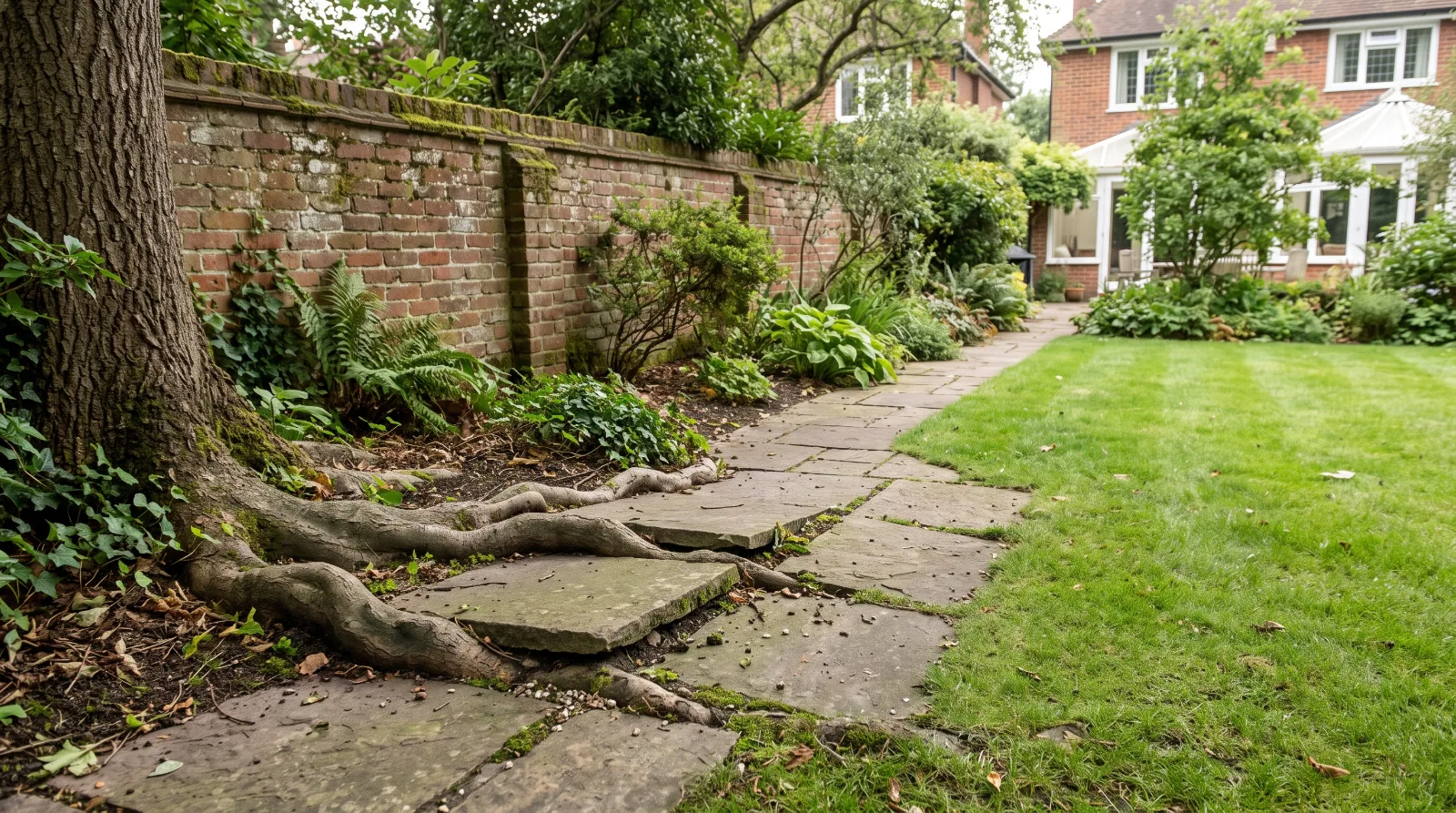
Signs of Root Problems
Most of a tree's root system is hidden underground, which makes root problems difficult for homeowners to spot.
However, there can sometimes be visible signs around the base of a tree.
Look for:
Cracks or changes in the soil around the root area
Recent ground disturbance or excavation
Damaged roots exposed near the surface
Noticeable changes in the tree's stability
Significant changes in the surrounding soil level
New construction or digging close to the tree
Roots provide both anchorage and access to water and nutrients, so substantial root damage can affect both tree health and stability. Root disturbance can also have effects that only become visible years later.
If building, paving or excavation has recently taken place near an established tree, professional advice can be particularly useful.
The Tree Has Started Leaning
A leaning tree is not automatically dangerous.
Some trees naturally grow at an angle because of their species, location or the way they have developed over many years.
The important question is whether the lean is new or changing, and whether there are other signs of instability around the base or trunk.
A sudden change in angle, soil movement around the roots or signs of root plate disturbance are reasons to have the tree assessed.
Branches Are Rubbing or Poorly Attached
Branches that repeatedly rub against each other can become damaged over time.
Similarly, some branch unions can have structural weaknesses. Tight or narrow unions, previous damage and old pruning wounds can all influence how a tree's branches are attached.
A professional tree inspection can identify potentially weak attachments and determine whether selective pruning could reduce the problem.
Pruning should be based on the structure and condition of the tree rather than simply removing branches because they look untidy.
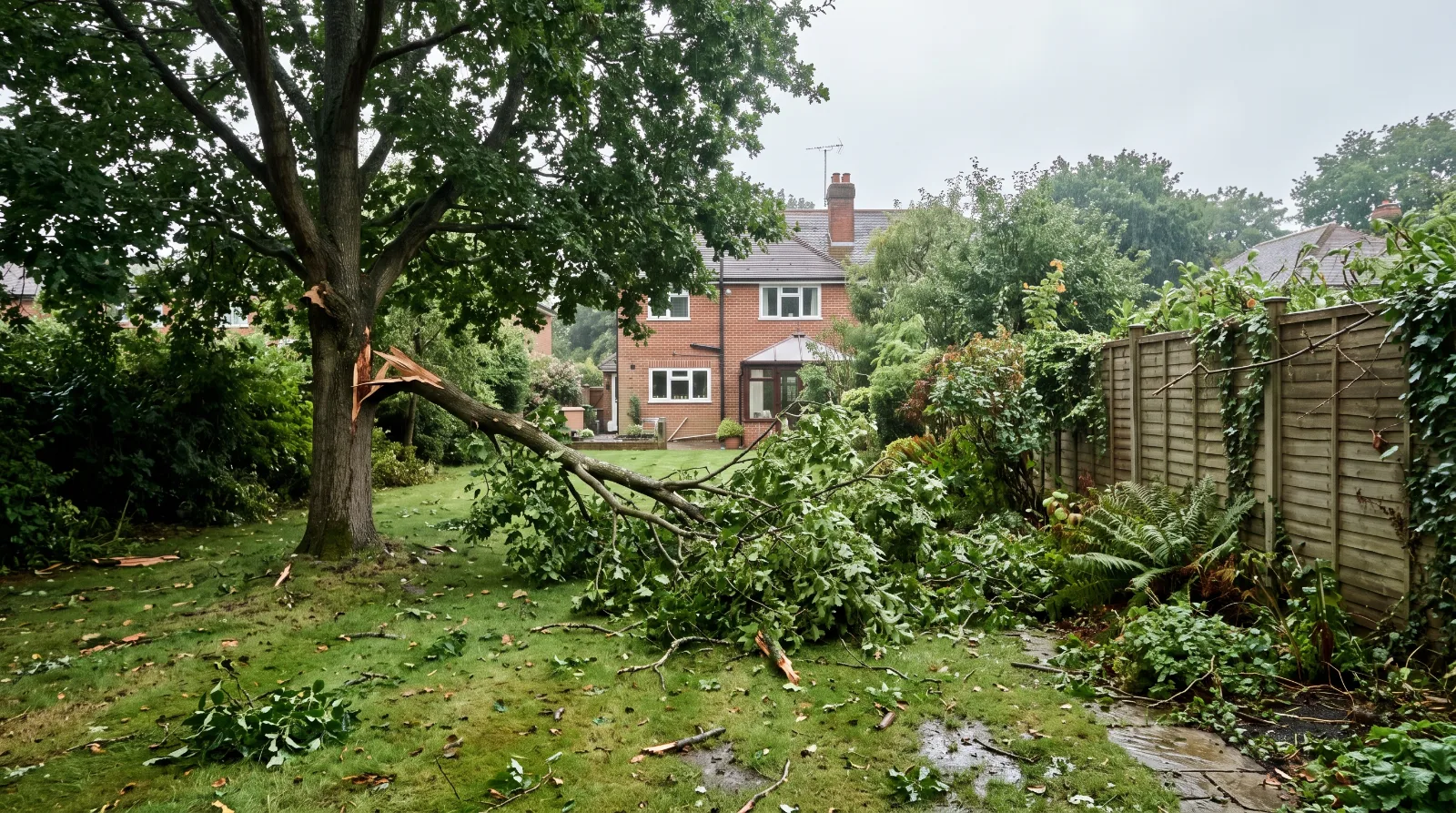
The Tree Has Recently Suffered Storm Damage
Storms can leave trees looking relatively normal while causing hidden structural damage.
After severe weather, look for:
Broken branches
Split limbs
Hanging branches
Newly exposed cracks
Uprooted or disturbed soil
Damage around major branch unions
Branches resting against buildings or structures
Storm-damaged trees can present different problems from trees that have developed gradually, so a professional inspection can help establish what needs to be dealt with and what can safely remain. Storm damage and disease are recognised causes of brittleness, branch loss and, in some cases, tree failure.
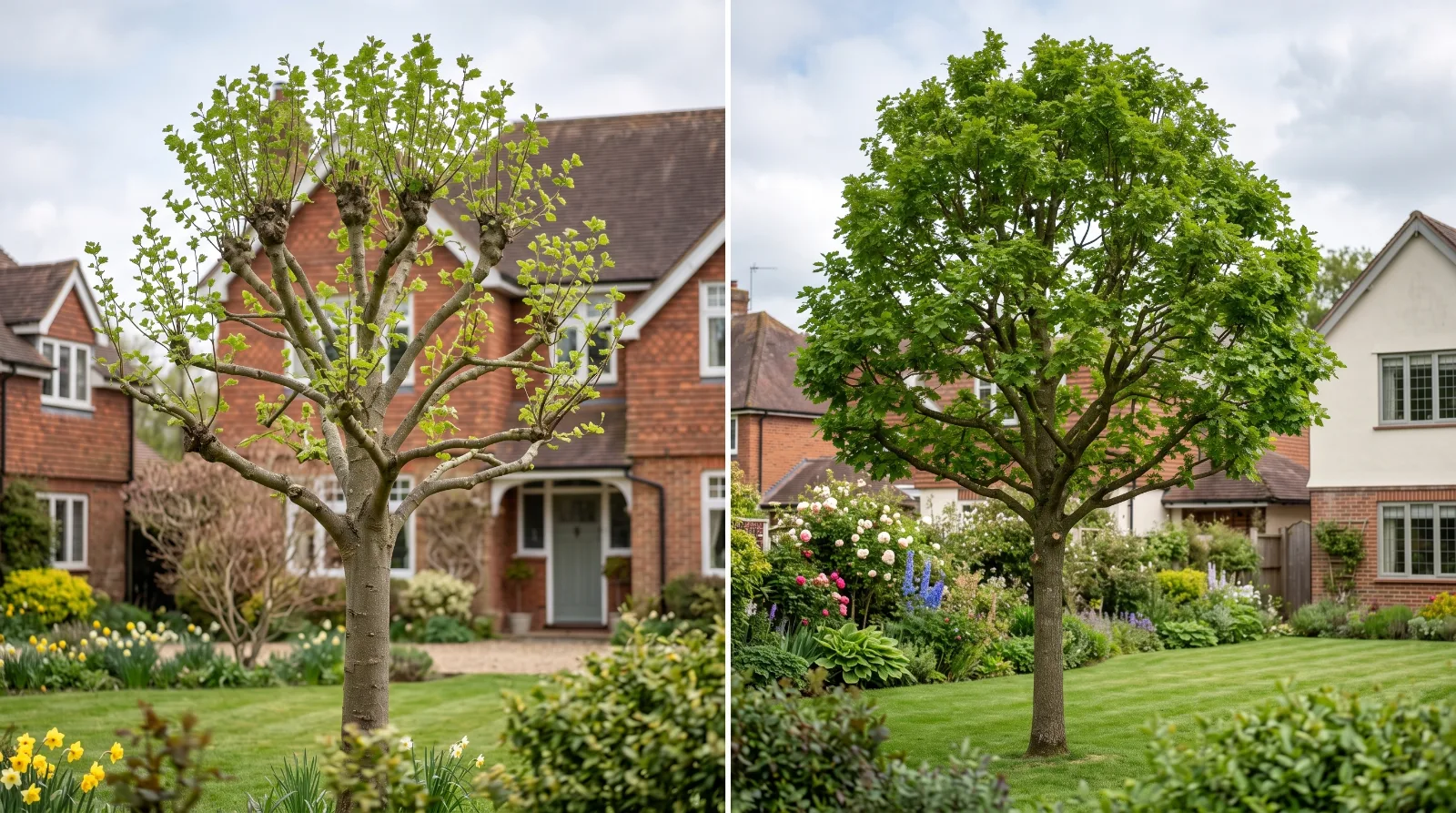
Previous Tree Work Has Left Large Wounds
Older pruning work can sometimes leave large wounds, cavities or altered branch structures.
Previous work does not automatically mean that a tree is unhealthy, but old wounds can become points where decay develops, particularly where large branches have been removed or where cuts were made poorly. Previous interventions are therefore worth considering when assessing the current structure of a tree.
This is one reason why a tree should be assessed as a whole rather than looking at one feature in isolation.
When Should You Call a Professional?
You should consider arranging a professional tree assessment when you notice a combination of warning signs or a significant change in the tree.
What you notice | Why it may need checking |
|---|---|
Large dead branches | Could require assessment or selective removal |
Major cracks | May indicate a structural weakness |
Fungal fruiting bodies | Can sometimes be associated with decay |
Significant crown dieback | May indicate stress or root-related problems |
New leaning or soil movement | Could indicate a stability issue |
Storm damage | Broken or split branches may need attention |
Major root disturbance | Can affect anchorage and long-term health |
Large old pruning wounds | May be associated with decay or weak structure |
A qualified tree professional can assess the tree in context and recommend whether monitoring, pruning, further investigation or another form of management is appropriate.
Does Every Problem Mean a Tree Needs Removing?
No.
Professional tree care is not simply about cutting trees down. Depending on the condition of the tree, the appropriate solution could be selective pruning, deadwood removal, monitoring or no immediate work at all.
Trees can naturally contain cavities, deadwood and areas of decay without automatically becoming unsafe. Their condition needs to be considered alongside factors such as the tree's species, structure, location and surrounding targets.
The aim should be to understand the problem first and choose the least intervention necessary to manage it appropriately.
Keep an Eye on Your Trees
Trees can change gradually, so regularly checking them throughout the year can help you spot anything unusual before it develops into a more serious problem.
Look out for damaged or dead branches, new cracks, changes in the canopy, unusual fungal growth, movement around the base of the tree or damage following strong winds and storms. If something looks different from how it normally does, it is worth having the tree assessed rather than guessing at the cause.
At Surrey Oak Landscapes, our tree surgery team can assess trees and recommend the most appropriate course of action, whether that means pruning, removing deadwood, further investigation or simply keeping an eye on the tree.
About the author