Can Tree Roots Damage Your House, Driveway or Garden Walls?
Tree roots can sometimes lift paving, affect garden walls and contribute to foundation problems. Learn what causes root damage, the warning signs to look for and how careful landscaping can help prevent it.
Trees bring structure, shade and character to a garden, but their roots can sometimes cause problems for nearby buildings and landscaping. Lifted paving, cracked garden walls and damaged drainage pipes are all issues homeowners may encounter as trees grow.
However, tree roots do not automatically damage everything in their path. The risk depends on the tree species, the surrounding soil, the type of structure and how the roots interact with the ground.
Understanding how these problems develop can help you protect your property while keeping your garden trees healthy.
Can Tree Roots Damage House Foundations?
Yes, trees can contribute to foundation damage, but the cause is often misunderstood. Roots do not normally break through sound concrete foundations simply by growing against them. In many cases, the problem is related to the way trees affect the moisture content of the soil.
Some trees take up substantial amounts of water from the surrounding ground. In shrinkable clay soils, this can cause the soil to dry out and contract, potentially leading to movement beneath a building. If the movement is uneven, cracks may develop in walls, particularly around windows, doors and other weak points.
The risk is influenced by several factors:
Soil type: Shrinkable clay soils are more susceptible to changes in moisture than many sandy or chalk-based soils.
Tree species: Some trees have higher water demands than others.
Distance from the property: A tree close to a building may have a greater influence on the surrounding soil, although roots can extend well beyond the canopy.
Foundation depth and condition: Older properties with shallow foundations may be more vulnerable in certain ground conditions.
Weather: Prolonged dry periods can increase soil shrinkage and make existing problems more noticeable.
It is important not to assume that a nearby tree is responsible for every crack in a house. Building movement can have several causes, including drainage leaks, construction defects and natural ground movement.
If you notice new or widening cracks, doors or windows that suddenly stick, or visible changes in floor levels, seek advice from a suitably qualified structural engineer or building subsidence specialist.
Can Tree Roots Lift Driveways and Patios?
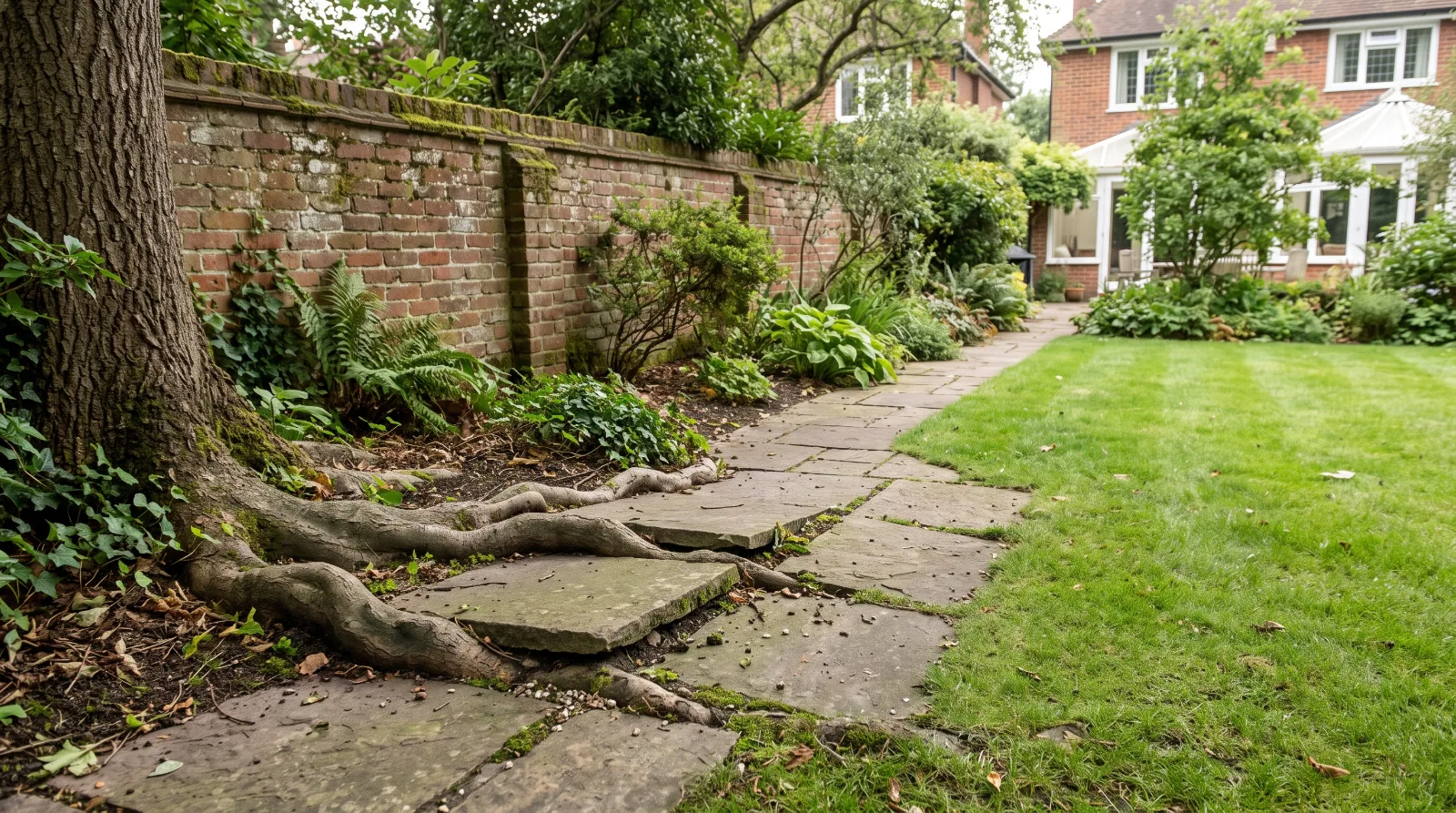
Yes. Driveways, paths and patios can be particularly vulnerable to shallow, expanding roots.
As roots increase in thickness beneath a paved surface, they can push slabs upwards, create uneven levels and cause joints to separate. This is more likely where paving has been installed close to a mature tree or where the surface and its supporting layers provide limited space for root growth.
Common warning signs include:
Paving slabs that have become raised or uneven.
Cracks appearing in concrete or tarmac.
Gaps developing between paving joints.
Sections of a driveway becoming difficult or unsafe to walk or drive across.
Not every uneven surface is caused by tree roots. Poor sub-base preparation, ground settlement, water erosion and general wear can produce similar symptoms.
Before repairing the surface, identify the likely cause. Simply replacing a few slabs without addressing the underlying problem may only provide a temporary solution.
Where roots are responsible, the repair may involve adjusting the paving layout, choosing a more flexible surface or creating additional space around the affected area. Any work near substantial roots should be planned carefully to avoid compromising the tree's health or stability.
Can Tree Roots Damage Garden Walls?
Tree roots can affect garden walls, especially where the structure has shallow foundations or was not designed to accommodate nearby root growth.
As roots thicken, they may exert pressure on lightweight walls, displace loose masonry or contribute to cracking. Roots can also exploit existing gaps in older structures, although a crack beside a tree does not necessarily mean the tree caused it.
Signs to look out for include:
Cracks developing between bricks or blocks.
Sections of the wall beginning to lean.
Loose or displaced masonry near a tree.
Changes in the level of the ground beside the wall.
A leaning wall or significant cracking should be assessed before repairs begin. If tree roots are involved, cutting them without understanding their size and function can affect the tree's stability. In some cases, the most suitable approach is to modify the wall or its foundations rather than remove the tree.
Can Tree Roots Block Drains?
Yes, but roots generally enter drains through existing cracks, leaking joints or damaged connections rather than penetrating an intact, watertight pipe.
A leaking drain releases moisture into the surrounding soil, which can attract root growth. Once roots enter through a defect, they may continue growing inside the pipe and eventually restrict the flow of wastewater.
Possible warning signs include recurring blockages, slow drainage, unpleasant smells and unexplained damp patches near buried pipes.
If you suspect root intrusion, a drainage specialist can inspect the pipework and identify the source of the problem. Repairing or replacing a damaged section is often more effective than repeatedly clearing the blockage without addressing the defect.
Removing a nearby tree is not always necessary, particularly when the underlying drain can be repaired.
Which Trees Are More Likely to Cause Problems?
The likelihood of damage depends on more than a tree's height. Rooting habits, water demand, soil conditions and the space available for growth all matter.
Some trees that deserve particular consideration near buildings and hard landscaping include:
Tree type | What to consider |
|---|---|
Willow | Often has a high water demand and extensive roots |
Poplar | Can develop vigorous roots and substantial growth |
Oak | Large mature trees can have extensive root systems and significant water demands |
Cherry | Some varieties develop shallow roots that can lift nearby paving |
Birch | Can develop an extensive root system, with risk depending on the site and species |
This does not mean these trees should never be planted in residential gardens. Their suitability depends on the available space, the type of soil and their distance from buildings and paving.
When choosing a new tree, consider its expected mature size rather than how small it looks when first planted. A suitable planting location can help avoid expensive alterations later.
How Can You Prevent Tree Root Damage?
Careful planning is usually more effective than trying to control roots once problems have developed.
Choose the Right Tree for the Space
Consider the mature height, spread and water requirements of a tree before planting. Smaller or more suitable species may be a better choice for compact gardens where houses, driveways and boundary walls are close together.
Allow Enough Space Around Trees
Avoid placing new paving or lightweight structures immediately against the trunk. Leaving an appropriate area for root growth can help reduce conflicts between trees and hard landscaping.
Plan Driveways and Patios Carefully
Good design and suitable construction can reduce the likelihood of uneven paving. Where existing trees are being retained, the layout and materials should take their root systems into account.
Maintain Drains and Hard Landscaping
Address leaking pipes, damaged joints and minor paving defects before they develop into larger problems. Regular inspections can help identify changes early.
Avoid Cutting Large Roots Without Advice
Cutting roots can weaken a tree, increase its susceptibility to disease or make it unstable. Before excavating near a mature tree, seek advice from a qualified arborist, particularly if substantial roots are exposed or the tree is close to a building.
Root barriers and specialist construction methods may be appropriate in some situations, but they need to be designed for the particular site. They are not guaranteed solutions for every tree or structure.
Should You Remove a Tree If Its Roots Are Causing Damage?
Not necessarily. Tree removal is only one possible response, and it may not resolve the underlying issue in every case.
For example, a leaking drain can often be repaired without removing the tree, while lifted paving may be addressed by changing the surface design. Where building movement is suspected, the cause should be investigated before decisions are made about pruning or removal.
If a tree may be contributing to subsidence, professional assessment is particularly important. Removing a mature tree can also change soil moisture conditions, and in some shrinkable clay soils this may lead to ground expansion.
Before carrying out tree work, check whether the tree is protected or subject to any local restrictions.
Protect Your Garden with Surrey Oak Landscapes
Tree roots are a natural part of a healthy garden, and most trees growing near homes do not cause structural damage. The key is understanding the ground conditions, allowing enough space for growth and recognising potential problems before they become more serious.
Whether you are planning a new driveway, updating garden walls or considering tree planting as part of a wider landscaping project, careful design can help balance the needs of your garden with the practical requirements of your property.
Surrey Oak Landscapes provides landscaping, hard landscaping and planting services to help homeowners create attractive, functional outdoor spaces.
About the author