Best Trees and Plants for Privacy in Surrey Gardens
Looking to create more privacy in your Surrey garden? Discover the best trees, shrubs and plants for screening, from evergreen hedges to pleached trees.
A garden can feel very different when it is overlooked by neighbouring homes, upper-floor windows or nearby roads. Fencing can provide a boundary, but planting offers another way to create privacy while making the garden feel softer and more established.
The best privacy planting is not always the tallest or fastest-growing option. The right choice depends on how high the screening needs to be, how much space you have, how much light reaches the area and whether you want privacy throughout the year or mainly during the growing season.
For Surrey gardens, a mixture of trees, shrubs and carefully positioned screening plants can create a more natural result than relying on one uniform hedge.
What Makes a Good Privacy Plant?
Before choosing a plant, think about the actual view you are trying to block.
A neighbour's first-floor window may require taller screening than a ground-level patio, while a narrow side garden may need something upright rather than a plant that spreads several metres.
Important things to consider include:
Mature height rather than its size when planted
Mature width and how much space the plant will eventually need
Evergreen or deciduous foliage
Sunlight and shade
Soil and drainage
How quickly you want the screen to establish
How much pruning and maintenance you are comfortable with
Privacy planting is most effective when it is designed around the particular sightline rather than simply planted along the entire boundary.
Best Evergreen Trees and Plants for Privacy
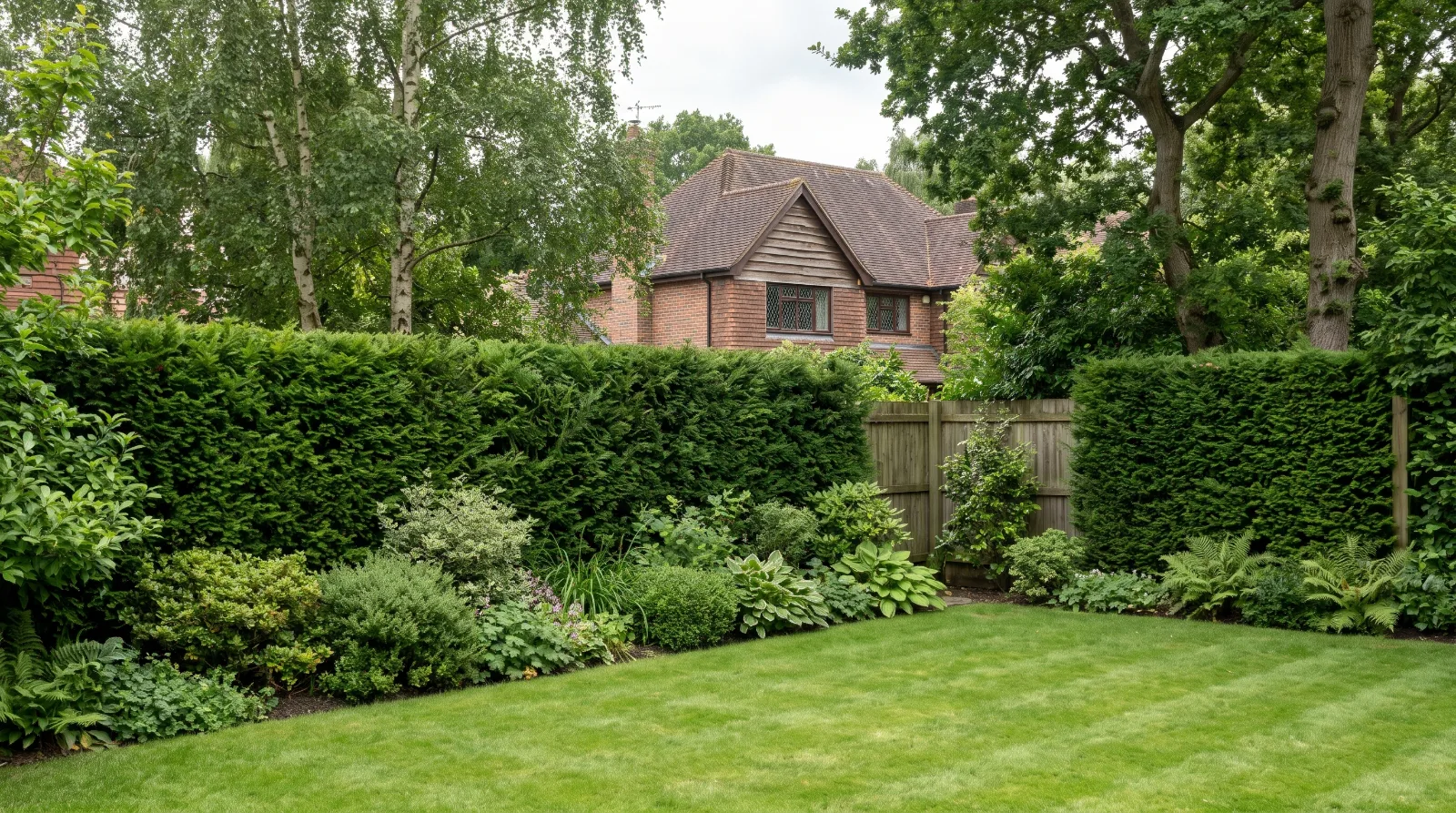
Evergreen plants are often the first choice when year-round screening is important. They keep their foliage through winter and can provide a more consistent visual barrier.
Portuguese Laurel
Portuguese laurel (Prunus lusitanica) is a popular choice for formal evergreen screening. Its glossy dark-green leaves and dense growth can create a substantial hedge, while its smaller leaves give it a more refined appearance than some larger-leaved laurels.
It responds well to pruning and can be maintained as a formal hedge or allowed to develop into a more substantial screen. It is best suited to gardens where there is enough room for the mature plants and regular maintenance.
Yew
Yew (Taxus baccata) is another evergreen option that can be clipped into a dense, structured hedge. It is particularly useful where a more formal appearance is wanted and can tolerate a range of conditions, including some shade.
Yew is relatively slow-growing compared with faster screening plants, so it is better suited to a long-term planting scheme than someone looking for very rapid coverage.
Holly
Holly provides year-round foliage and works particularly well where a garden needs structure as well as privacy. It can be grown as a hedge or allowed to develop into a tree, giving you flexibility depending on the size and layout of the garden.
It also tolerates partial shade, which can make it useful for areas where a sunnier screening plant may struggle. Female plants can produce berries when a suitable pollinating male is present.
Photinia 'Red Robin'
Photinia × fraseri 'Red Robin' is an evergreen shrub that brings something different to a privacy planting scheme. Its young foliage emerges bright red before maturing to green, giving a screen more seasonal colour than a completely green hedge.
It can be used as a hedge or larger shrub and responds well to pruning. It prefers a sunny or partially shaded position with reasonably well-drained soil.
Privacy Plants for Smaller Surrey Gardens
A smaller garden does not necessarily need a huge hedge to create privacy.
In tighter spaces, it can be better to use a combination of narrower plants, smaller trees and layered planting. The aim is to block the specific view without allowing the screening to take over the entire garden.
Plants such as Pittosporum tenuifolium, Viburnum tinus and compact clump-forming bamboo such as Fargesia can provide useful evergreen structure where space is limited. Fargesia varieties are clump-forming, unlike running bamboos that can spread aggressively.
For a small garden, positioning is just as important as plant choice. A well-placed plant can block a sightline much more effectively than a continuous row of plants that simply takes up valuable space.
Trees for Taller Privacy Screening
When privacy is needed above a standard fence line, trees can become an important part of the planting design.
Pleached Trees
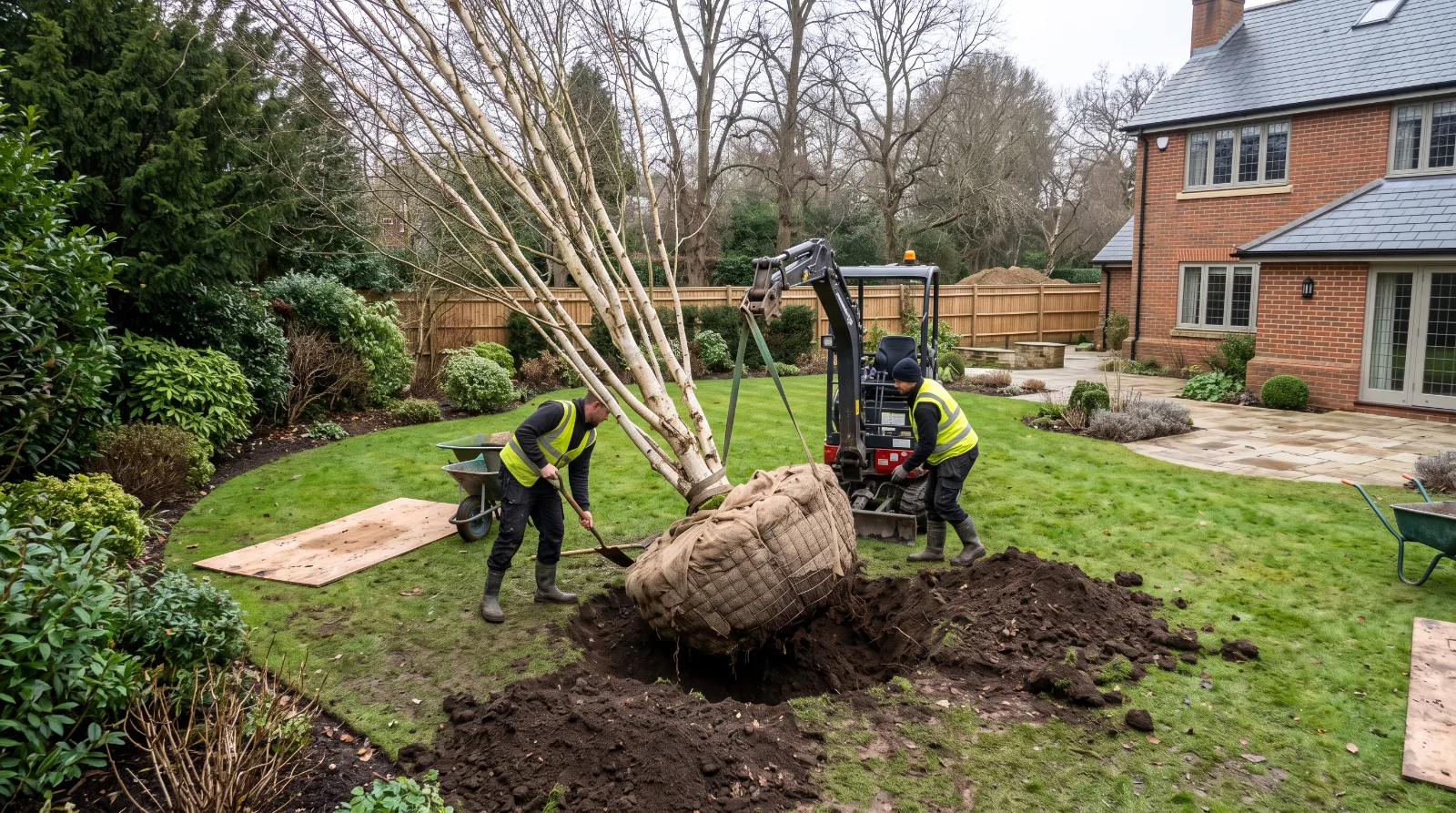
Pleached trees are trained so that their branches form a raised screen above a clear stem. They can be particularly useful where you want additional privacy at upper-window level without filling the whole garden with tall, dense growth.
They are often used alongside fences and walls to create a more structured boundary while allowing planting and lawn space to remain underneath.
Hornbeam
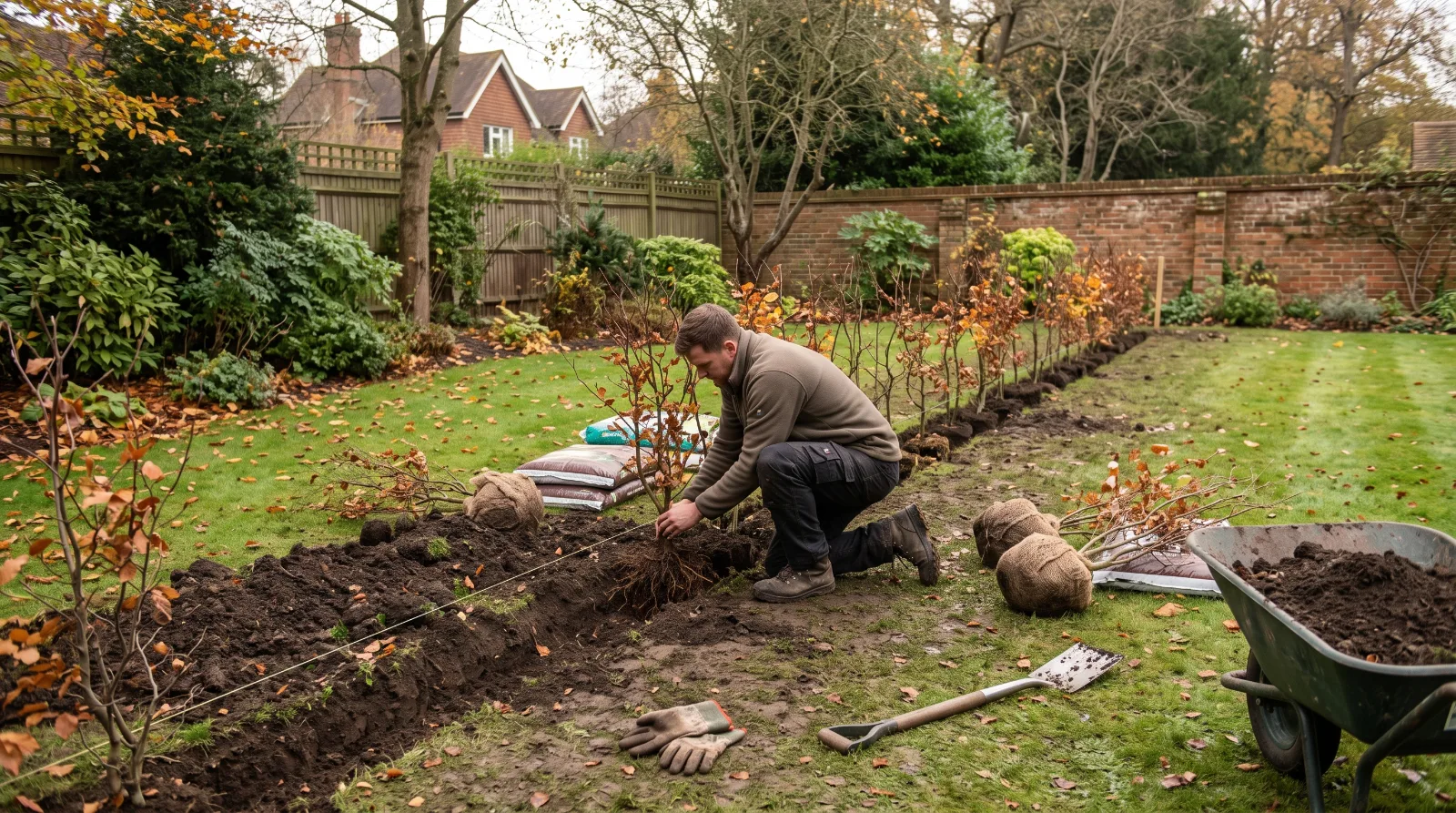
Hornbeam (Carpinus betulus) is a useful option for a more natural-looking screening scheme. It is deciduous but can retain much of its brown foliage into winter, helping it provide longer seasonal coverage than many deciduous plants.
It is also known for being hardy and adaptable, making it suitable for a range of garden conditions.
Western Red Cedar
Western red cedar (Thuja plicata) can provide tall evergreen screening where there is sufficient space. It is capable of substantial growth, so it should be selected with its eventual size and maintenance requirements firmly in mind rather than simply being planted for fast coverage.
For many residential gardens, a more carefully proportioned mixed screen can be preferable to planting a row of very large trees and trying to keep them under control.
Layered Planting Can Create Better Privacy
Privacy does not have to come from one continuous hedge.
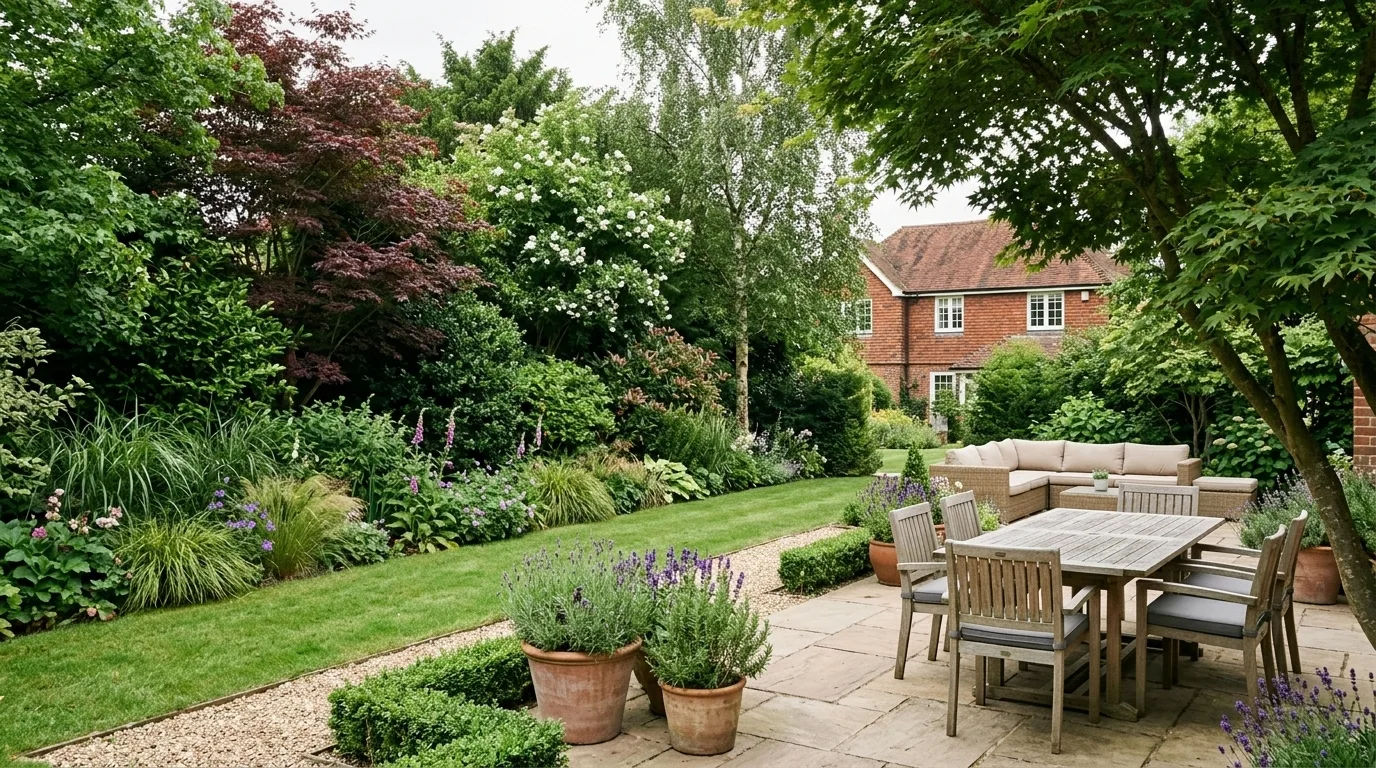
A layered planting scheme can use different heights to block several sightlines at once. For example, taller screening trees can provide height at the back, medium shrubs can fill the middle layer and lower planting can soften the base.
This can make the garden feel more natural while also creating seasonal changes in colour and texture.
A simple example could be:
Layer | Possible plants | Purpose |
|---|---|---|
Tall | Pleached hornbeam, holly or suitable screening tree | Blocks higher views |
Middle | Portuguese laurel, Photinia or Viburnum | Main visual screening |
Low | Grasses, shrubs and perennials | Softens the base of the screen |
Climber | Suitable evergreen or seasonal climber | Adds height without a wide footprint |
Mixed planting can also help avoid the uniform appearance of a single-species boundary and gives you more opportunities for seasonal interest.
Evergreen or Deciduous: Which Is Better?
The answer depends on what kind of privacy you actually need.
Type | Main advantage | Consideration |
|---|---|---|
Evergreen | Screening throughout the year | Can cast more shade and require regular pruning |
Deciduous | Seasonal colour and lighter winter character | Less visual cover once foliage has dropped |
Mixed | Combines structure, screening and seasonal interest | Requires more design planning |
Evergreen planting is particularly useful where privacy is needed in winter, while deciduous trees can bring blossom, autumn colour and a more open feel at other times of the year.
For many gardens, combining the two can give you a better balance.
How Close Should You Plant for Privacy?
There is no single spacing that works for every screening plant.
Planting too far apart can leave obvious gaps for years, while planting everything extremely close together can create unnecessary competition between plants as they mature.
The ideal spacing depends on the species, the size of the plants when installed and the final height and width you want to achieve. Growth rates also vary significantly between species and depend on conditions such as soil, light and aftercare.
This is one reason a professional planting plan can be useful. It allows the planting to be designed around the mature garden rather than just how the plants look on installation day.
How to Create Privacy Without Making the Garden Feel Closed In
A fully solid boundary is not always the best answer.
You might only need to screen one neighbouring window or a particular seating area rather than block views around the entire garden.
Using plants at different heights, leaving some openings and combining planting with fencing or screening can give you privacy while keeping the garden feeling open.
This approach is particularly effective around patios, pergolas and outdoor seating areas, where privacy is normally needed at a specific height and position.
Choosing the Right Plants for Your Surrey Garden
There is no universal list of the “best” privacy plants. A plant that works perfectly in a large garden may be completely unsuitable for a narrow border, while an evergreen that thrives in full sun may struggle in deep shade.
Before planting, consider:
Where the unwanted view is coming from
How high the screening needs to be
The available planting width
Soil and drainage
How much sunlight reaches the area
Whether you need winter screening
How much pruning will be required
How large the plants will eventually become
The best privacy schemes are designed around these factors rather than simply choosing the fastest-growing plant available.
Create a Natural Privacy Screen for Your Surrey Garden
Trees and planting can provide much more than privacy. They can add structure, colour, texture and seasonal interest while making boundaries feel like part of the garden rather than a barrier around it.
Portuguese laurel, yew, holly, Photinia, hornbeam, pleached trees and carefully selected shrubs can all have a place in a well-planned Surrey garden. The right combination depends on the property, available space and the type of privacy you are trying to create.
If you're planning a new planting scheme or want to improve privacy around your garden, Surrey Oak Landscapes can design planting around your space, from screening shrubs and trees to premium planting schemes and specimen tree installation.
About the author