Can You Plant Mature Specimen Trees in Winter?
Winter can be a suitable time to plant mature specimen trees in UK gardens. Learn how to choose the right tree, prepare the site and support healthy establishment.
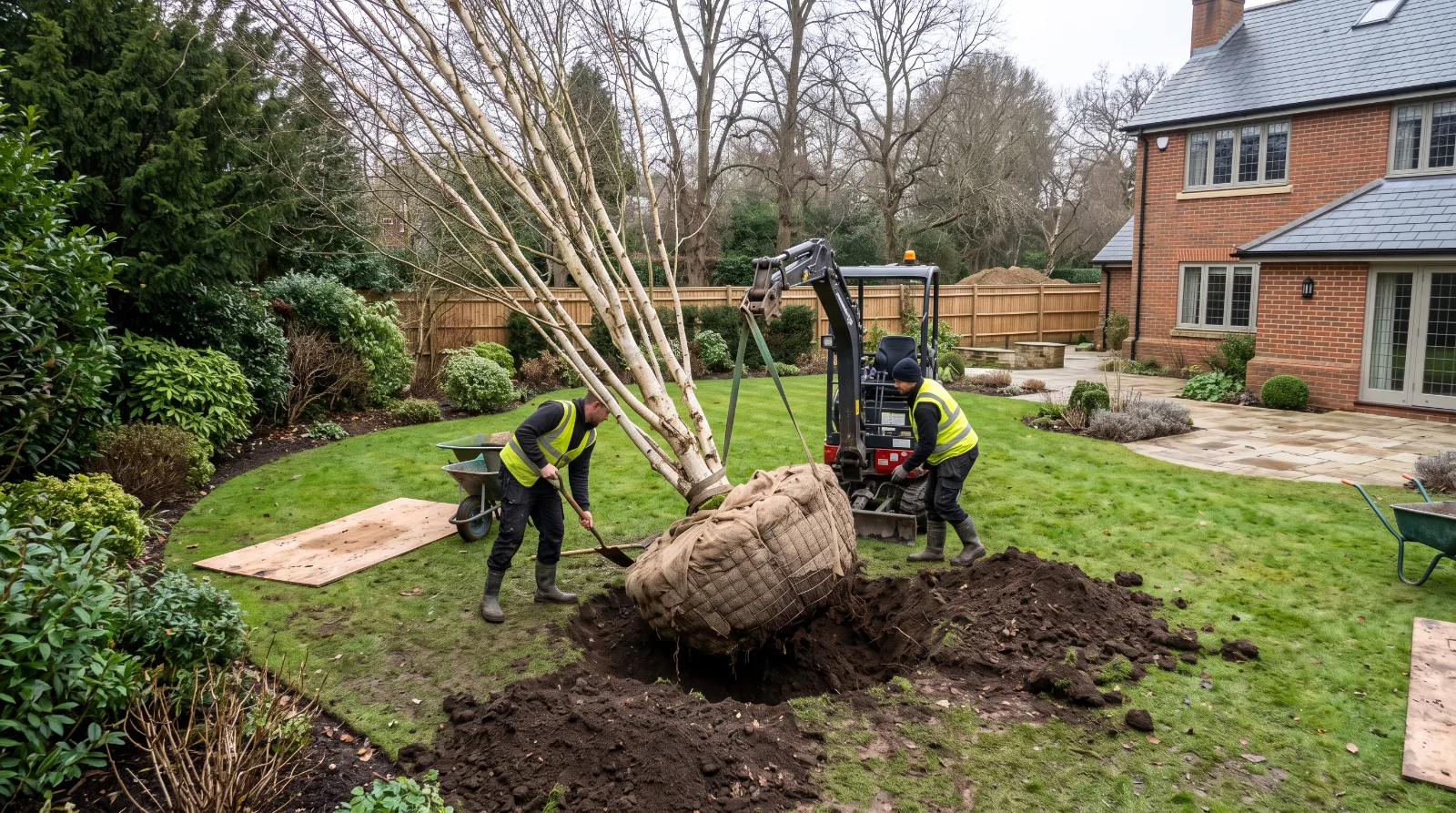
A mature specimen tree can transform a garden, adding height, structure, seasonal interest and a sense of maturity that smaller plants take years to achieve. Whether you want an elegant multi-stem tree, a sculptural evergreen or a striking feature for a newly landscaped garden, planting during winter can be a practical way to get your plans underway.
But is winter really a good time to plant a large tree?
Yes, mature specimen trees can often be planted successfully in winter, provided the tree is suitable for winter planting and the ground is neither frozen nor waterlogged. The type of tree, how it has been grown, the size of its root ball and the conditions in your garden will all influence the best time to plant.
In this guide, we explain when winter planting works best, how to prepare your garden, what to consider when choosing a mature tree and how to help it establish successfully.
Why Plant Mature Specimen Trees in Winter?
Winter is an important planting season for many trees in the UK, particularly deciduous varieties that lose their leaves during autumn.
As these trees enter dormancy, their demand for water is generally lower than during active spring and summer growth. Cooler temperatures can also reduce moisture loss from foliage and surrounding soil, although newly planted trees still need careful watering.
Planting during the dormant season gives the tree time to settle into its new position before the next growing season begins. When conditions become favourable, its roots can gradually develop into the surrounding soil.
There are several advantages to planting mature specimen trees during winter:
A head start for spring: The tree is already in position when warmer weather and new growth arrive.
Reduced heat stress: Cooler conditions can make establishment easier than planting during hot, dry summer weather.
A more established garden: A mature tree provides immediate structure and visual impact without waiting years for a young tree to develop.
A useful landscaping window: Winter can be a good time to complete tree planting as part of a wider garden redesign, provided access and ground conditions are suitable.
However, dormant does not mean indestructible. Large trees can suffer significant stress when transplanted because much of their original root system may have been left behind. Careful handling and suitable aftercare remain essential.
When Is the Best Time to Plant a Mature Tree?
For many deciduous specimen trees, autumn to early spring is a suitable planting period. In general, November to March is a useful window to consider, although availability and the ideal timing vary by species and how the tree has been supplied.
The important distinction is between a suitable planting season and suitable planting conditions.
Even if the calendar suggests that it is the right time, planting should be postponed if the soil is frozen, saturated with water or too wet to work without causing damage.
In Surrey and the surrounding areas, winter conditions can vary considerably. A mild, workable period may provide an opportunity to plant, while several days of heavy rain can leave clay-heavy ground unsuitable for machinery or excavation.
It is also important to consider the tree itself. Different species have different preferences, and evergreen specimens may require additional care because they retain foliage and can continue losing moisture during winter.
Does the type of tree supplied make a difference?
Yes. Mature trees can be supplied in different forms, and this affects when they can be planted and how they need to be handled.
Type of tree | Winter planting considerations |
|---|---|
Root-balled trees | Often supplied for autumn and early-winter planting. The root ball must remain intact and moist, and the tree should be planted promptly. |
Bare-root trees | Usually available during dormancy. The roots must not be allowed to dry out before planting. |
Container-grown trees | Can generally be planted over a broader period, but still require suitable ground conditions and careful watering. |
Evergreen specimens | May be planted in suitable conditions, but can need extra protection from drying winds and careful attention to moisture levels. |
For larger specimens, the supplier's recommendations should always be checked before confirming a planting date. Some trees are more sensitive to root disturbance than others, and certain species have specific handling requirements.
What Should You Consider Before Planting a Mature Specimen Tree?
Choosing the tree is only one part of the process. Before ordering a large specimen, it is worth assessing the planting site and understanding what the tree will need to thrive.
1. The size of the tree and its root ball
A mature specimen is more substantial than a typical nursery tree. Its root ball may be heavy, wide and difficult to manoeuvre through a garden.
This affects more than the planting hole. The delivery vehicle may need suitable access, and machinery might be necessary to position the tree safely. Narrow side access, steps, existing walls or a finished patio can make installation more complicated.
Planning these details in advance helps prevent unnecessary disruption and ensures the tree can be moved into position without damaging the root ball.
2. Soil type and drainage
Healthy roots need both moisture and oxygen. Soil that remains saturated for long periods can deprive roots of oxygen, making establishment difficult.
This is particularly relevant in gardens with heavy clay soil, compacted ground or areas where rainwater collects.
Before planting, assess how quickly water drains from the proposed location. If the ground is consistently waterlogged, it may be better to improve drainage, reconsider the exact planting position or select a species suited to the conditions.
Simply digging a deeper hole is not a solution. In poorly drained soil, a deep planting pit can collect water and create further problems.
3. The tree's eventual size
A mature tree may look perfectly proportioned when first installed, but it will continue to grow.
Consider its eventual height, canopy spread and root development in relation to the house, boundaries, garden buildings, paving and underground services. Think about how the tree might affect light levels, views and neighbouring properties as it matures.
A carefully positioned specimen can become a defining feature of the garden. A poorly positioned one may eventually require unnecessary pruning or removal.
4. Access and protection of existing landscaping
Large trees are often installed using lifting equipment or other machinery, depending on their size and root-ball weight.
The route from the access point to the planting position should be planned before delivery. Wet winter lawns and soft ground can be particularly vulnerable to heavy equipment.
Where necessary, protective ground mats or boards can help distribute loads and reduce damage. If a tree needs to be lifted over a wall or building, the work requires appropriate access, equipment and a suitable lifting plan.
How to Plant a Mature Specimen Tree in Winter
Successful planting involves more than placing the tree in a hole and covering its roots. The preparation, positioning and initial support all contribute to how well it establishes.
Step 1: Prepare the planting site
Choose the final position carefully before excavation begins.
Clear the area and check that the ground is workable. The planting hole should be wider than the root ball to give the roots room to develop into the surrounding soil.
The depth is equally important. The hole should generally be no deeper than the root ball, so the tree sits at the correct level rather than sinking as the soil settles.
If the surrounding soil is compacted, loosen the sides of the planting area to help future root growth. Avoid unnecessarily disturbing the base, as loose soil beneath the tree can settle and leave it planted too deeply.
Step 2: Handle the tree carefully
The root ball contains the roots needed to establish the tree in its new location. It must be protected from drying out, breaking apart or suffering unnecessary movement during transport.
Large specimens should be lifted using suitable equipment and the correct lifting points. Never attempt to lift a heavy tree by its trunk or branches.
Keep the root ball protected until the tree is ready to be positioned. Follow the supplier's instructions for removing or adjusting any wrapping, ties or other materials around the roots. Synthetic or constricting materials must not be left in a position where they could damage the developing tree.
Step 3: Position the tree at the correct depth
Lower the tree carefully into the prepared hole and check its position from different angles.
The root flare, where the trunk broadens and transitions into the main roots, should be at or just above the finished soil level as appropriate to the tree. Avoid burying the base of the trunk.
Planting too deeply can restrict oxygen around the roots and contribute to long-term establishment problems. With large specimens, correcting the position before backfilling is much easier than trying to fix it later.
Take time to ensure that the tree is upright and positioned correctly in relation to the surrounding garden.
Step 4: Backfill and water thoroughly
Backfill around the root ball with suitable excavated soil, working it into gaps without excessively compacting it.
The aim is to make good contact between the root ball and surrounding soil while preserving a structure that allows air and water to move through it. Avoid creating large air pockets, but do not stamp the ground into a hard mass.
Water the tree thoroughly after planting, unless the ground is already saturated or conditions make watering inappropriate. This helps settle the soil around the roots and provides moisture for the establishment period.
Adding large quantities of compost or fertiliser directly into the planting hole is not automatically beneficial. The correct approach is to assess the existing soil and follow the needs of the particular tree.
Step 5: Secure the tree and apply mulch
A large specimen may need staking, guying or an underground anchoring system to keep its root ball stable while new roots develop.
The correct support depends on the size and shape of the tree, the root-ball dimensions, wind exposure and the planting location. Supports should hold the root system steady without unnecessarily restricting natural movement of the trunk.
Apply a layer of suitable organic mulch around the base to help moderate soil temperature, conserve moisture and reduce weed competition. Keep the mulch clear of the trunk rather than piling it against the bark.
For a professionally landscaped garden, these finishing details matter. The tree should be properly supported, the planting area should look neat, and the surrounding lawn, beds or paving should remain in good condition.
How to Care for a Mature Tree After Winter Planting
Planting is only the beginning. A mature specimen can take several years to establish fully, so ongoing maintenance is important even if it looks healthy immediately after installation.
Monitor soil moisture
Winter rainfall does not guarantee that the root ball will always remain moist. Water can drain away from the original root ball at a different rate from the surrounding ground, and dry, windy weather can still cause moisture loss.
Check the soil around the root ball rather than relying solely on rainfall or a fixed watering schedule. Water when necessary, taking care not to saturate already wet ground.
Continue monitoring moisture as spring and summer approach, when demand can increase significantly.
Keep weeds and grass away from the base
Grass and weeds compete with the newly planted tree for water and nutrients.
Keeping the area around the tree clear and mulched helps reduce competition while the roots establish. Avoid digging aggressively around the root ball, as this can damage new roots.
Check the tree supports
Inspect stakes, ties and anchors periodically, particularly after strong winds. Make sure the tree remains stable and the supports are not rubbing against the trunk or becoming too tight.
As the tree establishes, its support requirements may change. Supports should be adjusted or removed at the appropriate time rather than being left unattended for years.
Look for signs of stress
Leaf loss is not necessarily a problem for a deciduous tree during winter. However, other signs, including significant branch dieback, a leaning trunk, persistent waterlogging or a visibly unstable root ball, deserve attention.
If the tree starts to struggle during spring, investigate the cause rather than assuming it simply needs more water. Both underwatering and excessive moisture can lead to establishment problems.
When Should You Postpone Planting?
Although winter can be a suitable season for mature specimen trees, some conditions make it better to wait.
Condition | Recommended approach |
|---|---|
Frozen ground | Postpone planting until the soil has thawed and can be worked properly. |
Waterlogged soil | Wait for conditions to improve or address persistent drainage problems first. |
Heavy rain forecast | Consider delaying excavation and delivery to avoid damaging the soil or surrounding garden. |
Severe or exposed conditions | Assess the weather, lifting arrangements and support requirements before proceeding. |
Inadequate site access | Plan the delivery route and installation method before ordering the tree. |
Tree or root ball drying out | Protect the roots and arrange prompt planting under suitable conditions. |
There is no benefit in forcing a planting job through unsuitable weather simply to meet a preferred date. Postponing the work can be the better long-term decision, especially when a substantial specimen represents a significant investment.
Are Mature Specimen Trees Worth the Investment?
For many gardens, the answer is yes. A well-chosen specimen tree can provide immediate structure, create a focal point and help a newly landscaped space feel more established.
The benefits depend on choosing a tree suited to the garden, positioning it correctly and allowing enough room for its future growth. The cost also extends beyond the tree itself: delivery, access, lifting equipment, ground preparation and aftercare can all affect the overall budget.
A mature tree is therefore best viewed as part of the wider landscape design rather than an isolated purchase. Its position should complement planting beds, lawns, paths, patios and views from the house.
Final Advice: Plan Before You Plant
Planting mature specimen trees in winter is entirely possible and can be an excellent way to bring structure and character to a garden ahead of spring. The most important factors are selecting suitable stock, preparing the ground properly, protecting the root ball and providing consistent aftercare.
The right planting window will depend on the species, the way the tree has been supplied and the weather conditions at the time. If the ground is frozen or waterlogged, waiting for a better opportunity is usually the sensible choice.
At Surrey Oak Landscapes, specimen trees can be considered as part of a wider garden design, helping to balance planting, levels, lawns and outdoor living areas.
Planning a garden transformation or looking to introduce a mature specimen tree?
About the author