When Is the Best Time to Plant a New Hedge?
Discover when to plant a new hedge, which varieties suit your garden and how to prepare the soil, space plants correctly and care for them as they establish.
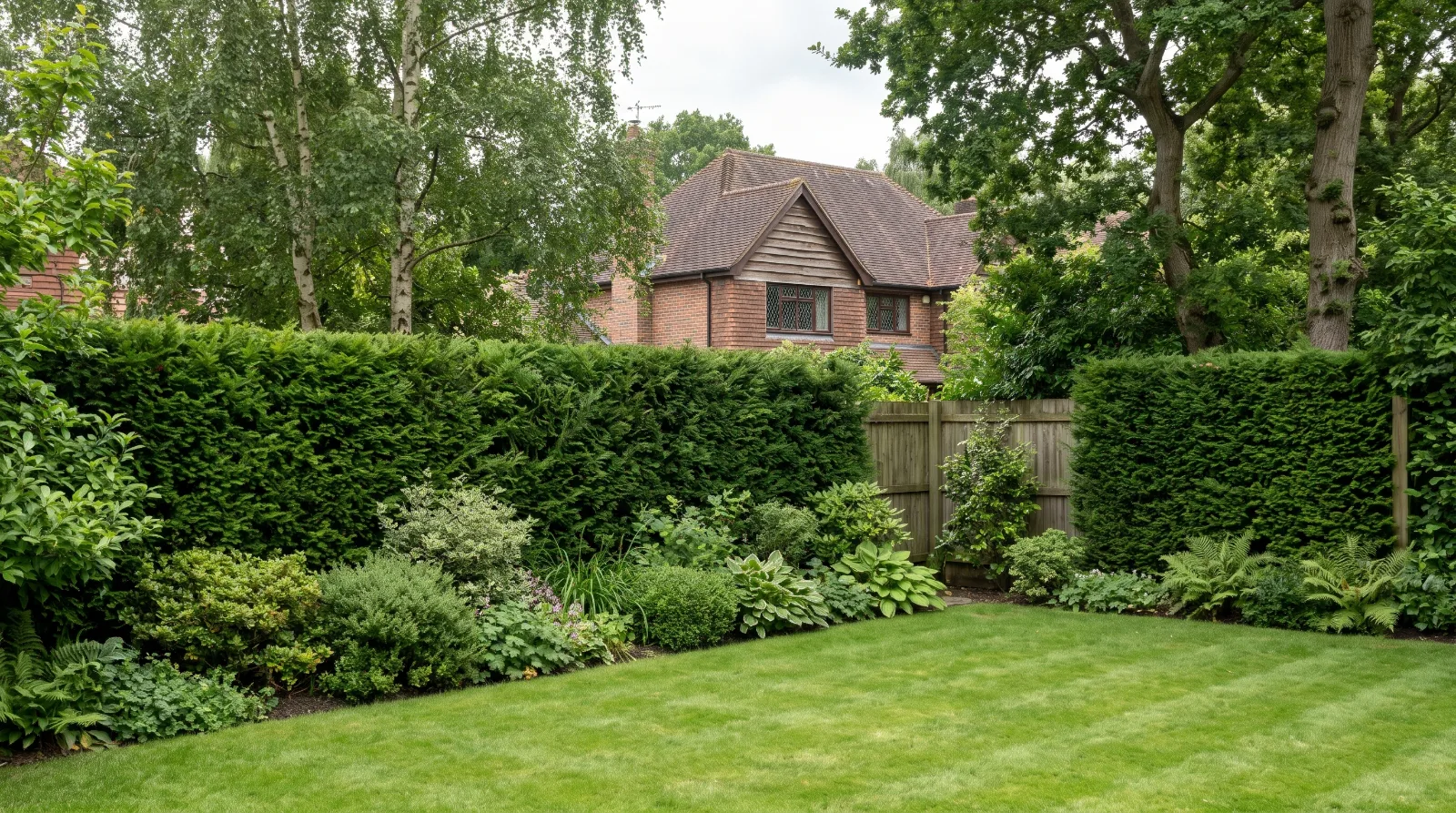
A well-planted hedge can provide privacy, define garden boundaries and bring structure to an outdoor space. Whether you want a neat evergreen screen, a traditional beech hedge or a natural boundary that supports wildlife, choosing the right time to plant can make a significant difference to how well it establishes.
In the UK, autumn to early spring is generally the best period for planting many hedges, although the ideal timing depends on the variety you choose and whether the plants are bare-root or container-grown.
Planting during suitable conditions gives roots time to establish before the demands of warmer weather arrive. However, even during the recommended planting season, frozen or waterlogged ground can make it better to wait.
In this guide, we explain when to plant a new hedge, which varieties suit different gardens and how to give your plants the best possible start.
When Is the Best Time to Plant a Hedge?
For many UK gardens, the main hedge-planting season runs from autumn to early spring. During this period, temperatures are generally cooler, and rainfall can help keep the soil moist while roots establish.
However, there is no single planting date that suits every hedge.
The best time depends on the type of plant, how it has been grown and the conditions in your garden.
Autumn: An Excellent Time for Planting
Autumn is often an excellent time to plant a new hedge because the soil may still retain warmth from summer while cooler air reduces moisture loss.
This can help roots develop before spring growth begins. It also gives the plants a chance to settle into their new position before the warmer, potentially drier months arrive.
Autumn is particularly suitable for many evergreen hedges, including yew and suitable varieties of laurel. It can also be a good time for container-grown plants, provided the ground is workable and conditions are favourable.
For gardens in Surrey, autumn can offer a useful opportunity to establish a new boundary before winter. However, heavy rainfall can leave some gardens, especially those with compacted or clay-heavy soil, too wet to plant safely.
Winter: Best for Many Bare-Root Hedges
Winter is an important planting season for deciduous hedging plants such as beech, hornbeam and hawthorn.
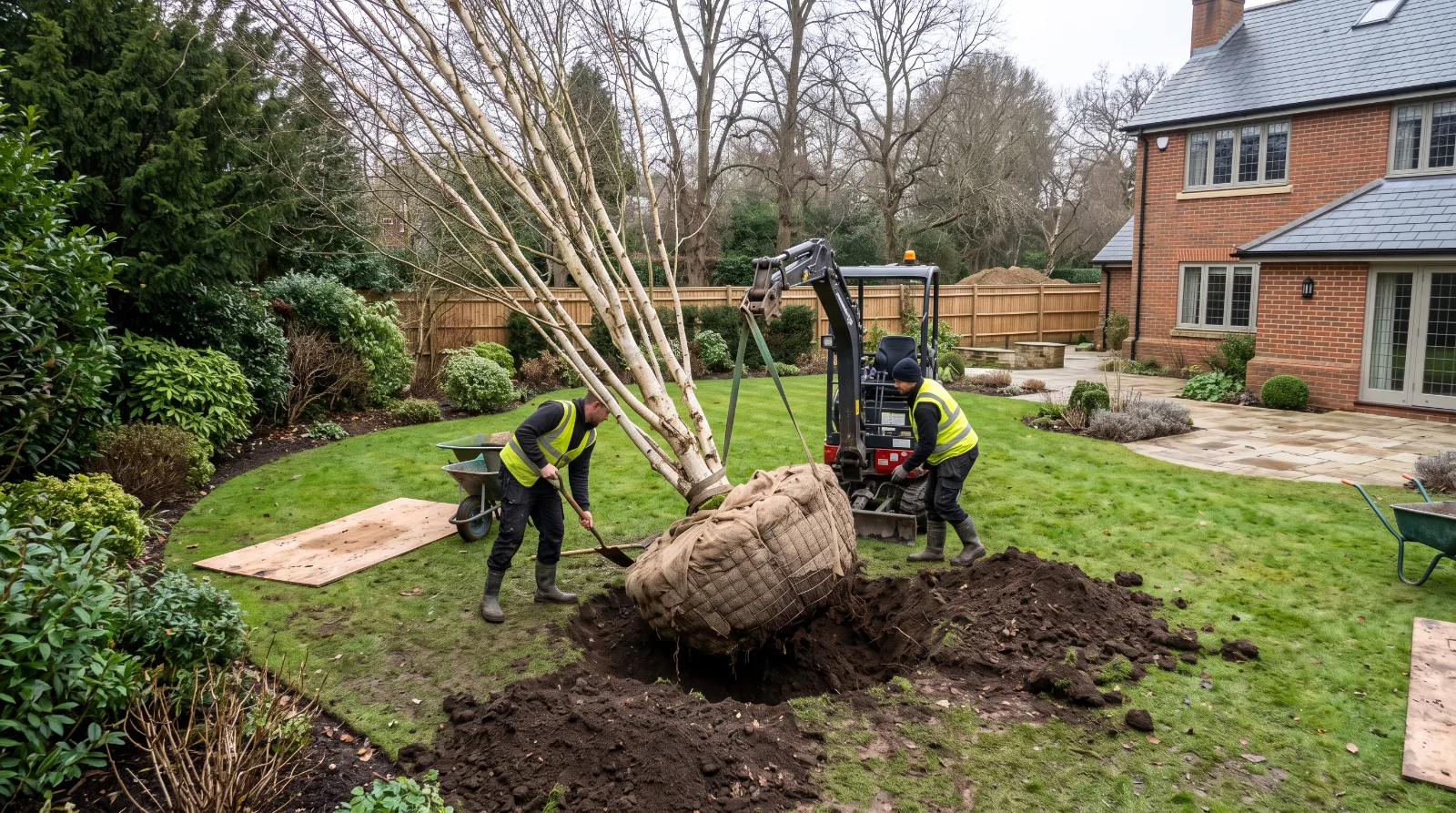
These plants are commonly supplied bare-root while dormant, meaning they are lifted from the ground without a pot or substantial amount of soil around their roots.
Bare-root hedges are often more economical than larger container-grown alternatives, making them a popular choice for planting longer boundaries.
The best window generally runs from late autumn, after the leaves have fallen, through to late winter, while plants remain dormant. The ground must still be suitable for planting.
Avoid working frozen soil or digging into saturated ground, as this can damage the soil structure and make establishment more difficult.
Spring: A Good Alternative
Spring can be a sensible option if you miss the autumn planting window or need to wait for the weather to improve.
It is particularly useful for container-grown hedges, which offer greater flexibility than bare-root plants. Evergreen hedges may also benefit from spring planting in exposed gardens, where establishing roots before the following winter can be helpful.
The main consideration is watering. As temperatures rise and plants begin producing new growth, their water requirements increase. A hedge planted in spring may need closer monitoring through its first summer, especially during dry spells.
Summer: Possible, but More Demanding
Container-grown hedging can be planted during summer, but it generally requires more attention.
Warm temperatures, drying winds and limited rainfall can place newly planted hedges under considerable stress before their roots have established.
If summer planting is unavoidable, choose a suitable period, water thoroughly and monitor soil moisture closely. Avoid planting during heatwaves or prolonged dry conditions where possible.
For most residential landscaping projects, autumn or spring will be the more practical choice.
Does the Type of Hedge Affect Planting Time?
Yes. One of the most important considerations is how the plants are supplied.
Type of hedge | Best planting period | Main consideration |
|---|---|---|
Bare-root deciduous | Late autumn to late winter | Plant while dormant and prevent the roots from drying out. |
Container-grown deciduous | Autumn to spring is often ideal | Can be planted over a broader period when conditions are suitable. |
Evergreen hedging | Early autumn or spring is often preferable | Allow roots to establish and consider exposure to drying winds. |
Root-balled hedging | Usually autumn to winter, depending on the species | Keep the root ball intact and follow the supplier's planting guidance. |
Bare-root plants are often a cost-effective choice for long boundaries, while container-grown and larger root-balled plants can be more convenient when flexibility or greater immediate coverage is required.
The important point is to match the planting method to the species, your budget and the conditions in your garden.
Which Hedge Should You Plant?
Choosing the right variety is just as important as choosing the right time. Consider how much privacy you need, how quickly you want the hedge to grow, the available space and how much maintenance you are prepared to undertake.
Beech
Beech is a popular choice for formal boundaries. Although deciduous, it often retains its dry leaves through winter, providing some screening when other deciduous hedges are bare.
It suits well-managed residential gardens and can develop into a dense, attractive boundary with appropriate care.
Hornbeam
Hornbeam offers a similar formal appearance to beech and can be particularly useful in heavier soils. It is a good option to consider where you want a traditional hedge with a clear, structured shape.
Laurel
Laurel is a popular evergreen option for year-round privacy. It can grow relatively quickly and produces substantial foliage, so regular trimming and sufficient space are important.
Choose a suitable variety for your garden rather than assuming every laurel will have the same mature size.
Yew
Yew is a slower-growing evergreen hedge that can be clipped into a neat, formal shape. It is particularly suited to gardens where a refined appearance and long-term structure are priorities.
It can be a good investment for a formal landscape, although it generally takes longer to create substantial screening than faster-growing alternatives.
Hawthorn and Mixed Native Hedging
For a more natural boundary, hawthorn and mixed native hedging can provide seasonal interest and a habitat for wildlife.
A mixed hedge can combine different leaf shapes, flowers, berries and autumn colours, creating a softer appearance than a uniform evergreen screen.
The most suitable option depends on the soil, light levels, available room and the purpose of the boundary.
How to Prepare Your Garden Before Planting
Good preparation can make a significant difference to hedge establishment. Before ordering plants, assess the proposed position and prepare the ground properly.
1. Choose the Right Position
Consider the hedge's eventual height and width, rather than judging its suitability by the size of the plants when delivered.
Allow enough room for the foliage to develop without encroaching excessively on paths, driveways or neighbouring properties. Where the hedge follows a boundary, leave sufficient space for future trimming and maintenance.
Also consider nearby buildings, existing trees, underground services and the amount of light available.
2. Prepare the Soil
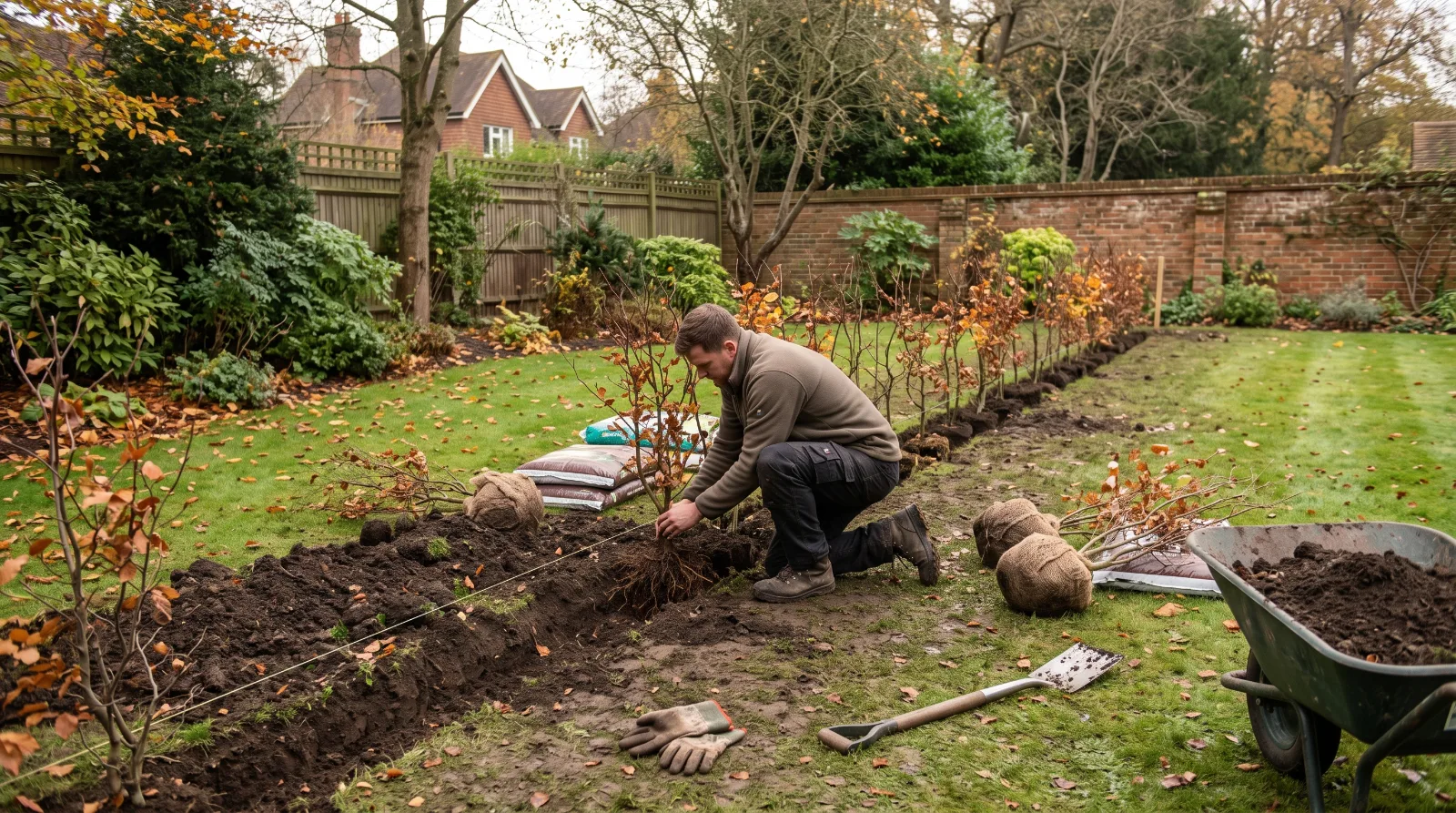
Clear the planting strip of grass and perennial weeds, then loosen the soil along the intended line of the hedge. For longer boundaries, a prepared trench can make it easier to position plants evenly.
Compacted ground should be improved before planting. If the soil is heavy clay, pay particular attention to drainage and avoid working it when saturated.
Organic matter can be incorporated where appropriate to improve soil structure, but avoid creating an excessively rich planting pocket that differs significantly from the surrounding ground.
If water regularly collects along the proposed hedge line, address the drainage problem or reconsider the planting position before proceeding.
3. Plan the Spacing
Spacing depends on the species, the size of the plants and how quickly you want the hedge to fill out.
Many small hedging plants are spaced roughly 30–60cm apart in a single row, but some varieties require different distances. Larger plants may need more room, while closely spaced plants can compete for water and nutrients if the arrangement is poorly planned.
For a substantial or particularly wide hedge, a staggered double row may be appropriate.
Always check the recommended spacing for the chosen variety before purchasing plants. Correct spacing helps achieve a more consistent hedge without unnecessary overcrowding.
How to Plant a New Hedge Correctly
Once the timing and preparation are right, the planting process itself is straightforward, although attention to detail is important.
Step 1: Keep the roots moist. If planting bare-root hedging, protect the roots from drying out before they go into the ground. If planting must be delayed, follow the supplier's instructions for temporary storage.
Step 2: Position each plant at the correct depth. Spread bare roots out naturally, avoiding tightly folded or twisted roots. Container-grown plants should generally be planted at the same depth they were growing previously, with the root flare correctly positioned.
Step 3: Backfill with suitable soil. Work soil around the roots and firm it sufficiently to remove large air pockets without compacting it excessively.
Step 4: Water after planting. Give the plants a thorough watering where required to settle soil around the roots. Do not leave the planting area saturated.
Step 5: Apply mulch. A suitable organic mulch around the base can help retain moisture and suppress weeds. Keep it away from direct contact with the stems.
Step 6: Check the line and spacing. Step back and inspect the hedge from different angles. Correcting uneven spacing or leaning plants at this stage is much easier than fixing the problem after growth begins.
How to Care for a Newly Planted Hedge
A hedge does not become established as soon as it goes into the ground. The first couple of years are particularly important, and careful aftercare can make the difference between a consistent boundary and one with gaps.
Watering
Check soil moisture regularly, particularly during dry weather and through the first growing season.
Do not assume that rainfall has watered the entire root zone. Conversely, avoid watering automatically when the soil is already wet, as waterlogged roots may struggle.
Weed Control
Keep the ground around the hedge clear of competing grass and weeds. Young plants can struggle if surrounding vegetation takes up much of the available moisture and nutrients.
Mulch can help reduce competition and limit moisture loss, but it should be maintained rather than allowed to accumulate against the stems.
Trimming
The appropriate initial trimming regime depends on the species and the type of hedge you want to create. Some plants benefit from formative pruning to encourage bushy growth, while others require a different approach.
Avoid cutting back a new hedge indiscriminately. Check the requirements of your chosen variety, and consider nesting birds before undertaking trimming work.
Patience
Many ordinary hedges take several years to reach their intended size and density. The exact timeframe depends on the species, starting size, growing conditions and maintenance.
Larger plants can provide more immediate screening but usually cost more and may require additional care while establishing. Smaller plants take longer to create a substantial boundary, but can offer a more economical solution for long runs.
Common Hedge-Planting Mistakes to Avoid
A few common mistakes can make establishment more difficult:
Planting in frozen or waterlogged soil: Wait until conditions are suitable rather than forcing the job through.
Letting bare roots dry out: Protect the roots before and during planting.
Choosing unsuitable spacing: Allow for the mature size and growth habit of the chosen species.
Ignoring drainage: Persistent waterlogging can damage roots and weaken the hedge.
Neglecting summer watering: Newly planted hedges may still need water even when the surrounding garden looks established.
Choosing a variety without considering maintenance: Fast-growing hedges can provide quick screening, but often require more frequent trimming.
Taking time to get these details right from the beginning can help produce a healthier, more even hedge with fewer problems later.
Plan Your New Hedge at the Right Time
For most UK gardens, autumn to early spring provides the main opportunity to plant a new hedge, with the precise timing depending on the plant variety and how it is supplied. Bare-root deciduous hedges are generally planted while dormant, while container-grown plants offer greater flexibility.
The most important factors are choosing a suitable variety, preparing the soil properly, planting at the correct depth and providing consistent aftercare. If the ground is frozen or waterlogged, waiting for better conditions is usually the best decision.
At Surrey Oak Landscapes, planting schemes can be designed to complement your garden's layout, improve privacy and create a more cohesive outdoor space. Whether you are looking for a formal evergreen boundary or a softer mixed hedge, thoughtful planning helps ensure the finished result suits your property.
Planning a new hedge or a wider garden transformation?
About the author