How to Choose the Right Hedge for Privacy in Surrey
Looking for more privacy in your Surrey garden? Discover suitable hedge plants, compare evergreen and deciduous options, and learn how to choose, plant and maintain a hedge that complements your outdoor space.
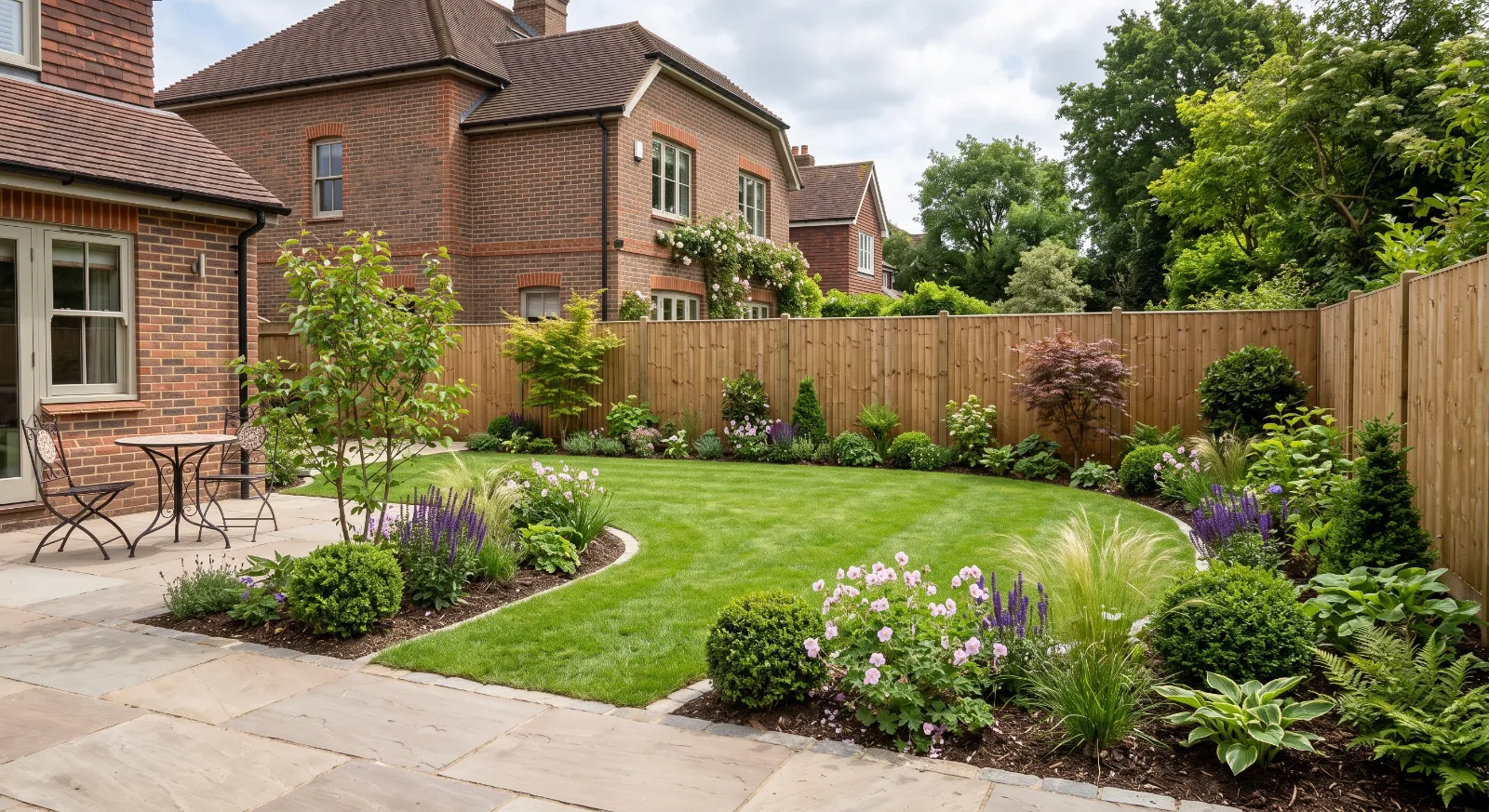
A garden should feel like a place where you can relax without constantly worrying about being overlooked. Whether you want more privacy from neighbouring windows, a greener boundary along your garden fence or a secluded space for outdoor dining, the right hedge can make a noticeable difference.
Unlike a plain fence, a hedge adds natural colour, texture and structure to the garden. Depending on the plants you choose, it can provide year-round screening, create shelter and complement the wider landscaping. However, not every hedge is suitable for every property. Some grow quickly and need frequent trimming, while others take longer to establish but are easier to keep within a defined shape.
If you are considering planting a hedge at your Surrey property, it is worth thinking beyond how the plants look when you buy them. Their eventual height, width, growth rate and maintenance requirements will all affect how well they work in your garden.
What to Consider Before Choosing a Privacy Hedge
Before deciding which plants to use, consider what you need the hedge to achieve and the conditions in which it will grow.
1. How much privacy do you need?
Start by identifying the area you want to screen. You might want to block views from a neighbouring ground-floor window, create a more secluded patio or reduce overlooking from properties further up a slope.
The required height will influence your choice of plant and how long the hedge takes to provide effective screening. A low hedge may be enough to define a seating area, while screening a garden boundary requires taller, denser growth.
Remember that a hedge cannot always solve overlooking from upper-floor windows. Where that is the main concern, a combination of hedging, strategically positioned trees and garden screening may be more suitable.
2. Do you want year-round privacy?
One of the most important decisions is whether your hedge needs to provide privacy throughout the year.
Evergreen hedges retain their foliage in winter, making them useful where consistent screening is the priority. Deciduous hedges lose their leaves in autumn, so the level of privacy changes with the seasons. Some, such as beech, may retain dry leaves for part of the winter, but this is not the same as reliable evergreen coverage.
If the garden is overlooked throughout the year, an evergreen or suitably semi-evergreen option is usually the better starting point.
3. How much space is available?
A young hedge can look surprisingly small compared with the mature plant it will become. Some varieties develop into broad, vigorous shrubs that need considerable room, while others are more suited to formal hedges that are clipped to a defined size.
Measure the available planting strip and consider the space needed for future growth and maintenance. A hedge planted directly beside a path, fence or patio may eventually become difficult to manage if its mature width is overlooked.
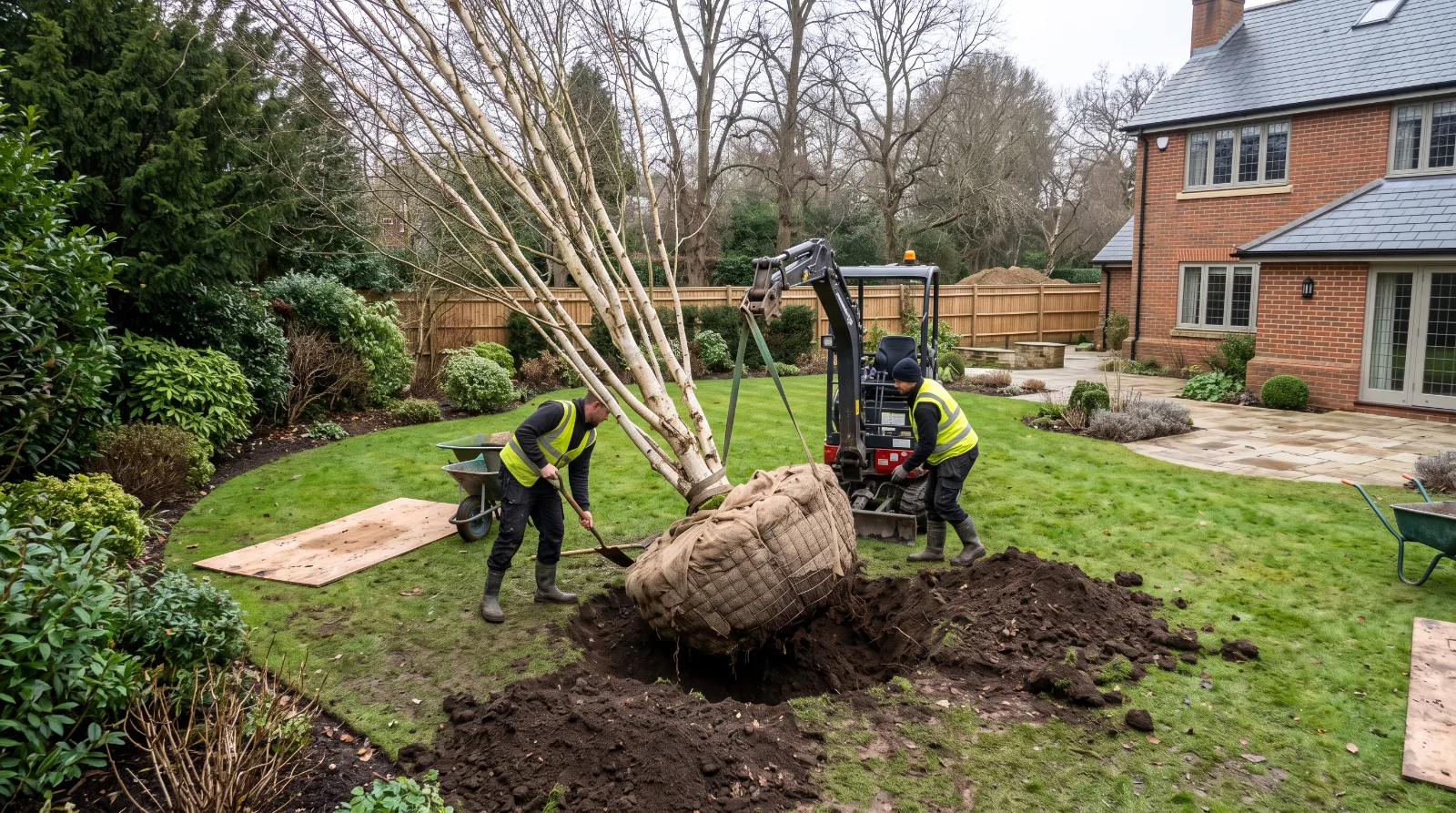
Where space is limited, choosing a more compact plant or considering pleached trees or a combined fence-and-planting solution may be more practical than planting a vigorous hedge.
4. What are your soil and light conditions?
The success of a hedge depends partly on whether the plants suit the garden's growing conditions. Consider how much direct sunlight the boundary receives, whether the ground stays wet after rain and whether the soil dries out quickly during warmer weather.
Soil and drainage conditions can vary considerably between properties in Surrey. A hedge that performs well in one garden may struggle in another, particularly if the ground is compacted or poorly drained.
Choosing a suitable species and preparing the planting area properly will give the hedge a better chance of establishing evenly along its length.
Best Hedge Plants for Privacy in Surrey
Several hedging plants can work well in Surrey gardens. The best choice depends on your desired appearance, the level of screening required and how much maintenance you are prepared to undertake.
1. Portuguese Laurel: A Smart Evergreen Screen
Portuguese laurel (Prunus lusitanica) is a strong option for homeowners who want a dense, evergreen hedge with a relatively refined appearance. It has smaller, darker green leaves than cherry laurel, with reddish stems that add subtle detail.
It suits formal gardens and contemporary landscapes, particularly where the hedge needs to create a consistent green boundary without looking overly coarse.
Portuguese laurel can be clipped into a neat shape, although it still needs sufficient room to develop and should not be treated as a maintenance-free screen. Growth and establishment depend on the planting conditions and the size of the plants supplied.
Best for: A smart, year-round privacy hedge with a formal finish.
2. Cherry Laurel: For Dense, Fast-Growing Privacy
Cherry laurel (Prunus laurocerasus) is popular because its large, glossy leaves create a substantial screen. It is a useful option where a relatively quick-growing evergreen boundary is required.
It can suit larger gardens where there is enough room to accommodate its vigorous growth. However, that same vigour can become a drawback in a narrow garden or beside a frequently used path.
Regular trimming helps maintain its shape and prevents the hedge from becoming excessively wide. Consider the mature size carefully before planting, particularly if you want a tidy boundary that will not dominate the garden.
Best for: Larger gardens where dense evergreen screening is the priority.
3. Yew: A Formal Hedge with a Timeless Appearance
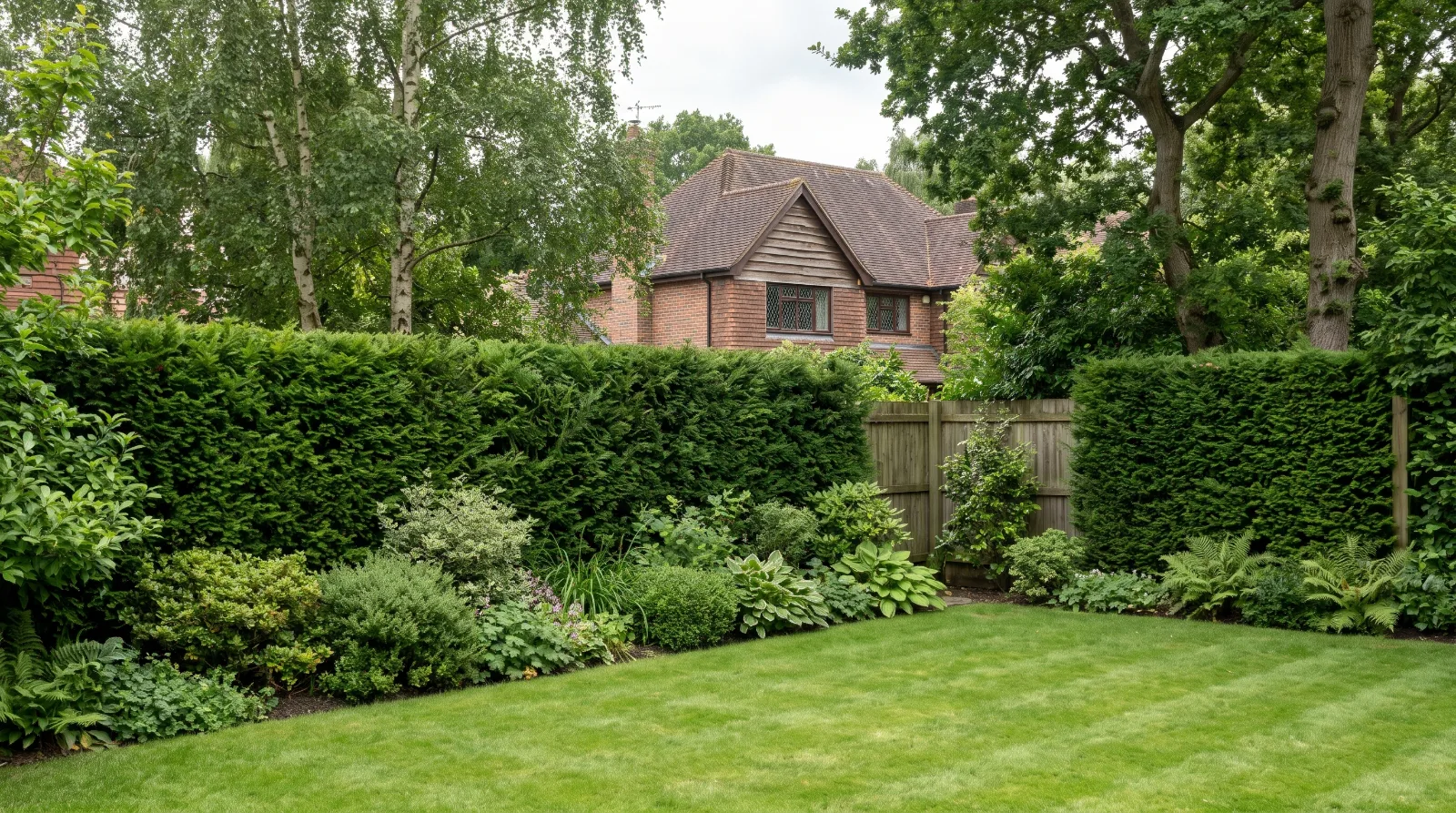
Yew (Taxus baccata) is an excellent choice for a traditional, carefully clipped hedge. Its fine, dark green foliage can create a dense and elegant boundary that complements mature gardens, formal layouts and high-quality landscaping.
Unlike very fast-growing conifers, yew generally grows more slowly, which can make its shape easier to manage once established. The trade-off is that it takes patience to develop a substantial screen.
Yew is toxic if eaten, so it may not be the most appropriate choice where children, pets or grazing animals could chew the plant.
Best for: Formal gardens where appearance and long-term structure matter more than rapid growth.
4. Privet: A Practical, Versatile Option
Privet (Ligustrum species) is a familiar hedging choice that can be clipped into a neat, defined boundary. It grows relatively readily and responds well to regular pruning.
However, many privet hedges are semi-evergreen rather than reliably evergreen. Their winter appearance can vary depending on the variety and conditions, so they may not provide the same consistent screening as laurel or yew.
Privet can work well where a traditional hedge is preferred and a little seasonal variation is acceptable.
Best for: Traditional garden boundaries where regular trimming is manageable.
5. Hornbeam and Beech: For a Traditional Green Boundary
Hornbeam (Carpinus betulus) and beech (Fagus sylvatica) both lend themselves to formal hedging. Their fresh green foliage creates a natural boundary during the growing season, followed by attractive seasonal colour in autumn.
They are deciduous, although beech and hornbeam hedges may retain some dry leaves during winter. The amount of retained foliage varies, so they should not be relied upon for complete winter privacy.
These hedges are particularly suited to gardens where a traditional appearance and seasonal interest are just as important as screening.
Best for: Traditional or naturalistic gardens where seasonal changes are welcome.
6. Mixed Native Hedging: A More Natural Look
A mixed hedge combines different shrubs and small trees to create a varied boundary. Depending on the species selected, it can offer flowers, berries, autumn colour and shelter for wildlife.
This approach often suits larger or more informal gardens, where a natural-looking boundary is preferred to a uniform clipped screen. However, a mixed native hedge will not necessarily provide dense privacy throughout winter, so the planting combination needs to reflect the main objective.
For a garden where both privacy and wildlife value matter, a carefully selected mix can be a good compromise.
Best for: Informal gardens where seasonal interest and wildlife value are important alongside screening.
Which Privacy Hedge Should You Choose?
The following comparison can help narrow down the options.
Hedge type | Privacy through winter | Growth and upkeep | Suitable garden style |
|---|---|---|---|
Portuguese laurel | Generally reliable | Requires regular shaping | Formal and contemporary |
Cherry laurel | Generally reliable | Vigorous; needs space and trimming | Larger, established gardens |
Yew | Generally reliable | Slow-growing; responds to clipping | Formal and traditional |
Privet | Variable | Responds well to regular pruning | Traditional |
Hornbeam or beech | Seasonal, not fully reliable | Needs periodic trimming | Traditional and naturalistic |
Mixed native hedge | Depends on species | Varies with the planting mix | Informal and wildlife-friendly |
No single option is best for every garden. If privacy is the main priority, start with the required screening height and whether it needs to be maintained all year. Then narrow down the choices according to the available space, soil conditions and your preferred garden style.
How Tall Should a Privacy Hedge Be?
The right hedge height depends on what you are trying to screen and how the garden is laid out.
For example, a hedge beside a ground-level patio may need a different height from one intended to screen an exposed boundary. The level of the neighbouring garden, the position of windows and the slope of the land can all affect how much screening is needed.
It is also important to consider how the hedge will look when fully grown. A very tall hedge can overshadow a smaller garden, reduce light to planting beds and make an outdoor space feel enclosed.
Aim for a height that offers useful privacy without creating unnecessary maintenance or dominating the layout. Before establishing a very tall boundary hedge, check any relevant local restrictions and consider the effect on neighbouring properties.
How to Plant a Hedge for Even, Reliable Coverage
Choosing suitable plants is only part of creating an effective privacy hedge. Good preparation and aftercare are essential if the hedge is to establish evenly.
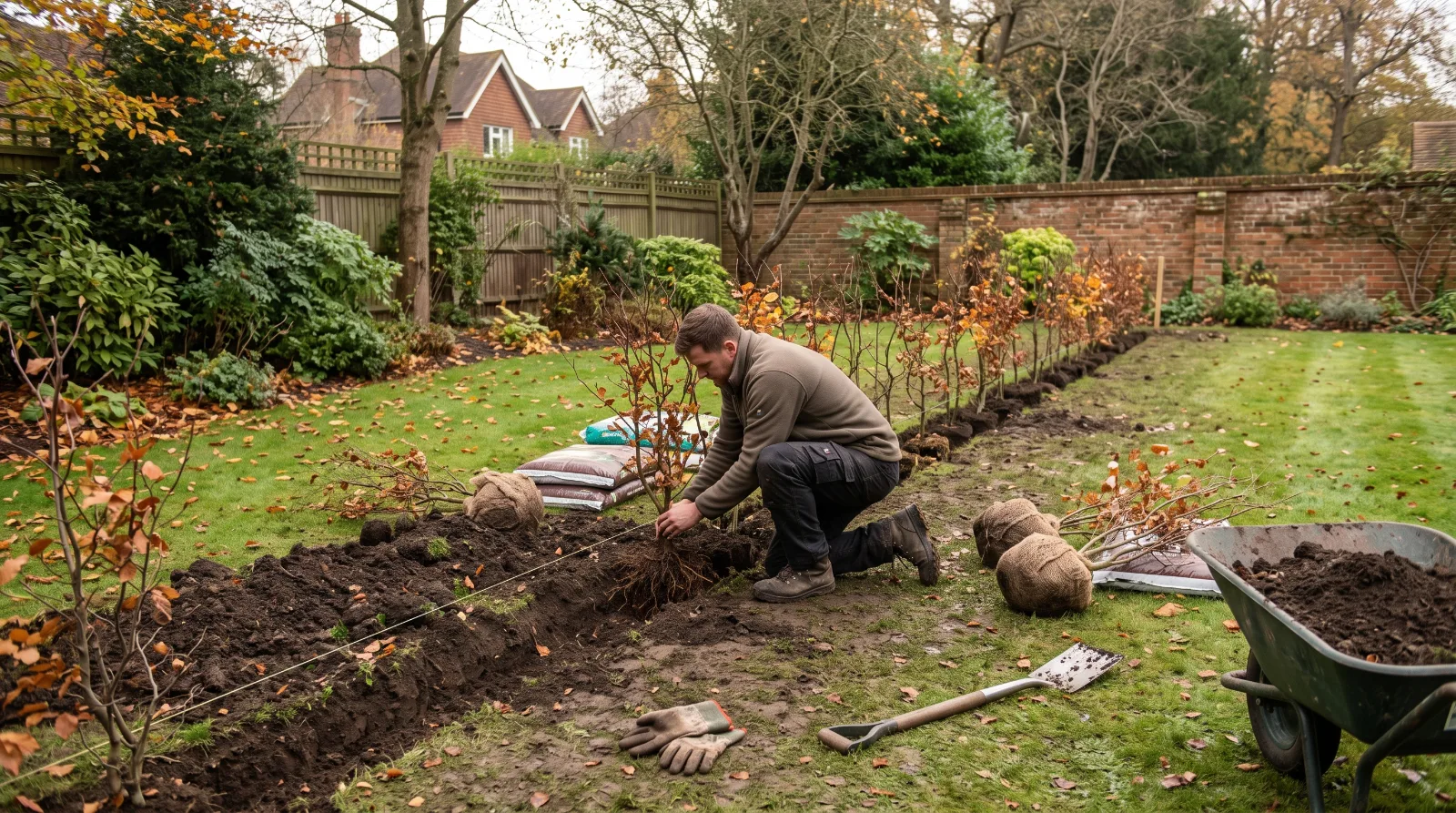
Prepare the planting area
Clear competing weeds and prepare the soil along the proposed hedge line. Check drainage before planting, particularly if water tends to collect near the boundary. Avoid planting into frozen or waterlogged ground.
It is also worth checking for underground services and considering access for future trimming before finalising the position.
Get the spacing right
Hedge plants need to be spaced according to their species, size and intended mature form. Planting too far apart can leave gaps for longer than expected, while overcrowding can create unnecessary competition.
Follow suitable spacing guidance for the particular plants being supplied rather than assuming every hedge should be planted at the same distance.
Water regularly while the hedge establishes
Newly planted hedges need consistent watering, especially during dry spells. The first couple of years can be important for establishment, although the precise requirements depend on the plant, soil and weather.
Mulch can help conserve soil moisture and suppress weeds, provided it is kept away from direct contact with the plant stems. Check the hedge regularly for uneven growth or plants that are struggling.
Maintain a suitable shape
Regular trimming helps keep many hedges dense and manageable. For a clipped hedge, a slightly wider base than top can help light reach the lower foliage, reducing the risk of a thin or bare appearance near the ground.
The timing and frequency of trimming depend on the species. Consider nesting birds before cutting and follow suitable seasonal practices for the hedge you have chosen.
Common Mistakes to Avoid When Choosing a Privacy Hedge
A few simple mistakes can make a hedge more difficult and expensive to manage in the long run.
Choosing only by growth speed: A fast-growing hedge may provide coverage sooner but can quickly become too large for the available space.
Ignoring winter screening: A deciduous hedge may look dense in summer yet provide much less privacy once its leaves fall.
Planting too close to boundaries or paths: Insufficient space can make maintenance difficult as the hedge matures.
Neglecting watering after planting: Establishing plants can struggle during dry periods, leaving gaps along the hedge line.
Expecting instant privacy from small plants: Smaller hedging plants generally need time to grow into a full screen.
Forgetting ongoing maintenance: Every hedge needs some care, and vigorous varieties may require more frequent trimming.
If you need immediate screening, larger established plants may be an option, although they usually cost more and still require proper aftercare.
When Is the Best Time to Plant a Privacy Hedge?
The best planting window depends on the type of hedge and whether the plants are supplied bare-root or in containers.
Many deciduous hedging plants are planted during the dormant season, generally from autumn into late winter, provided the ground is workable. Evergreen hedges can often be planted in early autumn or spring, when conditions support root establishment.
Avoid planting into frozen or waterlogged soil, and take extra care with watering if conditions become dry. The availability of particular species and plant sizes can also influence the timing of a project.
Planning ahead allows time to choose the right hedge, prepare the boundary and establish suitable planting conditions before the plants arrive.
Create a More Private Garden with Surrey Oak Landscapes
The right hedge can do more than screen neighbouring properties. It can frame the garden, soften boundaries and help outdoor spaces feel more secluded and connected to the surrounding planting.
At Surrey Oak Landscapes, we provide planting and landscaping services to help homeowners create outdoor spaces suited to their property and lifestyle. Whether you need a new privacy hedge, a more considered boundary planting scheme or a complete garden transformation, choosing the right plants and layout is an important first step.
Thinking about adding privacy to your garden? Contact Surrey Oak Landscapes for a free, no-obligation quote.
About the author