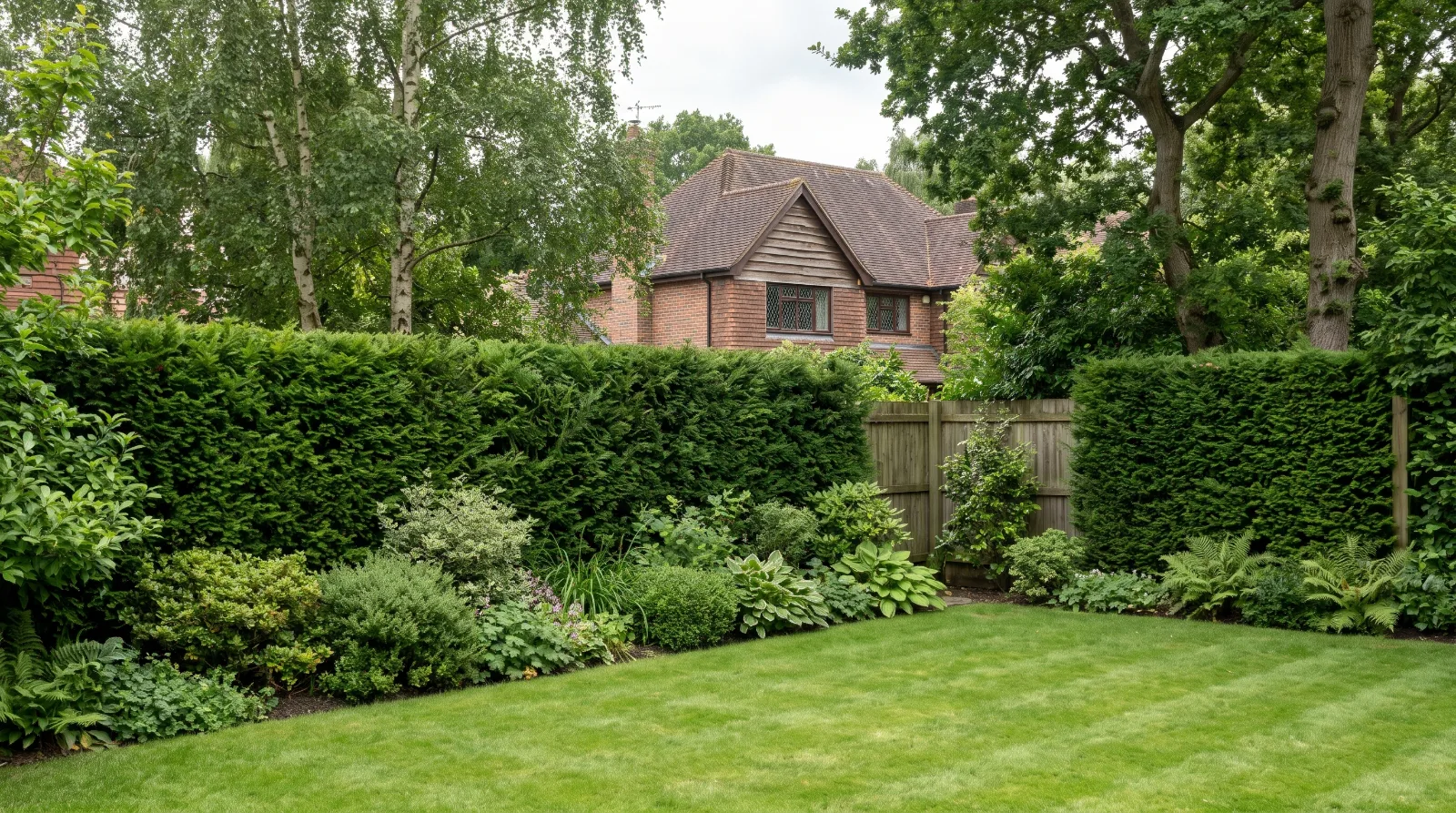
Specimen Trees & Planting Schemes: A Guide for UK Gardens
Discover how specimen trees and carefully planned planting schemes can bring structure, seasonal interest and character to UK gardens.
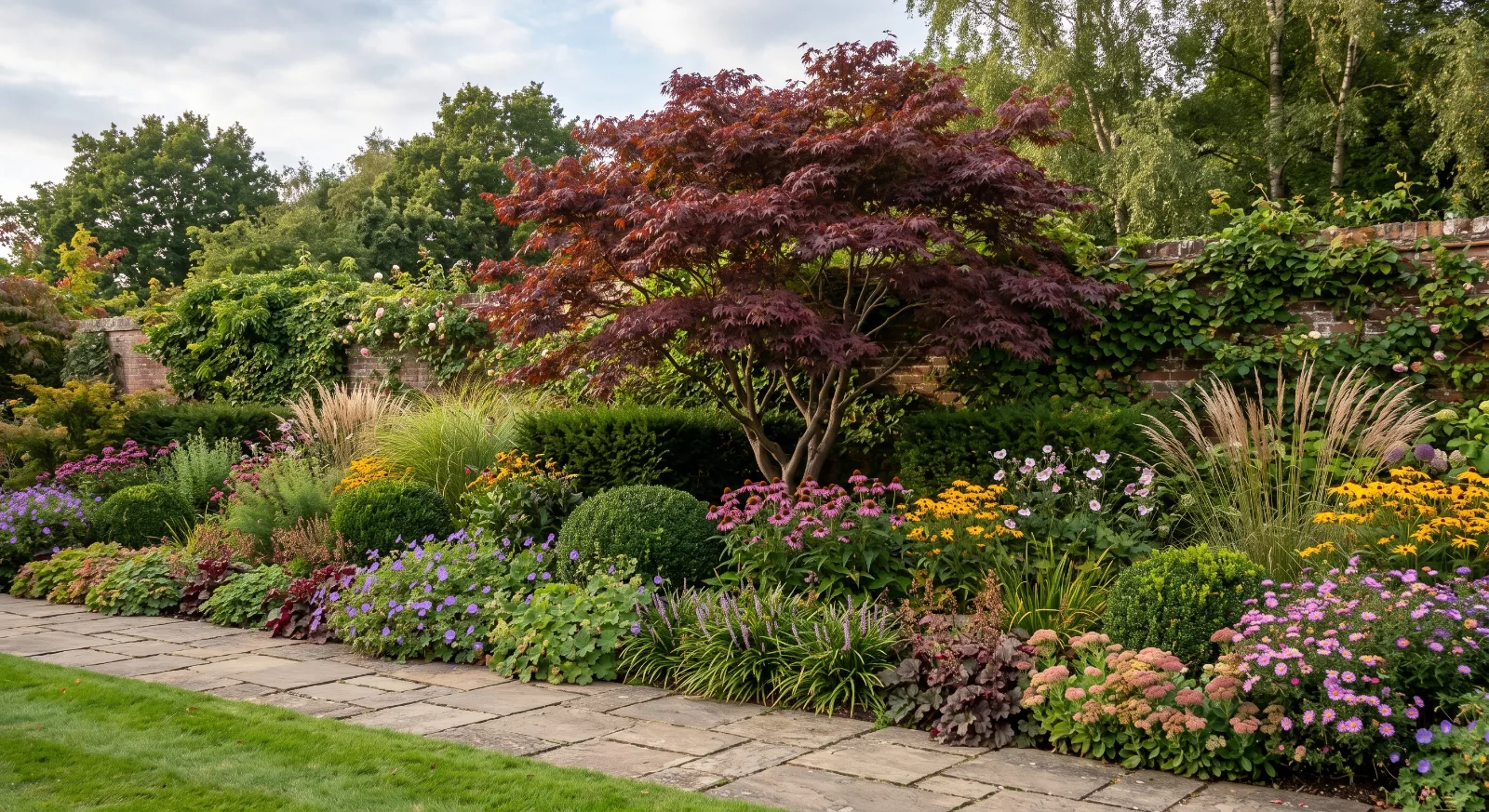
A well-designed garden is not simply a collection of attractive plants. The strongest planting schemes are considered as a whole, with trees, shrubs, perennials and grasses working together to create structure, seasonal interest and a sense of character.
Specimen trees can provide the larger-scale framework, while carefully selected planting fills out the garden around them. Done well, the result can feel established, cohesive and carefully planned from every viewpoint.
For UK gardens, choosing the right plants for the conditions, allowing for their eventual size and thinking about how the garden will develop over time are all essential parts of the process.
What Is a Specimen Tree?
A specimen tree is generally chosen to make a particular visual impact within a landscape rather than simply being one of many trees in a planting group.
It might provide a focal point from a patio, frame a view, mark an entrance or bring height and presence to an otherwise open area.
The choice does not have to be based purely on size. A tree can be selected for its flowering, foliage, autumn colour, fruit, bark, shape or overall form. Some trees offer several seasons of interest, making them especially useful when there is space for only one principal feature tree.
This is where careful selection becomes important. A tree that looks relatively small when planted can eventually become a substantial part of the garden, so its mature height and spread should always be considered.
Choosing Specimen Trees for a UK Garden
There is no single specimen tree that works for every garden.
The right choice depends on the character of the property, available space, soil conditions, aspect and the effect you want to create.
Consider the mature size
One of the most important considerations is how large the tree will eventually become.
Think beyond the size of the tree when it arrives and consider its ultimate height and canopy spread. You should also consider surrounding buildings, boundaries, views, overhead services and the amount of shade the mature tree may create.
Consider seasonal interest
A specimen tree can contribute something different at different times of year.
Spring blossom, summer foliage, autumn colour, fruit, attractive bark and winter form can all be part of the selection process. Choosing a tree with interest across more than one season can help it remain a feature rather than becoming visually important for only a short period.
Consider the conditions
The right tree also needs the right growing conditions.
Soil type, moisture, exposure and available light can all affect establishment and long-term performance. Looking at what is already growing successfully nearby can also provide useful clues about what may suit the local conditions.
Where Should a Specimen Tree Be Planted?
Position can be just as important as species selection.
A tree might be positioned to draw the eye towards a particular area, provide a focal point at the end of a view, frame a lawn or soften the relationship between hard landscaping and the wider garden.
It is worth considering the tree from different positions, including from inside the house, from seating areas and when approaching the garden.
Future growth matters here too. Roots and branches can extend considerably beyond the footprint of a newly planted tree, so its relationship with buildings, boundaries, underground services and other features should be considered from the beginning.
Creating Structure With Planting
A beautiful planting scheme needs structure as well as colour.
Large shrubs, evergreen plants and trees can provide the framework of a border, with smaller plants layered around them. The RHS recommends beginning with evergreen and larger structural plants before adding groups of perennials and smaller shrubs.
This creates a hierarchy within the planting.
Instead of every plant competing for attention, each layer has a role.
The larger elements establish height and shape. Medium planting creates volume and transition, while lower plants help connect the border to paths, lawns and other garden surfaces.
Why Layered Planting Works
Layered planting can make a garden feel deeper and more natural.
Rather than relying on a single line of shrubs, a considered scheme might combine:
Upper layer: specimen trees and larger structural plants
Middle layer: shrubs, grasses and taller perennials
Lower layer: groundcover, bulbs and lower-growing perennials
This approach introduces different heights, foliage forms and textures while helping the planting feel connected rather than fragmented.
It also creates opportunities for plants to take visual prominence at different times of the year.
Planning for Year-Round Interest
A garden does not need to be full of flowers in every season to remain interesting.
Evergreen foliage can provide dependable structure through winter, while deciduous trees and shrubs can bring blossom in spring, fuller foliage in summer and changing colour in autumn. Interesting bark, seedheads and plant form can add further winter detail.
The key is to think about the garden as a sequence of seasonal changes rather than designing everything around one particular moment.
For example, a garden might use spring blossom as an early feature, summer foliage and flowers to provide fullness, autumn colour to create a later focal point and evergreen structure to carry the scheme through winter.
Mixing Trees, Shrubs, Perennials and Grasses
A successful planting scheme is usually built around contrast.
Different leaf shapes, textures, heights and forms can make planting more interesting even when the colour palette is relatively restrained. Combining different foliage sizes, forms and textures can create attractive planting combinations, while evergreen plants can provide year-round structure and height.
This allows a planting scheme to feel sophisticated without depending entirely on flowers.
Fine grasses next to broad-leaved plants, upright forms beside softer shapes and evergreen foliage alongside deciduous planting can all create useful contrast.
The Importance of the Right Plant in the Right Place
One of the simplest principles in planting design is also one of the most important: choose plants that suit the conditions in which they will grow.
A plant that naturally suits the available light, soil and moisture levels is more likely to establish well and remain healthy than one that is simply chosen because it looks attractive.
Choosing the right plant for the right place can create stronger, longer-lived planting combinations while reducing the need for additional inputs once established.
This becomes particularly important when designing large borders or installing specimen trees, because replacing an unsuitable mature plant later can be considerably more disruptive than making the right decision at the beginning.
Soil Preparation Matters
The planting design may be beautiful on paper, but establishment depends on what happens below ground as well.
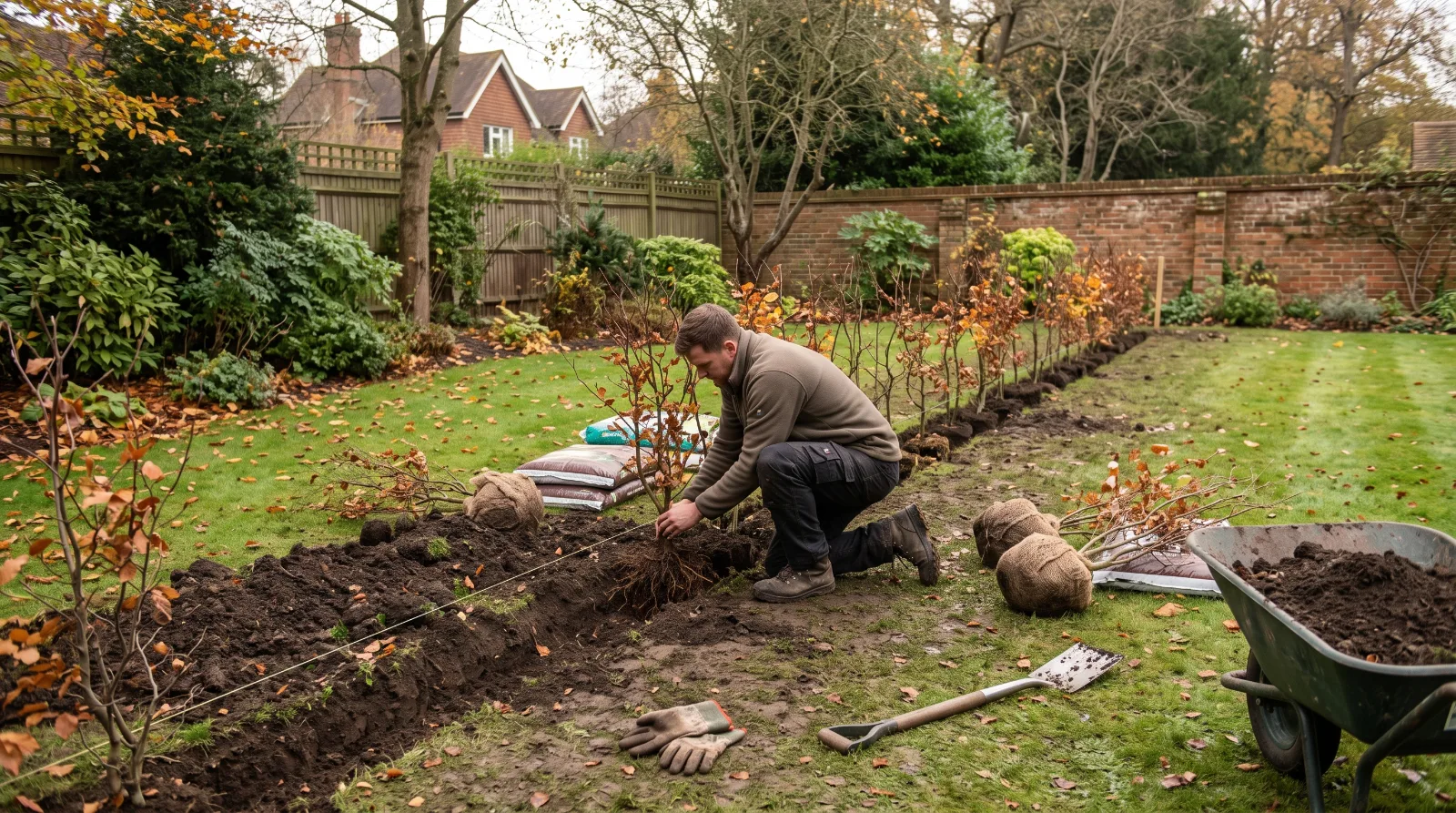
Before planting, the soil should be assessed and prepared appropriately for the plants being introduced. Soil type is an important consideration when selecting plants, and compacted or poorly drained ground can create problems for establishment.
Waterlogged ground is particularly important to consider. The RHS advises avoiding planting into waterlogged or frozen soil, while poor drainage may require the planting approach to be adapted to the site conditions.
Planting Mature Specimen Trees
Larger specimen trees can create a strong sense of establishment almost immediately, which is one reason they are often used when creating a finished landscape.
However, larger trees also require careful installation and aftercare.
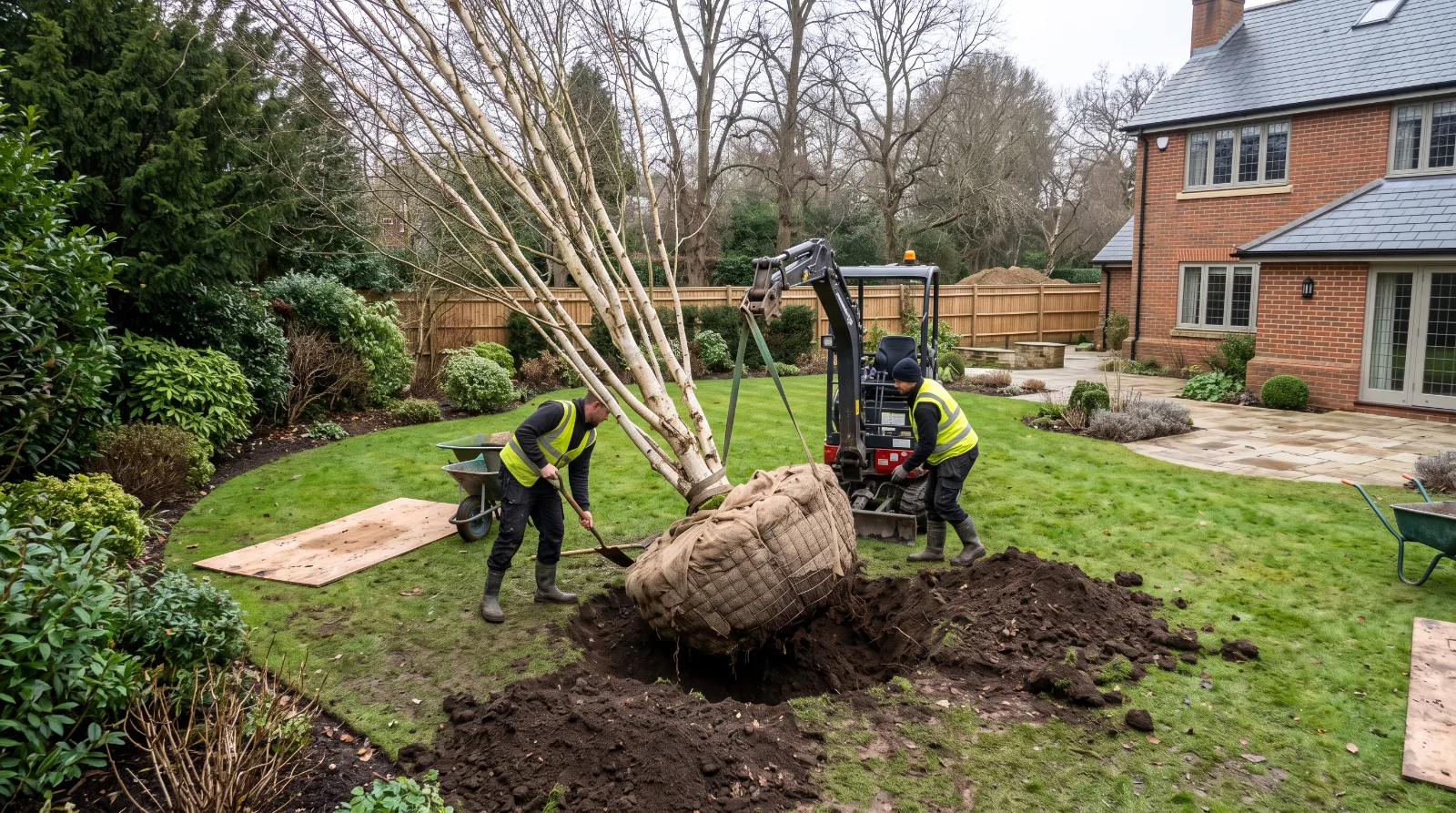
The RHS notes that larger specimen trees can be more prone to establishment problems because their root systems may be relatively small compared with the amount of top growth. They can therefore require particular attention to watering and aftercare during their establishment period.
For larger specimen trees, careful handling, appropriate planting conditions and a considered aftercare plan are all part of achieving a successful result.
Designing Planting Around the Whole Garden
Planting should not be treated as an afterthought once the hard landscaping has been completed.
It can be used to soften paving, frame steps, define garden rooms, create screening and connect different parts of the landscape.
A specimen tree can also help establish the focal point of a space, while surrounding planting provides the transition between the tree and nearby patios, lawns, paths or boundaries.
This is particularly effective when planting and hard landscaping have been designed together from the outset.
Planting Schemes for Surrey and the South East
In Surrey and across the South East, garden conditions can vary considerably from one property to another, which is why a planting scheme should be designed around the individual site rather than based on a fixed list of plants.
Sun exposure, soil characteristics, drainage, shelter, available space and the surrounding landscape all influence what will work successfully.
A considered approach allows the planting to feel appropriate to both the property and its setting.
Planning for the Mature Garden
One of the most important differences between planting a garden and decorating a garden is that plants are not static.
A newly installed scheme can look relatively open at first, but the plants will develop, spread and interact with one another.
Good planting design therefore considers what the garden should look like not only immediately after installation but as it matures.
Spacing, eventual height, spread and maintenance requirements all need to be considered. The RHS specifically recommends taking the ultimate size and spread of plants into account when planning borders.
The objective is a garden that becomes more established and characterful with time, rather than one that quickly becomes overcrowded.
Creating a Planting Scheme With Character
The best planting schemes usually have a clear sense of composition.
A specimen tree may establish the focal point. Structural planting creates the framework. Evergreen plants maintain presence through winter. Perennials and grasses introduce movement and seasonal change, while lower planting connects everything to the surrounding landscape.
The result should feel intentional without appearing overly rigid.
It should work with the architecture of the property, complement the way the garden is used and continue to look considered as the plants mature.
Planning a New Planting Scheme?
Whether you are creating a new garden, refreshing existing borders or looking to introduce mature specimen trees, Surrey Oak Landscapes can help develop a planting scheme around the character and long-term potential of your outdoor space.
We provide bespoke planting design, specimen tree sourcing and installation, feature planting, structural planting and seasonal planting, with careful consideration given to how the garden will develop over time.
Discuss your project with Surrey Oak Landscapes and request a free, no-obligation quote.
About the author