Why Are My Patio Slabs Loose?
Loose patio slabs can result from poor bedding, ground movement or drainage problems. Learn how to identify the cause and choose the right repair.
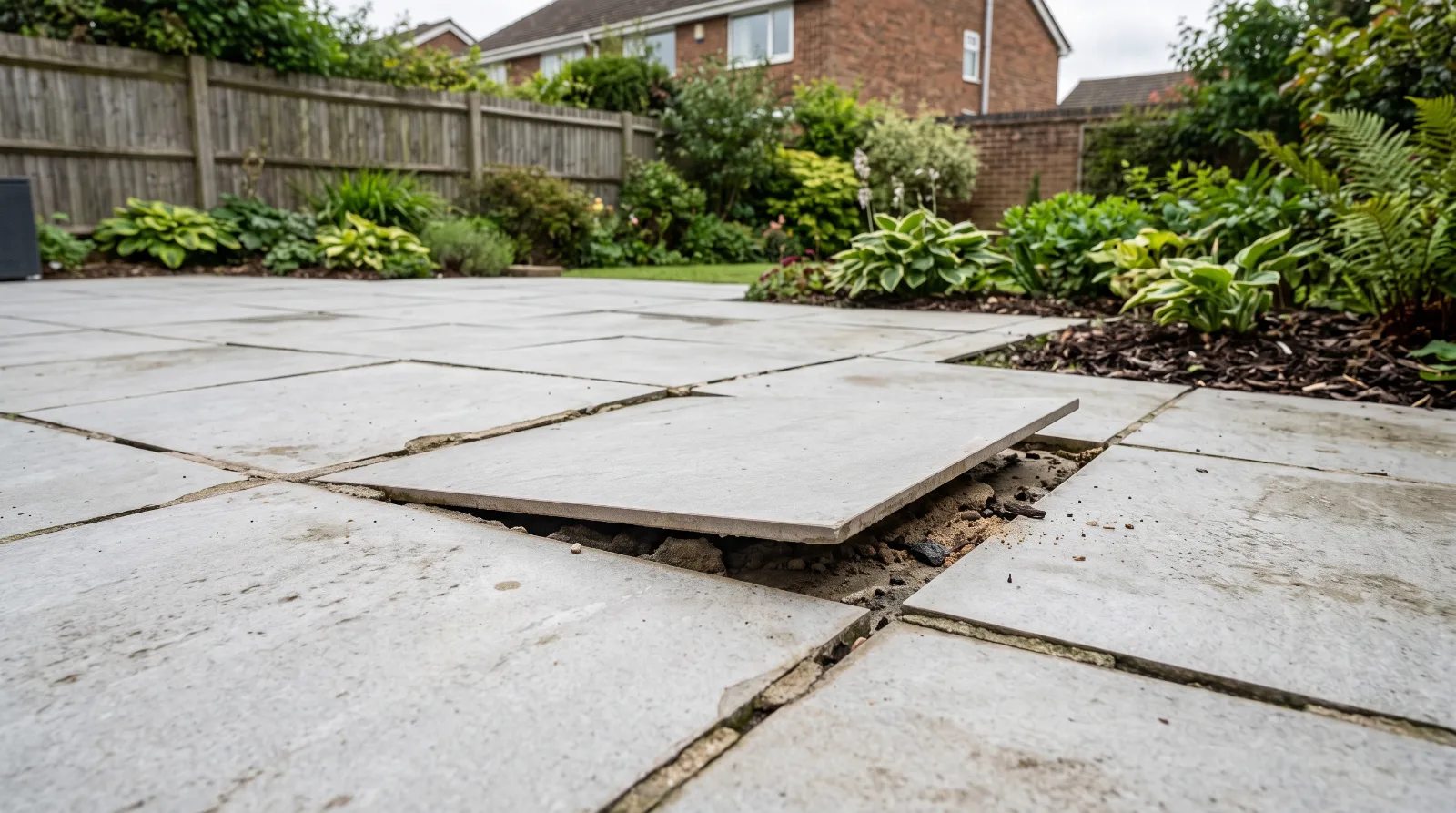
Loose patio slabs can make an otherwise attractive garden feel uneven, unfinished and potentially unsafe. You might notice a slab rocking when you walk across it, gaps appearing between paving stones or sections of the patio beginning to sink.
These problems often develop gradually as the materials beneath the paving deteriorate or the ground moves. While a single loose slab may only need a local repair, movement across a larger area can indicate a more serious problem with the patio's foundations or drainage.
Understanding the cause is the first step towards finding a lasting solution. Here is why patio slabs become loose, how to identify the underlying issue and what can be done to repair them.
What Causes Patio Slabs to Become Loose?
Several factors can cause patio paving to move over time. In many cases, the problem lies beneath the slabs rather than with the paving itself.
1. Poor Bedding or Installation
One of the most common causes of loose patio slabs is inadequate support underneath. Paving laid on an uneven mortar bed or supported only by isolated dabs of mortar can develop unsupported areas.
As the patio is used, these areas may begin to move under pressure. A slab can start rocking, the joints may crack, and the problem can gradually worsen.
A properly prepared base and a suitable, consistent bedding layer help distribute weight evenly and keep the paving stable.
2. A Weak or Poorly Compacted Sub-Base
The sub-base is the foundation beneath the bedding layer. If it has not been prepared or compacted correctly, the ground may settle after the patio has been installed.
This can cause slabs to sink, tilt or separate from neighbouring paving. The risk is particularly relevant where the ground was disturbed during construction or where the existing soil is soft.
If several slabs are moving together, the sub-base may need attention rather than simply resetting individual paving stones.
3. Water and Poor Drainage
Water can contribute to loose patio slabs in several ways. If rainwater collects around the paving or enters through damaged joints, it may weaken the bedding or affect the ground beneath it.
Repeated wetting and drying can worsen existing weaknesses. During cold weather, trapped water may also freeze and expand, placing additional pressure on already unstable paving.
Patios should have suitable falls to prevent water from pooling. If puddles repeatedly appear in the same places, it is worth checking both the surface levels and the drainage arrangements.
4. Movement in the Ground or Tree Roots
Ground movement can affect even an established patio. Changes in soil moisture, settlement in previously disturbed ground and root growth from nearby trees or shrubs can all contribute to uneven paving.
Roots may lift individual slabs, while settlement can cause sections to drop. The pattern of movement can offer useful clues about the cause.
Where tree roots are suspected, the situation should be assessed carefully before any roots are disturbed, particularly if a mature tree is nearby.
5. Damaged Joints and Pointing
The material between patio slabs helps keep the joints filled and reduces the amount of water and debris entering the gaps.
When pointing becomes cracked, loose or missing, the edges of the paving can become more vulnerable to movement and water ingress. Weeds may also begin growing between the slabs.
However, damaged pointing is not always the original cause. If the slabs themselves are moving, the joints may simply be showing the effects of a deeper bedding or foundation problem.
How Can You Tell What Is Wrong With Your Patio?
Look at the pattern of damage rather than focusing on just one slab. The following signs can help indicate what needs investigating.
What you notice | Possible cause |
|---|---|
One slab rocks underfoot | Failed bedding or a localised void |
Several slabs have sunk | Sub-base settlement or unstable ground |
Slabs are lifting at the edges | Uneven support, ground movement or root growth |
Pointing repeatedly cracks | Movement beneath the paving |
Water collects in particular areas | Poor falls or inadequate drainage |
Slabs become loose again after repairs | The underlying cause may not have been corrected |
These signs are useful starting points, but they cannot confirm the exact cause on their own. A closer inspection may be needed before deciding on the repair.
How Do You Fix Loose Patio Slabs?
The right repair depends on how many slabs are affected and whether the problem is limited to the bedding or extends into the sub-base.
Repairing One or Two Loose Slabs
If the surrounding patio is stable, an isolated loose slab can often be lifted and reset.
The usual process involves removing the jointing material, carefully lifting the slab, clearing away failed bedding and checking that the base beneath is firm. The slab can then be relaid on a suitable, properly prepared bedding layer, levelled to match the surrounding paving and re-jointed once the repair has cured.
Porcelain paving may also require a suitable bonding primer as part of the installation system.
Simply pushing extra mortar into the edges or filling the joints will not reliably support a slab that is rocking underneath.
Repairing a Larger Section of Patio
If multiple slabs have sunk or become uneven, the affected section may need to be lifted so the sub-base can be inspected and corrected.
This may involve removing unstable material, rebuilding and compacting the base, checking the drainage and relaying the paving at the correct levels.
Although this is more involved than replacing an individual slab, addressing the underlying problem can help prevent repeated repairs.
When Is It Better to Replace the Patio?
If the paving is extensively damaged, the foundation has failed across a large area or repeated repairs have not lasted, replacing part or all of the patio may be the more practical option.
The decision depends on the condition of the existing slabs, the extent of the movement and whether the original construction can be repaired effectively.
A professional assessment can help establish whether localised repairs are sufficient or whether more extensive work would provide better long-term value.
How Can You Prevent Patio Slabs From Becoming Loose?
Good installation and regular maintenance can reduce the likelihood of movement developing over time.
Prepare the foundations properly: Use a suitable sub-base for the ground conditions and intended use of the patio.
Ensure consistent bedding: Slabs need appropriate support across their underside rather than relying on isolated mortar spots.
Plan drainage carefully: Provide suitable falls so rainwater does not continually collect on or beneath the paving.
Maintain the joints: Repair deteriorating pointing and investigate recurring cracks rather than repeatedly filling them.
Address movement early: A loose slab is easier to assess before neighbouring slabs and joints begin to deteriorate.
These measures are particularly important when installing a new patio, as problems caused by poor preparation can be difficult to resolve without lifting the paving later.
Get Your Patio Back in Good Condition
Loose patio slabs are more than a cosmetic issue. They can create trip hazards, allow water to collect and indicate problems with the bedding, foundations or drainage beneath the surface.
If only one or two slabs are affected, a local repair may be enough. Where larger sections are sinking, lifting or repeatedly coming loose, it is important to identify and correct the underlying cause before carrying out further work.
At Surrey Oak Landscapes, we provide patio installation and hard landscaping services across Surrey and the surrounding areas. Whether you are planning a new patio or considering improvements to an existing outdoor space, the right preparation and attention to detail can make a significant difference to the finished result.
About the author