How Much Does Decking Cost in Surrey?
Find out how much decking costs in Surrey, with price estimates for timber and composite decking and advice on installation, groundwork and design.
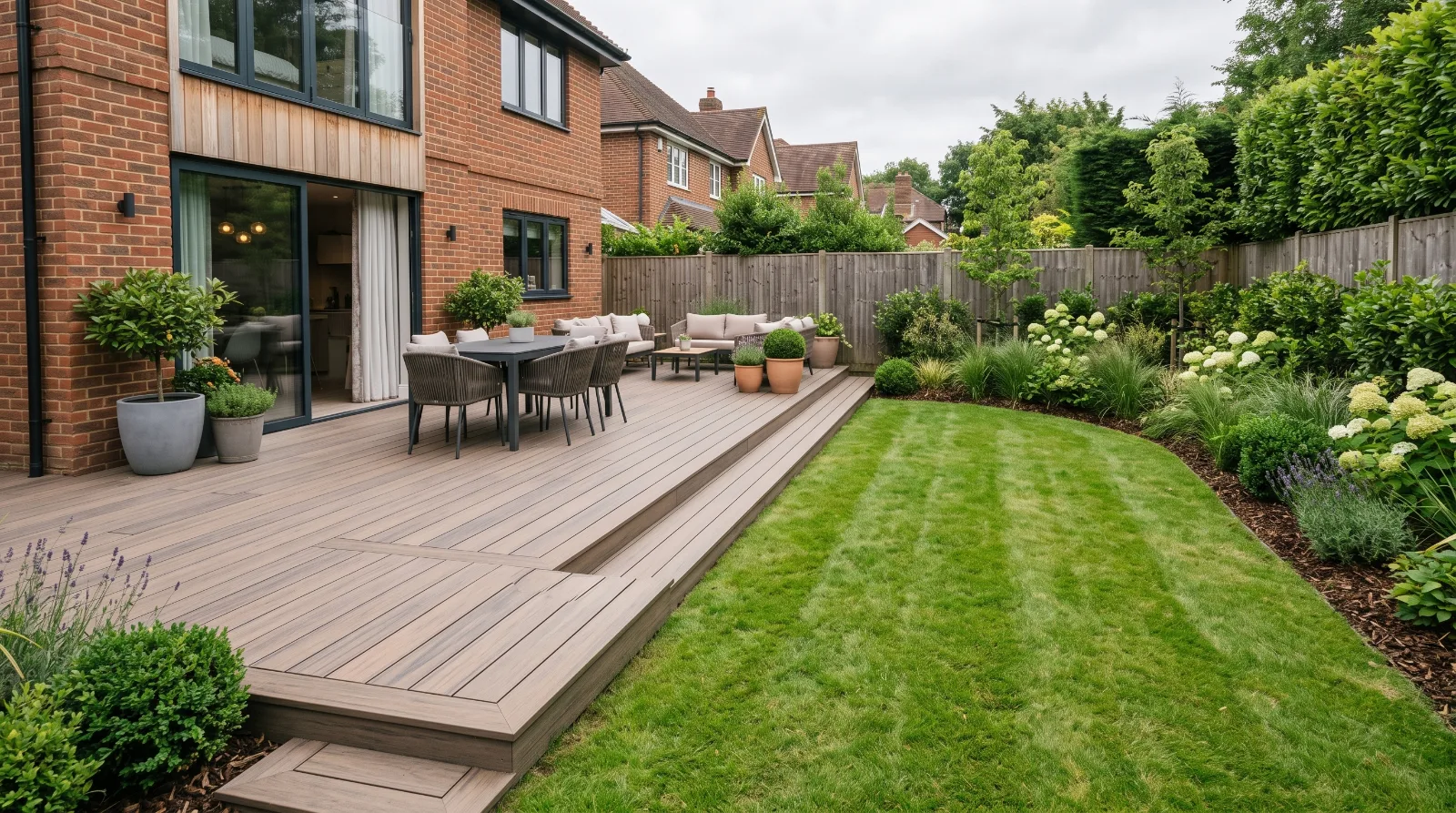
Garden decking can transform an unused part of your garden into a practical space for outdoor dining, relaxing and entertaining. Whether you prefer the natural appearance of timber or the lower-maintenance finish of composite decking, understanding the likely costs can help you plan your project.
The price of decking in Surrey depends on several factors, including the size of the area, the materials you choose, ground preparation and the complexity of the design. A simple platform on level ground will generally cost less than a raised deck with steps, balustrades and integrated lighting.
How Much Does Decking Cost in Surrey?
As a rough guide, professionally installed garden decking in Surrey may cost around £90 to £250 per square metre, depending on the material, specification and installation requirements.
The table below provides indicative prices for budgeting purposes only. These are not fixed prices or a quotation from Surrey Oak Landscapes. Actual costs can vary considerably depending on the garden, the condition of the ground, access to the site and the work required.
Type of decking | Estimated cost per m² | Estimated cost for 15m² |
|---|---|---|
Treated softwood | £90–£130 | £1,350–£1,950 |
Hardwood | £140–£180 | £2,100–£2,700 |
Mid-range composite | £150–£200 | £2,250–£3,000 |
Premium composite | £200–£250 | £3,000–£3,750 |
These figures are approximate examples of potential supply and installation costs for relatively straightforward projects. They should not be treated as a final price for your garden. Ground preparation, excavation, waste removal, steps, balustrades, drainage and other additional work can increase the total. VAT treatment may also vary.
For a more accurate price, the materials, dimensions and site requirements need to be assessed individually. A tailored quotation will establish what is included and the likely total cost of the project.
1. Choosing the Right Decking Material
Your choice of decking material has a significant influence on the initial cost and the maintenance required over time.
Treated Softwood Decking
Pressure-treated softwood is usually the most affordable option. It offers a traditional timber appearance and can suit a wide range of garden styles, from simple seating platforms to larger entertaining areas.
However, timber needs appropriate care to help protect it from moisture, weathering and deterioration. Periodic cleaning, inspections and suitable protective treatments should be factored into the long-term cost.
Softwood is worth considering if you want the appearance of natural timber while keeping the initial project budget relatively modest.
Hardwood Decking
Hardwood decking offers a distinctive natural grain and a more premium finish. Depending on the species and specification, it can provide excellent durability and develop an attractive appearance as it weathers.
It generally costs more than treated softwood, both because of the material itself and the requirements of installation. The choice of hardwood, fixing method and finish will all affect the price.
Composite Decking
Composite decking combines wood fibres and polymers to create boards that require less routine maintenance than traditional timber. It is available in a variety of colours, textures and finishes, making it suitable for both contemporary and traditional gardens.
The initial cost is typically higher than treated softwood, particularly for premium boards. However, composite decking generally does not need the same regular staining or oiling as timber.
When comparing options, consider the quality of the boards, the supporting frame and the manufacturer's maintenance recommendations rather than choosing on purchase price alone.
2. What Factors Affect the Cost of Decking?
Material choice is only one part of the overall cost. The condition of your garden and the design you have in mind can make a substantial difference to the final quote.
Size and Shape
Larger decking areas require more boards, supporting materials and installation time. However, the cost per square metre may decrease on a larger project because certain preparation and setup costs are spread across a greater area.
A simple rectangular deck will also generally be more economical to build than one with multiple sections, curved edges or intricate board patterns.
Ground Preparation
The ground beneath the decking needs to be suitable for the proposed supporting structure. Depending on the site, preparation may involve clearing vegetation, removing old materials, levelling the ground or improving drainage.
If the area contains an existing deck that needs to be dismantled and removed, disposal costs should also be included in the budget.
Raised Decking and Sloping Gardens
A raised deck can create a level outdoor living area where the ground is uneven or slopes away from the house. However, it usually requires a more substantial supporting frame and additional structural supports.
Steps, handrails and balustrades may also be necessary, depending on the design and height. These requirements increase both material costs and installation time compared with a straightforward, low-level deck.
Access to the Garden
Restricted access can make a project more expensive. If materials have to be carried through the house, down narrow side passages or through difficult garden access points, additional labour may be needed.
The amount of available working space and the ease of removing excavated soil or old materials can also affect the quotation.
3. Additional Features That Can Increase the Budget
Decking often forms part of a wider garden design. Additional features can make the finished space more useful, but they should be considered when establishing the budget.
Feature | How it affects the cost |
|---|---|
Steps | Additional materials and labour to connect different levels |
Balustrades and handrails | Extra construction around raised edges where required |
Built-in seating | Bespoke carpentry and additional materials |
Integrated lighting | Lighting fittings, installation and electrical work where needed |
Planters and planting | Additional containers, soil, plants and landscaping |
Removal of existing decking | Dismantling, labour and disposal costs |
Not every project needs these additions. A well-planned deck with a straightforward layout can create an attractive and functional outdoor space without unnecessary features.
If you are planning a complete garden transformation, coordinating decking with paving, planting, fencing and lighting can also help create a more consistent finished design.
4. How Can You Keep Decking Costs Under Control?
There are several practical ways to manage your budget without compromising the quality of the installation.
Choose the right size: Plan enough room for your furniture and everyday activities without creating an unnecessarily large deck.
Keep the layout simple: Straightforward shapes and standard board layouts generally require less cutting and installation time.
Compare long-term maintenance: Lower initial costs can mean more regular upkeep, so consider the expected maintenance of each material.
Plan additional features early: Deciding on steps, lighting and seating before work begins makes it easier to establish a realistic overall budget.
Prioritise the supporting structure: Proper ground preparation, suitable fixings and a well-constructed subframe are essential to a durable deck.
It is also worth comparing quotations carefully. Check whether each includes the same materials, groundwork, waste removal and finishing details before deciding which offers the best value.
5. Is Timber or Composite Decking Better Value?
The right choice depends on your budget, preferred appearance and willingness to maintain the deck.
Timber can be an appealing option if you prefer a natural finish and do not mind periodic maintenance. Composite may suit homeowners who want a consistent appearance with less routine upkeep.
Neither option is automatically the better investment for every garden. The quality of the materials, installation and supporting structure all contribute to how well the finished deck performs over time.
If you are still deciding between the two, consider how frequently you will use the space and how much time you want to spend maintaining it after installation.
Get a Quote for Garden Decking in Surrey
The cost of decking depends on more than the number of square metres. Material choice, ground preparation, access and the details of the finished design all influence the final price.
A site assessment helps establish what the garden requires and which options are most suitable for the space. It also allows the installation, supporting structure and any additional features to be considered together.
At Surrey Oak Landscapes, we help homeowners create practical outdoor spaces that complement the wider garden, from carefully planned decking areas to complete landscaping projects.
Planning a new decking area?
About the author