Why Does Decking Become Slippery?
Slippery decking is often caused by algae, moss, moisture and fallen leaves. Learn how to clean your deck, improve drainage and reduce future build-up.
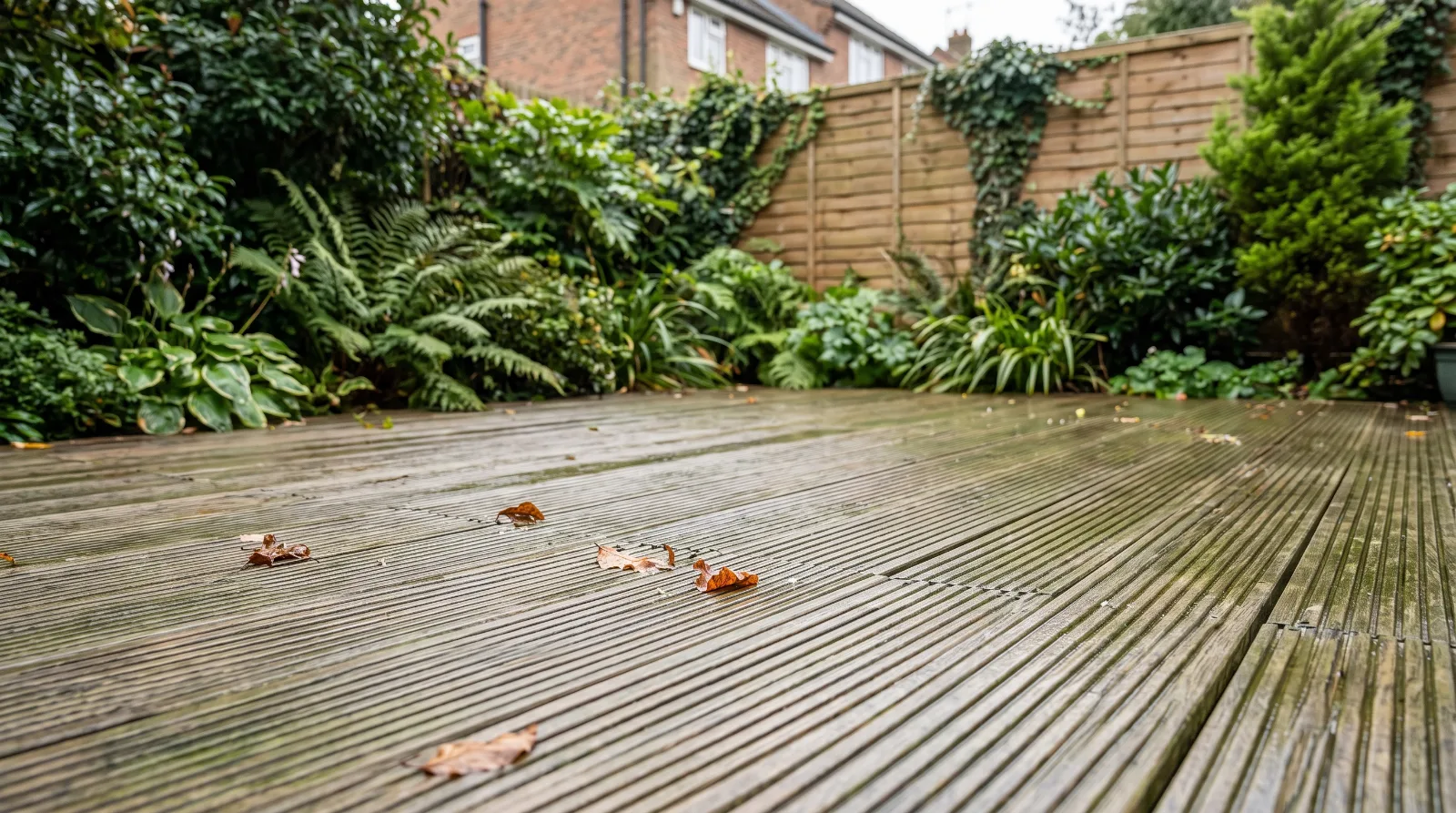
Garden decking creates a useful space for relaxing, dining and enjoying the outdoors. However, if the boards become slippery after rain or develop a green film over time, the area can become difficult and potentially unsafe to walk on.
This is a common problem in British gardens, particularly during autumn and winter when damp weather, fallen leaves and limited sunlight allow surface growth to build up. Both timber and composite decking can become slippery, although the causes and appropriate cleaning methods may differ.
The good news is that slippery decking can often be improved with regular cleaning, better drainage and a few sensible maintenance measures. The important thing is to identify why the surface has become slippery rather than simply washing it and hoping the problem stays away.
Why Does Decking Become Slippery?
There is rarely just one cause. In many gardens, moisture combines with surface deposits, dirt and environmental conditions to reduce grip underfoot.
1. Algae and moss growth
Algae is one of the main reasons decking develops a green, slippery surface. It grows readily where moisture persists, particularly in shaded areas that receive little direct sunlight or have limited airflow.
Moss can also establish itself in damp areas, especially where debris accumulates between boards or around the edges of the deck.
These growths may be more noticeable after prolonged wet weather. When the surface becomes wet, the organic layer can make the boards feel slimy and reduce traction underfoot.
Regular cleaning helps remove this build-up before it becomes established.
2. Rainwater and lingering moisture
Decking is exposed to rain, morning dew and changing weather throughout the year. If water remains on the surface or beneath the structure for extended periods, the boards may stay damp for longer, creating conditions that encourage algae and moss.
Areas beneath overhanging trees, beside tall fences or next to walls can be particularly vulnerable because they may receive less sunlight and airflow.
Poor drainage can make the situation worse. Where water collects around the deck or debris blocks the gaps between boards, moisture may take longer to clear.
3. Wet leaves, dirt and organic debris
Fallen leaves, soil, pollen and small pieces of plant material can collect on decking, particularly during autumn.
As this debris becomes wet and breaks down, it can leave a slippery film on the surface. Material trapped between boards may also obstruct drainage and keep the surrounding area damp.
The problem can develop even when the decking initially appears to be in good condition. Regular sweeping is therefore one of the simplest ways to reduce the build-up.
4. Smooth or worn surfaces
The condition of the boards also matters. Some decking finishes provide more texture than others, while wear can change how a surface performs over time.
Timber boards may weather, crack or deteriorate, and composite boards can accumulate surface deposits that affect their grip. Grooved boards are not automatically slip-proof, as grooves can also collect dirt and organic matter.
The material, surface finish and condition should all be considered when assessing a slippery deck.
Is Timber or Composite Decking More Slippery?
Both materials can become slippery when wet or contaminated with algae, moss and dirt. Neither should be assumed to remain slip-resistant in every weather condition.
Factor | Timber decking | Composite decking |
|---|---|---|
Common causes of slipperiness | Algae, moss, wet leaves and surface wear | Algae, dirt, wet leaves and surface deposits |
Cleaning requirements | Regular brushing and suitable timber cleaning products | Regular brushing and cleaning methods approved for the board |
Surface deterioration | May develop splinters, cracks or decay | May become stained, worn or damaged depending on the product |
Treatment options | Suitable timber treatments or compatible anti-slip measures | Product-approved cleaning methods and compatible anti-slip solutions |
Maintenance considerations | Depends on timber type, exposure and finish | Depends on the board construction, surface texture and manufacturer guidance |
The key consideration is not simply whether the decking is timber or composite. Its surface condition, exposure to moisture and maintenance history can make a significant difference.
If you are choosing new decking for a garden that remains damp or shaded, consider the intended use, the surface's wet-condition performance and the maintenance it will require.
How to Make Slippery Decking Safer
If your decking has already become slippery, begin by addressing the surface contamination and checking whether there are any underlying problems.
1. Remove leaves and loose debris
Start by clearing the deck of furniture, plant pots and anything else that makes the surface difficult to reach.
Sweep away fallen leaves, soil and loose material using a stiff-bristled brush suitable for the decking. Pay attention to corners, the gaps between boards and areas beneath furniture where debris may accumulate.
Regular sweeping helps prevent organic matter from building up and makes a deeper clean more effective.
2. Clean the decking thoroughly
For timber decking, a suitable mild cleaning solution or a decking cleaner can help remove dirt and surface growth. Use a brush appropriate for the timber and follow the cleaner's instructions.
Composite decking should be cleaned according to the manufacturer's recommendations. Some products may be unsuitable for particular finishes, so avoid assuming that a treatment designed for timber will work equally well on composite boards.
Pressure washers can remove stubborn deposits, but excessive pressure or holding the nozzle too close can damage timber and certain composite surfaces. If you use one, follow the board manufacturer's instructions and choose an appropriate setting.
Allow the decking to dry before assessing the result. Keep people off the surface while it is wet and slippery, and avoid walking on it until it is safe to do so.
3. Consider suitable anti-slip measures
If the decking remains slippery after cleaning, additional measures may be appropriate.
Depending on the material and condition of the deck, options include compatible anti-slip strips, suitable surface treatments or replacing particularly worn boards.
Products must be appropriate for the specific decking material and intended outdoor conditions. Do not assume that a coating will solve a problem caused by standing water, structural deterioration or a damaged surface.
If the decking is elevated, heavily used or regularly exposed to wet conditions, professional advice can help you decide which measures are suitable.
4. Check the condition of the boards and structure
A slippery surface can sometimes be a sign of a wider maintenance issue.
Check for loose boards, damaged fixings, splintering, soft or decaying timber, and areas that move underfoot. If water consistently collects in the same place, the drainage arrangements and gaps between boards may also need attention.
Cleaning can improve the surface, but it will not resolve rotten supports, unstable decking or a poorly constructed base.
Where the structure feels unstable or boards show significant deterioration, avoid using the affected area until it has been inspected and repaired.
How to Stop Decking Becoming Slippery Again
Once the decking has been cleaned, a few simple maintenance habits can help keep the surface in better condition.
Sweep regularly: Remove leaves, soil and other debris before they accumulate.
Clean seasonally: Give the deck a more thorough clean when surface deposits begin to build up, particularly after periods of wet weather.
Keep drainage clear: Check that water can drain away and that debris is not blocking the gaps between boards.
Improve airflow where practical: Carefully manage surrounding vegetation where it creates excessive shade or traps moisture.
Inspect the surface: Look for loose boards, damaged finishes, moss growth and signs of deterioration.
Use suitable treatments: Apply only products appropriate for the decking material and follow the manufacturer's instructions.
It is particularly important to keep on top of maintenance during autumn and winter, when wet leaves and persistent dampness can make decking slippery more quickly.
When Should You Consider Replacing Your Decking?
Cleaning is often sufficient when the main problem is a build-up of algae, moss or dirt. However, some decks need more substantial repairs.
Replacement or extensive renovation may be worth considering when:
Multiple boards are rotten, split or badly damaged.
The supporting frame has deteriorated or become unstable.
Boards repeatedly become loose or uneven.
Drainage problems persist despite routine maintenance.
The deck has reached a point where repeated repairs are no longer practical.
If only a small area is affected, replacing individual boards or repairing the relevant section may be sufficient. If the structure has widespread damage, a more comprehensive solution may be needed.
The decision should be based on the condition of the decking, the extent of the underlying problem and the practicality of repairing it.
Keep Your Garden Decking in Good Condition
Slippery decking is often caused by a combination of moisture, algae, moss and accumulated debris. Fortunately, regular cleaning and suitable maintenance can help prevent these problems from becoming established.
The most effective approach is to keep the surface clean, ensure water can drain away and investigate any signs of damage rather than treating every problem as a cleaning issue.
If your decking remains slippery, feels unstable or needs more extensive repairs, it may be time to consider professional advice.
At Surrey Oak Landscapes, we provide decking and hard landscaping services across Surrey and the surrounding areas. Whether you are planning a new decking area or considering improvements to an existing outdoor space, we can help you explore options suited to your garden.
About the author