How Wide Should a Garden Path Be?
How wide should a garden path be? Discover practical dimensions for main walkways, narrow paths, wheelbarrow routes and accessible gardens, plus tips for choosing suitable materials and planning your layout.
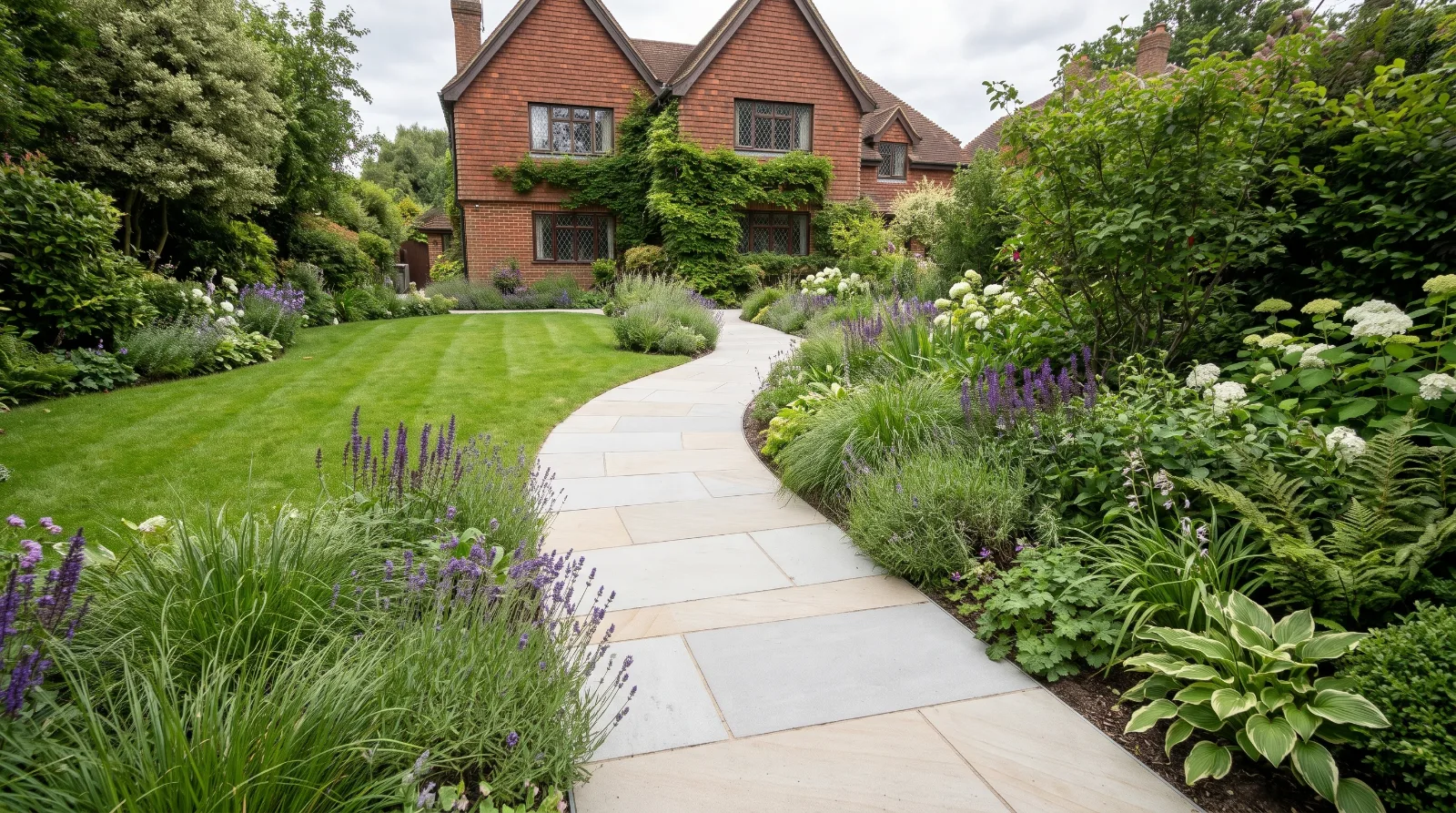
A garden path needs to do more than connect one part of the garden to another. It should be comfortable to walk along, suit the available space and complement the surrounding landscaping. If a path is too narrow, carrying tools or walking alongside another person can become awkward. If it is too wide, it may take up valuable room that could be used for planting, lawn or seating.
So, how wide should a garden path be? The answer depends on where it leads, how frequently it will be used and who needs to use it. A simple path to a shed has different requirements from the main walkway connecting a house to a patio or garden room.
For homeowners planning a garden renovation in Surrey, getting the width right from the beginning helps create a practical layout that looks balanced and works well throughout the year.
What Is the Standard Width of a Garden Path?
For many residential gardens, a path around 900mm wide is a practical starting point for everyday walking. However, a wider route can be more comfortable, particularly when it connects frequently used areas or needs to accommodate two people walking together.
The following dimensions are useful general guidelines when planning a garden path.
Garden path type | Suggested width |
|---|---|
Narrow path for occasional access | 600–750mm |
Standard garden path for one person | Around 900mm |
Main path used regularly | 900–1,200mm |
Path for two people walking side by side | 1,200–1,500mm |
Path designed for wheelchair access | Generally plan for at least 1,200mm, with additional space where needed |
These measurements are starting points rather than universal rules. Accessibility requirements, turning space, site conditions and the intended use of a path may call for a different design.
It is also important to consider the clear walking width, not just the measurement on a drawing. Edging, pots, overhanging plants and garden furniture can all reduce the space available once the garden is established.
1. How Wide Should a Main Garden Path Be?
A main garden path is one of the most frequently used routes through an outdoor space. It might connect the back door to the patio, provide access to a garden room or link different areas of a larger garden.
For this type of path, around 900mm to 1,200mm is a useful range to consider. The narrower end can work well for single-person use, while a width closer to 1,200mm generally feels more generous.
If the path is used for carrying shopping into the garden, moving garden equipment or walking alongside children, the extra space can make a noticeable difference.
Wider paths can also suit larger gardens visually. A generous walkway leading to a seating area or garden room may feel more in proportion than a narrow strip of paving surrounded by broad planting borders.
Think about the route's purpose before choosing the final dimensions. A direct path used to reach a shed or washing line should prioritise convenience, while a decorative route through a landscaped garden may justify a different shape or arrangement.
2. How Wide Should a Path Be for Two People?
If you want two people to walk comfortably side by side, consider a path around 1,200mm to 1,500mm wide.
This can be particularly useful for the main route through a family garden or a path connecting the house to an outdoor dining area. It also makes the space feel less restrictive when people meet or pause along the route.
In a smaller garden, a wider central path can become a prominent design feature. In a larger space, it can create a generous approach to a patio, garden room or feature planting area.
There is no need to make every path this wide. Secondary routes can remain narrower, allowing more of the garden to be used for planting and other features.
For longer routes used by several people, or where wheelchair users need to pass comfortably, a more generous width and suitable passing or turning spaces may be needed.
3. Is a Narrow Garden Path Wide Enough?
Narrow paths can work well where space is limited or access is needed only occasionally.
For example, a route behind a planting border or along the side of a house may not need the same width as a main garden walkway. A path around 600mm to 750mm wide may be sufficient for occasional single-person access, depending on the task and the available space.
However, narrow paths can quickly become inconvenient if they are used every day. Carrying bulky equipment, pushing a wheelbarrow or passing another person may be difficult.
Before settling on a narrow width, consider what you will carry along it and whether you need room to turn or work beside the path.
It is also worth allowing for plant growth. Ornamental grasses, shrubs and spreading perennials can gradually encroach on a walkway, reducing its usable width during the growing season.
If a narrow route needs to remain functional, choose suitable edging and keep planting positioned so that it does not regularly obstruct the path.
4. How Wide Should a Garden Path Be for a Wheelbarrow?
If the path will be used to move compost, soil, tools or garden waste, it needs to accommodate both the wheelbarrow and the person pushing it.
Around 900mm is a useful starting point for a regular wheelbarrow route, but the required width depends on the wheelbarrow itself. Handles can extend considerably beyond the main body, so check the actual dimensions before finalising the design.
Allow additional room if the route includes tight turns, gates or narrow spaces between walls and planting. A path that is wide enough in a straight line may become awkward where it bends sharply.
The surface matters, too. A firm, reasonably level route with stable paving or a suitable bound surface is usually more practical for moving loads than loose material that shifts underfoot.
If you regularly transport heavy materials through the garden, plan the path and its base for the intended use rather than treating it as a purely decorative feature.
5. What Width Is Best for Wheelchair Access?
Where wheelchair access is important, path width should be considered alongside surface quality, gradients, turning space and the position of gates and entrances.
A clear width of at least 1,200mm is a useful starting point for an accessible garden route, but the complete layout may require more space. A path intended for two-way movement, wheelchair passing or regular turning needs to be designed around those specific requirements.
Choose a firm, stable, even and slip-resistant surface. Loose gravel, deep bark and uneven stepping stones can make movement difficult for wheelchair users and people with limited mobility.
Avoid abrupt changes in level and consider how the path connects to the patio, house or garden room. Even a sufficiently wide path can be difficult to use if it ends at a narrow gate or includes awkward steps.
Where accessibility is a key requirement, have the layout assessed against the needs of its users and any applicable design standards before construction begins.
6. How Does Garden Size Affect Path Width?
The proportions of the garden should influence your choice just as much as the path's practical function.
Small gardens
In a small garden, an oversized path can reduce the space available for planting, lawn or seating. A carefully positioned path around 900mm wide may provide sufficient everyday access without dominating the layout.
Keeping the route simple can also make the garden feel less cluttered. Where the path connects to a compact patio, matching materials can help the two areas feel like part of the same design.
Large gardens
Larger gardens can often accommodate wider paths that connect different outdoor areas. A broad paved approach may suit the entrance to a garden room, while a narrower secondary path can wind through planting beds.
Changes in width can be useful when they serve a purpose. For example, a path might widen near a bench or feature tree to create a natural stopping point.
Long, narrow gardens
For a long, narrow garden, the path's position can matter just as much as its width. A central walkway creates a clear route, while an off-centre layout may leave more room for planting or a seating area.
Avoid making the path unnecessarily wide simply to fill the length of the garden. The objective is to create a comfortable connection between spaces while preserving the garden's proportions.
7. Should a Garden Path Be Straight or Curved?
The route's shape should reflect how the garden is used.
A straight path is often the most practical option when you need to get directly from the house to a shed, side gate or garden room. It can also complement contemporary landscaping with geometric paving and defined planting beds.
A curved path can create a softer appearance and help guide visitors through a more naturalistic garden. However, the curve should have a clear purpose and leave enough room for comfortable movement.
Remember that curves affect the usable space. Tight bends can make narrow paths awkward to navigate, particularly for wheelbarrows and mobility aids.
For many gardens, a straightforward route with one or two gentle changes in direction provides a good balance between appearance and practicality.
8. Choose Materials That Suit the Path's Width and Purpose
The width of a path should work with the material selected and the way the route will be used.
Porcelain paving can create a clean, contemporary finish and suit main routes connecting the house to a patio or garden room. The layout of the slabs needs to be considered when setting the path width to avoid awkward cuts.
Natural stone offers variation in colour and texture, making it suitable for traditional and contemporary gardens. The chosen finish should be appropriate for outdoor use and provide suitable slip resistance.
Block paving can work well for regularly used paths, particularly where a defined border or pattern is part of the garden design.
Gravel may suit informal paths through planting areas, although loose gravel is generally less suitable for wheelchair access or moving heavy loads.
Stepping stones can create a light-touch route across a lawn or planted area. They are best suited to locations where the gaps and uneven transitions will not make movement difficult.
Whatever material you choose, ensure the path has a suitable foundation, stable edging where required and appropriate drainage. The finished surface should remain practical in wet weather as well as looking attractive when the garden is dry.
9. Common Garden Path Width Mistakes to Avoid
A little planning can prevent a path from becoming inconvenient once the garden is in everyday use.
Making the path too narrow: What looks sufficient on a plan may feel restrictive when carrying tools or walking alongside someone.
Ignoring future plant growth: Borders can reduce the clear width and make maintenance more difficult.
Choosing width based only on paving slabs: Standard slab sizes can help with the layout, but they should not dictate a path that is too narrow for its purpose.
Forgetting gates and turning points: A wide path is less useful if the entrance or a tight bend creates a bottleneck.
Overlooking drainage: Standing water can make paths slippery and affect the condition of joints or surrounding ground.
Prioritising appearance over use: A decorative curve or stepping-stone arrangement should not make an essential route awkward to navigate.
One useful approach is to mark out the proposed path with string or a garden hose and walk the route before construction begins. This helps you see how much room remains for planting and whether the width feels comfortable in practice.
Plan a Garden Path with Surrey Oak Landscapes
The ideal garden path width depends on how the route will be used, the space available and the style of the garden. A narrow secondary path may be perfectly suitable for occasional access, while a main walkway may benefit from additional width for comfort, movement and accessibility.
At Surrey Oak Landscapes, we provide landscaping and hard landscaping services to help homeowners create outdoor spaces that work as well as they look. From practical garden pathways to coordinated paving, planting and complete garden transformations, careful planning helps bring the whole design together.
Planning a new garden path or upgrading your existing paving? Contact Surrey Oak Landscapes for a free, no-obligation quote.
About the author