How to Protect Garden Irrigation Before Winter
Prepare your garden irrigation system for colder weather with practical advice on draining pipes, cleaning filters, protecting timers and preventing frost damage.
An automatic irrigation system makes it easier to keep lawns, borders, hedges and newly planted trees watered throughout the growing season. However, as temperatures drop, it is important to prepare the system for winter rather than leaving it running as normal.
Water left inside exposed pipes, timers, valves and other components can freeze and expand, potentially causing cracks, leaks or expensive repairs when the system is switched on again in spring. Even systems that are designed to remain outdoors can have vulnerable parts that need attention before the first frost.
With a little preparation in autumn, you can protect your garden irrigation system, extend the life of its components and make sure it is ready for the next growing season.
In this guide, we explain how to protect garden irrigation before winter, which components need attention and when it is worth calling in a professional.
Why Should You Winterise a Garden Irrigation System?
Winterising means preparing an irrigation system for colder weather by shutting it down correctly, removing water from vulnerable components and protecting equipment that could be damaged by frost.
Water expands as it freezes. If water becomes trapped inside a pipe, valve, filter or pump, the resulting pressure can damage the component. The problem is not always immediately visible. A small crack may only become apparent in spring, when the system is running again and water begins escaping from a joint or fitting.
Common problems include:
Cracked exposed pipes and plastic connectors.
Damaged irrigation timers and pressure regulators.
Split filters, valves and sprinkler components.
Leaks caused by weakened joints.
Pump damage from freezing water or incorrect shutdown.
Blocked emitters and uneven watering when the system restarts.
Winter preparation is particularly important for systems with exposed equipment, long runs of pipework or several connected watering zones.
When Should You Prepare Your Irrigation System for Winter?
The best time to winterise an irrigation system is during autumn, before the first significant frost is forecast.
In Surrey, autumn temperatures can remain relatively mild, but conditions can change quickly as winter approaches. Waiting until a particularly cold night is forecast may leave little time to drain the system or remove vulnerable equipment.
Rather than relying on a fixed date, keep an eye on the local forecast and consider how your irrigation system is installed. An exposed tap timer and above-ground pipework may need attention earlier than a professionally installed system with protected underground lines.
You should also consider the plants being watered. Established planting may require little additional irrigation during a wet winter, but newly planted trees, hedges and shrubs can still need occasional watering during prolonged dry spells. Shutting down automatic irrigation does not mean you should stop checking the soil altogether.
1. Turn Off the Water Supply and Irrigation Controller
Start by locating the isolation valve that supplies the irrigation system. Turn off the relevant supply according to the system's instructions so that no additional water enters the network while you prepare it for winter.
If your irrigation is connected to an outdoor tap, make sure the tap and any connected fittings are protected against frost as well.
Next, switch off the automatic watering schedule. Depending on the controller, this may mean selecting an off setting, using rain mode or following the manufacturer's recommended winter shutdown procedure.
Some controllers allow you to pause watering while preserving the programmed schedule for spring. This can save time when the system is brought back into use.
If your irrigation system operates a pump or has an electrical control unit, follow the specified shutdown procedure. Do not simply disconnect components at random, particularly where fixed wiring or mains electricity is involved.
2. Drain the Pipes and Exposed Components
Draining the system is one of the most important steps in winter preparation, but the correct method depends on how the irrigation network was designed.
Above-ground pipes and drip irrigation
For many domestic drip irrigation systems, the exposed supply lines and removable accessories are relatively straightforward to prepare.
Once the water supply has been isolated, open designated drain points or removable end caps where the manufacturer recommends doing so. Allow the water to escape and check for low sections of tubing where it may remain trapped.
Flexible drip lines can often stay in position throughout winter, provided they are suitable for outdoor use and have been drained as required. However, connectors, filters, timers and other attachments may need to be removed and stored separately.
Underground sprinkler systems
Underground irrigation systems can be more complicated because water may remain inside buried pipework, sprinkler assemblies and valve boxes.
Some systems have manual or automatic drainage arrangements. Others require a specific winterisation procedure to prevent water being left in vulnerable sections.
Do not assume that opening a tap will drain the entire network. If the system requires compressed air to remove residual water, it is best to use an irrigation specialist who understands the correct pressure and procedure for that installation. Incorrect use of compressed air can damage components and create a safety risk.
The important point is to follow the drainage method designed for your particular system rather than applying the same procedure to every installation.
3. Clean Filters, Drippers and Sprinkler Heads
Autumn is a good opportunity to remove the dirt and debris that have accumulated during the watering season.
Filters can collect grit and other particles, while drippers and sprinkler heads may become clogged by sediment or mineral deposits. If left untreated, these problems can reduce water flow and make it harder to identify faults when the system restarts.
Before storing removable components, consider the following:
Filters: Clean them according to the manufacturer's instructions and allow removable parts to drain.
Drippers and micro-sprays: Check for blockages, damage and uneven water delivery.
Sprinkler heads: Remove visible debris and inspect for cracked housings or damaged nozzles.
Connectors and end caps: Check for worn seals, loose fittings and splits.
Hoses and tubing: Look for sections that have become brittle, flattened or damaged.
Avoid using sharp objects to clear delicate emitters, as this can alter their openings and affect the amount of water delivered.
It is also worth making a note of components that need replacing. Dealing with these small issues in autumn can prevent a minor fault from becoming a larger problem during the next growing season.
4. Remove and Store Timers and Other Vulnerable Accessories
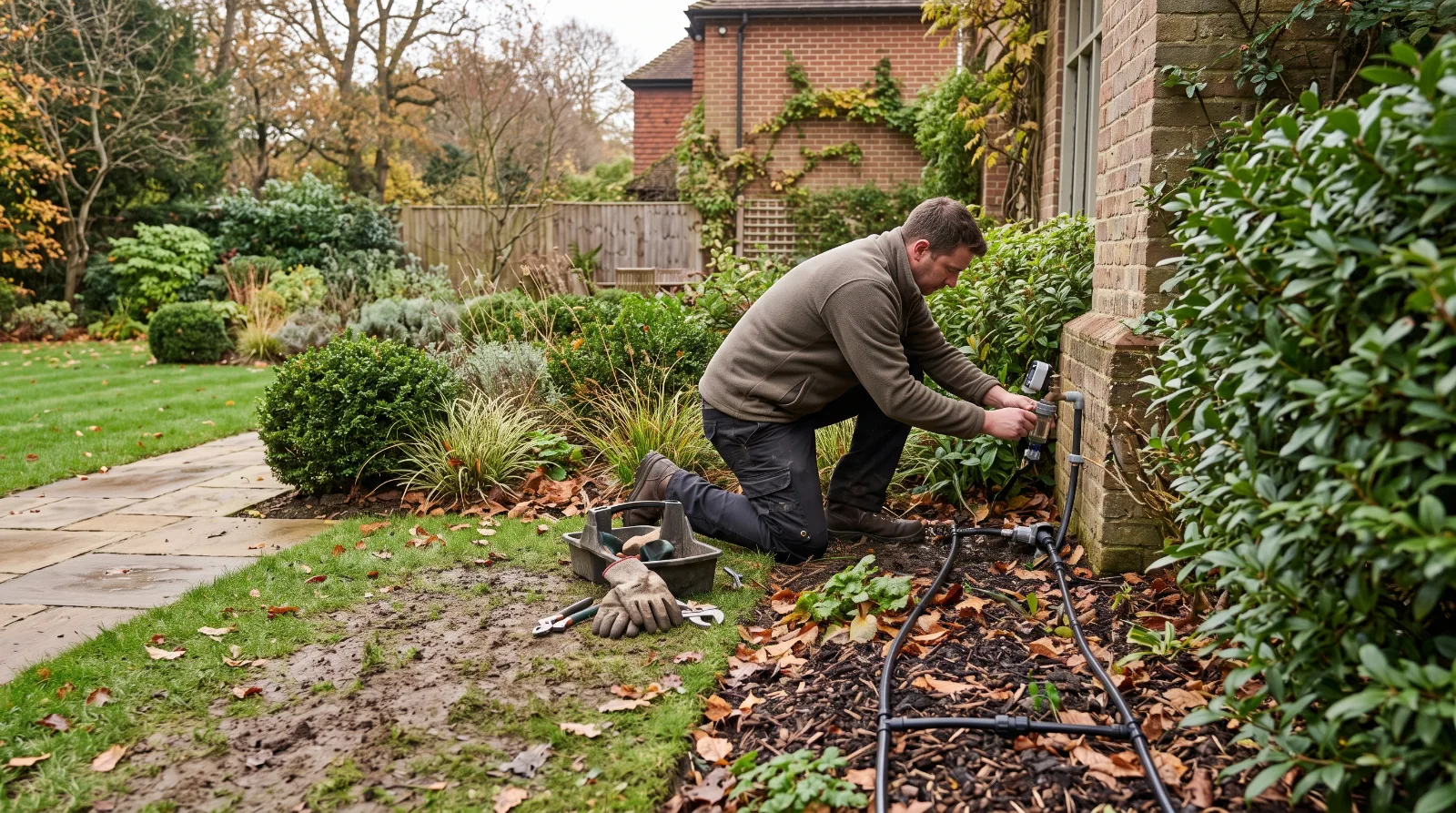
Tap-mounted timers are often more exposed to cold weather than the main irrigation pipework. Unless the particular model is designed to remain connected in freezing conditions, remove it before winter.
Disconnect the timer carefully, drain any remaining water and wipe away dirt before storing it in a dry, frost-free location. Remove batteries where the manufacturer's instructions recommend doing so.
Other accessories may also benefit from being taken indoors, including:
Tap splitters and adaptors.
Removable pressure regulators and filter housings.
Loose connectors and small fittings.
Portable pumps or watering accessories that are not designed for freezing conditions.
Keep small components together in a labelled container so that they are easier to find when the irrigation system is reassembled.
Water-resistant does not necessarily mean frost-proof. Always check the manufacturer's storage recommendations before leaving a component outside.
5. Protect Valves, Pumps and Exposed Pipework
Not every part of an irrigation system can be removed and stored indoors. Some valves, pipework and other equipment may remain outside throughout winter.
Inspect these areas for signs of damage and identify any sections that are particularly exposed to wind and cold. Suitable insulation can help protect some exposed components, but it should not be treated as a substitute for draining water from parts that are vulnerable to freezing.
Pay particular attention to:
Exposed valves and fittings: Check for leaks, damage and water trapped in housings. Follow the correct drainage and protection procedure for the valve type.
Pressure regulators and backflow prevention devices: These components may contain water and can be vulnerable to frost. They must be protected in accordance with their specific instructions. Do not assume that wrapping them in insulation alone will prevent damage.
Pumps: Follow the pump manufacturer's shutdown and drainage procedure. Depending on the equipment, it may need to be drained, disconnected or stored in a protected location.
Outdoor pipework: Inspect joints, clips and exposed sections. Damaged insulation should be replaced, and any vulnerable water-filled sections should be dealt with before freezing weather arrives.
Where irrigation equipment is connected to household plumbing or a mains water supply, make sure the correct isolation and backflow protection arrangements are maintained.
6. Check Rainwater Harvesting and Water Storage Equipment
Some gardens use water butts, storage tanks or rainwater harvesting systems to supply irrigation. These installations need their own winter checks.
Start by inspecting the connections between the storage system and the irrigation network. Look for leaks, loose fittings and exposed pipework that may retain water.
Drain or protect vulnerable components where required by the manufacturer's instructions. If the system includes a pump, float switch or automatic filling mechanism, check how each part should be shut down for winter.
Avoid assuming that every tank should be emptied. The correct approach depends on its construction, position, contents and whether it is designed to remain full in cold weather. Some equipment may be suitable for outdoor use, while associated pipes, filters and pumps may still require protection.
A properly prepared water storage system can help prevent unnecessary repairs and make it easier to resume water collection and irrigation in spring.
Garden Irrigation Winter Preparation Checklist
Use this checklist to keep track of the main tasks before winter arrives.
Task | What to check |
|---|---|
Turn off the water | Isolate the irrigation supply correctly. |
Disable the controller | Pause automatic watering and protect the existing settings where possible. |
Drain the system | Follow the correct method for pipes, valves and exposed components. |
Clean the equipment | Inspect filters, drippers, sprinkler heads and connectors. |
Store removable parts | Protect timers, batteries and vulnerable accessories as directed. |
Protect exposed equipment | Check valves, regulators, pumps and above-ground pipework. |
Inspect water storage | Prepare tanks, water butts and associated equipment appropriately. |
Record any problems | Note leaks, damaged fittings and parts that need replacing. |
Plan for spring | Keep the system layout and watering schedule available for recommissioning. |
Common Mistakes to Avoid
Winterising an irrigation system is not especially complicated, but a few common mistakes can undermine the whole process.
Only switching off the timer. Stopping automatic watering does not remove water from the pipes, valves or other components. Vulnerable parts still need to be drained or protected.
Assuming every pipe will drain automatically. Water can remain trapped in low points, fittings and equipment housings. Use the drainage method appropriate to the installation.
Leaving a tap timer connected. A timer exposed to freezing conditions may be damaged even when the irrigation schedule has been disabled.
Using compressed air without the correct procedure. Excessive pressure or an incorrect sequence can damage an irrigation system. Specialist help is advisable when blow-out drainage is required.
Forgetting about pumps and filters. These are important parts of the installation and can contain water even when the main lines have been drained.
Leaving the system unchecked until spring. Winter storms, accidental damage and unexpected leaks can still affect exposed equipment. An occasional visual inspection is worthwhile.
How to Prepare Your Irrigation System for Spring
Although winter preparation focuses on preventing damage, it is worth making spring recommissioning easier at the same time.
Before shutting down the system, record the watering schedule and take a few photographs of the controller, valves and pipe layout. This can be useful if settings are lost or components need to be reconnected.
When warmer weather returns, inspect the equipment before restoring the water supply. Refit stored accessories, check connections and bring the system back into operation gradually, following the manufacturer's instructions.
Run each watering zone and look for leaking joints, damaged pipes, blocked emitters or sprinklers that are not distributing water evenly. Check that filters are clean and that the timer is set to suit the plants' current needs.
Do not immediately return to the previous summer watering schedule. Rainfall, soil moisture, plant growth and temperature all affect how much water a garden needs. Adjust the programme as the growing season develops.
Protect Your Garden Irrigation Before Winter
A garden irrigation system is easier to maintain when it receives attention at the end of the growing season. Isolating the supply, draining vulnerable components, cleaning filters and protecting exposed equipment can reduce the risk of frost damage and help avoid unnecessary repairs.
The right approach will depend on the type of irrigation installed, particularly where underground pipework, pumps, automatic valves or rainwater harvesting equipment are involved. If you are unsure how your system should be drained or protected, professional advice can help you avoid damaging components through an unsuitable winterisation method.
At Surrey Oak Landscapes, we understand how irrigation fits into the wider garden, from planting schemes and lawns to established borders and outdoor living areas. Preparing these systems properly helps protect the investment you have made in your garden.
Planning improvements to your garden irrigation or wider landscaping?
About the author