How Much Does Garden Irrigation Installation Cost in Surrey?
How much does garden irrigation installation cost in Surrey? Explore indicative prices for drip systems, lawn sprinklers and automatic controls, discover what affects the budget and learn how to plan your installation.
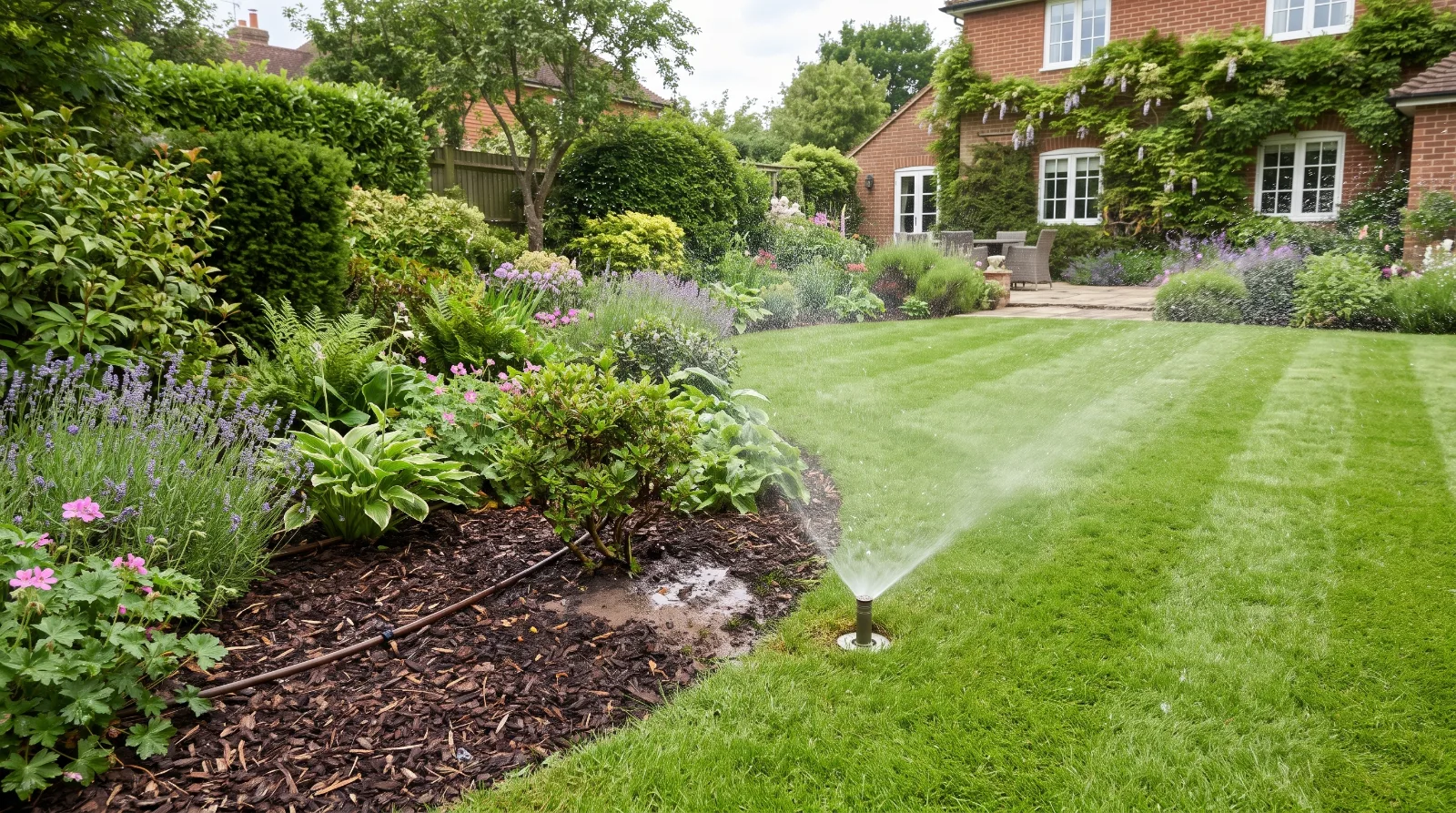
Keeping a garden properly watered can take time, particularly during warmer weather when lawns, planting borders, hedges and newly planted trees may need regular attention. A professionally installed garden irrigation system can make watering more convenient by delivering water to the areas that need it, either automatically or according to a schedule.
However, the cost of installing garden irrigation varies considerably. A simple drip system for a few planting beds requires far less equipment and groundwork than an underground sprinkler system covering a large lawn. The layout of the garden, water supply, controls and installation requirements all influence the final price.
For homeowners in Surrey, understanding these differences can help when planning a landscaping project and deciding which type of irrigation system offers the most practical solution.
How Much Does Garden Irrigation Installation Cost?
The cost depends primarily on the type of system being installed, the area it needs to cover and how complex the installation will be.
The following figures are indicative UK budgeting estimates, not a quotation from Surrey Oak Landscapes. They are based on published UK cost guides available in 2026 and should be treated as approximate rather than guaranteed Surrey prices.
Type of irrigation system | Indicative estimated cost |
|---|---|
Small drip system for pots, planters or raised beds | £300–£800 |
Drip irrigation for small to medium planted areas | £500–£2,500 |
Basic lawn sprinkler system | Around £700–£1,100 per zone |
Medium-sized lawn sprinkler installation | £1,500–£3,500 |
Large or complex multi-zone sprinkler system | £3,500–£7,000+ |
Smart controller or upgraded controls | Approximately £150–£500 extra |
Disclaimer: These figures are estimates only, intended to help with initial budgeting. They are not fixed prices, a guarantee of what a Surrey installation will cost, or a quotation from Surrey Oak Landscapes. Actual costs may be lower or higher depending on the garden, equipment, labour, access, groundwork, specification and any additional services required. Published cost guides may use different assumptions about what is included, and VAT treatment can vary. Confirm the scope, VAT and total price with your installer before committing to work.
The figures for sprinkler systems also need to be interpreted carefully. A price per zone is not necessarily the same as the total price for a complete installation. A garden with several zones, buried pipework and automatic controls will generally cost more than a straightforward single-zone setup.
1. Drip Irrigation vs Sprinkler Systems: How Do Costs Compare?
One of the first decisions is choosing how water will be distributed around your garden. Drip irrigation and sprinklers serve different purposes, so the most suitable option depends on what you want to water.
Drip irrigation for planting beds and borders
Drip irrigation delivers water close to the roots of plants through dripline, tubing or individual emitters. It is useful for planted borders, hedges, raised beds, containers and some vegetable gardens.
Because the water is delivered near the plants, the system can reduce unnecessary watering of surrounding surfaces. It can also be installed discreetly beneath suitable mulch or among planting.
The cost depends on the length of the pipework, number of outlets, water supply and level of automation. A small arrangement for a few containers may be relatively straightforward, while a large garden with several planting zones will need more equipment and installation time.
For homeowners whose main priority is keeping borders and newly planted trees watered, drip irrigation may be a practical starting point.
Pop-up sprinklers for lawns
Pop-up sprinklers are commonly used to water lawns. The sprinkler heads sit close to ground level when not operating and rise when the system is running.
Installing them usually involves underground pipework, suitable sprinkler heads and careful positioning to achieve appropriate coverage. Trenching and reinstating the lawn can add to the work involved.
Larger lawns may need several zones to manage water distribution and available supply pressure. The layout must also account for obstacles, narrow sections and areas that should not receive unnecessary water.
A sprinkler system can be convenient for homeowners who want automated lawn watering, but its cost should be assessed against the size of the lawn and the complexity of the installation.
Can you combine both systems?
Yes. A garden with a lawn, mature planting and container displays may benefit from a combination of sprinkler and drip irrigation.
The two systems may need separate zones because lawns and planting beds have different watering requirements. Although a combined system can cost more to install, it allows the different areas to be managed more appropriately.
2. What Affects the Cost of Garden Irrigation?
Even two gardens of a similar size can require very different irrigation installations. These are the main factors to consider when estimating the budget.
Garden size and layout
A larger area generally requires more pipework, fittings and watering outlets. However, the shape of the garden matters as well.
A simple rectangular lawn may be relatively straightforward to cover, while a garden with narrow borders, separate lawn sections, raised beds and multiple planting areas may need more careful planning.
The total area being watered is often more useful than the overall garden size. A large garden with only a few planted borders may need a smaller irrigation system than a compact garden filled with containers and closely spaced planting.
Number of watering zones
An irrigation zone is an area controlled as a separate watering section.
For example, a garden could have one zone for the lawn, another for planting borders and a third for containers or a greenhouse. The appropriate layout depends on the plants, watering requirements and the available water supply.
Each additional zone can require more valves, connections, controls and design work. This is why a multi-zone system may cost considerably more than a basic setup.
Water supply and pressure
The existing water supply can influence both the system design and installation cost.
An installer may need to check the available pressure and flow rate to establish how many sprinklers or outlets can operate effectively. If the supply is insufficient for the intended layout, the system may need to be divided into additional zones or redesigned.
The location of the water connection also matters. A straightforward connection to an existing suitable outdoor tap differs from a project that requires new pipework or a longer connection route.
Any permanent connection to the mains water supply must also meet the applicable water fittings requirements, including appropriate backflow protection.
Groundwork and access
Installing underground irrigation can involve more than laying pipes.
Where the system crosses an existing lawn, the installer may need to excavate narrow trenches and reinstate the surface afterwards. Working around established trees, mature planting, patios and other landscaping features can require additional care.
Restricted access may also affect the equipment and working methods available.
If irrigation is being incorporated into a new landscaping project, coordinating the pipework with the groundwork and planting installation can help avoid unnecessary disruption later.
Automatic controls and sensors
A basic system may use a simple timer, while a more advanced installation can include programmable controllers, rain sensors or soil-moisture sensors.
These features can improve convenience by helping adjust watering schedules or prevent unnecessary watering in suitable conditions. However, they add to the initial specification and may not be necessary for every garden.
Choose controls based on how the garden will be used, how many zones need managing and how much automation you genuinely need.
3. Is Professional Garden Irrigation Worth the Cost?
For a small number of pots, hand watering may be perfectly manageable. A basic watering kit could also be sufficient for a few raised beds.
A professionally installed system becomes more attractive when watering several planting areas takes considerable time, when parts of the garden are difficult to reach or when consistent watering is particularly important during plant establishment.
Potential benefits include:
Convenience: Watering can follow a planned schedule without relying entirely on manual watering.
Consistent coverage: A well-designed system can deliver water to specified areas more reliably.
Targeted watering: Drip irrigation can deliver water close to plant roots rather than across entire surfaces.
Support for new planting: Suitable irrigation can help manage watering during the establishment period.
Better garden management: Separate zones make it easier to account for different watering requirements.
However, irrigation still needs to be designed and maintained properly. Incorrect positioning, blocked emitters, poor scheduling or inadequate coverage can undermine the benefits.
It is also worth remembering that an irrigation system does not remove the need to check soil moisture and adjust watering as the weather and seasons change.
4. How Can You Keep Irrigation Installation Costs Under Control?
A well-planned irrigation system should meet the garden's needs without including equipment that adds little practical value.
Start with the areas that need watering most
Identify which parts of the garden would benefit most from automated watering. These may include extensive planting borders, new hedges, specimen trees, raised beds or a frequently used lawn.
You can then establish whether a single system is sufficient or whether multiple zones are justified.
Plan irrigation alongside landscaping
If you are already installing a new lawn, patio, planting scheme or garden room, consider the irrigation requirements before the surrounding landscaping is completed.
This can make it easier to route pipes, establish connections and avoid disturbing newly finished surfaces.
Avoid choosing a system on price alone
A low initial price does not necessarily mean good value if the system fails to provide suitable coverage or needs frequent alterations.
Check what is included in the quotation, such as the controller, pipework, valves, emitters, sprinkler heads, connection to the water supply, installation labour and reinstatement of disturbed areas.
Allow for future planting
If you expect to add more beds or specimen trees, mention this during the planning stage. The design may be able to accommodate future expansion, although additional equipment and installation work will still be needed when new zones or outlets are added.
5. How to Get an Accurate Garden Irrigation Quote
Because installation costs depend on several site-specific factors, an indicative online price cannot replace a proper assessment.
Before requesting a quotation, it helps to establish:
Which areas need watering: For example, lawns, borders, hedges, trees, containers or raised beds.
The approximate area involved: A rough plan or measurements can help the installer understand the scale of the work.
Whether you want automatic controls: Decide whether a basic timer or more advanced controls would be useful.
The current water supply: Note the location of the outdoor tap or another potential connection.
Any existing landscaping: Identify patios, walls, mature planting and other features that could affect pipe routes or access.
An installer can then assess the site, discuss suitable options and provide a quotation based on the actual requirements.
When comparing quotations, make sure they cover a similar system and scope of work. A price for drip irrigation in a few borders should not be compared directly with a complete underground sprinkler installation across a lawn.
Plan Your Garden Irrigation with Surrey Oak Landscapes
Garden irrigation can make watering more manageable, particularly in gardens with extensive planting, lawns or newly established landscapes. The right system depends on what needs watering, the layout of the garden and how much automation would be useful.
At Surrey Oak Landscapes, we provide landscaping services to help homeowners plan and improve their outdoor spaces. If you are considering irrigation as part of a new planting scheme or wider garden project, planning the system alongside the landscaping can help create a more coordinated result.
Thinking about installing garden irrigation?
About the author