Why Do Patios Sink? Common Causes and How to Prevent Them
Is your patio sinking or developing uneven slabs? Learn the common causes of patio settlement, from poor compaction and drainage to weak ground and inadequate bedding.
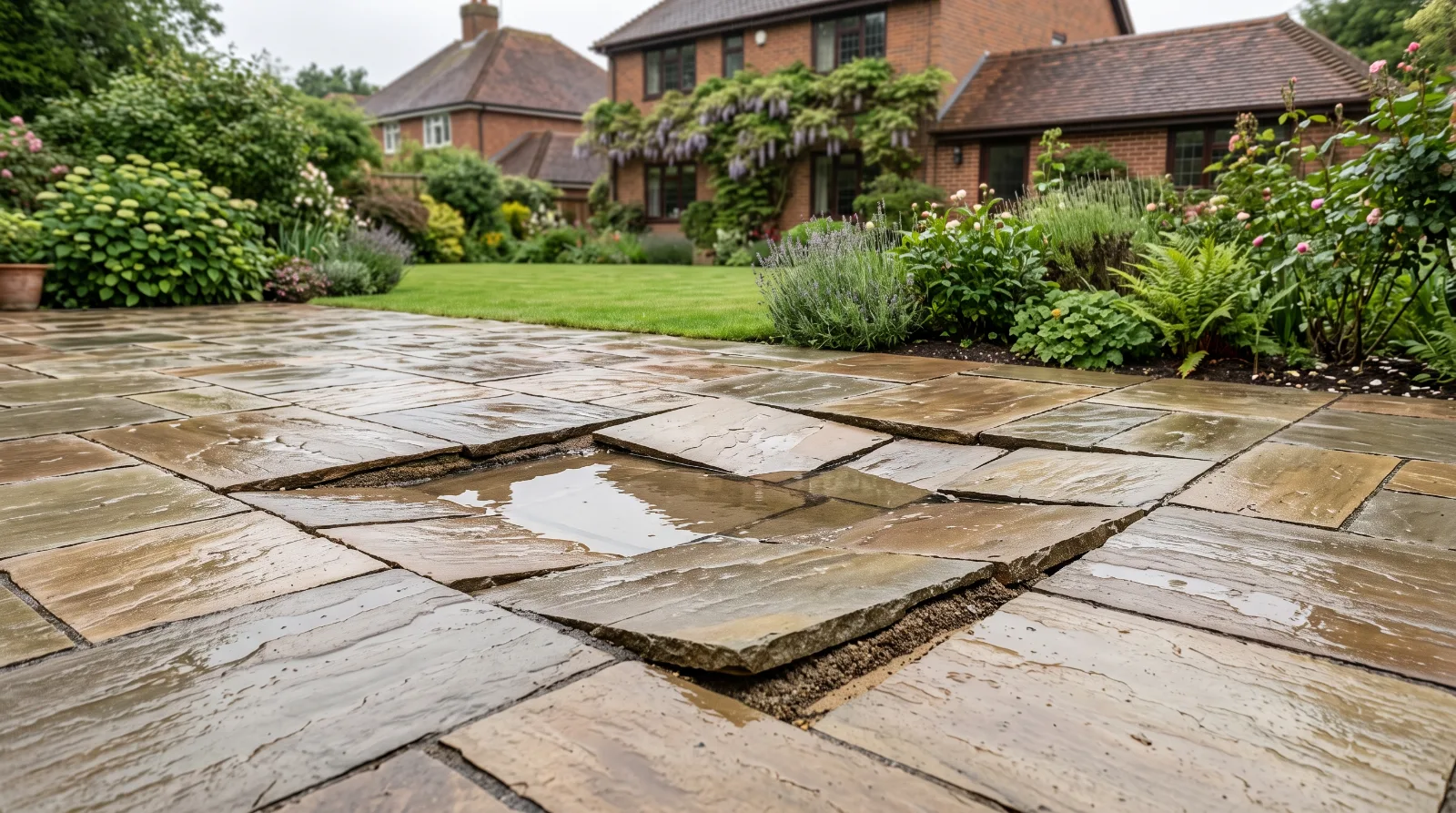
A patio can look perfectly level when it is first installed, only to develop dips, uneven slabs or areas where rainwater starts to collect several months or years later.
When this happens, the problem is often not the paving itself. In many cases, the real issue is underneath the surface.
A patio relies on a properly prepared ground structure to remain stable. If the soil, sub-base, bedding or drainage has not been dealt with correctly, the finished paving can gradually settle and become uneven.
For homeowners in Surrey, where ground conditions can vary between sites, proper preparation is particularly important.
What Causes a Patio to Sink?
There is rarely one universal cause, but the most common problems include:
An inadequate or poorly compacted sub-base
Building over soft or disturbed ground
Poor drainage
Incorrect bedding beneath the slabs
Water washing out material
Poorly supported edges
Changes in the underlying ground
Heavy loads that the patio was not designed to support
Understanding what is happening underneath the paving makes it much easier to prevent the problem in the first place.
1. The Sub-Base Was Not Prepared Properly
The sub-base is the structural layer underneath the bedding and paving.
Its job is to distribute loads over a wider area and provide a stable platform between the paving and the ground below.
For a typical domestic patio, a compacted sub-base is often built using a graded aggregate such as MOT Type 1. The required depth depends on the ground conditions, drainage and intended use of the patio.
Simply digging out an area, adding aggregate and spreading it level is not enough.
The sub-base needs to be properly compacted so the aggregate particles lock together and create a stable foundation for the paving above.
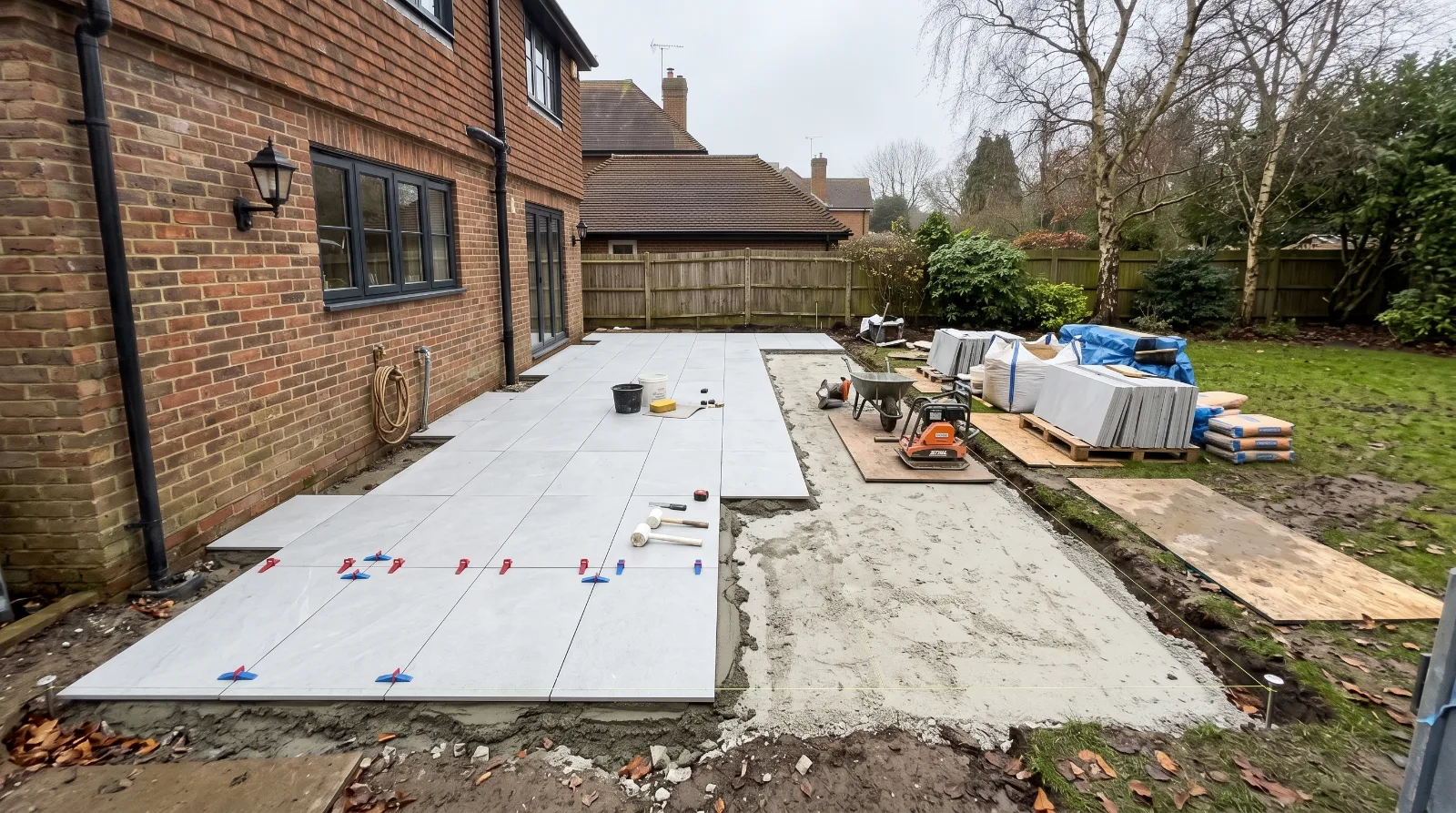
A Typical Patio Build-Up
Layer | Purpose |
|---|---|
Paving | Finished walking surface |
Bedding layer | Supports and levels the paving |
Compacted sub-base | Provides structural stability and distributes loads |
Prepared ground | Supports the construction below |
The exact construction can vary depending on the paving material and site conditions, but each layer has an important role.
2. The Sub-Base Was Not Properly Compacted
This is one of the more technical reasons a patio can sink.
A thick layer of loose aggregate cannot be compacted effectively simply by driving over it or compacting only the surface. If the whole sub-base is placed in one deep layer, the top can become firm while material underneath remains relatively loose.
Over time, everyday use, weather and moisture can cause the weaker material below to compress.
As that happens, the paving above can gradually settle.
This is why the quality of compaction matters just as much as the depth of the sub-base. A deeper foundation is not automatically better if it has not been properly compacted.
3. The Patio Was Built Over Soft or Disturbed Ground
Even a well-built sub-base can struggle if the ground below it is unsuitable.
Topsoil, recently excavated ground, old planting areas, filled ground and previously disturbed soil can all behave differently from firm natural ground.
Soft spots are particularly problematic because they can settle more than the surrounding areas.
This can lead to a patio where most of the paving stays level while one section gradually drops.
Before the sub-base is installed, weak areas may need to be excavated and replaced with suitable compacted material rather than simply covered over.
4. Poor Drainage Can Contribute to Settlement
Water is another major factor in patio movement.
If rainwater repeatedly enters weak areas beneath the patio, it can contribute to soil movement, soften some ground types and carry fine material away from areas that are already poorly constructed.
The finished patio should therefore have a suitable fall so water can move towards its intended drainage point instead of sitting on the surface.
A commonly used domestic paving gradient is around 1:80, although the appropriate fall depends on the site, surrounding levels and drainage arrangement.
Drainage should be considered before the paving is installed rather than added as an emergency solution after water starts pooling.
5. The Slabs Were Not Properly Supported
Another potential cause of movement is how the paving slabs were bedded.
A slab needs consistent support underneath it. If it only rests on a few isolated patches of mortar, parts of the paving can remain unsupported.
Those voids can allow movement beneath the slab and may eventually lead to rocking, cracking or uneven settlement.
A suitable full bedding system gives the paving much more consistent support than isolated spots of mortar.
The exact bedding method will depend on the paving material and the installation system being used, but the key principle is simple: the slab should be properly supported across its intended bearing area.
6. Soil Conditions Can Affect Stability
Ground behaves differently from one garden to another.
Some Surrey gardens have heavier clay-based soils, while others have sandier, chalk-influenced or mixed ground conditions.
Clay soils are particularly worth considering because their moisture content can change significantly between wet and dry periods. This can contribute to movement in the ground, especially where drainage or preparation is already poor.
That does not mean patios cannot be installed on clay soil.
It means the construction needs to be designed around the actual conditions on the site rather than assuming every garden requires exactly the same build-up.
7. Poor Patio Edges Can Lead to Movement
The edges of a patio can be more vulnerable to movement because there is less surrounding material helping to contain the paving structure.
If the edge of a patio borders a lawn, planting bed or loose soil without suitable support, the perimeter can gradually move.
Once an edge slab drops, neighbouring slabs may begin to move as well.
This is especially important around steps, narrow paths and patios with exposed edges.
8. The Patio Is Carrying More Weight Than Expected
Most domestic patios are designed for normal pedestrian use, garden furniture and typical outdoor activities.
Problems can occur when a patio is subjected to substantially heavier or concentrated loads.
Large masonry features, very heavy planters, hot tubs or vehicles can create loads that are different from those considered during a standard patio installation.
The intended use of the space should therefore be considered before construction begins.
How Can You Tell Why Your Patio Is Sinking?
The pattern of movement can sometimes provide useful clues.
What you notice | Possible cause |
|---|---|
One or two slabs have dropped | Localised bedding or ground problem |
A large section has sunk | Sub-base or underlying ground settlement |
Water collects in one area | Incorrect fall or drainage issue |
Slabs rock when walked on | Poor support beneath the paving |
Joints have opened or cracked | Movement beneath the paving |
Edge slabs have moved | Inadequate edge support |
Settlement appeared after major groundworks | Disturbed or poorly compacted ground |
These signs are useful indicators, but they do not provide a definitive diagnosis. The underlying construction needs to be inspected before deciding on the correct repair.
Can a Sunken Patio Be Repaired?
Sometimes a repair is relatively straightforward.
If the problem is limited to one or two slabs, they may be able to be lifted and re-laid once the underlying area has been corrected.
However, simply adding a little sand or mortar underneath a sunken slab does not necessarily solve the underlying problem.
If the sub-base itself has settled, the affected area may need to be lifted, excavated and rebuilt before the paving is reinstated.
Where a large section has moved, rebuilding the affected area can be more appropriate than carrying out individual repairs.
The important thing is to fix the reason the patio sank rather than simply raising the surface temporarily.
How to Prevent a Patio From Sinking
A stable patio starts long before the first slab is laid.
1. Prepare the Ground Properly
Remove unsuitable material and deal with soft or unstable areas before installing the sub-base.
2. Use an Appropriate Sub-Base
The sub-base should be suitable for the site conditions and the intended use of the patio.
3. Compact the Sub-Base Correctly
Compact the material properly and in suitable stages rather than treating a deep layer as one loose mass.
4. Set the Correct Levels and Falls
Establish the finished levels before laying the paving and make sure water has a clear route to the intended drainage point.
5. Use Suitable Bedding
The paving should be properly supported using an installation method appropriate to the chosen material.
6. Support the Edges
Exposed edges should be adequately contained and supported so the paving cannot gradually spread or move.
7. Consider the Existing Ground
Soil type, drainage, existing levels and previous ground disturbance should all be considered during the design and construction process.
A Patio Should Be Built From the Ground Up
A patio may only show a few millimetres of paving at the surface, but much of its long-term stability comes from what sits underneath.
Poor compaction, weak ground, inadequate drainage and unsupported paving can all contribute to settlement. Once the surface begins moving, cracks, uneven joints and standing water can follow.
The best way to prevent a sinking patio is therefore not simply to choose a strong paving material. The ground preparation, sub-base, bedding, levels and drainage all need to work together as one system.
If your patio in Surrey has started to sink, the first step is to identify why the movement has occurred. A proper assessment can then determine whether the problem requires a local repair or more extensive groundwork and re-laying.
About the author