Driveway Edging Ideas: How to Finish a Driveway Properly
Discover driveway edging ideas for Surrey homes, from contrasting paving borders and natural stone setts to raised kerbs and planted edges. Learn how to choose an attractive finish that also supports the driveway surface.
A driveway can have attractive paving, a well-planned layout and a smart finish, but the edges often determine how complete the whole design looks. The right edging creates a clean boundary between the driveway and the surrounding garden, highlights the paving pattern and helps the entrance to your property feel more considered.
Driveway edging is not just a decorative detail, either. When properly specified and installed, it helps keep paving in position, separates different surfaces and provides support along the perimeter. Without suitable edge restraints, some driveway surfaces can spread, shift or deteriorate at the edges over time.
Whether you are installing a new driveway or improving an existing one, there are several ways to finish the perimeter. From contrasting block paving and natural stone setts to raised kerbs and planted borders, the best choice depends on the driveway material, the style of your home and how the space will be used.
Here are some driveway edging ideas to consider for your Surrey property.
1. Use Contrasting Block Paving for a Defined Border
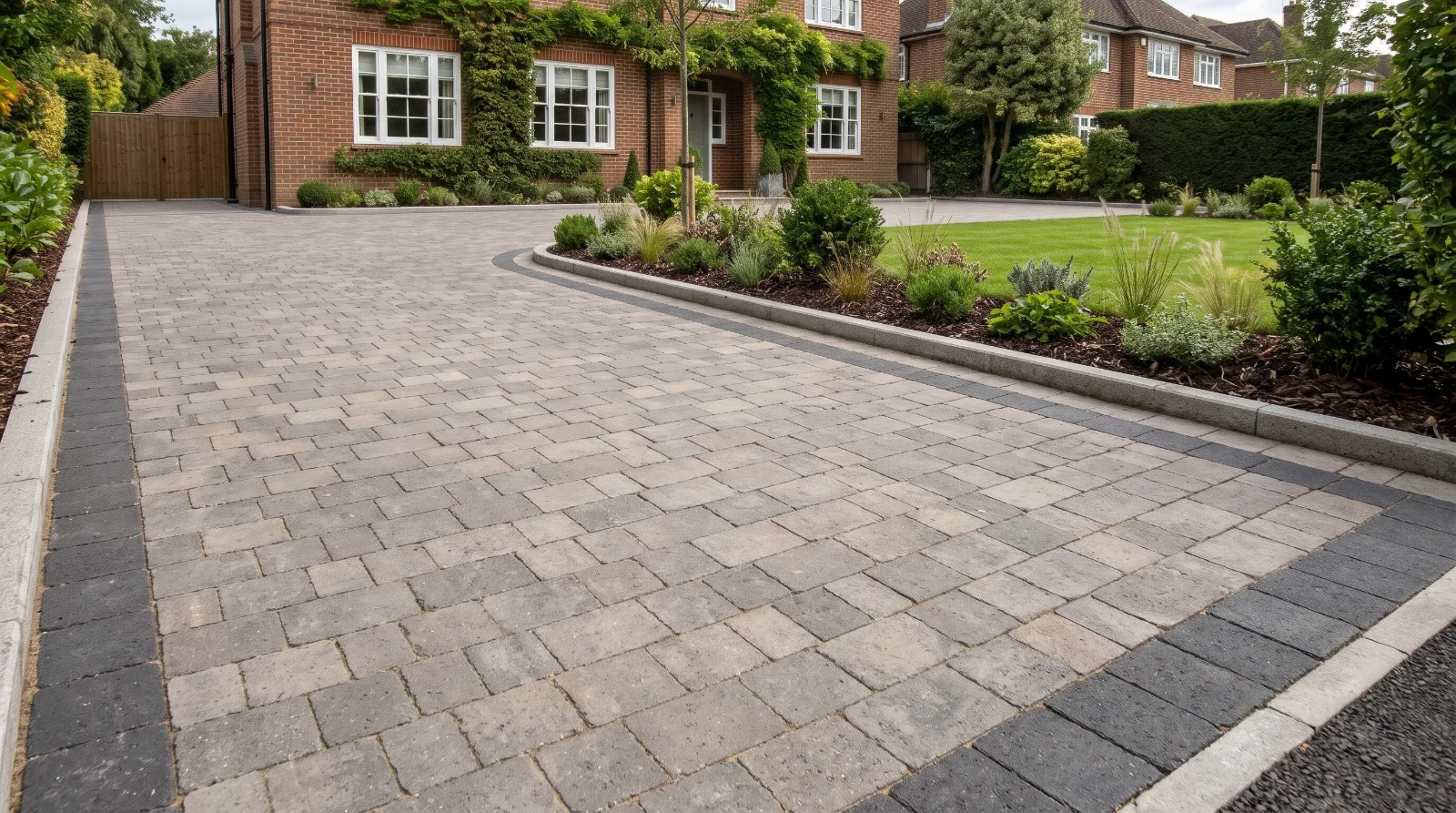
One of the simplest ways to make a block paving driveway look more distinctive is to introduce a contrasting border around the main paved area.
For example, charcoal blocks against a lighter grey driveway can create a crisp, contemporary finish. Red or brown paving can be framed with darker blocks to complement traditional brickwork.
The border can follow the perimeter of the driveway or highlight particular features, such as the entrance, turning area or approach to the garage.
A single contrasting row can be enough to define the space, while a wider border creates a more pronounced decorative feature. The proportions should suit the driveway rather than compete with the main paving pattern.
This approach works particularly well when the border colour relates to another feature of the property, such as the roof, window frames, brickwork or front boundary wall.
2. Choose Natural Stone Setts for a Premium Finish
Natural stone setts can give a driveway a more substantial, traditional appearance. Granite, sandstone and other suitable stone products offer different colours, textures and finishes, making them versatile options for many residential properties.
Setts can be installed as a narrow border along the driveway, used to frame a turning area or incorporated into a wider decorative band.
Granite setts, for instance, can introduce a strong visual contrast against lighter paving. Sandstone can provide warmer tones that complement traditional homes and softer garden landscaping.
When choosing natural stone, consider its colour variation, surface texture and suitability for vehicle use. The product and installation method need to be appropriate for the driveway conditions, particularly where vehicles will regularly cross the edging.
For Surrey homes with established gardens or traditional brick façades, a well-proportioned stone border can connect the driveway with the character of the property.
3. Use Raised Kerbs to Create a Clear Boundary
Raised kerbs are a practical option when you want a clearly defined edge between the driveway and the surrounding ground.
They are particularly useful where a driveway meets a lawn, gravel area, planting bed or a change in ground level. Depending on the design, kerbs can create a subtle raised line or a more prominent boundary.
Available in different profiles, sizes and finishes, kerbs can complement both contemporary and traditional driveway designs. A simple grey kerb may suit modern paving, while a more textured finish can work well alongside natural stone.
However, kerbs should not be selected on appearance alone. A driveway used by vehicles needs suitable edge restraints capable of handling the expected loads. The foundation and supporting details are just as important as the visible finish.
The height of the kerb also matters. A raised edge may help contain gravel or separate planting from paving, but it should not create an awkward obstruction at entrances, pedestrian routes or parking positions.
4. Consider a Flush Edge for a Clean, Modern Look
If you prefer a subtle finish, a flush or near-flush edging detail can create a neat transition between the driveway and the surrounding landscape.
This works well in contemporary gardens where clean lines and uninterrupted surfaces are important. It can also be useful where you want the driveway to sit visually alongside a lawn or planted border without a prominent raised kerb.
A flush appearance does not mean the edge can be left unsupported. The construction still needs an appropriate restraint or perimeter detail to prevent the surface from moving.
The chosen materials must also be compatible. For example, a paved driveway meeting a lawn needs a detail that maintains the edge while allowing the grass to be trimmed without damaging the paving.
Where the ground slopes or water needs to cross the boundary, the levels and drainage arrangements should be planned before construction begins.
5. Separate the Driveway from Planting Beds
Not every driveway needs a decorative stone or contrasting paving border. Sometimes, a simple separation between the hard surface and a planted bed creates the best result.
Low planting can soften a large expanse of paving and introduce colour and texture to the front garden. Suitable options might include compact shrubs, ornamental grasses or structured evergreen planting, depending on the available light and maintenance requirements.
A narrow planting bed alongside the driveway can also help connect the hard landscaping with the rest of the garden.
However, keep the driveway's practical use in mind. Plants should not obstruct vehicle access, reduce visibility when entering or leaving the property, or grow across the usable parking area.
The boundary between paving and planting still needs to be properly detailed. Suitable edging can help contain soil and mulch, maintain a tidy line and reduce the amount of material spilling onto the driveway.
6. Use Gravel Borders to Add Texture
Gravel can provide a softer contrast against block paving, resin-bound surfacing or other driveway materials. It introduces a different texture without requiring an elaborate decorative pattern.
A narrow gravel strip can frame the driveway, separate it from a wall or planting bed, or complement a more naturalistic front garden.
Choose a gravel colour that works with the main driveway surface and the exterior of the house. Pale gravel can contrast with dark paving, while warmer stone tones may suit red brick and traditional properties.
Gravel needs to be contained so it does not spread onto the paved area, path or public pavement. A suitable retaining edge, together with a properly prepared base, helps keep the border in place.
Consider how the border will be maintained, too. Leaves, soil and weeds can accumulate between loose stones, particularly beside trees and planting beds.
7. Add a Decorative Entrance Border
The entrance to a driveway is an opportunity to introduce a detail that makes the approach to your home feel more considered.
You could use contrasting blocks across the entrance, stone setts to frame the transition between the road and driveway, or a wider border that leads towards the garage or front door.
This feature can be particularly effective on longer driveways, where a change in pattern helps break up a large paved surface.
The key is to use decorative detailing selectively. Too many colours, borders and patterns can make the driveway look busy, whereas one well-chosen feature creates a clearer visual focus.
The entrance also needs to remain practical. Changes in level, edging heights and surface materials should be designed around vehicle movement and safe pedestrian access. Where the driveway meets the pavement or road, the relevant access requirements should be checked before work begins.
8. Match the Edging to Your Driveway Material
The most suitable edging depends partly on the driveway surface itself.
Driveway surface | Edging options to consider | Main consideration |
|---|---|---|
Block paving | Contrasting blocks, kerbs or stone setts | Secure restraint to help prevent the paving from spreading |
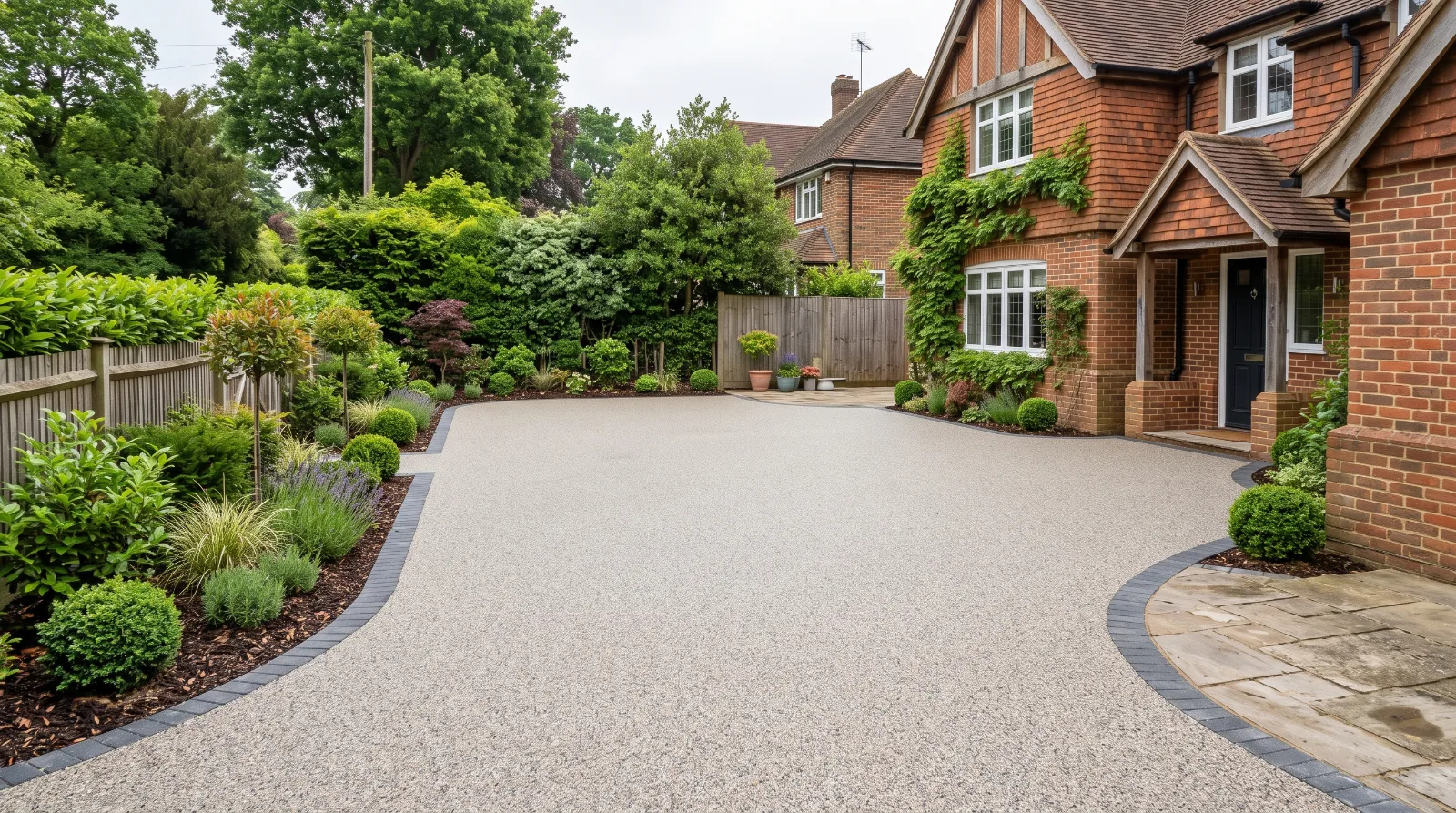
Resin-bound surfacing | Suitable kerbs or solid perimeter edging | A stable, clean boundary for the resin surface |
Gravel | Timber edging where suitable, metal edging or kerbs | Preventing loose gravel from migrating |
Tarmac or asphalt | Concrete kerbs or suitable block paving borders | Supporting the edge and creating a neat transition |
Concrete driveway | Suitable concrete edging or kerbs | Compatible levels, joints and perimeter detailing |
These options are starting points rather than fixed rules. The material, driveway construction, ground conditions and expected vehicle loads all influence which edging system is appropriate.
It is especially important to distinguish between a decorative border and a structural edge restraint. A contrasting row of paving may contribute to both functions when properly installed, but simply adding decorative blocks against an existing driveway will not necessarily prevent movement.
9. Why Proper Edge Restraints Matter
The appearance of driveway edging is only one part of the installation. Its construction can affect how the driveway performs over time.
With block paving, the outer blocks need sufficient restraint to reduce movement under vehicle loads. Without a properly supported edge, blocks may gradually spread apart, creating wider joints and an uneven perimeter.
Other driveway materials have their own requirements. Resin-bound surfacing needs a suitable, stable edge detail, while gravel requires effective containment to stop loose material migrating into surrounding areas.
Good preparation includes setting out the finished line, establishing the correct levels, preparing a stable support and installing the edging in accordance with the chosen system's specifications.
The perimeter also needs to work with the drainage design. Water should be directed towards a suitable drainage point or other appropriate solution rather than being allowed to collect against buildings or flow into neighbouring properties.
These details are easier to coordinate when the edging is planned alongside the main driveway rather than added as an afterthought.
10. Common Driveway Edging Mistakes to Avoid
Even attractive edging can disappoint if it is poorly chosen or installed.
Keep these common mistakes in mind when planning your driveway:
Choosing edging on appearance alone: A decorative product may not be suitable for the loads or conditions at the driveway's edge.
Using too many contrasting materials: Excessive changes in colour and texture can make the design look cluttered.
Ignoring the levels: Uneven edging can look untidy and create awkward transitions between surfaces.
Forgetting drainage: Raised boundaries and poorly planned falls can contribute to water collecting in the wrong places.
Allowing planting to overgrow the edge: Uncontrolled growth can obscure the border and reduce usable driveway space.
Treating edging as an optional extra: The perimeter should be included in the original layout and construction plan.
A well-designed driveway usually benefits from a consistent material palette and edging that complements the main surface rather than competing with it.
Finish Your Driveway with Surrey Oak Landscapes
Driveway edging can make a noticeable difference to the finished appearance of your property. A contrasting block border, natural stone setts, neat kerbs or a carefully planted perimeter can help the driveway feel connected to the house and garden.
Just as importantly, the right edge restraint supports the driveway surface and helps keep the perimeter neat and stable. The best solution combines a suitable construction detail with a finish that suits the property.
At Surrey Oak Landscapes, we provide driveway and hard landscaping services to help homeowners create practical, well-finished outdoor spaces. Whether you are planning a new driveway or upgrading an existing entrance, careful attention to the edging and surrounding landscaping can bring the whole design together.
Planning a new driveway or looking to improve your existing one?
About the author