How Much Does a New Patio Cost in Surrey?
Find out how much a new patio costs in Surrey, compare paving materials and learn how size, groundwork and drainage affect installation costs.
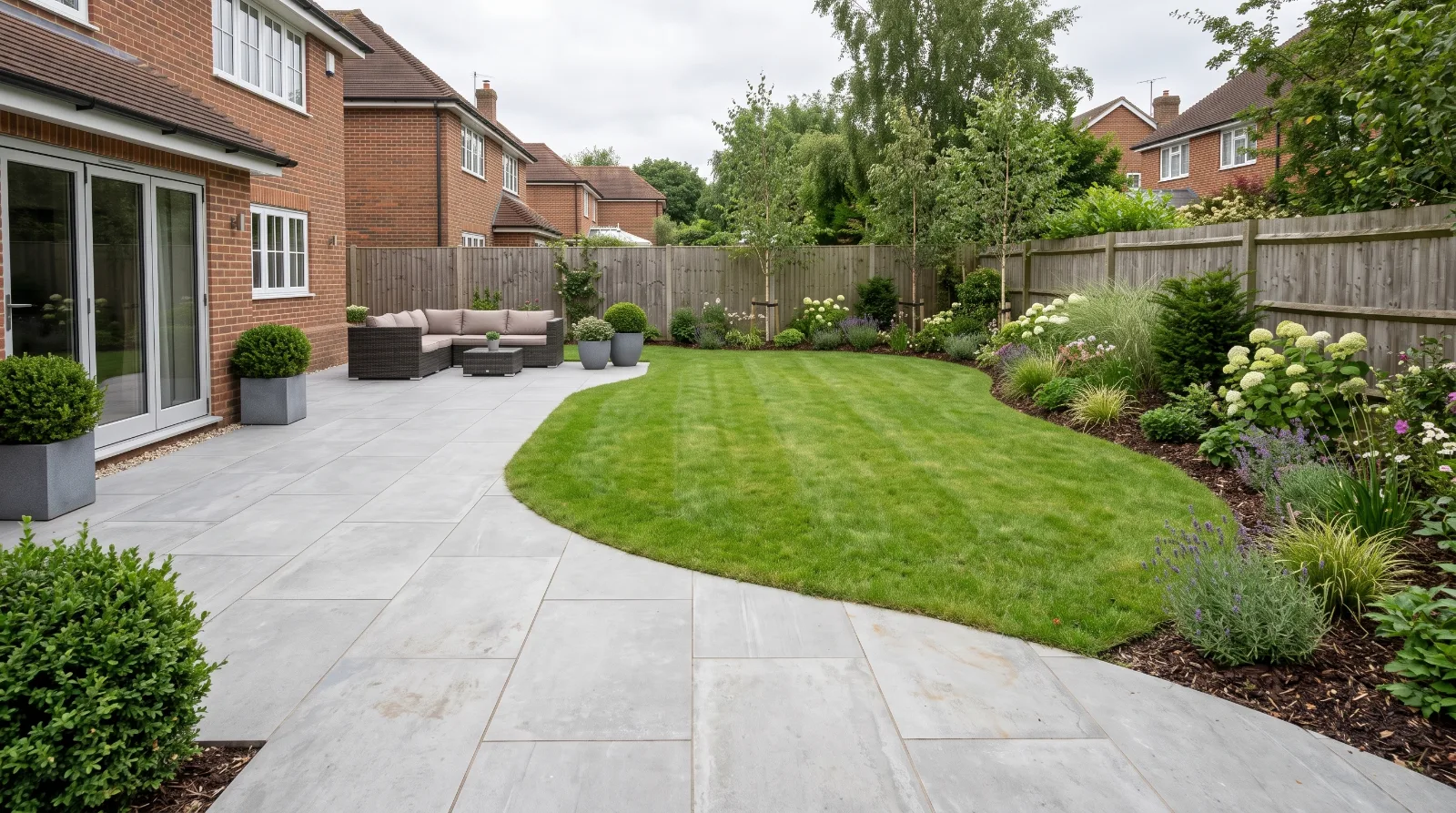
A new patio can transform your garden into a practical space for outdoor dining, relaxing and entertaining. Whether you prefer traditional Indian sandstone, contemporary porcelain paving or a simple concrete finish, the right patio can complement your home and make better use of your outdoor space.
However, the cost of installing a new patio in Surrey depends on more than the paving itself. The size of the area, ground preparation, drainage, site access and complexity of the design can all affect the final price.
This guide explains the typical costs to consider, compares popular paving materials and outlines what to look for when planning a patio project.
How Much Does a New Patio Cost in Surrey?
As a broad guide for 2026, a straightforward professionally installed patio of around 20–25m² might cost approximately £2,000 to £4,000, depending on the materials and site requirements. More complex projects involving premium paving, extensive excavation, steps or drainage improvements can cost considerably more.
The figures below are indicative budgeting estimates, not fixed prices or quotations from Surrey Oak Landscapes. Published price guides vary according to their location, specification and what is included in the installation.
Paving material | Estimated installed cost per m² | Example cost for 25m² |
|---|---|---|
Concrete paving slabs | £65–£85 | £1,625–£2,125 |
Indian sandstone | £85–£115 | £2,125–£2,875 |
Porcelain paving | £95–£140 | £2,375–£3,500 |
Natural limestone | £90–£130 | £2,250–£3,250 |
Granite paving | £100–£160 | £2,500–£4,000 |
These are approximate price-guide ranges for planning purposes. They are not guaranteed prices for a particular Surrey property. The example totals are calculated by multiplying each square-metre range by 25, so they should not be treated as confirmed project quotations.
Some published estimates exclude VAT or additional work, while others include more extensive groundwork and waste removal. Always check the scope of a quotation before comparing prices.
1. How Your Choice of Paving Affects the Cost
The paving material you choose influences the initial cost, appearance and maintenance requirements of your finished patio.
Concrete Paving Slabs
Concrete paving is often one of the more affordable ways to create a practical patio. Available in different sizes, colours and textures, it can suit anything from a simple seating area to a larger family garden.
Modern concrete slabs can also replicate the appearance of natural stone, offering a more decorative finish without necessarily requiring a premium material budget.
Concrete paving is worth considering if you want a straightforward, functional outdoor surface. However, the quality of the slabs and the installation method will influence how well the finished patio performs over time.
Indian Sandstone
Indian sandstone remains a popular choice for traditional and contemporary gardens because of its natural texture and variation in colour.
Individual slabs have distinctive patterns and tones, helping create a patio that feels less uniform than a manufactured surface. Neutral greys, warm browns and softer buff shades can work particularly well alongside lawns, planting beds and brickwork.
Sandstone generally sits above basic concrete paving in price, although the final cost depends on the stone's grade, finish and laying pattern.
Natural stone can require more attention to cleaning and maintenance than some porcelain options. Choosing suitable paving and having it installed correctly helps preserve its appearance.
Porcelain Paving
Porcelain paving is particularly popular in modern garden designs. Its consistent colour, clean edges and range of finishes make it suitable for contemporary patios, outdoor kitchens and carefully planned entertaining areas.
Porcelain is non-porous compared with many natural stones, so it generally absorbs very little water and does not require the same routine sealing as some natural stone products.
However, porcelain paving requires suitable installation materials and careful preparation. The outdoor-rated slabs, bedding system and jointing products must be appropriate for the job.
Although the initial price can be higher than concrete paving, porcelain is worth considering for homeowners who want a crisp, contemporary finish with relatively straightforward maintenance.
Natural Limestone and Granite
Limestone can provide a refined, understated appearance, while granite offers a distinctive finish and is known for its durability.
Both can work well in high-quality garden designs, particularly where the paving needs to complement architectural features or other stone finishes.
These materials vary considerably in price according to their source, finish and specification. Granite can be among the more expensive options, so it is important to compare the complete installed cost rather than the price of the paving alone.
2. What Factors Affect the Cost of a New Patio?
Even when two patios use exactly the same paving, their final costs can differ considerably. The condition of the garden and the work needed to prepare the site often account for a substantial part of the budget.
Patio Size and Layout
The total area is one of the most obvious factors affecting cost. A larger patio requires more paving, bedding materials, jointing products and installation time.
However, the price does not always increase in direct proportion to the size. Smaller projects can have a higher cost per square metre because excavation, equipment, delivery and site preparation still involve fixed costs.
The shape also matters. A simple rectangular patio is generally quicker to lay than one with curves, circular features, multiple levels or intricate borders. More complicated designs require additional cutting and careful positioning.
Ground Preparation and Excavation
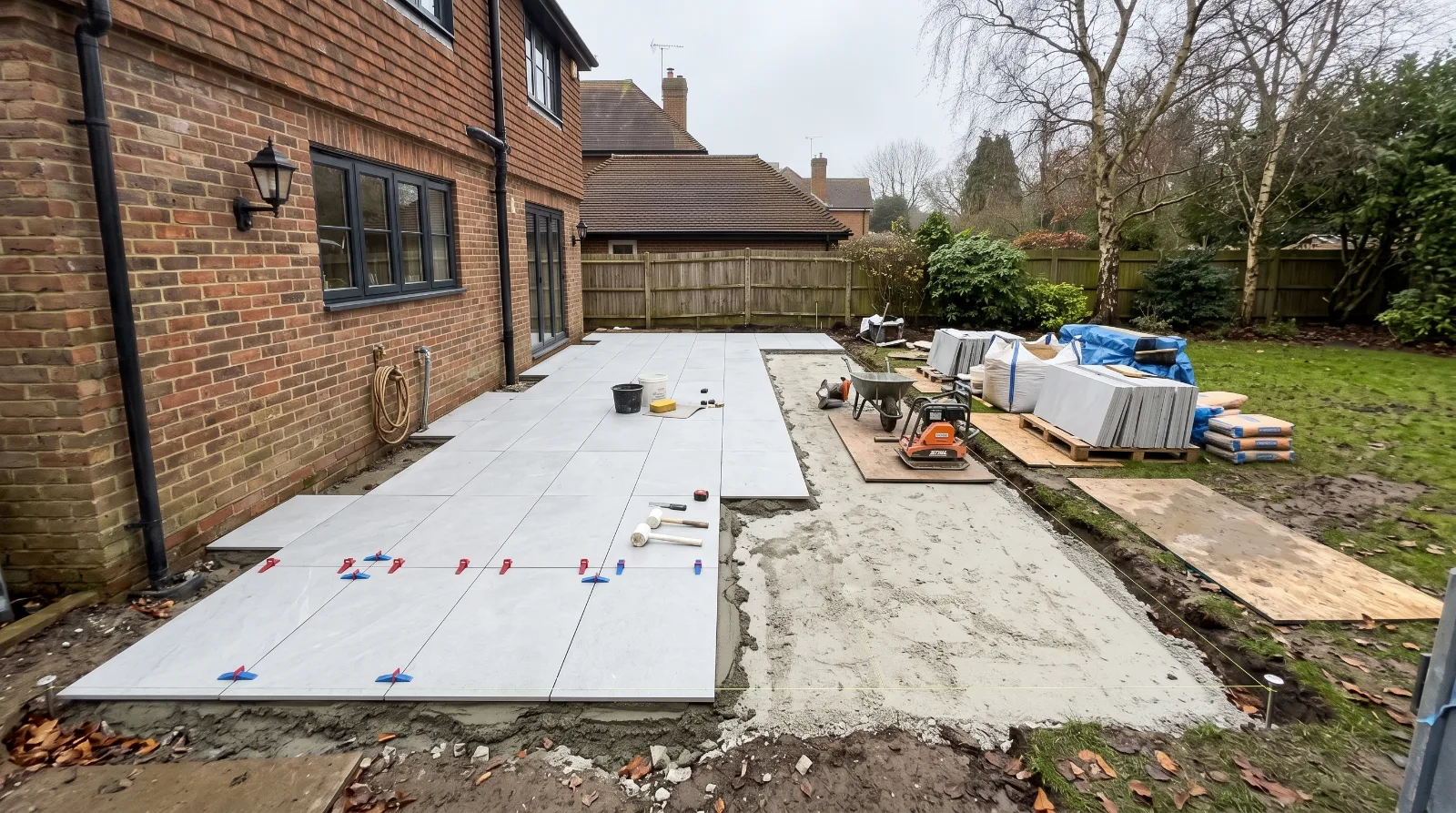
Before the paving can be installed, the ground needs to be excavated and prepared to suit the finished surface.
Depending on the existing garden, this may involve removing turf, digging out soil, breaking up an old patio and disposing of unwanted materials.
A suitable sub-base must then be installed and compacted to provide a stable foundation. The required construction will depend on the ground conditions, paving system and intended use of the area.
Poor preparation can contribute to sinking slabs, uneven surfaces and failing joints. It is therefore important to understand what groundwork is included in a quotation rather than focusing only on the visible paving.
Drainage and Levels
A patio needs to manage rainwater effectively. Its finished levels should direct water away from the house and towards a suitable drainage arrangement.
If the garden is already waterlogged, has poor falls or collects water near the property, additional drainage work may be necessary.
This could involve channel drains, adjustments to levels or other site-specific measures. Such work adds to the budget but can help prevent water-related problems after installation.
Access to the Garden
The ease of getting materials and equipment to the working area can also affect the price.
A garden with straightforward side access may require less labour than one where materials must be carried through the house or along a narrow passage.
Restricted access can also make excavation and waste removal more time-consuming. The contractor should assess these conditions before providing a firm quotation.
3. What Should a Patio Installation Quote Include?
When comparing quotes, make sure you understand exactly what each contractor is proposing.
A comprehensive patio installation quotation should clearly explain the relevant elements of the project, including:
Work involved | What to check |
|---|---|
Site clearance | Whether turf, vegetation or existing paving will be removed |
Excavation | The amount of digging and disposal included |
Sub-base | The proposed material, preparation and compaction |
Bedding | The specified mortar or other suitable bedding system |
Paving supply | The type, finish, size and quantity of slabs |
Installation | Laying, cutting, edging and jointing |
Drainage | How surface water will be managed and whether additional drainage is required |
Waste removal | Whether skip hire or other disposal costs are included |
Not every project requires every additional item. The important thing is that the quotation reflects the actual work needed for your garden.
Be cautious about choosing a quote purely because it is the cheapest. If the groundwork or waste removal has been omitted, the apparent saving may not represent the true cost of completing the project.
4. Additional Features That Can Increase the Budget
A patio often forms part of a wider garden transformation. Adding other features can make the area more useful, but these should be considered when establishing your budget.
Steps and level changes: If the patio connects different parts of the garden, steps or additional construction may be needed.
Retaining walls: Where the design involves raised areas or changes in ground level, retaining structures may be necessary.
Edging and borders: Contrasting paving, stone edging or decorative borders can give the finished patio a more defined appearance.
Outdoor lighting: Lighting around steps, seating areas and planting can help make the patio more enjoyable after dark.
Planting and lawn areas: Borders, specimen trees and new lawn can soften the paved area and connect it with the rest of the garden.
Outdoor kitchens and pergolas: Integrating a patio with an outdoor kitchen or pergola can create a more complete outdoor living space, although these additions need to be budgeted for separately.
Planning these features alongside the patio can help create a cohesive design and avoid making unnecessary changes once the paving is installed.
5. How Can You Keep Patio Costs Under Control?
A carefully planned patio does not need an unnecessarily complicated design to look impressive. There are several ways to manage the budget while still achieving a high-quality finish.
Choose a practical layout. Straightforward shapes generally require less cutting and are easier to install.
Compare materials carefully. Consider the initial cost, appearance, durability and maintenance requirements of each option.
Get the groundwork right. Saving money by compromising on preparation can lead to expensive repairs later.
Plan additional features early. Decide on steps, drainage, lighting and planting before the installation begins.
Compare like-for-like quotes. Check that contractors are quoting for the same paving, preparation, finishing and waste removal.
It is also worth considering how the patio will be used. A dining area needs sufficient room for a table and chairs, while a space designed for a lounge area may need a different layout.
Planning around your everyday needs can help prevent overspending on an area that does not work well once it is complete.
6. How Long Does It Take to Install a Patio?
A straightforward patio may take several days to complete, while a larger or more complicated project can take longer.
The timescale depends on the area being paved, the amount of excavation, site access, the chosen materials and any additional construction or drainage work.
Ground preparation and laying the paving are only part of the process. Bedding and jointing materials also need suitable conditions to cure, and poor weather can affect progress.
Your contractor should be able to give a more realistic schedule after assessing the garden and confirming the proposed design.
Get a Quote for a New Patio in Surrey
The cost of a new patio depends on the material, size, groundwork and details of the finished design. Published price guides are useful for initial budgeting, but they cannot account for every garden or provide a guaranteed price.
A site assessment helps establish the existing ground conditions, access requirements, drainage needs and most suitable paving options. From there, a tailored quotation can set out the work required and clarify what is included in the total.
At Surrey Oak Landscapes, we bring together paving, groundworks, planting and wider garden design to create outdoor spaces that are attractive, practical and suited to your property.
Planning a new patio?
About the author