Can You Lay a Patio in Winter?
Can you lay a patio in winter? Discover how frost, rain and ground conditions affect paving, when installation can go ahead and how to plan a long-lasting patio for your Surrey garden.
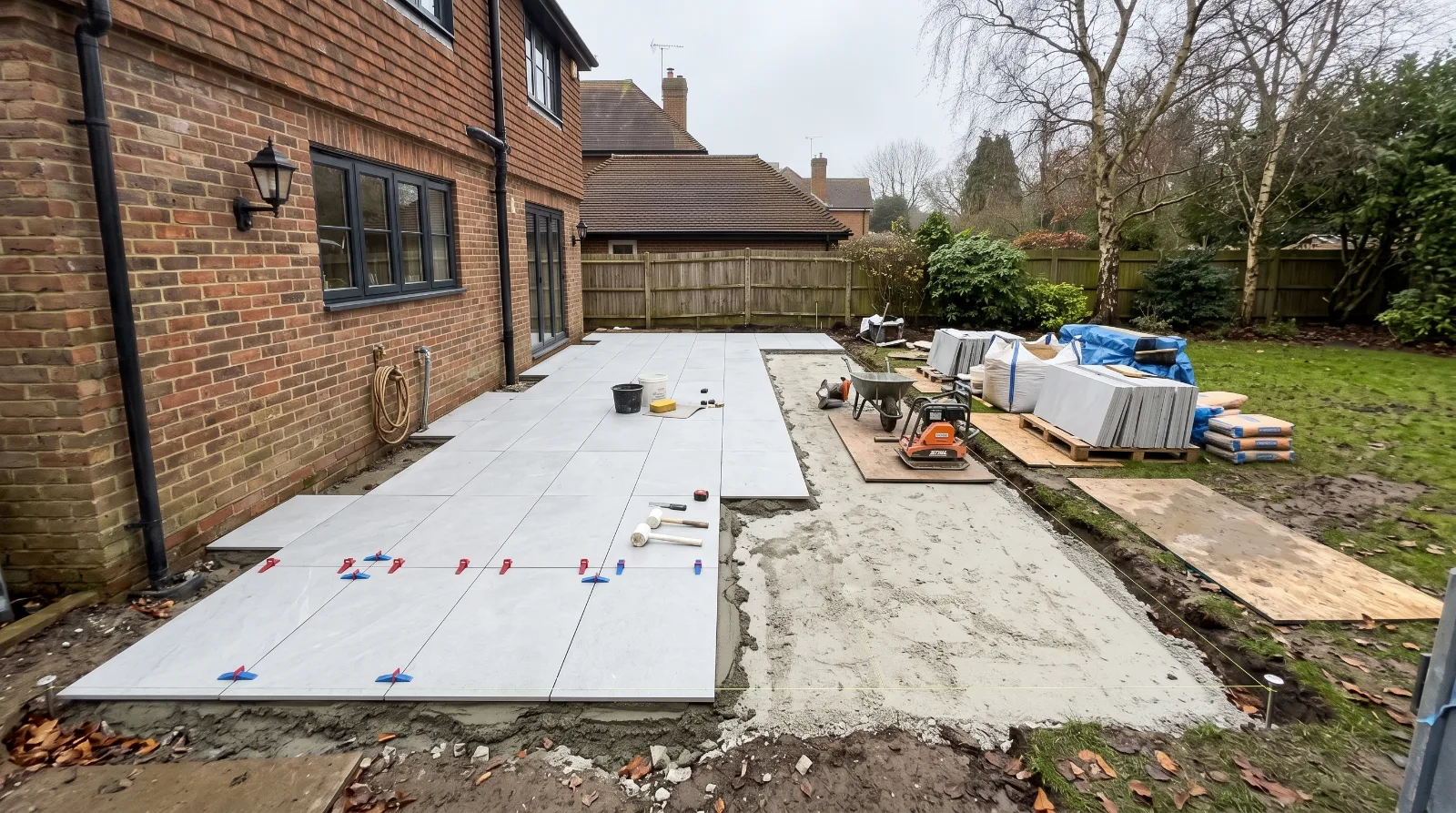
Planning a new patio during the colder months can raise a few questions. Is the weather suitable for paving? Will the slabs settle properly? And is it better to wait until spring before starting the work?
The good news is that you can lay a patio in winter in the UK, provided the weather and ground conditions are suitable. The main challenges are frost, heavy rain, waterlogged ground and the slower curing of bedding and jointing materials in cold temperatures.
For homeowners in Surrey considering a new patio, winter can be a useful time to plan the project and, during suitable weather, carry out the installation. Understanding which stages can proceed and when work should be postponed helps protect the quality and longevity of the finished patio.
Is Winter a Good Time to Lay a Patio?
Winter is not automatically unsuitable for patio installation. What matters most is the condition of the ground, the materials being used and the forecast during and after installation.
During a mild, dry spell, certain landscaping work may proceed without difficulty. However, a cold snap or prolonged rainfall can make conditions unsuitable, even if the weather initially appears manageable.
When Patio Installation Can Go Ahead
Winter patio installation may be possible when:
The ground is workable and not frozen or saturated.
The paving base is properly prepared and stable.
Temperatures meet the requirements of the bedding mortar, primer and jointing products.
There is no risk of frost damaging fresh work before it has hardened sufficiently.
The weather is suitable for the installation method and materials being used.
These conditions need to be assessed throughout the project rather than just on the day the slabs are laid.
When Is It Better to Wait?
It is generally better to postpone laying paving when the ground is frozen, the base is saturated or frost is expected while cement-based materials are curing.
Heavy rain can also interfere with bedding and jointing, wash material out of joints or leave the foundation too wet to work with properly.
Although protective covers can help shield suitable work from rain and overnight conditions, they are not a substitute for a suitable installation environment.
1. How Does Cold Weather Affect Patio Installation?
The biggest challenge with winter paving is not the slabs themselves but the materials and groundwork beneath them.
Mortar Needs Suitable Temperatures to Cure
Many traditional patios are installed using a mortar bedding layer. Cement-based materials need appropriate conditions to develop their strength, and cold temperatures slow this process.
If the mortar freezes before it has hardened sufficiently, the installation can be weakened. Slabs may become loose, move out of position or develop problems that only become apparent later.
The precise temperature limits depend on the product being used, so installers should follow the relevant manufacturer's instructions. As a general precaution, traditional paving work is commonly avoided when temperatures are around 3°C or lower, particularly when readings are falling or frost is forecast.
Frozen or Waterlogged Ground Causes Problems
A patio needs a stable foundation to remain level and perform well over time.
Frozen ground can change as it thaws, while saturated soil may be difficult to excavate and compact properly. These conditions can contribute to settlement, uneven paving and drainage problems.
In gardens with heavy clay soil, which can occur in parts of Surrey, wet winter conditions may make groundwork particularly challenging.
If the ground is too wet or unstable, delaying excavation or sub-base preparation is often the better decision.
Rain Can Affect Bedding and Jointing
Persistent rain can saturate the base, interfere with mortar work and make it difficult to achieve a clean finish.
Jointing products also have their own installation requirements. Some need dry weather, while others specify particular temperature ranges or restrictions on moisture.
Rather than following a fixed winter timetable, each stage should be carried out when the conditions are appropriate for the chosen materials.
2. Which Patio Installation Tasks Can Be Done in Winter?
Not every part of a patio project carries the same weather risks. Some stages are more flexible than others, while the actual laying and finishing work often requires a suitable window of conditions.
Installation task | Winter suitability | Main consideration |
|---|---|---|
Garden measurements and design | Generally suitable | Can be completed regardless of paving conditions |
Material selection and ordering | Generally suitable | Check availability and allow time for delivery |
Site preparation and excavation | Depends on ground conditions | Avoid frozen or saturated soil |
Sub-base installation | Possible in suitable conditions | Materials must be workable and properly compacted |
Laying slabs on a mortar bed | Weather-dependent | Protect fresh work from frost, unsuitable temperatures and heavy rain |
Porcelain paving installation | Weather and product-dependent | Correct preparation, bonding products and installation conditions are essential |
Pointing and jointing | Weather and product-dependent | Follow the jointing product's temperature and moisture requirements |
This distinction is useful when planning a project. Measurements, design decisions and material selection can be completed while waiting for a suitable installation period.
Where ground conditions allow, some preparation may also proceed. The finishing stages, however, should never be rushed simply to complete the project before a spell of cold weather.
3. Can Porcelain and Natural Stone Patios Be Laid in Winter?
Both porcelain and natural stone can be suitable for UK gardens, but their installation requirements differ.
Porcelain Paving
Porcelain paving is popular for contemporary patios because of its consistent appearance and relatively low routine maintenance requirements.
Its low water absorption can make the slabs themselves highly resistant to frost damage, but that does not remove the need for correct installation.
Porcelain generally requires a suitable bonding slurry or primer and an appropriate bedding system to achieve a reliable bond. These products may have specific temperature and weather requirements.
In winter, installers must also ensure that the base is suitable and that fresh joints and bedding are protected as required. A frost-resistant slab cannot compensate for a poorly prepared foundation or unsuitable installation conditions.
Natural Stone Paving
Natural stone, including sandstone and limestone, offers a more varied appearance, with natural colour differences and surface textures.
These materials also need correct preparation and installation. Depending on the stone, porosity, finish and product specification, additional care may be required to avoid staining, moisture-related problems or damage during installation.
The bedding method, jointing material and weather conditions should all be considered before work begins.
Ultimately, neither material is automatically the better choice for winter installation. The quality of the foundation and adherence to the appropriate installation method matter more than selecting a slab solely because it is intended for outdoor use.
4. How to Prepare for a Winter Patio Project
Good planning makes it easier to take advantage of suitable weather without compromising the final result.
Check the Ground and Drainage
Before installation begins, assess the existing ground, soil conditions and how water moves through the garden.
A stable sub-base and suitable drainage are essential for long-term performance. The completed patio should also be designed with appropriate falls so water does not collect on the surface or drain towards the house.
If the garden already suffers from standing water, it is worth addressing the cause as part of the project rather than simply covering the problem with new paving.
Choose the Right Materials
Select paving that suits the property's style and the way the patio will be used. Consider the surface finish, slip resistance in wet conditions, maintenance requirements and compatibility with the chosen installation system.
It is also sensible to confirm that bedding and jointing products are appropriate for the expected weather before ordering materials.
Allow for Weather-Related Delays
Winter weather can change quickly. A period of mild conditions may be followed by heavy rain or an overnight frost, potentially interrupting the installation.
Build flexibility into the schedule and allow sufficient time for bedding and jointing materials to cure. Do not assume that a newly laid patio is ready for normal use simply because the surface looks finished.
Protect Freshly Laid Paving
Where the product and installation method permit, suitable protective coverings can help shield fresh work from rain and frost.
Protection should be used in accordance with the material manufacturer's instructions and should not trap damaging amounts of moisture or interfere with curing.
A responsible installer will assess the forecast, protect work appropriately and postpone tasks when conditions are unsuitable.
5. Should You Wait Until Spring to Install a Patio?
Spring and early autumn often provide more convenient conditions for patio installation because temperatures are milder and severe frost is generally less frequent.
However, winter does not mean every project has to wait.
If the ground is workable and a sufficiently mild, dry period is available, installation may be possible. If conditions are persistently wet or freezing, waiting for a better window is usually the more sensible option.
There is also value in planning the project during winter, even if the physical work cannot begin immediately. Finalising the layout, choosing paving, discussing drainage and arranging access can help prepare everything for installation when conditions improve.
For Surrey homeowners hoping to enjoy a new patio in spring, early planning can help reduce last-minute decisions and make the project easier to organise.
6. Common Winter Patio Installation Mistakes to Avoid
A successful patio depends on the quality of the whole installation, not simply how neatly the slabs are arranged.
Avoid these common mistakes:
Laying paving on frozen ground: The base can change as it thaws, potentially causing movement.
Ignoring the weather forecast: Frost and heavy rain can compromise fresh bedding and jointing.
Rushing the foundation: Poor excavation or inadequate compaction can lead to settlement and uneven slabs.
Overlooking drainage: Standing water can create maintenance problems and increase the risk of ice forming during cold weather.
Using unsuitable installation products: Bedding, primers and jointing compounds must be compatible with the paving and weather conditions.
Using the patio too soon: Freshly laid paving needs sufficient time to settle and cure before it is subjected to regular foot traffic or heavy loads.
Taking the time to get these details right helps reduce the likelihood of repairs and protects the investment in the finished garden.
Plan Your Patio Installation with Surrey Oak Landscapes
So, can you lay a patio in winter? Yes, provided the weather, ground conditions and installation materials are suitable. The most important consideration is ensuring that every stage is completed properly rather than working to an inflexible deadline.
For homeowners in Surrey, a winter patio project can begin with the design, measurements and material choices, with installation arranged around suitable conditions. Where the weather permits, work can progress; where frost or waterlogged ground creates a risk, postponing the affected stages is often the better long-term decision.
At Surrey Oak Landscapes, we consider patio installation as part of the wider garden, taking account of paving, levels, drainage and the surrounding landscaping to create a practical, cohesive outdoor space.
Whether you are planning a contemporary porcelain terrace or a traditional natural stone patio, our team can help you explore the right options for your property.
About the author