Are Resin-Bound Driveways Permeable?
Resin-bound driveways allow rainwater to pass through the surface when installed over a suitable base. Discover how permeability works and what Surrey homeowners should consider before installation.
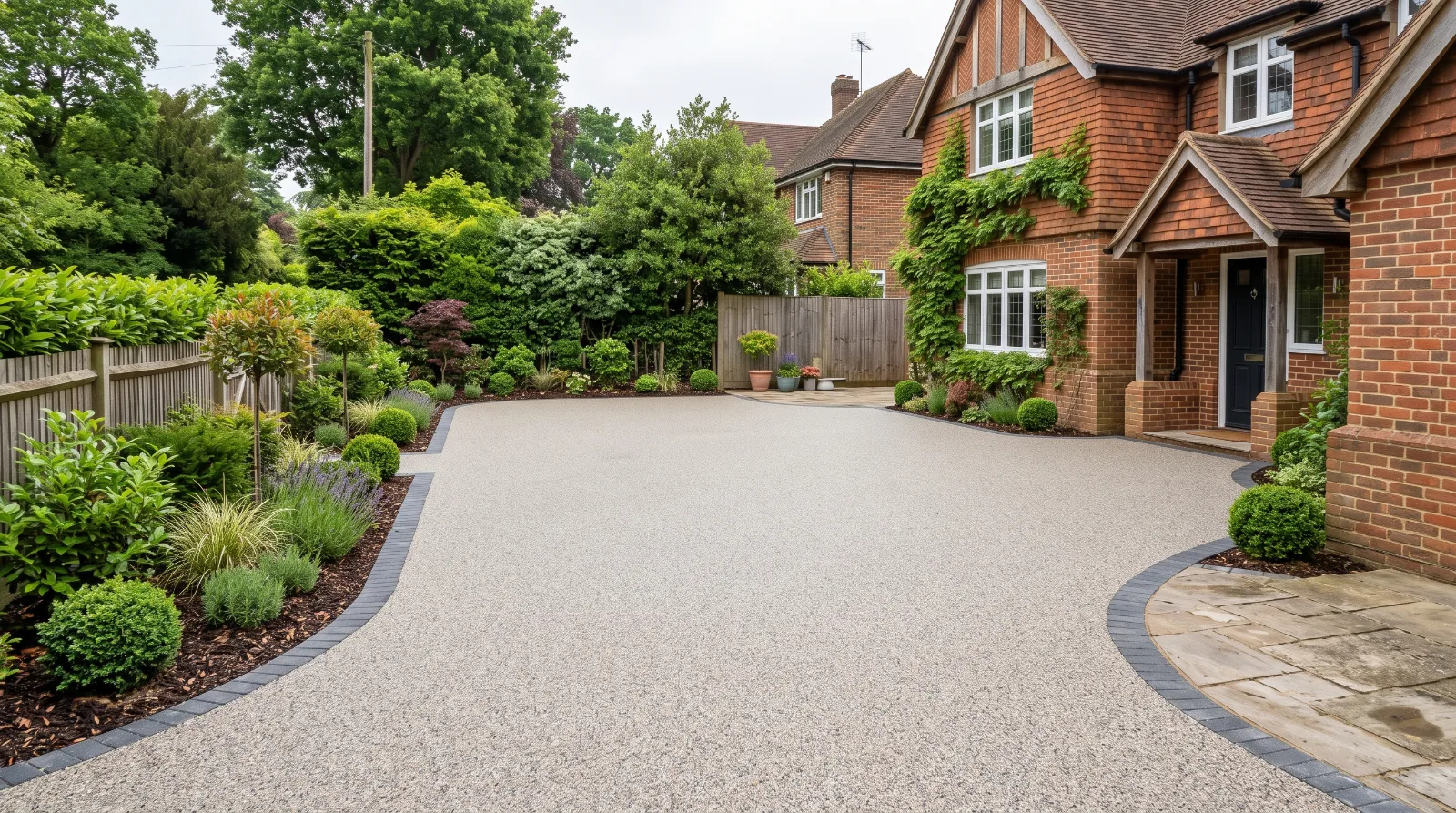
Resin-bound driveways are a popular choice for homeowners looking for a clean, contemporary finish without compromising on practical drainage. Their smooth appearance, range of aggregate colours and relatively low maintenance requirements make them suitable for many gardens and driveways across Surrey.
One of their biggest advantages is permeability. Unlike many conventional driveway surfaces, a properly installed resin-bound driveway allows rainwater to pass through the surface rather than simply running across it.
However, the drainage performance depends on more than the surface itself. The base beneath it, the condition of the ground and the way the installation is designed all play an important role.
Are Resin-Bound Driveways Permeable?
Yes, resin-bound driveways are permeable when installed as part of a suitable drainage system. The surface is created by mixing natural aggregate with a specialist resin before spreading and smoothing the mixture over a prepared base.
This creates a firm, even finish with small interconnected gaps between the stones. Rainwater can pass through these gaps into the layers beneath, where it can soak into the ground or be managed through an appropriate drainage arrangement.
This can help reduce surface water, limit puddling and manage rainfall more effectively around your property.
It is important to remember that permeability depends on the complete driveway construction. If water passes through the surface but meets an unsuitable or impermeable base, it may become trapped underneath. A permeable finish alone does not guarantee effective drainage.
How Does a Resin-Bound Driveway Drain Water?
A resin-bound driveway works as a layered system, with each part contributing to its performance.
The resin-bound surface: Rainwater passes through the small gaps between the aggregate particles.
The base and sub-base: Suitable underlying materials allow water to move through the construction and provide space for temporary storage.
The surrounding ground or drainage system: Depending on the soil and site conditions, water can infiltrate into the ground or be directed towards a suitable drainage solution.
When these elements are designed correctly, rainfall can be managed close to where it lands rather than immediately flowing towards the road or nearby drains.
This is particularly useful for driveways where standing water has previously been a problem. However, the amount of water the ground can absorb varies from one property to another, so drainage should always be considered before installation.
Resin-Bound vs Resin-Bonded: What Is the Difference?
Although the names sound similar, resin-bound and resin-bonded surfacing are made differently and have different drainage properties.
Feature | Resin-bound | Resin-bonded |
|---|---|---|
Installation method | Aggregate is mixed with resin before laying | Resin is applied first, then loose aggregate is scattered over it |
Appearance | Smooth, even and textured by the stone | Rougher, with exposed aggregate |
Permeability | Permeable when correctly installed | Generally non-permeable |
Drainage | Water can pass through the surface | Water mainly runs across the surface |
If drainage is a priority, resin-bound surfacing is generally the more suitable option. It is worth confirming the exact system being proposed, as the term “resin driveway” can refer to either method.
What Affects the Permeability of a Resin-Bound Driveway?
A resin-bound surface can only manage rainwater effectively when the installation suits the conditions of the property.
The Base Beneath the Surface
The base must provide adequate structural support while allowing water to drain as intended. A suitable permeable base and sub-base are important where the aim is for rainwater to soak into the ground.
Simply laying a permeable resin-bound layer over an existing solid base does not automatically create a fully permeable driveway. Where an existing base is retained, the drainage arrangement needs to be assessed separately.
Soil and Ground Conditions
Some soils absorb water readily, while others drain much more slowly. Heavy clay soil, which is found in parts of Surrey, can restrict natural infiltration, particularly after prolonged rainfall.
In these conditions, the driveway may need a carefully planned drainage solution to prevent water from accumulating beneath the surface. The right approach depends on the ground conditions, available space and the amount of rainfall the installation needs to manage.
Installation Quality
Correct preparation, suitable materials, adequate compaction and proper finishing all contribute to a durable driveway. Poor preparation or an unsuitable base can lead to drainage problems, movement or surface deterioration, even when the resin-bound material itself is permeable.
Do Resin-Bound Driveways Prevent Puddles?
Resin-bound driveways can significantly reduce puddling because rainwater can drain through the surface instead of collecting on top. Their smooth, even finish also makes them practical for everyday access and parking.
However, they cannot guarantee that puddles will never form. Very heavy or prolonged rainfall, blocked pores, poor ground infiltration or an incorrectly designed base can all affect drainage.
Regular maintenance helps keep the surface clear, while a properly designed installation gives rainwater somewhere suitable to go.
How Do You Maintain a Permeable Resin-Bound Driveway?
Resin-bound surfacing is relatively straightforward to maintain, but a little care helps preserve its appearance and drainage performance.
Sweep regularly: Remove leaves, soil and loose debris before they build up.
Wash the surface: Use water and a suitable brush to remove dirt and everyday marks.
Keep drainage areas clear: Check nearby channels, gullies and drainage outlets where these form part of the installation.
Remove moss and weeds carefully: Deal with growth using methods suitable for the resin surface, avoiding harsh treatments unless they are confirmed as compatible.
Arrange repairs when needed: If you notice cracks, loose aggregate or persistent puddles, investigate the cause rather than treating the surface alone.
Avoid allowing fine soil, organic debris and other material to accumulate in the small gaps between the stones, as this can gradually reduce permeability.
Are Resin-Bound Driveways a Good Choice for Surrey Homes?
For many Surrey properties, resin-bound surfacing offers an attractive balance of appearance, durability and drainage performance. It works well with a range of house styles and can create a neat, coordinated finish across driveways, paths and other outdoor areas.
The main consideration is whether the ground and base construction are suitable for the drainage performance you want to achieve. Properties with heavy clay soil, existing concrete bases or a history of waterlogging may need additional planning before work begins.
Where the design is right for the site, resin-bound surfacing can help manage rainfall while providing a practical, low-maintenance finish.
Planning a Resin-Bound Driveway?
Choosing the right driveway involves more than selecting an aggregate colour. Ground preparation, base construction and drainage all contribute to the finished result.
At Surrey Oak Landscapes, we take the wider layout of your outdoor space into account when planning landscaping and hard-surfacing projects. If you are considering a new driveway, we can discuss your requirements and help you explore a suitable approach for your property.
About the author