Why Do Newly Planted Trees Fail?
Newly planted trees can struggle for several reasons. Discover the most common tree planting mistakes and how to help young trees establish successfully in Surrey gardens.
Planting a new tree can completely change the character of a garden. A well-chosen tree can provide shade, seasonal colour, privacy, wildlife value and structure for decades. But getting a tree into the ground is only the beginning.
Young trees are particularly vulnerable during their first few years while they establish a new root system. Problems with planting depth, watering, soil conditions, competition from grass or poor aftercare can all prevent a tree from getting established. The Arboricultural Association recommends putting newly planted trees on a maintenance programme for at least two or three years. (Trees)
So, why do newly planted trees fail, and what can you do to give them the best possible start?
1. The Tree Was Planted Too Deep
One of the most common planting mistakes is putting the tree too far into the ground.
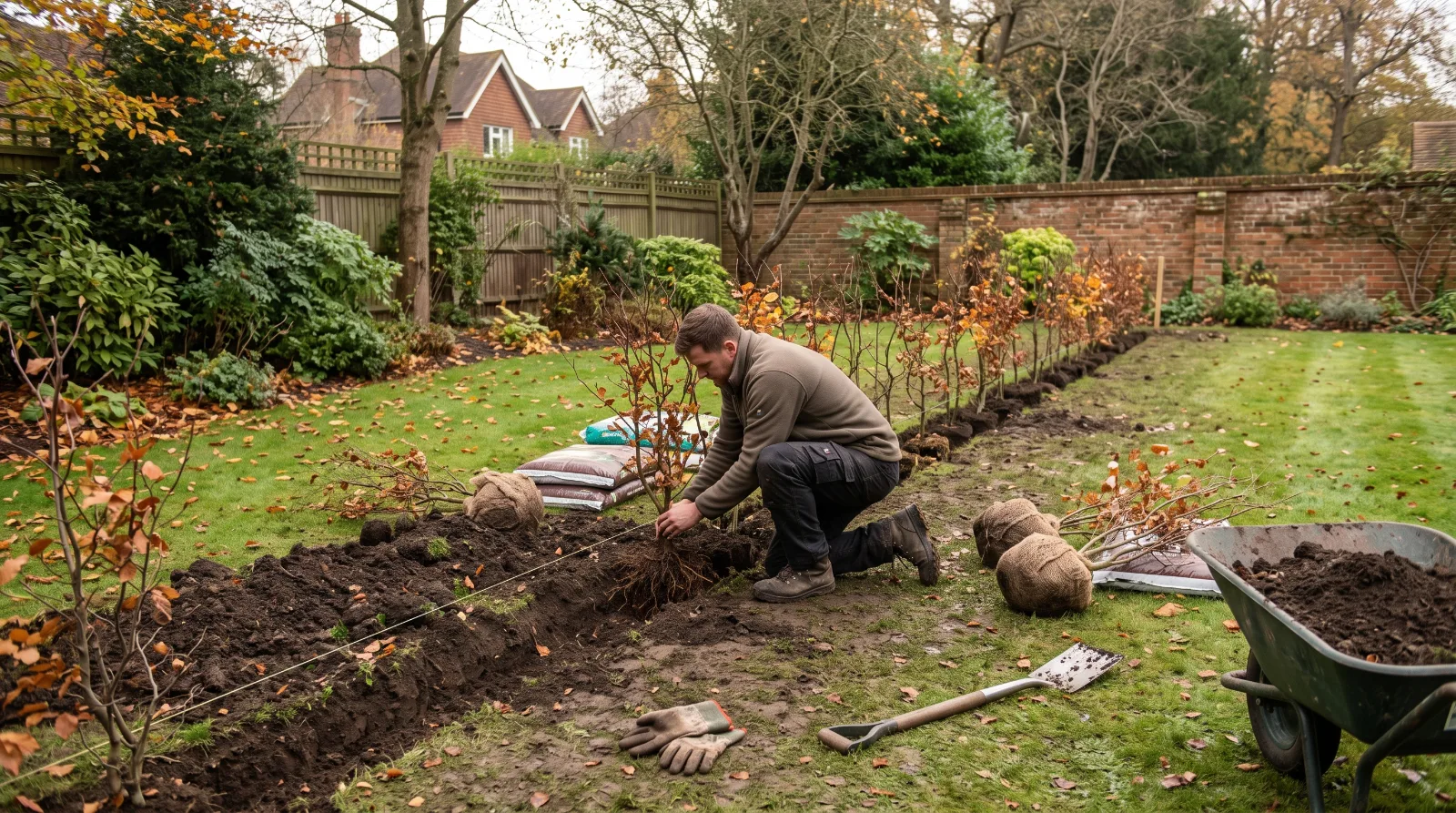
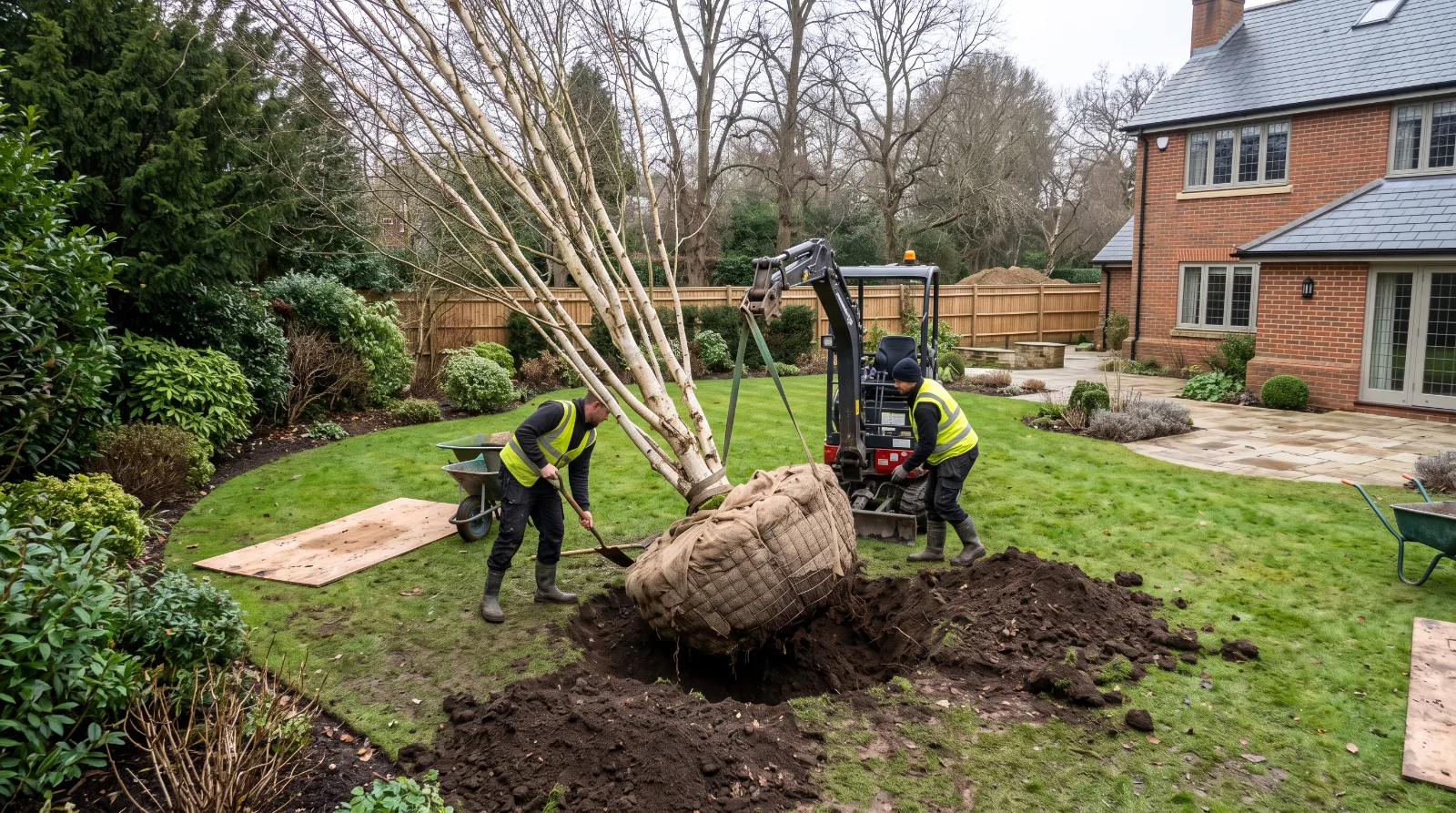
The top of the root ball should generally sit at, or very close to, the original nursery planting level. The planting hole should not be deeper than the root ball, while making it wider gives the roots room to establish.
Planting too deeply can leave the stem and root flare buried. This can restrict healthy root development and create conditions where moisture remains around the base of the trunk.
A simple check
Before backfilling, look for the point where the trunk begins to widen into the roots. This should be close to the finished soil level rather than buried beneath it.
Getting this right at the beginning is much easier than trying to correct a poorly planted tree later.
2. The Tree Isn't Getting Enough Water
A newly planted tree has lost much of the established root system it previously relied on. It therefore needs time to develop new roots into the surrounding soil.
Dry conditions during this establishment period can put considerable stress on a young tree. Newly planted trees should be monitored carefully during dry weather, with watering focused on thoroughly soaking the root zone rather than giving the tree a small amount of water frequently.
However, more water is not always better.
Waterlogged soil can also cause problems by reducing the air available around the roots. The right approach depends on the soil, weather and location of the tree.
3. The Soil Is Causing Problems
The existing soil has a major influence on whether a new tree establishes successfully.
Heavy or compacted soil can restrict root growth and drainage, while very dry or poor soil can make it difficult for roots to access enough moisture.
Compaction is particularly worth considering if the garden has recently undergone construction or landscaping. Machinery, foot traffic and stored materials can compress the soil and reduce the space available for air and water around the roots.
Before planting, consider:
Soil type
Drainage
Existing compaction
Moisture levels
Available rooting space
Nearby structures and hard landscaping
A tree can be perfectly healthy when purchased but still struggle if the conditions at its new location are unsuitable.
4. Grass and Weeds Are Competing With the Tree
A small tree surrounded by established grass may have to compete for water and nutrients while its root system is still developing.
Keeping the area immediately around a new tree free from grass and weeds can reduce this competition. The Woodland Trust recommends maintaining a weed- and grass-free area around young trees during their establishment period.
This is particularly important for smaller trees and newly planted specimens.
A layer of suitable mulch can also help suppress competing vegetation while retaining moisture in the soil.
5. The Tree Wasn't Mulched Properly
Mulching is a relatively simple step that can make aftercare easier.
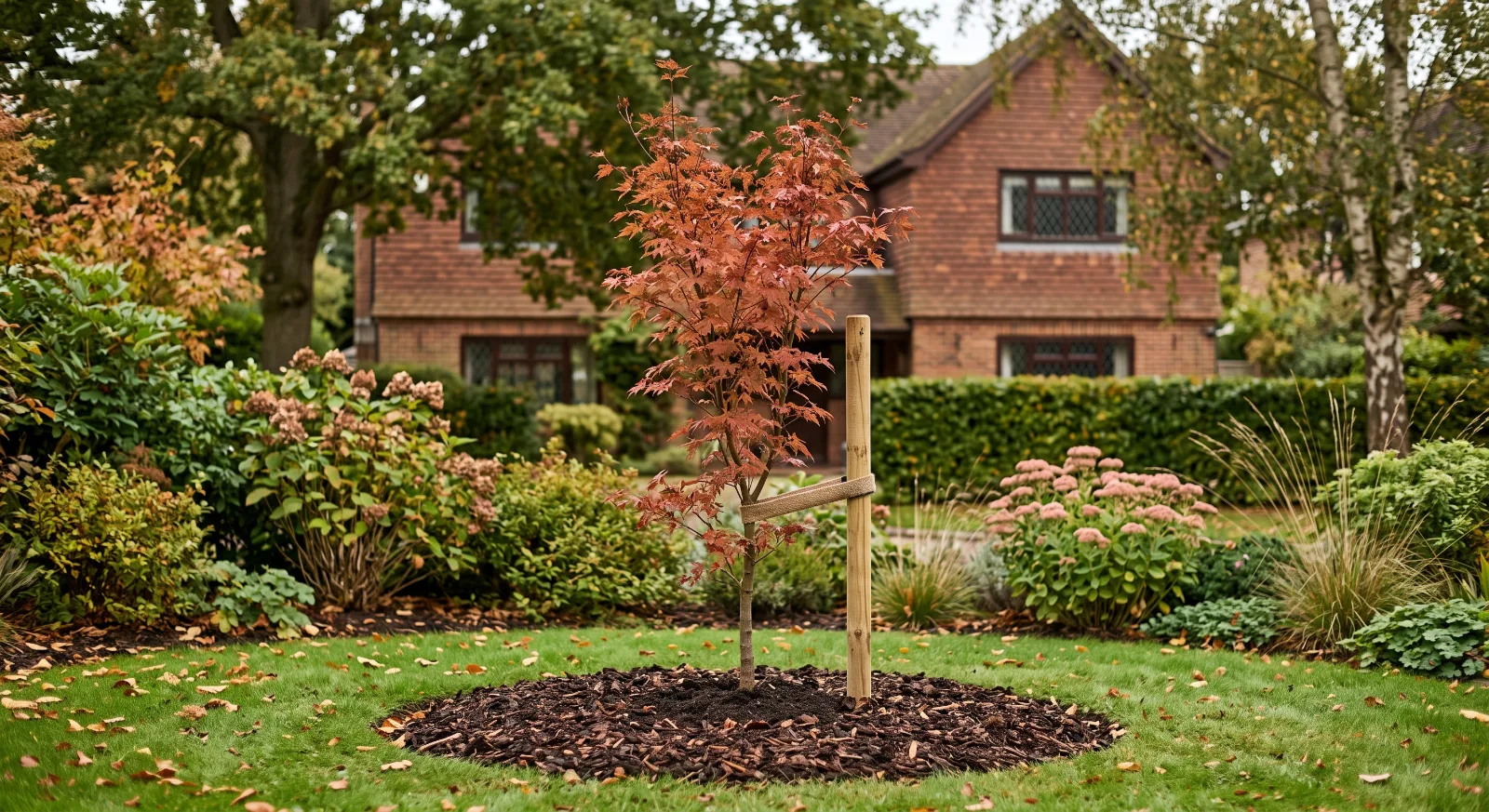
A layer of bark mulch around the tree can help retain moisture, suppress weeds and reduce competition from grass. Guidance from the Arboricultural Association recommends a mulch area of around 1m in diameter and approximately 5–10cm deep.
There is one important detail: don't pile mulch directly against the trunk.
Leave a small gap around the base of the tree so that the stem is not constantly surrounded by damp material.
What good mulching looks like
Good practice | Avoid |
|---|---|
5–10cm layer of suitable mulch | Extremely deep layers |
Broad area around the tree | Small pile immediately around the trunk |
Keep grass and weeds down | Allowing grass to grow right up to the stem |
Top up as needed | Letting mulch become compacted |
6. The Tree Wasn't Supported Correctly
Young trees can be vulnerable to strong winds while their root systems are still establishing.
A stake and suitable tie can provide temporary support where needed, but the aim should not be to hold the tree completely rigid. Some movement can help the tree develop strength.
Stakes should be positioned without damaging the root ball, and ties need to be checked regularly so they don't become too tight as the trunk grows.
Support should also not be left in place indefinitely. Once the tree has established sufficient stability, unnecessary stakes and ties should be removed.
7. The Wrong Tree Was Chosen for the Location
Sometimes the problem isn't the planting technique at all.
A tree might struggle because the conditions simply aren't suitable for the species.
Before choosing a tree, consider:
How much sunlight the area receives
Whether the soil stays wet or becomes dry
How exposed the garden is to wind
The amount of space available for roots
The tree's eventual height and spread
Its proximity to buildings, boundaries and other plants
A tree that performs well in one part of a garden may struggle only a few metres away if the soil, light or drainage is different.
Right tree, right place is one of the most important principles when planning a long-term planting scheme.
8. The Roots Were Damaged Before Planting
A tree's roots are particularly vulnerable when it is being transported, stored and planted.
Bare-root trees should not be allowed to dry out, while container-grown and rootballed trees should be handled carefully to avoid damaging the root system. Trees that cannot be planted immediately should also be stored in suitable conditions rather than left exposed to drying winds or frost.
When planting, the roots should have good contact with the surrounding soil without being unnecessarily disturbed.
9. The Tree Is Being Watered Too Much
It is easy to assume that a struggling tree simply needs more water.
That isn't always the case.
If the soil remains saturated, roots can become stressed because there is less air available within the soil. Yellowing or wilting leaves do not automatically mean the tree is thirsty.
Before watering, check the condition of the soil around the root zone.
The goal is to provide enough moisture for establishment without keeping the soil permanently saturated.
10. Aftercare Stops Too Soon
One of the biggest mistakes is treating planting day as the finish line.
A tree can look healthy immediately after planting but still be vulnerable during its establishment period. Regular checks can identify problems with watering, weeds, stakes, guards and general tree health before they become more serious.
The first two to three years are particularly important for young trees, with watering, weed control and monitoring forming a key part of establishment.
What to check after planting
Check | What to look for |
|---|---|
Soil | Too dry, waterlogged or compacted |
Leaves | Wilting, yellowing or unusual dieback |
Trunk | Damage or rubbing from ties |
Stakes | Loose, damaged or no longer needed |
Mulch | Correct depth and clear of the trunk |
Weeds | Grass or weeds competing around the tree |
Protection | Damage from animals or garden equipment |
How Can You Give a New Tree the Best Start?
Successful tree planting comes down to more than simply digging a hole.
Choose a species suited to the site, prepare the soil properly, plant at the correct depth and give the tree enough space to establish. Then keep an eye on it during the first few years rather than assuming it will look after itself.
For a newly planted tree in a Surrey garden, this is particularly important where soil conditions, exposure and available space can vary significantly from one property to another.
A little attention during the establishment period can make a substantial difference to the tree's long-term health.
Need Help With Tree Planting in Surrey?
Choosing the right tree and planting it correctly can make all the difference to how well it establishes. Whether you're adding specimen trees to an existing garden or including planting as part of a larger landscaping project, the location, soil and long-term growth of the tree all need to be considered.
Planning a new planting scheme in Surrey? Get in touch with Surrey Oak Landscapes for a free, no-obligation quote.
About the author