Why Are My Fence Posts Leaning?
Leaning fence posts can have several causes. Learn why your fence is moving, how to identify the problem and when repair or replacement may be needed.
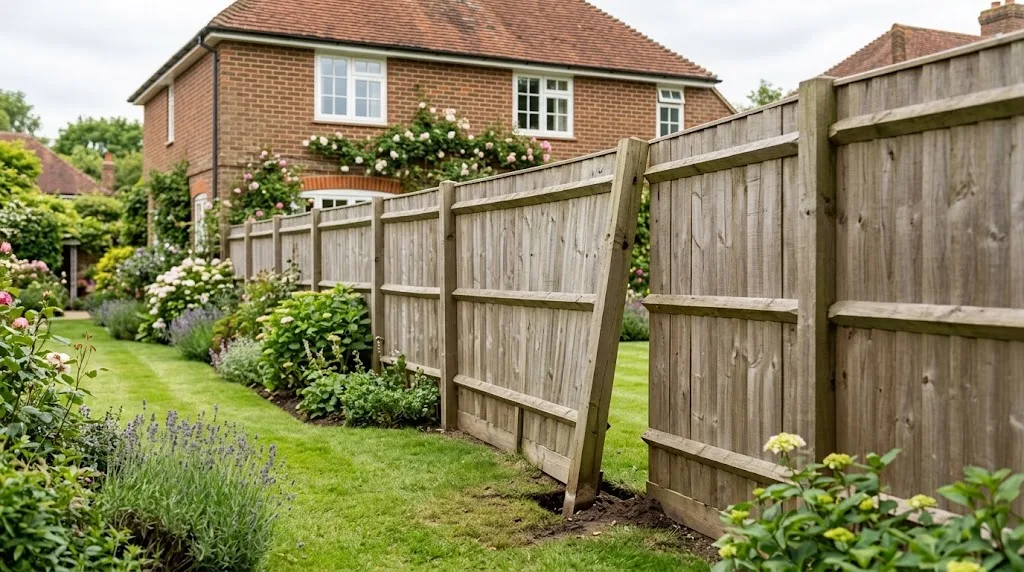
A leaning fence is one of those problems that can start almost unnoticed.
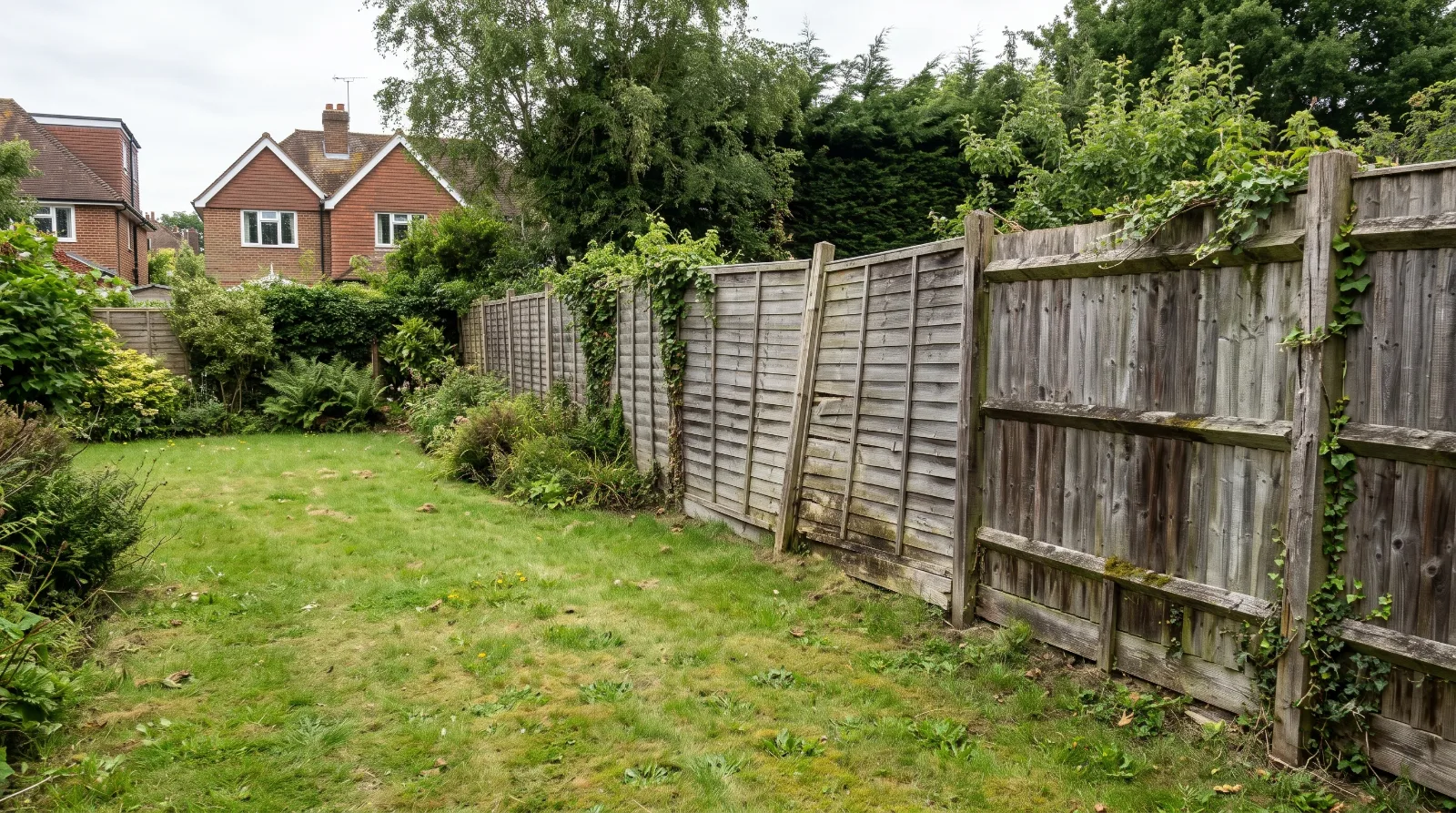
One post may be slightly out of line, a gate may stop closing properly or a fence panel may begin to slope. After a few months, what was once a small movement can turn into a visibly leaning section of fence.
The panels are often the first thing homeowners notice, but the real problem is usually somewhere around the post and its foundation.
A fence post has to resist the weight of the fence as well as wind and movement from the surrounding ground. If the post, footing or soil can no longer provide enough support, the fence begins to move.
So why do fence posts lean, and can they be repaired?
The Most Common Causes of Leaning Fence Posts
There is rarely one single cause.
A post may lean because it was poorly installed, the ground has moved, timber has deteriorated or the fence is being subjected to loads that the original installation cannot handle.
The most common causes include:
Inadequate foundations
Soft or waterlogged ground
Timber rot
Strong wind
Ground movement
Heavy gates
Retained soil against the fence
Damage to the post or footing
Age and general deterioration
Identifying the cause matters because simply pushing the post upright does not solve the reason it started leaning in the first place.
Poor or Inadequate Foundations
A fence post relies on the ground and its footing to keep it upright.
If the post was installed too shallowly, the supporting material was inadequate or the ground around it was not properly prepared, the post may gradually loosen.
This is particularly noticeable with taller or solid fences because they create greater resistance to wind.
A fence can look perfectly secure when first installed but begin moving later as the ground becomes saturated, settles or is repeatedly loaded by wind.
The visible lean is therefore often a sign that something has changed below ground.
Soft or Waterlogged Ground
Water can have a major effect on fence stability.
When soil becomes saturated, it can lose strength and allow a post to move more easily.
This can be particularly relevant in:
Heavy clay soil
Poorly drained gardens
Low-lying areas
Ground close to drainage problems
Locations where water collects around the fence line
Repeated wet and dry conditions can gradually loosen the area surrounding a post.
If the ground stays wet for long periods, simply replacing the visible fence panel may do nothing to solve the underlying problem.
Timber Rot
Timber posts are especially vulnerable around the ground line.
This is the area where the timber is exposed to soil, moisture and changing conditions, making it a common location for decay to develop.
A post can look reasonably healthy above ground while being seriously weakened near its base.
Warning signs can include:
Soft or crumbling timber
Cracks around the base
Darkened or deteriorated wood
Movement when the post is pushed
A fence that pivots from ground level
A rotten post may not need the whole fence to be replaced if the damage is limited and the rest of the installation remains sound.
However, once the structural strength of the post has been compromised, the post itself will need to be addressed.
Strong Winds
A solid fence can act much like a sail during strong winds.
The panels catch the force of the wind and transfer that load into the posts and foundations.
If the ground is already weakened, or the post has insufficient support, a period of strong weather can turn a small amount of movement into a much more obvious lean.
This is why fencing problems are often noticed after storms.
The wind may not have caused the original weakness. It may simply have exposed a problem that was already developing.
Ground Movement
The ground beneath a fence does not remain completely static.
Clay soils can expand and contract as moisture levels change, while disturbed or poorly compacted ground can settle over time.
Where the fence has been installed near excavations, new construction, recently filled ground or other disturbed areas, movement can be more likely.
Small changes may not be noticeable initially, but repeated movement can gradually affect the alignment of the posts.
Heavy Gates Can Pull Posts Out of Line
Gate posts have a harder job than ordinary fence posts.
A gate creates additional weight and movement every time it is opened and closed. A wide or heavy gate can put considerable leverage on its supporting post.
You may notice this when:
The gate begins rubbing
The latch no longer lines up
The gate no longer closes squarely
The post appears to lean towards the gate
Hinges become difficult to operate
A gate problem can therefore look like a general fencing issue when the real problem is a post that is no longer adequately supported.
Soil or Material Retained Against the Fence
A fence is not automatically a retaining wall.
If soil, gravel or another material is piled against one side of a fence, it can place additional pressure on the posts.
As the retained material becomes wet, its weight can increase and the pressure on the boundary can become greater.
If a garden has different ground levels on either side of the fence, that difference needs to be considered when designing the boundary.
Trying to use a standard fence to retain a significant amount of soil can eventually cause movement or structural failure.
Why Does the Whole Fence Lean?
Sometimes one post fails and the neighbouring panels begin to move with it.
Because panels and rails connect the posts, movement in one part of the fence can put additional pressure on the next post.
This can produce a domino effect where:
One failed post → movement in the panel → pressure on neighbouring posts → wider section begins to lean
This is why it is worth inspecting the posts on either side of an obvious failure rather than repairing only the one that looks worst.
How Can You Tell What Has Failed?
The pattern of the lean can provide useful clues.
One post is leaning
If one post is noticeably out of line while the neighbouring posts remain upright, the problem may be localised.
Possible causes include rot, a damaged footing or local ground movement.
Several posts lean together
If a whole run gradually leans in the same direction, the cause may involve wind exposure, ground movement or a broader foundation problem.
The fence leans after heavy rain
This may point towards soft or waterlogged ground.
The problem appeared after a storm
Wind loading may have moved an already weakened post or footing.
A gate has started dropping
The gate post or its foundation may be failing.
The pattern does not provide a definite diagnosis, but it can help determine where to investigate first.
Can You Straighten a Leaning Fence Post?
Sometimes.
If the post itself is sound and the surrounding foundation has simply moved, it may be possible to bring the post back into position and rebuild or reinforce the support around it.
However, simply pushing a post upright and packing soil around it is unlikely to provide a reliable long-term solution.
The supporting structure needs to resist the same forces that caused the post to move originally.
If the problem was waterlogged ground, rot or an inadequate footing, those conditions need to be considered during the repair.
Can a Rotten Fence Post Be Repaired?
In some cases, yes.
If the deterioration is limited to the lower part of a timber post and enough sound timber remains, a repair spur or similar support can sometimes be used to reinforce the existing post.
This can avoid removing an otherwise serviceable fence panel.
However, repair is not always appropriate.
A post that is badly deteriorated, broken or unstable may be better replaced completely.
The condition of the surrounding fence also matters. There is little benefit in repairing one rotten post if many of the other posts are approaching the same condition.
When Should You Replace the Post?
Replacing an individual post can make sense when:
The post is badly rotten
The footing has failed
The post has snapped
The post has been damaged
The fence panels are otherwise in good condition
The surrounding posts remain sound
This can be a relatively focused repair compared with replacing the entire fence.
However, access to the existing post, the type of fencing and the condition of the surrounding structure can all affect how practical the repair is.
When Should You Replace the Whole Fence?
A complete replacement may make more sense when the problems are widespread.
Consider replacement when:
Multiple posts are failing
Several panels are damaged
Timber is deteriorating throughout the fence
The fence has repeatedly needed repairs
The original installation is poorly supported
The layout no longer suits the garden
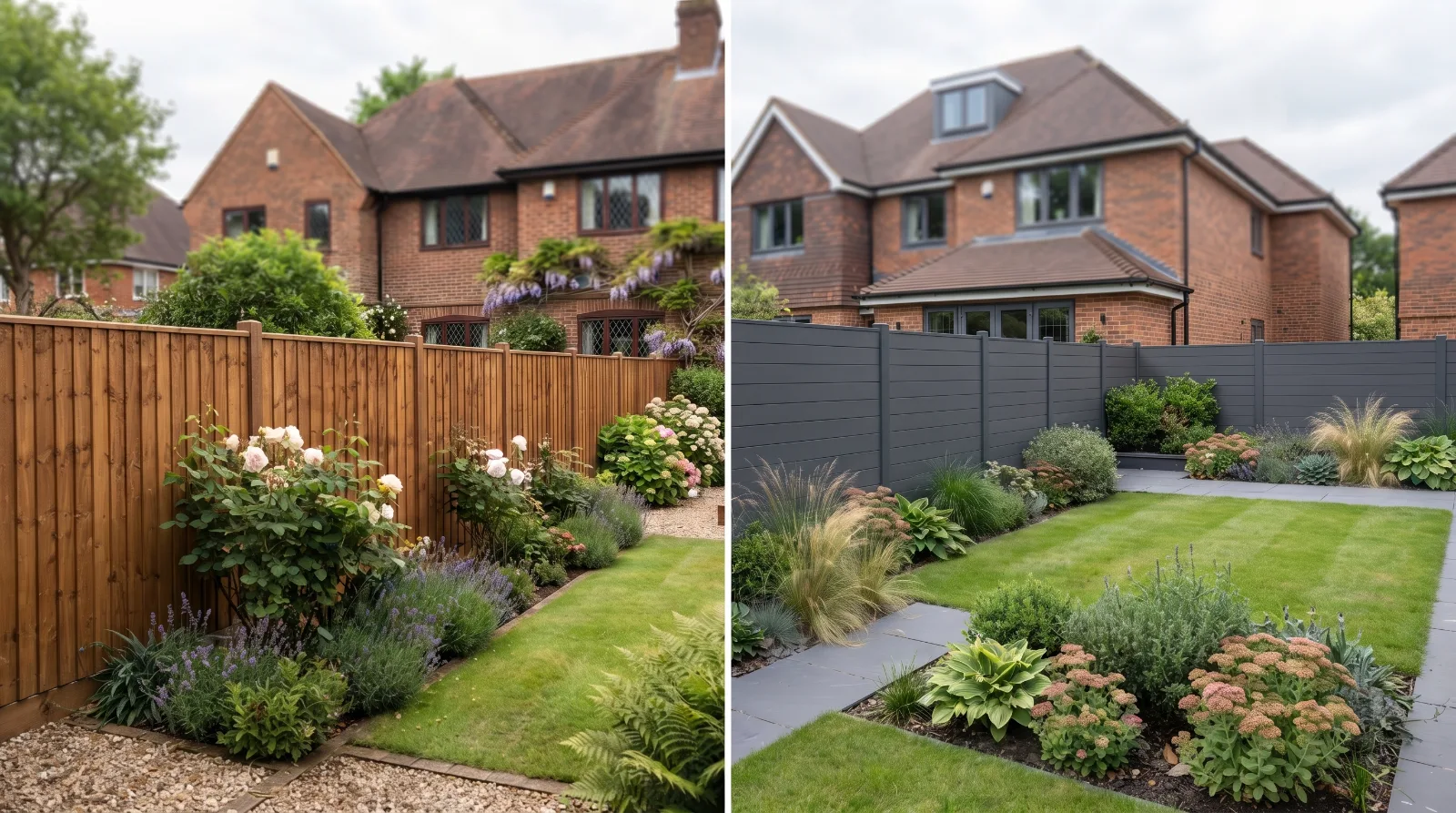
You want to change the fence style
If several posts have started leaning at the same time, replacing only one of them may simply delay the next failure.
Leaning Posts vs Leaning Panels
It is also worth checking whether the post itself is leaning.
A panel can appear crooked because it has moved within its frame, a rail has failed or the ground beneath the fence has changed.
This distinction matters because a panel replacement will not fix a post that is moving.
Similarly, a sound post does not necessarily need replacing simply because one panel has become damaged.
Before carrying out work, identify which part of the fence has actually failed.
Can New Panels Be Installed on Existing Posts?
Sometimes.
If the existing posts are straight, structurally sound and correctly positioned, new panels may be fitted without replacing the posts.
This is one reason it is worth checking the posts before deciding that the entire fence needs replacing.
However, if the existing posts are leaning, rotten or unstable, installing new panels onto them is unlikely to provide a lasting result.
The supporting structure has to be sound before the new panels can perform properly.
What About Concrete Posts?
Concrete posts do not rot like timber, but they can still move or fail.
A concrete post can lean if the surrounding ground or its footing has shifted.
The concrete itself can also crack or become damaged.
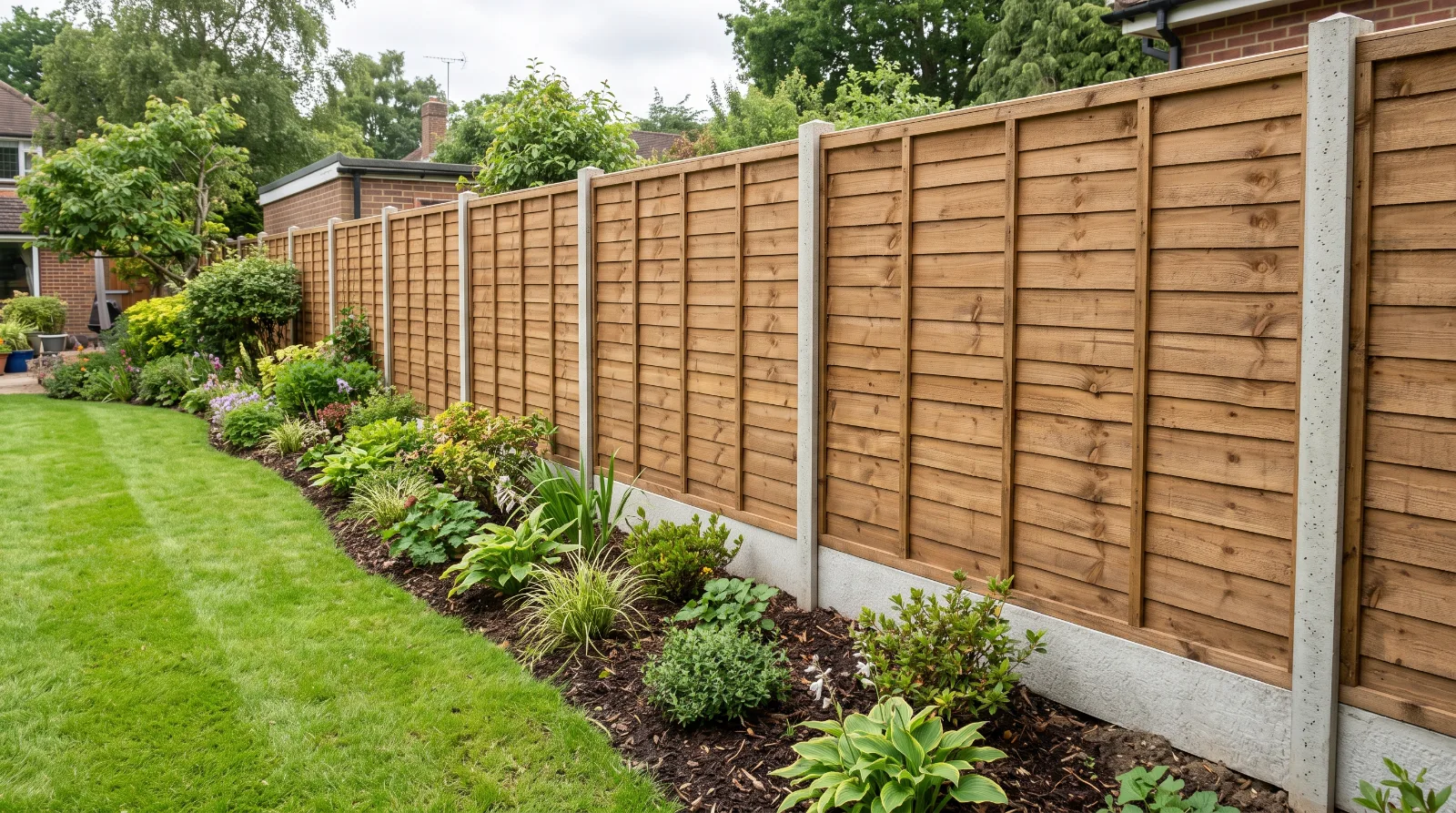
Replacing a concrete post can involve more work than replacing a timber one because the existing footing may need to be broken out before the new post can be installed.
The fact that a post is made from concrete therefore does not make it immune to movement.
Can Drainage Stop Fence Posts From Leaning?
Good drainage can help reduce problems associated with persistently wet ground.
If water collects around the fence line, addressing the source of the water may be just as important as repairing the post.
This does not mean every leaning fence needs a drainage system.
Sometimes simple improvements to levels or surrounding ground can help prevent water from remaining around the post.
The appropriate solution depends on why the area is becoming wet in the first place.
How Can Leaning Fence Posts Be Prevented?
The best way to deal with a leaning post is not to let the problem develop in the first place.
A good fencing installation should take account of:
Fence height
Taller fences generally place greater loads on their posts.
Ground conditions
Soft, unstable or frequently wet soil may require a different approach from firm, well-drained ground.
Wind exposure
A solid fence in an exposed location experiences greater wind loading.
Post specification
Posts need to be suitable for the fence they are supporting.
Foundation
The post needs adequate support below ground.
Drainage
Water should not be allowed to remain around timber posts unnecessarily.
Gate loading
Large gates need appropriately supported posts and hinges.
Good installation is therefore about more than simply getting the fence upright on the day it is fitted.
How Often Should You Check Your Fence?
A fence does not need a formal inspection every few weeks, but it is worth looking at it periodically.
Pay particular attention after:
Strong winds
Heavy rainfall
Prolonged wet periods
Groundworks near the boundary
Major changes to garden levels
Look along the fence line from a distance as well as checking individual posts.
A slight lean is much easier to address before the panel breaks or several neighbouring posts become affected.
Should You Repair a Fence Before Winter?
If a post is already loose or leaning, leaving it through a period of strong winter weather can increase the risk of further movement.
Wind can place additional pressure on an already weakened structure, while wet ground can reduce the stability of the footing.
Small repairs are therefore usually easier to manage before the problem becomes more severe.
A fence that is slightly leaning today may be significantly more difficult to repair after the next major storm.
How Much Does It Cost to Fix a Leaning Fence?
There is no standard cost because the right repair depends on what has failed.
A small repair involving one post may be relatively straightforward, while replacing several posts or an entire section of fencing requires considerably more work.
The main cost factors include:
Factor | Why it matters |
|---|---|
Number of failed posts | More posts require more labour |
Post condition | Rotten posts may need complete replacement |
Fence type | Some systems are easier to dismantle |
Ground conditions | Difficult ground can increase installation work |
Access | Restricted access can make repairs slower |
Panel condition | Damaged panels may need replacement |
Waste removal | Old fencing may need to be taken away |
Drainage or groundwork | Underlying problems can require additional work |
A proper assessment is more useful than assuming every leaning fence needs the same repair.
Repair or Replace?
A simple way to approach the decision is:
Repair may make sense when | Replacement may make sense when |
|---|---|
One or two posts have failed | Multiple posts are failing |
Panels remain in good condition | Panels are also deteriorated |
Timber is largely sound | Rot is widespread |
The fence layout still works | The design needs changing |
Foundations can be repaired | The original installation is fundamentally weak |
Damage is localised | Problems keep returning |
The cheapest immediate fix is not always the most economical long term.
If several components are already near the end of their useful life, repeatedly repairing individual failures can become more expensive than replacing the affected section properly.
What If Only One Side of the Fence Is Leaning?
Look at what is happening on both sides of the boundary.
A fence may lean because of pressure from one garden, changes in ground levels or material being placed against it.
For example, if soil has gradually been added against one side, the additional pressure may be contributing to the movement.
This is particularly important where a boundary separates gardens with different finished ground levels.
When Is a Leaning Fence an Urgent Problem?
A slightly leaning fence is not necessarily an emergency.
However, it becomes more concerning when:
The post is visibly rotten
The fence is moving significantly
Panels are pulling away from posts
A gate is unstable
The fence is close to a public path
A large section appears likely to fall
Strong winds are forecast
A damaged fence can become a safety or access problem if it collapses.
If a section is clearly unstable, it should be dealt with rather than left to deteriorate further.
Why Do Fence Posts Lean?
Most leaning posts have a problem with support, movement, deterioration or loading.
The visible lean is only the symptom.
The real issue may be:
A weak or shallow foundation
Wet or unstable ground
Timber rot
Wind loading
Ground movement
A heavy gate
Pressure from retained soil
A damaged post
An ageing fence
That is why simply straightening the visible panel is rarely enough.
A successful repair needs to address the part of the fence that has actually failed.
Keep Your Fence Straight and Secure
A leaning fence can often be repaired, especially when the problem is identified early.
The first step is to establish whether the issue is with the post, footing, ground or the fence itself.
A single rotten post may only require a focused repair. A fence with widespread movement or deterioration may be better replaced.
Either way, the aim should be to fix the underlying problem rather than repeatedly correcting the visible lean.
Need Fence Repairs or Replacement in Surrey?
If your fence posts have started leaning, Surrey Oak Landscapes can assess the condition of the existing fence and help determine whether a repair or replacement is the better option.
From individual post repairs and panel replacement to complete new fencing, we can also incorporate gates, screening and wider garden improvements where required.
Got a leaning fence in Surrey? Get in touch with Surrey Oak Landscapes for a free, no-obligation quote.
About the author