When Should You Replace an Old Patio?
Not sure whether your old patio needs repairing or replacing? Learn the warning signs, when repairs make sense and when a new patio is the better option.
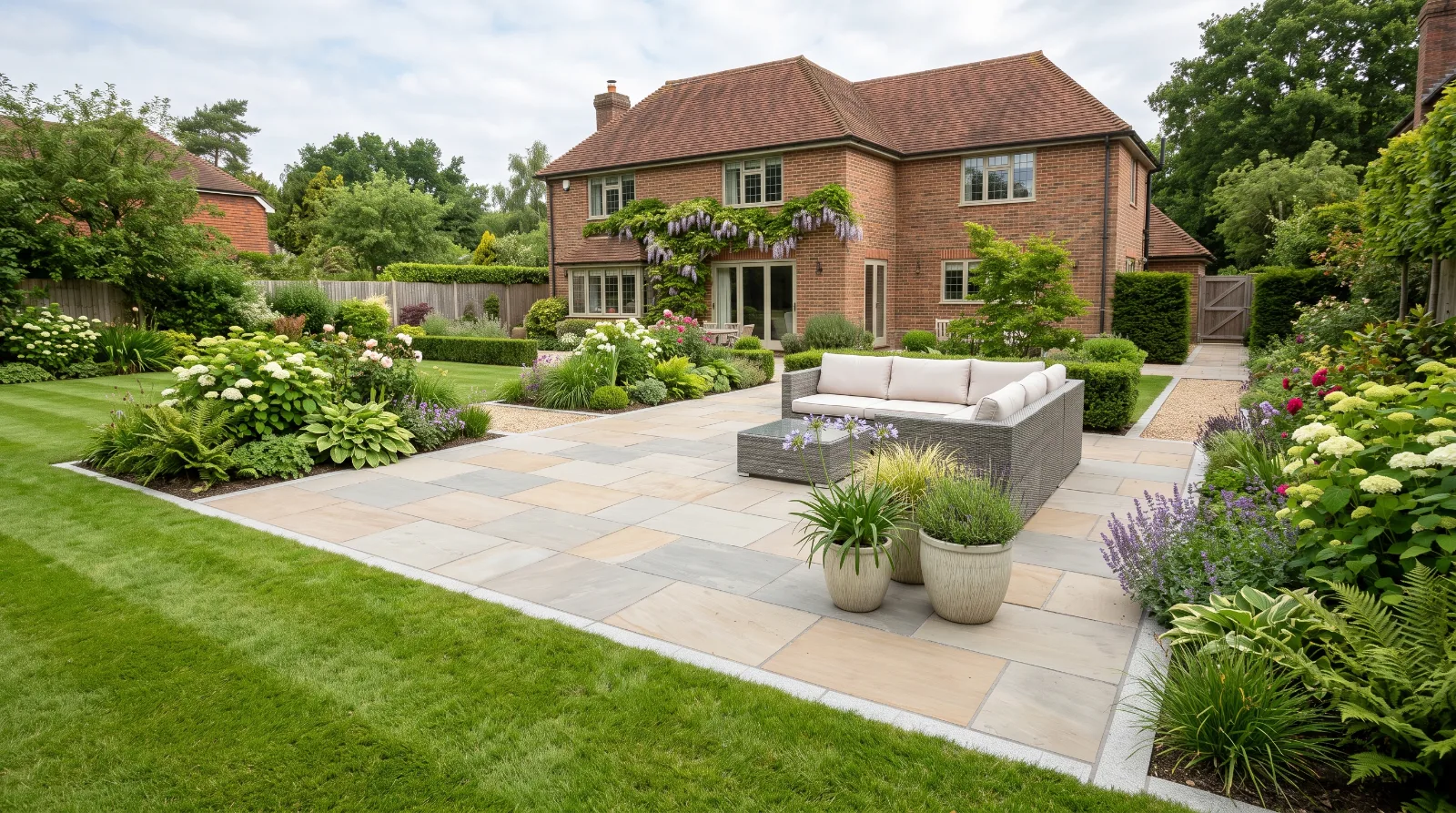
A good patio can last for many years, but even well-installed paving will eventually show signs of wear. Slabs can crack, joints can deteriorate, surfaces can become uneven and drainage can become a problem.
The difficult part is knowing when a patio simply needs some maintenance and when repairing it is no longer the best option.
Replacing an old patio can completely change the appearance and usability of a garden, but it is a significant project. Before deciding, it is worth looking at the condition of the paving, the extent of the damage and whether the problems are likely to return.
Signs Your Patio May Need Replacing
There is no fixed age at which every patio should be replaced. A well-built patio can remain usable for decades, while a poorly constructed one may develop problems much sooner.
Instead, look at the condition of the patio and how it is performing.
1. Multiple Cracked or Damaged Slabs
One cracked slab does not necessarily mean you need a new patio. Individual paving units can often be removed and replaced.
The situation is different when cracks are appearing across a large part of the patio. Multiple damaged slabs can indicate that the paving is reaching the end of its useful life or that there is an underlying problem with the supporting layers.
Replacing several individual slabs may also become less practical when the existing paving is old, difficult to match or already showing general deterioration.
2. The Patio Is Uneven or Moving
Uneven paving is one of the clearest signs that something needs attention.
If slabs rock when walked on, have dropped below surrounding paving or have lifted in certain areas, the cause needs to be addressed rather than simply filling the gaps around them.
Movement can be linked to problems below the paving, including settlement, inadequate preparation or water affecting the underlying layers. Replacing the affected slabs without correcting the underlying issue may only provide a temporary solution.
If a large section of the patio has become uneven, rebuilding that area or replacing the patio completely may make more sense.
3. Water Is Pooling on the Surface
A patio should allow water to drain away rather than leaving large areas of standing water after rainfall.
Occasional small puddles may not mean the whole patio needs replacing, but persistent pooling is worth investigating. It can make the surface slippery, encourage algae and leave the patio difficult to use after wet weather.
Drainage problems can sometimes be corrected without replacing everything. However, if the levels or falls across the patio are fundamentally wrong, replacement may be the more effective long-term solution.
4. The Pointing Keeps Failing
Deteriorating pointing is common on older patios. Small gaps or isolated damaged joints can often be repaired or repointed.
Repeatedly cracked or missing joints can be a different matter, particularly when the paving itself is also loose or moving.
Pointing is not simply a cosmetic feature. The condition of the joints can affect the stability and overall condition of the paved area. If the joints keep failing because the slabs beneath them are moving, repeatedly repointing the patio may not solve the underlying problem.
5. The Surface Has Become Severely Weathered
Outdoor paving is exposed to rain, frost, dirt, organic growth and general wear for years.
Some weathering is perfectly normal and does not mean a patio needs replacing. Cleaning can often make an older patio look considerably better.
Replacement becomes more worth considering when the paving is heavily worn, damaged or discoloured and cleaning or maintenance can no longer produce the appearance you want.
This can be particularly relevant when an old patio has become a noticeable weak point in an otherwise recently landscaped garden.
When Can an Old Patio Be Repaired Instead?
Not every ageing patio needs to be removed.
For a patio that is fundamentally stable, targeted repairs can often be enough.
Problem | Repair may be suitable | Replacement may be better |
|---|---|---|
One or two cracked slabs | ✓ | |
Small areas of damaged pointing | ✓ | |
Surface dirt or algae | ✓ | |
A few loose slabs | ✓ | |
Widespread cracked slabs | ✓ | |
Large areas of sinking or movement | ✓ | |
Persistent drainage problems | ✓ | |
Repeatedly failing repairs | ✓ | |
Major changes to the layout wanted | ✓ | |
Patio is severely worn or deteriorated | ✓ |
The important question is not simply how old the patio is, but whether the existing structure is still suitable for another repair.
You Probably Do Not Need a New Patio Just Because It Looks Dirty
An old patio can sometimes look much worse than it actually is.
Moss, algae, dirt and staining can build up over time, particularly in shaded areas. Cleaning and maintenance may dramatically improve its appearance without the need for replacement.
Before making a decision, look at the paving itself.
Are the slabs stable? Are they reasonably level? Is the pointing intact? Does water drain properly?
If the structure is sound, improving the surface may be a much more straightforward option than replacing the entire patio.
When Replacing the Patio Makes More Sense
There are situations where continuing to repair an old patio simply does not make sense.
The Repairs Are Becoming Frequent
If you are repeatedly replacing slabs, repairing joints or correcting areas of movement, the cost and effort can start to outweigh the benefit of keeping the existing patio.
A replacement gives you the opportunity to address the underlying construction rather than continuing with individual repairs.
You Want to Change the Layout
Sometimes the patio is not necessarily failing, but it no longer works for the garden.
Perhaps the seating area is too small, the shape wastes space or you want a better connection between the patio, lawn and planting.
In this situation, replacement can provide an opportunity to rethink the entire space rather than modifying an existing layout that was designed for a different use.
The Existing Paving Is Difficult to Match
Individual slab replacement works best when suitable matching paving is available.
Older patios may use discontinued paving products, meaning replacement slabs can be difficult to source or may look noticeably different from the existing ones.
When many areas need attention, installing a completely new surface can provide a much more consistent finish.
Replacing an Old Patio Is Also an Opportunity to Improve the Garden
A patio replacement does not have to be simply a like-for-like swap.
It is an opportunity to reconsider the whole outdoor space.
You could create a larger dining area, introduce a more defined seating zone or change the shape of the patio to make better use of the garden.
The paving material can also be changed. Porcelain, natural stone and other paving options can create very different appearances and maintenance requirements.
Other features such as steps, retaining walls, planting, lighting and drainage can also be considered as part of the wider design.
What Happens When an Old Patio Is Replaced?
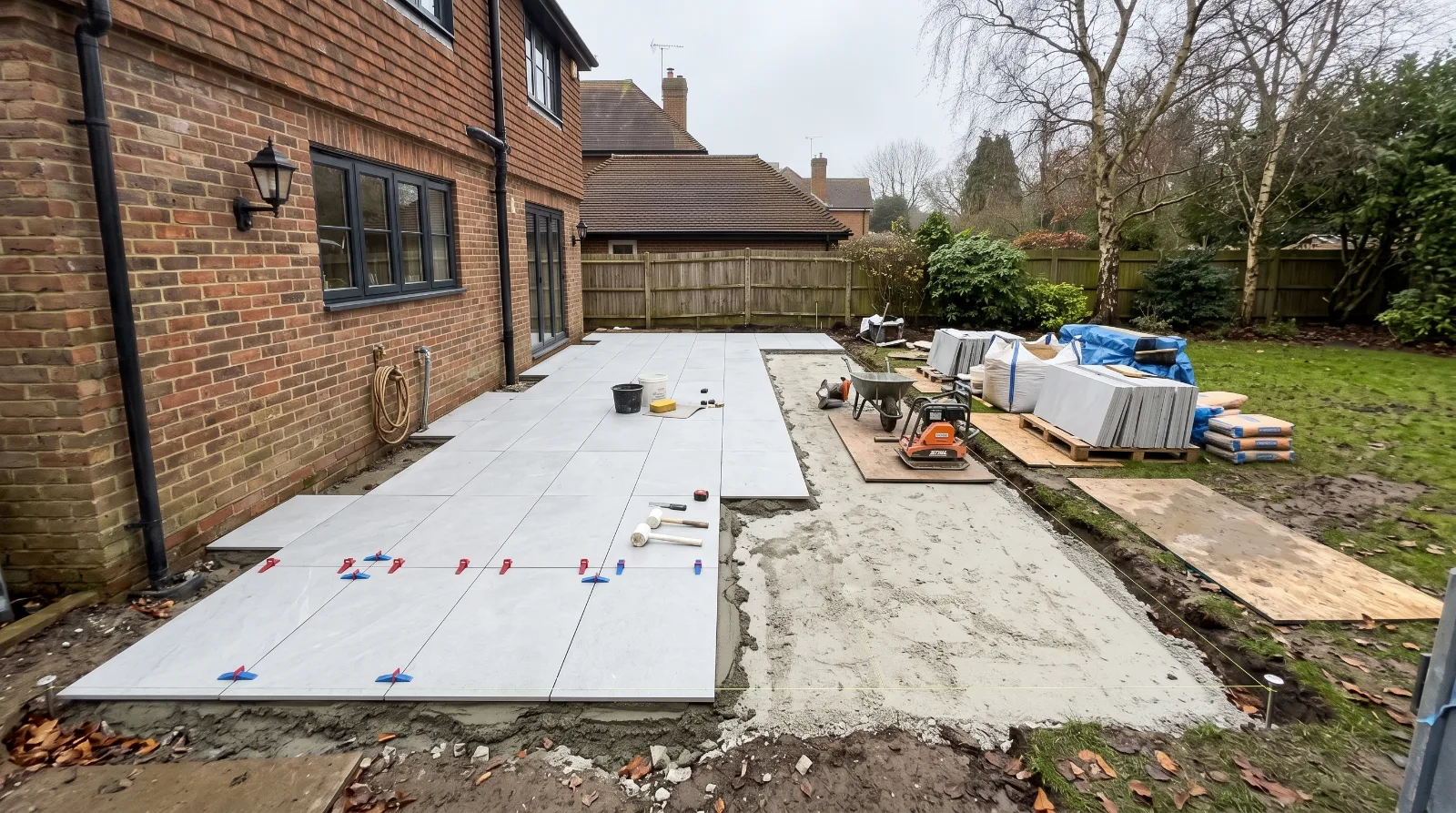
A professional patio replacement normally involves more than simply lifting the old slabs and putting new ones down.
The existing paving needs to be removed, the ground assessed and the levels and drainage considered before the new patio is constructed.
The exact preparation will depend on the site, existing ground conditions and chosen paving.
A typical project may involve:
Removing the existing patio and unsuitable material.
Preparing and levelling the area.
Checking drainage and required falls.
Preparing a suitable sub-base where required.
Installing the new paving.
Completing the joints and finishing details.
Tidying the surrounding garden and completing any associated landscaping work.
Good preparation is particularly important when replacing a patio that failed because of movement, poor levels or drainage. Simply covering up an existing problem will not necessarily prevent it from returning.
How Do You Know Whether Your Patio Should Be Repaired or Replaced?
Start by looking at the overall condition rather than focusing on one individual problem.
A patio with a couple of cracked slabs and some tired pointing may only need repairs. A patio with widespread movement, damaged paving, recurring joint failure and poor drainage is more likely to benefit from replacement.
It is also worth considering how much you are likely to spend maintaining the existing patio over the next few years. A series of small repairs can sometimes become less economical than investing in a properly planned replacement.
Give Your Old Patio a New Lease of Life
An old patio does not automatically need replacing. The right choice depends on the extent of the damage, the condition of the existing construction and what you want from your garden.
Where repairs are enough, there is no need to replace a perfectly serviceable patio. But when problems are widespread or the existing layout no longer works, a new patio can provide a more reliable and attractive long-term solution.
Thinking about replacing an old patio in Surrey? Get in touch with Surrey Oak Landscapes for a free, no-obligation quote.
About the author