What Should You Consider Before Installing a Swimming Pool?
Planning a swimming pool for your garden? Learn what to consider before installation, including space, access, groundworks, drainage, heating, safety and surrounding landscaping.
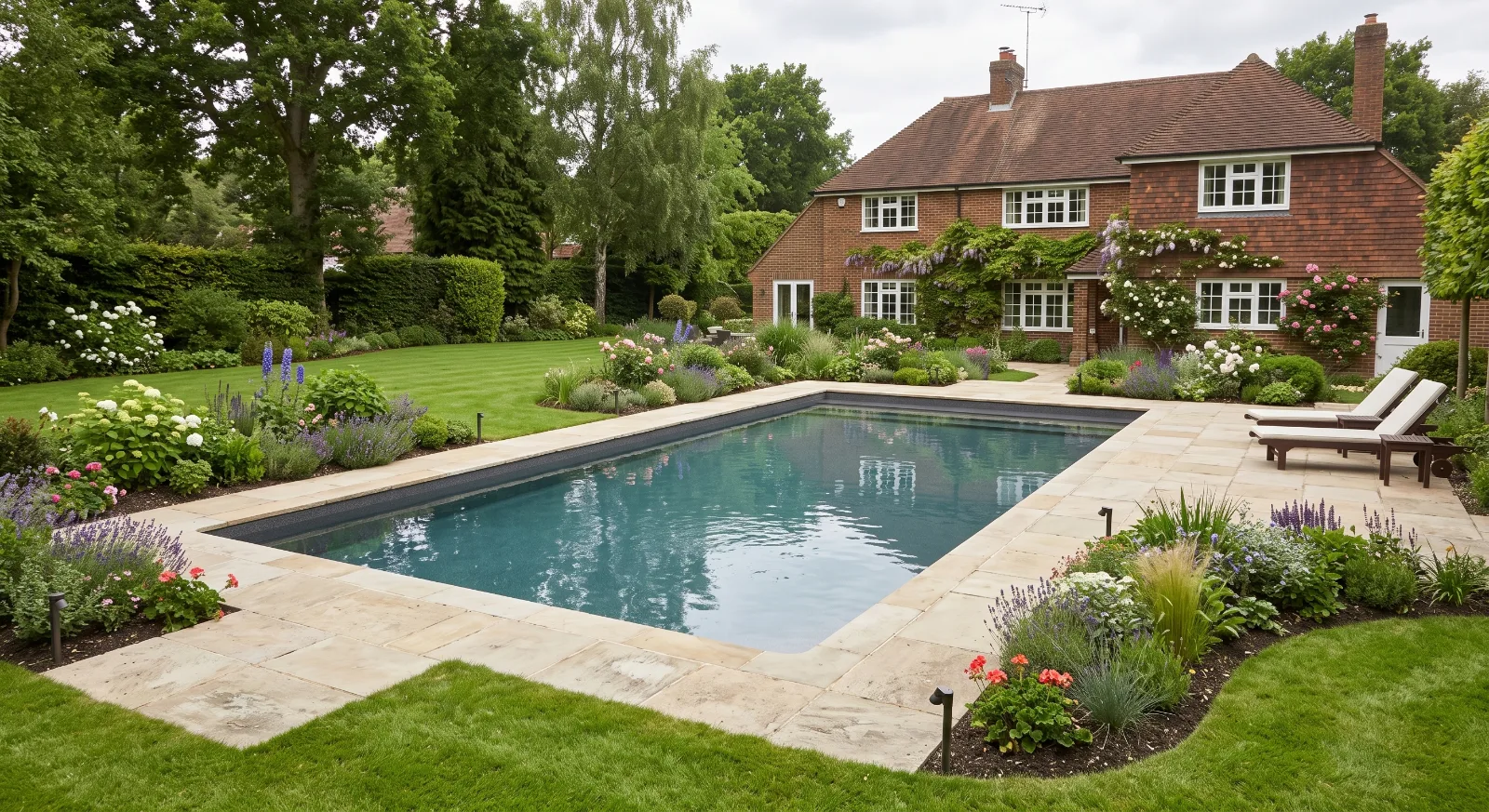
A swimming pool can completely change how a garden is used. It can create a dedicated space for exercise, family time and entertaining, while also becoming a major feature within the overall landscape.
However, installing a swimming pool is a much bigger project than simply choosing the shape and filling it with water. The pool itself is only one part of the work. Excavation, drainage, access, filtration, heating, electrical systems, safety measures and the surrounding landscaping all need to be considered before construction begins.
For homeowners in Surrey, the existing garden can also create its own challenges. Sloping sites, mature planting, restricted access and difficult ground conditions can all influence the design and installation.
So, what should you consider before installing a swimming pool?
1. How Will You Use the Pool?
The first question is not how large the pool should be, but how you intend to use it.
A pool designed primarily for swimming lengths will have different requirements from one intended for family use or entertaining.
Think about whether the pool is mainly for:
Exercise and swimming
Family use
Entertaining guests
Relaxation
Children
A combination of different uses
The answer can influence the pool's shape, depth, size and surrounding space.
For example, a long rectangular pool may be more suitable for regular swimming, while a wider design may give more room for families and social use. There is no single shape or size that works for every garden.
2. How Much Space Do You Really Need?
The available garden area will have a major influence on the project.
It is easy to focus on the pool dimensions themselves and forget that you also need space around the pool for circulation, access, equipment and landscaping.
The finished area could include:
Pool surround
Steps or access points
Paths
Seating areas
Planting
Fencing or safety barriers
Pool equipment
Storage
Outdoor lighting
A pool that takes up almost the entire garden may technically fit, but could leave very little usable space around it.
A well-designed pool should feel like part of the garden rather than an object placed in the middle of it.
3. Above-Ground or In-Ground?
The type of pool you choose will affect the construction process, appearance and amount of groundworks involved.
In-ground pools
These are excavated into the garden and can be designed in a wide range of shapes and sizes. They generally offer more flexibility when creating a fully integrated landscape.
Above-ground pools
These can require less excavation, depending on the design, and may be suitable where a permanent full excavation is not practical.
Different construction methods
In-ground pools can also be constructed using different methods, including concrete, fibreglass shells and liner-based systems.
Pool type | Main consideration |
|---|---|
Concrete | Highly flexible in terms of shape and dimensions |
Fibreglass | Factory-made shell with a relatively straightforward installation process |
Liner pool | Flexible design options with a replaceable liner |
Above-ground | Can reduce the amount of excavation required |
The right option depends on the site, design, budget and how you want the finished pool to look.
4. Is the Garden Suitable for a Pool?
Before deciding on the final design, the existing garden should be assessed.
This means looking at more than just the available space.
Important considerations include:
Ground levels: A sloping garden may require additional excavation, retaining structures or changes to the surrounding landscape.
Soil conditions: Different ground conditions can affect excavation, drainage and construction.
Existing trees: Mature trees can influence where a pool can be positioned and how the surrounding garden should be designed.
Drainage: Existing water problems should be understood before a large excavation takes place.
Boundaries: The position of neighbouring properties, fences and surrounding structures can all affect the layout.
Access: There needs to be a practical way of getting machinery, materials and excavated soil to and from the site.
A site that looks straightforward from above can have considerably more involved construction requirements once these factors are considered.
5. Think About Access Before You Start
Access is one of the easiest things to overlook.
A swimming pool installation can involve excavation equipment, construction materials, concrete, aggregate and large quantities of soil being removed from the garden.
If the garden has direct vehicle access, the process may be relatively straightforward. If access is through a narrow side passage, garage or the house itself, the project may require more planning.
Limited access can affect:
Machinery selection
Excavation methods
Material deliveries
Waste removal
Labour
The overall programme
This is one reason a site assessment is valuable before finalising the pool design.
6. What Happens to the Excavated Soil?
Installing an in-ground pool means removing a significant amount of material from the ground.
That excavated material needs to be dealt with properly. Depending on the site and project, some material may be suitable for reuse elsewhere, while other material will need to be removed.
This is worth discussing before construction starts because spoil removal can become a major part of the logistics of a pool installation.
It is also important to consider where machinery will operate and where materials can be temporarily stored without damaging the rest of the garden.
7. Drainage and Groundwater Need Careful Planning
Water management is particularly important when installing a pool.
The garden may already have drainage issues, or excavation could reveal groundwater or areas where water naturally collects.
A pool project should therefore consider how surface water and groundwater will be managed around the structure.
This might involve drainage channels, pumps, changes to levels or other site-specific solutions.
Drainage should not be treated as something to solve after the pool has been installed. It is much easier to incorporate the necessary work into the design and groundworks from the beginning.
8. What About Planning Permission?
Planning requirements depend on the property and the exact proposal.
In England, an outdoor domestic swimming pool can often fall under permitted development rights when it is incidental to the enjoyment of the dwelling and the relevant limits and conditions are met. However, there are important exceptions and restrictions, including certain designated areas, listed properties and locations where permitted development rights have been removed or limited.
The fact that a pool is in a garden does not automatically mean planning permission can be ignored.
Before starting work, it is sensible to check the position with the relevant local planning authority, particularly where the property has additional planning restrictions. Planning permission and building regulations are also separate matters.
For a Surrey property, the exact location and site circumstances should therefore be checked before construction begins.
9. Don't Forget the Pool Plant Room
A swimming pool needs equipment to keep the water circulating, filtered and treated.
This can include:
Pumps
Filters
Heating equipment
Control equipment
Chemical dosing or treatment equipment
Valves and pipework
All of this needs somewhere to go.
A plant room can be positioned away from the main pool, incorporated into another structure or designed as a dedicated space depending on the project.
Its location matters because you want the equipment to remain accessible for maintenance without allowing it to dominate the garden.
A proper plant room should be considered during the design stage rather than added as an afterthought.
10. How Will the Pool Be Heated?
An outdoor pool in the UK will often require heating if you want a longer swimming season.
There are several heating options, with heat pumps and other systems available depending on the project.
The important thing is to consider the heating system alongside the pool design rather than treating it as a separate decision.
Pool heating can represent a significant part of the long-term running cost, so efficiency matters.
A properly selected heat-retention cover can also make a substantial difference because much of a swimming pool's heat loss occurs through evaporation from the water surface. SPATA recommends using a heat-retention cover alongside the chosen heating system.
Think about:
How often the pool will be used
How long you want the swimming season to be
Desired water temperature
Pool size
Cover options
Heating system
Insulation
The cheapest system to install is not necessarily the cheapest system to operate over several years.
11. Filtration and Water Treatment Matter
A swimming pool is not simply a large container of water.
It requires circulation, filtration and water treatment to keep the water suitable for swimming.
Water treatment involves maintaining the correct chemical balance and ensuring the filtration and circulation systems are working properly. Pool operators and owners need to consider factors including disinfection, water chemistry, filtration and ongoing testing.
This means the pool should be designed around its filtration and treatment system from the start.
Access to pumps, filters and other equipment should also be considered because these components will need routine maintenance.
12. Pool Safety Should Be Built Into the Design
Water safety should never be treated as an optional extra.
This is particularly important for homes where young children may use or visit the garden.
RoSPA recommends that swimming pools are completely separated from children using a childproof safety barrier and a self-locking gate, with active supervision still essential around water.
Safety can therefore influence the wider garden design.
For example, you may need to consider:
Pool fencing
Gates
Access points
Pool covers
Visibility from the house
The position of steps
Nearby furniture and planting
The aim is to create a pool area that is safe without making it feel disconnected from the rest of the garden.
13. Consider the Surrounding Landscaping
The pool is only part of the finished project.
The area around it has a major effect on how the garden looks and functions.
The pool surround could incorporate:
Porcelain paving
Natural stone
Decking
Gravel
Planting borders
Retaining walls
Steps
Outdoor seating
Pergolas
Lighting
The materials need to work with the pool as well as the existing property.
For example, a traditional Surrey home may suit natural stone and softer planting, while a contemporary property could work well with cleaner paving lines and more structured planting.
The surrounding landscaping should also provide enough room for people to move around the pool comfortably.
14. Think About Privacy
A swimming pool can create an area where you spend a lot of time, so privacy is often important.
Depending on the property, this could be achieved through:
Fencing
Screening
Trees
Shrubs
Layered planting
Pergolas or other structures
Planting can be particularly effective because it can soften the pool area while providing screening.
However, trees and large shrubs should be selected and positioned carefully. The aim is to create privacy without creating future problems for the pool or restricting too much light.
15. Lighting Can Transform the Pool Area
Pool lighting is not only about seeing the water after dark.
A well-designed lighting scheme can highlight the pool, surrounding planting, steps, walls and seating areas.
Lighting can also help connect the pool with the rest of the garden so that the space feels intentional after sunset.
It is worth deciding where lighting will be needed before paving and landscaping are completed because cables and fittings are much easier to integrate during construction.
Electrical work around pools also needs specialist consideration and should be designed and installed appropriately for the environment. Electrical Safety First notes that installations involving demanding or specialist environments require proper attention to the relevant wiring requirements and professional installation.
16. How Much Maintenance Will the Pool Need?
A swimming pool is a long-term commitment, not just a one-off landscaping project.
Ongoing maintenance can include:
Water testing
Chemical treatment
Filter maintenance
Cleaning
Checking pumps
Maintaining heating equipment
Cleaning the pool surround
Managing the pool cover
Seasonal preparation
The amount of maintenance depends on the pool, equipment and how frequently it is used.
Automation can reduce some of the routine work, but there will still be ongoing responsibilities.
It is worth understanding these before installation so you know what owning the pool will involve after the construction team has left.
17. Build the Budget Around the Whole Project
The biggest budgeting mistake is looking at the pool itself and forgetting everything around it.
A realistic budget may need to account for:
Part of the project | What it can include |
|---|---|
Pool construction | Shell, structure, liner, finishes and fittings |
Groundworks | Excavation, preparation and spoil removal |
Drainage | Channels, pumps and site drainage solutions |
Plant room | Pumps, filtration and controls |
Heating | Heat pump or alternative heating system |
Safety | Fencing, gates and covers |
Landscaping | Paving, decking, planting, walls and paths |
Lighting | Pool and garden lighting |
Access | Temporary works, machinery and material handling |
Ongoing costs | Heating, chemicals, cleaning and maintenance |
Not every project will need all of these elements, but considering them early gives you a much clearer picture of the total investment.
18. Ask What Is Actually Included in the Quote
When comparing pool installation quotes, don't just compare the headline figure.
Check what each contractor has included and what will be priced separately.
Useful questions include:
Is excavation included?
Is spoil removal included?
Is drainage included?
Is the plant room included?
Is heating included?
Is a pool cover included?
Are electrical connections included?
Is the surrounding paving included?
Is fencing included?
Is final landscaping included?
Is commissioning included?
A lower initial quote can become much more expensive if important parts of the project are excluded.
19. How Long Does a Pool Installation Take?
There is no single installation time for every swimming pool.
A straightforward site with good access and uncomplicated ground conditions will usually be easier to build than a restricted or sloping garden requiring extensive excavation, retaining structures and drainage.
The construction programme can also be affected by:
Pool size and construction method
Ground conditions
Weather
Site access
Excavation and waste removal
Landscaping requirements
Specialist equipment
Availability of materials
It is better to establish a realistic programme after the site has been assessed rather than relying on a generic timescale.
Should You Install a Pool During a Larger Garden Transformation?
For some homeowners, installing the pool as part of a wider garden project makes sense.
If the garden is already being redesigned, the pool, paving, planting, lighting, fencing and outdoor living areas can all be planned together.
This can help create a more cohesive result because the pool does not have to be fitted into an existing landscape later.
For example, the design could include a pool as the main feature, with a surrounding patio, planted borders, outdoor seating, lighting and a covered entertaining area all working together.
Instead of treating the pool as a standalone project, it becomes part of the overall garden design.
Is a Swimming Pool Right for Your Garden?
A swimming pool can be an impressive addition to a home, but the decision should be based on more than how the finished pool looks.
Before committing, consider:
Space: Is there enough room for the pool and the surrounding garden?
Access: Can machinery and materials reach the site?
Ground conditions: Will excavation and construction be straightforward?
Drainage: Does the garden have existing water problems?
Budget: Have you considered the full project rather than just the pool itself?
Heating: How long do you want to use the pool each year?
Maintenance: Are you prepared for the ongoing care?
Safety: How will access to the pool be controlled?
Landscaping: How will the pool fit into the rest of the garden?
Planning: Are there any restrictions affecting the property?
These questions are worth answering before the design is finalised.
Planning a Swimming Pool in Your Surrey Garden?
A swimming pool works best when it is designed as part of the garden rather than added as an isolated feature. From the initial layout and groundworks to paving, planting, lighting and outdoor living areas, every part of the project can contribute to the final result.
For Surrey homeowners considering a new swimming pool, careful planning at the beginning can help avoid expensive changes later and create a pool area that is practical, attractive and suited to the property.
Need Help With a Swimming Pool Project in Surrey?
Surrey Oak Landscapes can help bring together the landscaping around your swimming pool, including garden design, hard landscaping, planting, lighting and outdoor living areas.
Planning a swimming pool or complete garden project in Surrey?
About the author