Warm vs Cool White Garden Lighting: Which Is Better?
Choosing between warm and cool white garden lighting? Discover how colour temperature affects patios, pathways, planting and outdoor living spaces, with practical tips for creating a balanced lighting scheme.
Garden lighting can completely change how an outdoor space looks and feels after sunset. It can highlight architectural features, illuminate pathways and create an inviting setting for evening dining. However, even with well-positioned fittings, choosing the wrong colour temperature can make a beautifully landscaped garden feel harsh or unwelcoming.
One of the most common decisions when planning garden lighting is whether to choose warm white or cool white LEDs. Both have their uses, but they create noticeably different effects, particularly around paving, planting, timber structures and outdoor seating areas.
For homeowners planning garden lighting in Surrey, understanding these differences can help create a scheme that balances atmosphere, visibility and practicality.
What Is the Difference Between Warm and Cool White Lighting?
The main difference is the colour tone of the light. This is measured in Kelvin (K), with lower numbers producing warmer, more golden light and higher numbers producing a cooler, whiter appearance.
Warm White Lighting
Warm white lighting typically ranges from around 2700K to 3000K. It produces a soft, slightly golden glow similar to traditional household lighting.
This colour temperature works particularly well in residential gardens because it creates a relaxed atmosphere without making the space feel overly bright or clinical.
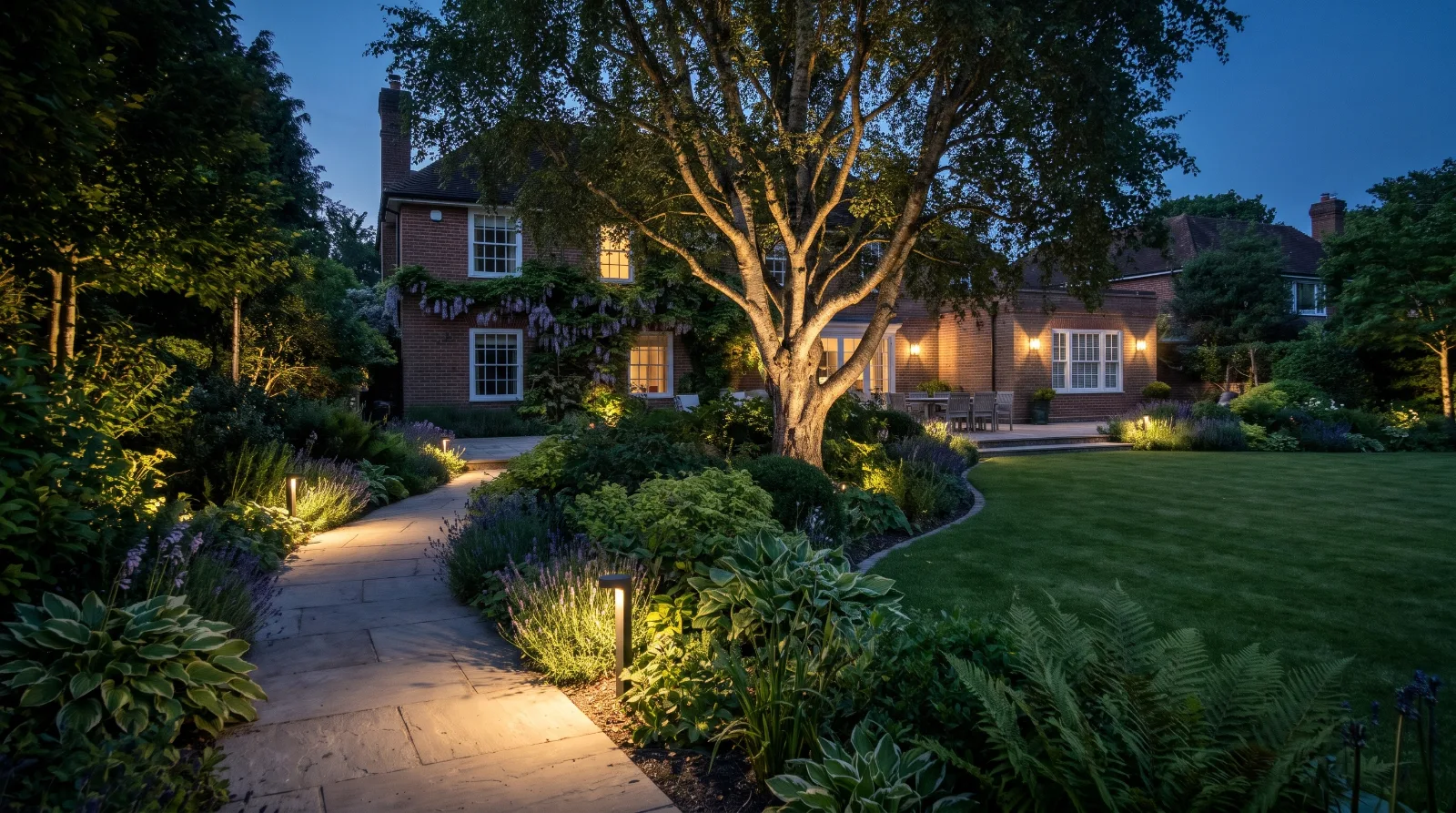
Warm white lighting can complement natural materials such as timber, brick and sandstone. It is also effective around seating areas, pergolas, patios and planted borders, where the aim is to create a welcoming environment rather than illuminate every part of the garden equally.
Cool White Lighting
Cool white lighting generally refers to light around 4000K and above, although product descriptions vary. At these temperatures, the light appears crisper and less yellow than warm white. Higher temperatures, such as 5000K, can produce a distinctly daylight-like appearance.
Cooler lighting can suit contemporary architecture, certain utility areas and locations where clear visibility is a priority. It can also create a sharper appearance around pale paving, rendered walls and modern outdoor structures.
However, using cool white lighting throughout a residential garden can make the space feel stark, particularly when combined with bright fittings or excessive illumination.
Warm vs Cool White: At a Glance
Feature | Warm white (2700K–3000K) | Cool white (4000K–5000K+) |
|---|---|---|
Appearance | Soft, golden and inviting | Crisp, whiter and sometimes bluish |
Atmosphere | Relaxed and comfortable | Brighter-looking and more functional |
Best suited to | Patios, seating areas and planting | Selected utility areas and security applications |
Natural materials | Complements brick, timber and warm stone | Can emphasise cooler tones in modern finishes |
Traditional gardens | Usually a natural fit | May contrast with the garden's character |
Contemporary gardens | Creates a softer contrast | Can complement clean architectural lines |
General garden use | Excellent for ambient and feature lighting | Best used selectively where appropriate |
The best option ultimately depends on the garden's design and how each area will be used.
1. Why Warm White Is Often Best for Garden Lighting
For many residential gardens, warm white is the most versatile starting point. It provides enough visual definition to highlight features while maintaining the relaxed atmosphere homeowners usually want outdoors.
It Creates a More Inviting Outdoor Living Space
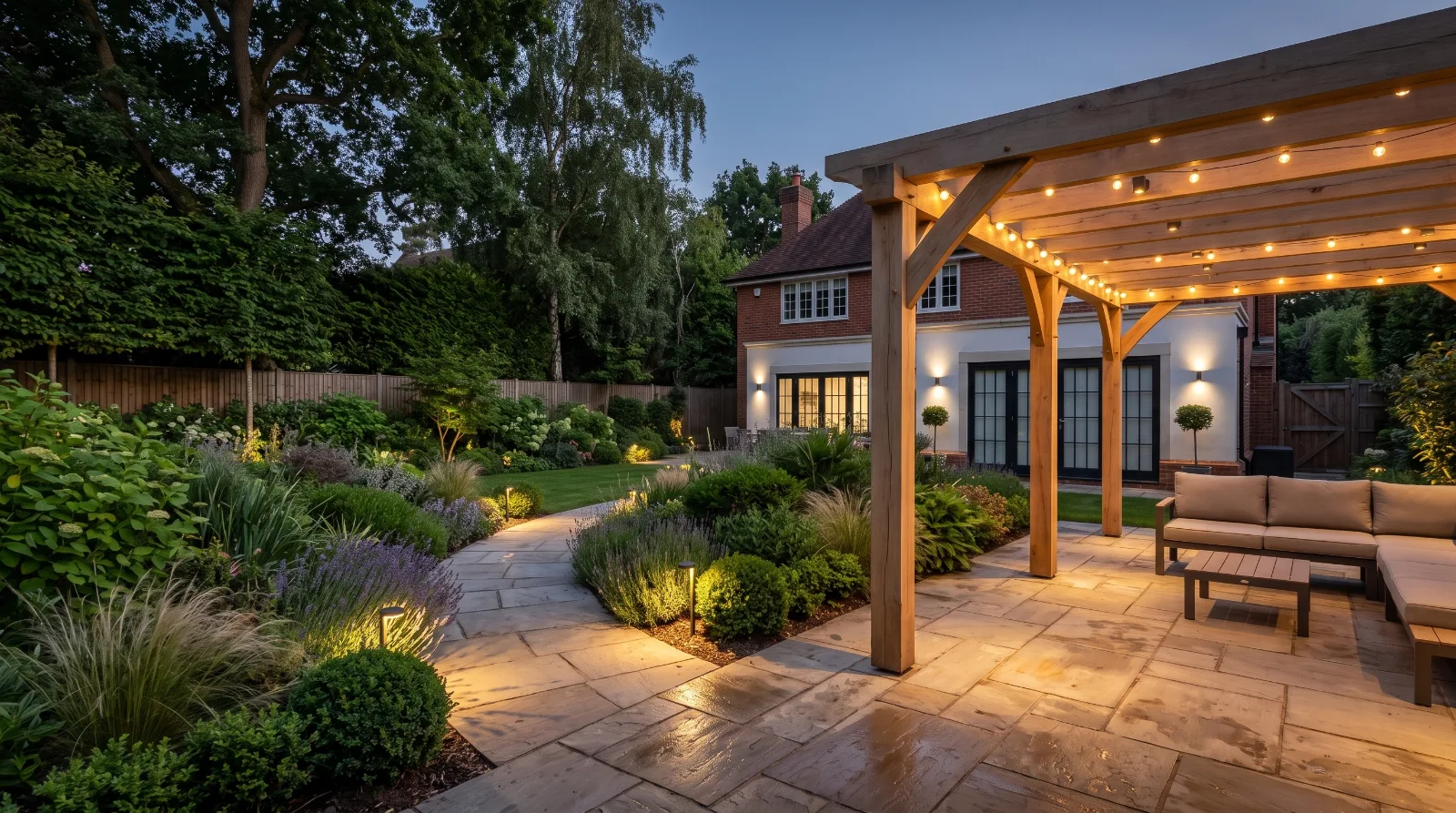
A patio should feel comfortable after dark, especially when it is used for dining, entertaining or relaxing. Warm white wall lights, discreet decking lights and subtle illumination around a pergola can help create this atmosphere.
Rather than covering the entire space in bright light, a combination of softer fittings can establish different areas of interest. This gives the garden more depth and makes it feel like a natural extension of the house.
It Complements Natural Materials
Garden landscaping often combines several materials, including timber, stone, brick and greenery. Warm white lighting can bring out the natural tones and textures of these finishes without making the overall design appear overly stark.
For example, lighting placed near a sandstone patio can emphasise its texture, while a warm wall light against brickwork can create a softer appearance. Timber pergolas and garden rooms can also benefit from this approach.
The exact result will depend on the material's original colour and the quality of the light, so it is worth testing fittings in the actual space before committing to an entire scheme.
It Works Well Around Planting
Warm white lighting can highlight ornamental grasses, shrubs, specimen trees and planted borders without making the garden feel as though it is permanently illuminated.
A carefully positioned spotlight directed towards the trunk and lower branches of a tree, for example, can create an attractive focal point. Low-level lighting can also pick out the edges of a path or the shape of a border.
The goal is to highlight selected features rather than illuminate every plant individually.
2. When Is Cool White Lighting a Better Choice?
Although warm white suits many outdoor living areas, cool white should not be ruled out completely. Certain spaces benefit from a cleaner, more neutral appearance.
Contemporary Garden Designs
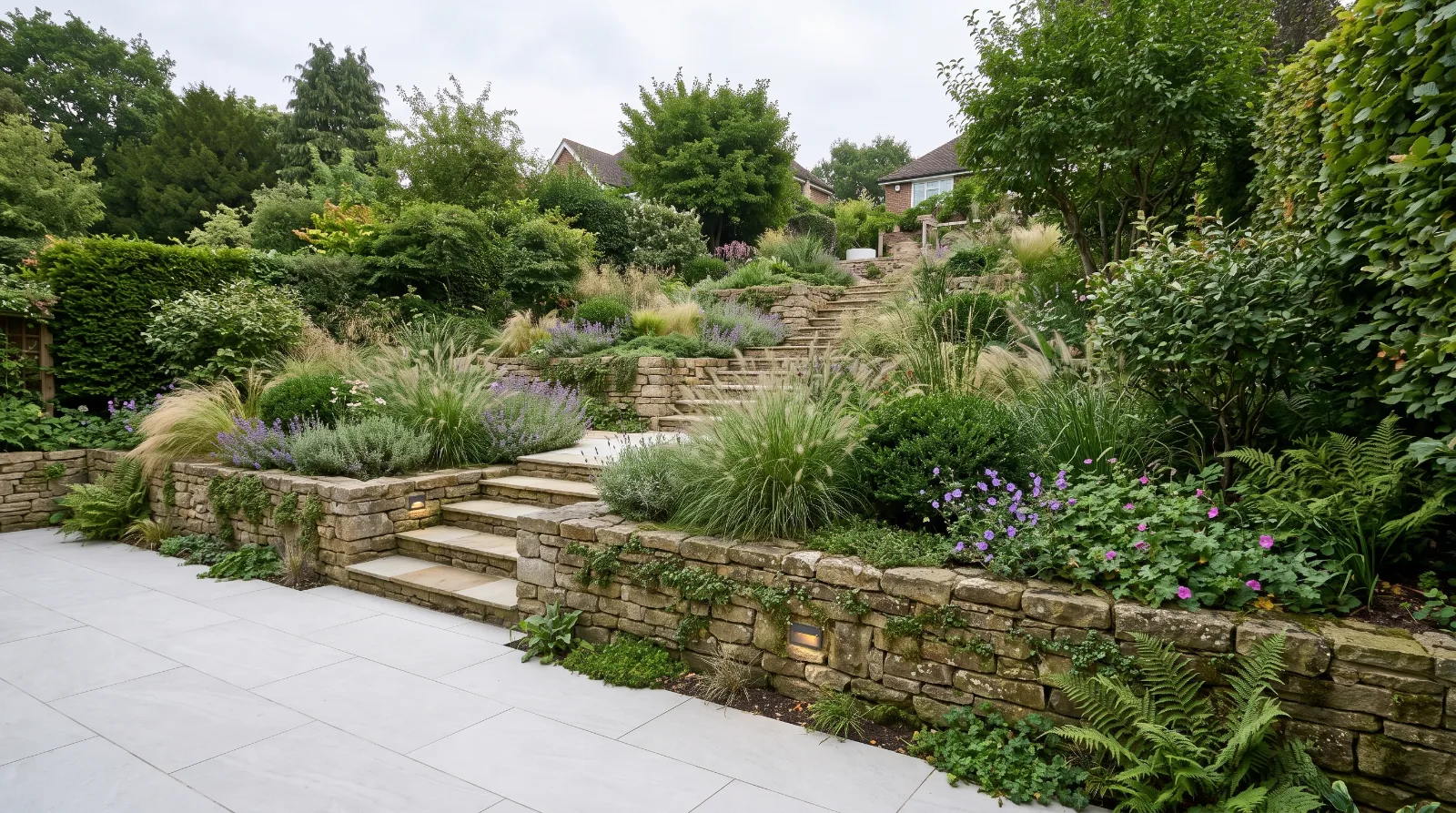
Modern gardens often feature simple geometry, large-format porcelain paving, rendered walls and streamlined architectural structures.
In these settings, a carefully selected neutral or cooler white light can complement the clean lines and create a more defined appearance. However, warm white can work equally well when a softer, more welcoming contrast is desired.
The key is to consider the entire colour palette rather than choosing a fitting in isolation.
Utility and Security Areas
Paths to side entrances, access routes and selected working areas may require practical lighting rather than purely decorative illumination.
Cooler white lighting can be suitable where a crisp appearance and accurate colour recognition are useful. However, brightness, beam direction, fitting position and glare control are just as important as colour temperature.
A powerful cool white floodlight is not automatically safer than a well-positioned warm or neutral white fitting. Excessive brightness can create glare and strong contrasts between illuminated and dark areas, making the surroundings harder to assess.
For security lighting, consider directing the light where it is needed and using motion sensors or timers to avoid unnecessary illumination throughout the night.
3. Choosing the Right Colour Temperature for Each Garden Area
Different parts of the garden have different purposes. Selecting lighting according to each area's function can produce a more balanced result than using the same fitting everywhere.
Garden area | Recommended approach | Why it works |
|---|---|---|
Patio and outdoor dining | Warm white, around 2700K | Creates a comfortable evening atmosphere |
Pergola and seating area | Warm white, around 2700K–3000K | Highlights timber, furniture and surrounding planting |
Garden paths | Warm white, around 2700K–3000K | Defines the route without creating an overly stark effect |
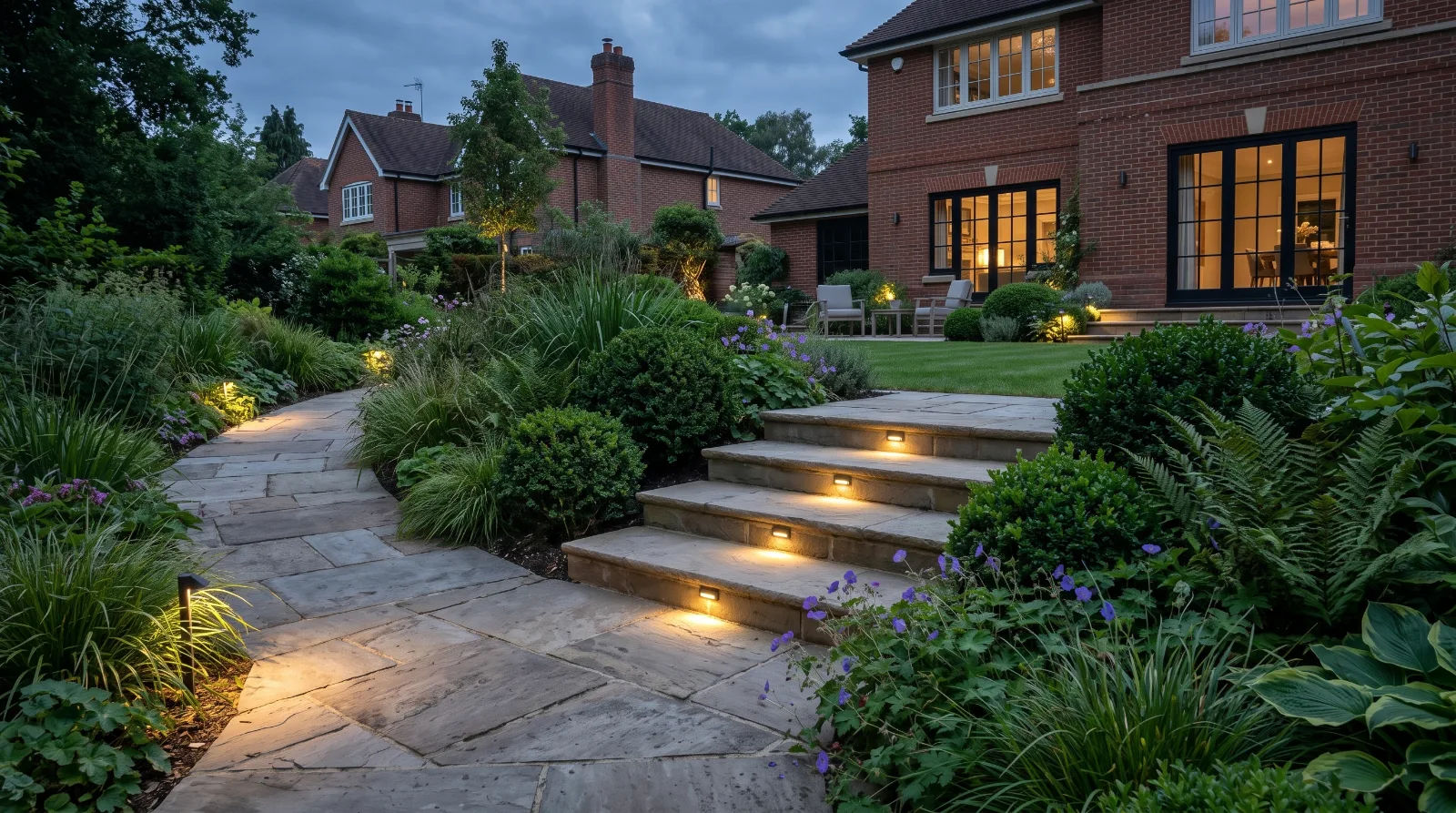
Steps and changes in level | Warm or neutral white, selected for clear visibility | Helps distinguish edges and changes in height |
Specimen trees and planted borders | Warm white, often around 2700K | Creates depth and highlights natural textures |
Garden room entrance | Warm or neutral white, depending on the architecture | Connects the lighting with the building's style |
Side access and utility areas | Warm or neutral white, with suitable brightness and coverage | Supports practical movement and visibility |
Security lighting | Choose according to the task and surroundings | Prioritises useful coverage, controlled glare and appropriate brightness |
These are starting points rather than rigid rules. A well-designed scheme should account for the garden's materials, surrounding properties and the amount of light each area actually needs.
4. Can You Mix Warm and Cool White Garden Lighting?
Yes, but it requires some planning.
Combining different colour temperatures can be effective when each serves a clear purpose. For example, warm white lighting might be used around a patio and planted borders, while a more neutral fitting illuminates a practical access route.
Problems arise when different tones compete within the same visual area. A warm white wall light beside a distinctly blue-white spotlight can make the lighting appear inconsistent, even when the fittings themselves are attractive.
To avoid this, choose a dominant colour temperature for the main garden and introduce variations only where there is a practical or design reason.
Keep the Main Lighting Consistent
For most residential gardens, warm white provides a useful starting point. Matching the colour temperature of the main patio, pergola and nearby planting lights helps create continuity.
Use Different Tones for Distinct Purposes
If a particular utility area requires neutral white lighting, keep it visually separate from the main entertaining space where possible.
The aim is not to make every light identical, but to ensure the differences feel intentional rather than accidental.
Test the Lighting Before Installation
Lighting can look different in product photographs compared with a real garden. The colour of the paving, surrounding walls and planting all influence the final appearance.
Viewing sample fittings after dark, or temporarily testing different bulbs where practical, can help you make a more confident decision before installation.
5. Why Brightness and Position Matter as Much as Colour
Colour temperature is only one part of a successful garden lighting scheme. The brightness and direction of each fitting often make an equally important difference.
Brightness is commonly expressed in lumens, while colour temperature is measured in Kelvin. These values describe different characteristics: a warm white light can be very bright, and a cool white light can be relatively dim.
For a balanced garden, consider the following principles:
Light the important areas first. Prioritise frequently used paths, steps, entrances and seating areas before adding decorative lighting elsewhere.
Avoid glare. Recessed fittings, shields and carefully directed beams can prevent light shining directly into people's eyes.
Use layers of light. Combine practical pathway lighting with subtle feature lighting around trees, walls or architectural details.
Keep some areas dark. Leaving parts of the garden unlit creates contrast and avoids the flat appearance that can result from illuminating everything equally.
Consideration for wildlife and neighbours is important, too. Artificial lighting can disturb nocturnal wildlife, and blue-rich white light can be particularly disruptive to some species. Keeping fittings low, directing light downwards, limiting brightness and switching lights off when they are not required can help reduce unnecessary impact.
Outdoor fittings should also have a suitable protection rating for their location and exposure to weather. Any mains-powered garden lighting should be installed by a suitably qualified professional.
6. Common Garden Lighting Mistakes to Avoid
Even an attractive lighting scheme can disappoint if the details are overlooked. A few common mistakes are worth avoiding.
Using cool white everywhere: A single colour temperature may not suit every area, and excessively cool lighting can detract from a relaxed residential garden.
Making every light too bright: More illumination does not necessarily improve visibility or appearance. A few well-positioned fittings can be more effective than numerous powerful lights.
Ignoring the surrounding materials: The colour of paving, brickwork, timber and planting affects how the light will appear. Choose fittings that complement these finishes.
Mixing colour temperatures without a plan: Noticeable differences between nearby lights can make the garden feel disjointed.
Overlooking neighbours and wildlife: Unshielded lights and fittings left on all night can create unnecessary light spill beyond the intended area.
A considered approach to colour, positioning and brightness helps create a garden that remains attractive and practical after sunset.
Create the Right Atmosphere with Garden Lighting
Warm white and cool white garden lighting each have their place, but for many Surrey gardens, warm white is the best starting point for patios, pergolas, pathways and planted areas. Its softer appearance complements natural materials and helps create an inviting outdoor living space.
Cooler white lighting can be useful for selected contemporary or practical areas, provided its colour temperature, brightness and position suit the surroundings.
At Surrey Oak Landscapes, we consider garden lighting as part of the wider landscape design, taking into account patios, planting, garden rooms, pergolas and the overall layout. This helps ensure lighting enhances the garden rather than competing with it.
Whether you are updating an existing patio or planning lighting as part of a complete garden transformation, the right design can make your outdoor space more usable and enjoyable after dark.
About the author