Common Garden Lighting Mistakes and How to Avoid Them
Avoid common garden lighting mistakes with practical advice on brightness, glare, positioning, colour temperature and electrical safety. Learn how to create a comfortable, attractive lighting scheme for your Surrey garden.
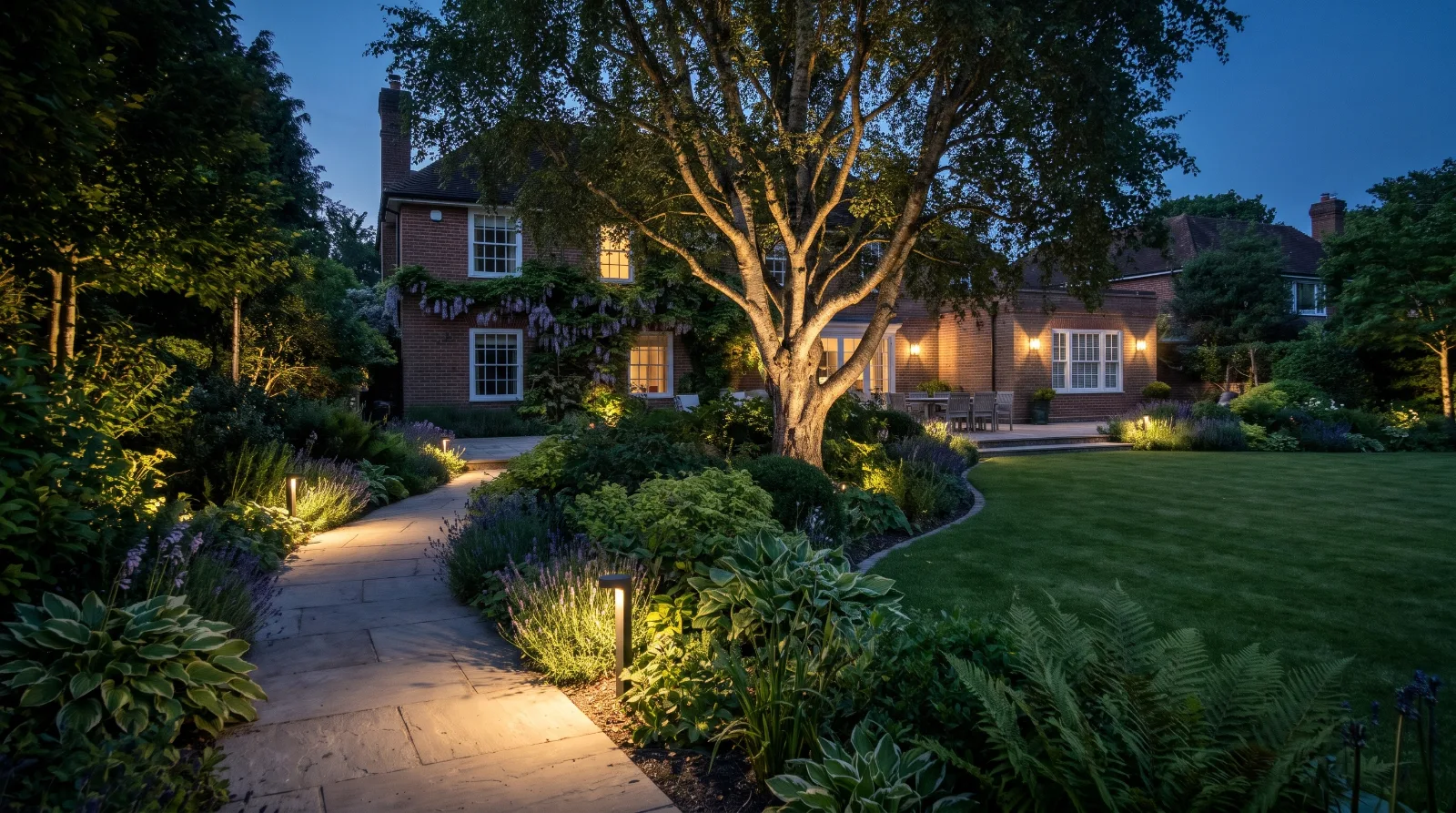
Garden lighting can transform an outdoor space after sunset, highlighting beautiful planting, making paths easier to navigate and creating a welcoming atmosphere around patios and seating areas. However, even good-quality lights can disappoint when they are poorly positioned, excessively bright or unsuitable for the garden.
Too many lights can make a garden feel harsh rather than inviting. Poorly directed spotlights may shine into neighbouring windows, while inadequate lighting around steps can leave important areas difficult to see.
The key is to choose the right fittings, position them carefully and consider how the garden will look and function after dark. For homeowners in Surrey, avoiding a few common mistakes can help create an outdoor lighting scheme that is attractive, practical and considerate of the surrounding environment.
1. Installing Too Many Lights
One of the most common garden lighting mistakes is assuming that more lights will create a better result.
Lighting every tree, border, pathway and wall can make the garden appear overly bright and visually cluttered. It can also increase energy use and make individual features less distinctive.
A more effective approach is to decide which parts of the garden deserve attention. This might include a specimen tree, a textured retaining wall, the entrance to a patio or a path connecting the house to a garden room.
Allow some areas to remain darker. The contrast between illuminated features and unlit spaces can create depth, making the garden feel more natural and relaxing.
How to avoid it: Start with a few key features and add lighting only where it serves a clear purpose. Review the result after dark before deciding whether additional fittings are necessary.
2. Choosing Lights That Are Too Bright
Powerful lights are not always the best choice for a residential garden. Excessive brightness can cause glare, make it uncomfortable to look towards the light source and create stark contrasts between illuminated and dark areas.
This is particularly noticeable around patios, outdoor dining areas and smaller gardens, where a bright spotlight can dominate the entire space.
Different areas also have different lighting requirements. A path needs enough illumination to make the route and any changes in level visible, while a planted border may need only subtle accent lighting.
The aim is to provide sufficient light for the task or feature without overpowering the surroundings.
How to avoid it: Choose fittings with an appropriate light output and beam angle for their intended use. Consider dimmable lights where suitable, and avoid using a single powerful spotlight to illuminate an entire garden.
3. Directing Light into Neighbouring Windows or the Night Sky
Outdoor lighting should illuminate the intended area rather than spill across the property boundary or upwards into the sky.
Poorly positioned spotlights, exposed lamps and wide-beam floodlights can disturb neighbours, create glare and contribute to light pollution. Unnecessary artificial lighting can also disrupt wildlife, particularly nocturnal insects and other animals.
This matters in residential gardens across Surrey, where properties may have neighbouring windows close to patios, boundary fences and planted areas.
How to avoid it: Choose fittings that direct light where it is needed. Shielded or hooded lights can help control the beam, while careful adjustment can prevent light from shining directly into windows or upwards beyond the intended feature.
Timers, dimmers and motion sensors can also reduce unnecessary lighting when the garden is not being used.
4. Using the Wrong Type of Light for Each Area
Not every garden feature should be illuminated in the same way. A fitting that works well for a boundary wall may be unsuitable for a narrow path or a mature tree.
For example, a spotlight aimed directly at a plant can create harsh shadows and expose the light source to anyone looking across the garden. A fitting designed to illuminate a broad area may also produce too much glare when used in a compact seating space.
Different lighting techniques can serve different purposes:
Path lighting: Helps make routes and changes in level easier to see.
Spotlights: Highlight selected trees, architectural details or garden features.
Wall lights: Provide functional or decorative light around entrances, boundaries and seating areas.
Recessed lights: Can provide discreet illumination in suitable steps, walls and paved structures.
Downlights: Direct light onto a particular surface or seating area, where the fitting is suitable for the location.
The right combination depends on the layout and intended use of the garden.
How to avoid it: Decide what each light needs to achieve before choosing the fitting. Consider the direction of the beam, the position of the viewer and how the light will interact with nearby plants, paving and walls.
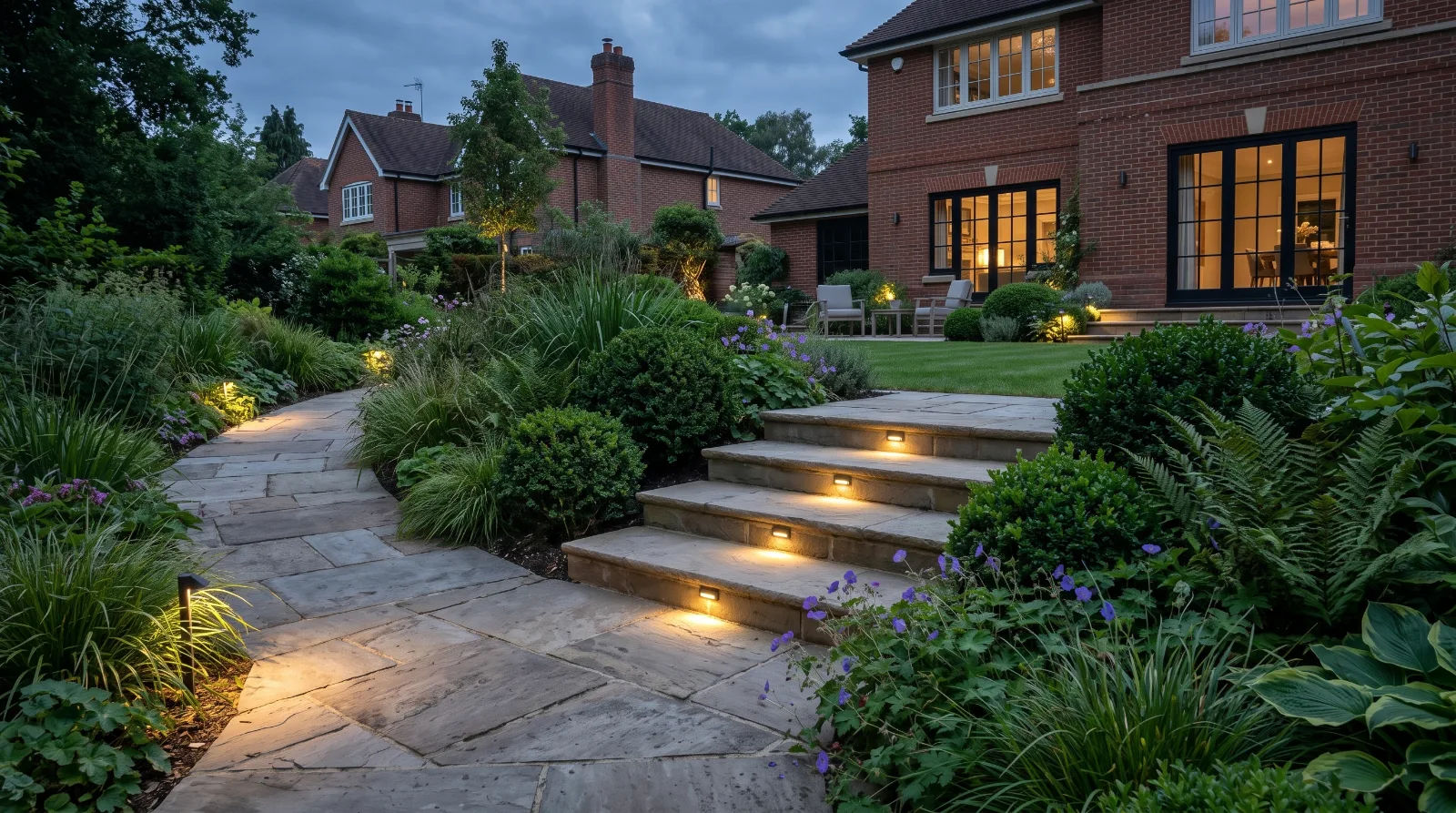
5. Ignoring Paths, Steps and Changes in Level
Decorative lighting may create an attractive atmosphere, but safety should not be overlooked. A beautiful planting scheme is of limited use if visitors cannot clearly see the steps or uneven surfaces leading through the garden.
Steps, level changes, narrow paths and entrances deserve particular attention. Shadows can obscure the edge of a step, while a bright light aimed directly towards a person approaching from the opposite direction can make it more difficult to see.
Lighting should make the walking surface and its boundaries easier to recognise rather than simply illuminate the general area.
How to avoid it: Identify the routes people regularly use, including the journey from the house to the patio, garden room, side gate or seating area. Position suitable lights so they illuminate the route without creating glare.
The fittings should also be appropriate for outdoor conditions and installed so that they do not create trip hazards or obstruct movement.
6. Mixing Too Many Light Colours
Garden lighting colour affects how paving, brickwork, planting and other materials appear after dark.
Using several noticeably different colour temperatures across a small garden can make the overall scheme feel inconsistent. For example, cool white path lights beside very warm patio lights may create an abrupt visual change if there is no clear design reason for it.
This does not mean every fitting must use precisely the same colour. Different areas can have different requirements, and some feature lighting may intentionally contrast with the surrounding illumination.
However, colour choices should be deliberate rather than accidental.
How to avoid it: Choose a consistent colour approach for connected spaces, especially where a path leads directly into a patio or seating area. Before purchasing multiple fittings, compare the light colours and consider how they will look against your paving and planting.
For a more detailed comparison, see our guide to Warm vs Cool White Garden Lighting: Which Is Better?
7. Placing Lights Without Considering the Finished Garden
A light can appear well positioned during installation but produce an awkward result once the garden is viewed after dark.
For instance, a spotlight placed too close to a shrub may illuminate only a small section of foliage. A fitting aimed across a path might leave the surface itself in shadow, while a light positioned behind a piece of furniture could create distracting silhouettes.
Plant growth can also change how a lighting scheme performs over time. Shrubs and ornamental grasses may eventually block a beam or conceal a fitting.
How to avoid it: Consider the garden from the viewpoints that matter most, including the house, patio, main paths and seating areas. Where possible, test temporary lighting positions after sunset before finalising the installation.
Think about the mature size of plants rather than their current appearance. Allow suitable access for cleaning and maintenance, and make sure fittings can still reach the features they are intended to illuminate as the garden develops.
8. Using Lights That Are Not Suitable for Outdoor Conditions
Garden fittings are exposed to rain, moisture, dirt and changes in temperature. A product designed for indoor use should not be assumed suitable for an exposed outdoor location.
Ingress Protection (IP) ratings indicate how well an enclosure protects against the entry of solid objects and water. The appropriate rating depends on the location and the conditions the fitting will face.
A sheltered fitting beneath a suitable roof may have different requirements from a light exposed to driving rain or water splashes. Lights installed in or near water features need particular care and suitable equipment.
How to avoid it: Buy fittings from reputable suppliers and check the manufacturer's instructions, outdoor suitability and IP rating before installation. Consider the fitting's actual exposure rather than relying on the product's appearance alone.
It is also important to inspect existing lights periodically. Cracked housings, deteriorating seals, damaged cables and loose connections should not be ignored.
9. Overlooking Electrical Safety
Garden lighting combines electricity with an outdoor environment where moisture, soil disturbance and accidental damage can introduce additional risks.
Using unsuitable extension leads, poorly protected connections or damaged cables can create hazards. Installing permanent mains-powered lighting without appropriate knowledge and safeguards is also a mistake.
The installation needs to be planned around the garden, including cable routes, buried services, access for maintenance and protection from damage during future landscaping work.
How to avoid it: Use equipment intended for outdoor conditions and ensure the electrical installation has suitable protection, including appropriate residual current device (RCD) protection where required.
For permanent mains-powered garden lighting or work involving new wiring, use a suitably qualified and competent electrician who can ensure the installation meets the applicable requirements. Do not attempt electrical work beyond your competence.
If you are installing new paving, retaining walls or planting beds at the same time, coordinate the lighting and cable routes before construction begins. This can help avoid unnecessary excavation and disruption later.
10. Leaving Lights on When They Are Not Needed
Garden lights do not need to run at full output throughout the night to be useful.
Leaving every fitting switched on until morning can waste electricity and contribute to unwanted light spill. It can also reduce the opportunity for wildlife to use darker parts of the garden undisturbed.
The best control method depends on the purpose of the lighting. Decorative feature lights may only be needed while the garden is being used, while some entrance or security lights may benefit from sensors.
How to avoid it: Consider timers, dimmers or motion sensors where appropriate. Set operating times around how the garden is actually used, and switch off decorative lighting when it is no longer needed.
For areas where permanent illumination is unnecessary, controlled lighting can provide convenience without keeping the entire garden lit all night.
11. Treating Garden Lighting as an Afterthought
Another common mistake is planning the paving, planting, seating and garden structures first, then deciding where the lights should go once everything has been installed.
This can limit the available positions for fittings and make cable routes more difficult to arrange. Retrofitting lighting may involve lifting paving, disturbing planting or making changes to completed structures.
A little early planning can make the final scheme more cohesive and avoid some of this disruption.
How to avoid it: Include lighting in the wider garden design from the beginning. Identify important paths, steps, trees, seating areas and architectural features, then coordinate suitable fittings and cable routes with the other landscaping work.
This is particularly useful for projects involving new patios, pergolas, garden rooms, retaining walls or specimen trees, where discreet lighting can be integrated into the finished layout.
How to Get Your Garden Lighting Right
A successful lighting scheme is not about making every part of the garden bright. It is about deciding what needs to be illuminated, selecting suitable fittings and controlling where and when the light is used.
Before installing garden lighting, consider the following:
Identify the main routes and level changes that need to be visible after dark.
Select a small number of features to highlight rather than illuminating everything.
Choose suitable fittings and light outputs for each location.
Direct light away from neighbouring windows and unnecessary areas of the sky.
Consider colour consistency, plant growth and future maintenance.
Plan cable routes, controls and electrical safety requirements before installation.
A well-planned scheme should feel comfortable when viewed from the house and when walking through the garden. It should support how you use the space without overwhelming its natural character.
Create a Better-Lit Garden with Surrey Oak Landscapes
Garden lighting can bring out the best in a carefully designed outdoor space, from highlighting specimen trees and planting borders to making paths, steps and seating areas easier to use after sunset.
At Surrey Oak Landscapes, we provide landscaping and garden design services to help homeowners create outdoor spaces that work well during the day and into the evening. Whether you are planning a new lighting scheme or incorporating lighting into a wider garden transformation, thoughtful positioning and coordination with the surrounding landscaping can make a real difference.
Thinking about improving your garden lighting?
About the author