Garden Path and Step Lighting Ideas
Discover garden path and step lighting ideas to improve visibility and enhance your landscaping. Compare recessed lights, bollards, solar options and warm white LEDs for a practical, attractive outdoor lighting scheme.
Garden paths and steps are often overlooked when planning outdoor lighting, yet they are among the most important areas to illuminate. A well-designed lighting scheme makes it easier to move around after dark, highlights the garden's layout and adds atmosphere without overwhelming the surrounding planting.
Whether you have a winding stone pathway, a set of steps leading to a raised patio or a simple route to a garden room, the right lighting can make a noticeable difference. It can also help connect different parts of the garden, making the space feel more cohesive after sunset.
For homeowners exploring garden path and step lighting ideas in Surrey, the key is to balance visibility, appearance and practicality. The aim is not to make every corner equally bright, but to illuminate the areas that matter while allowing the garden's natural features to remain part of the design.
1. Use Low-Level Lighting Along Garden Paths
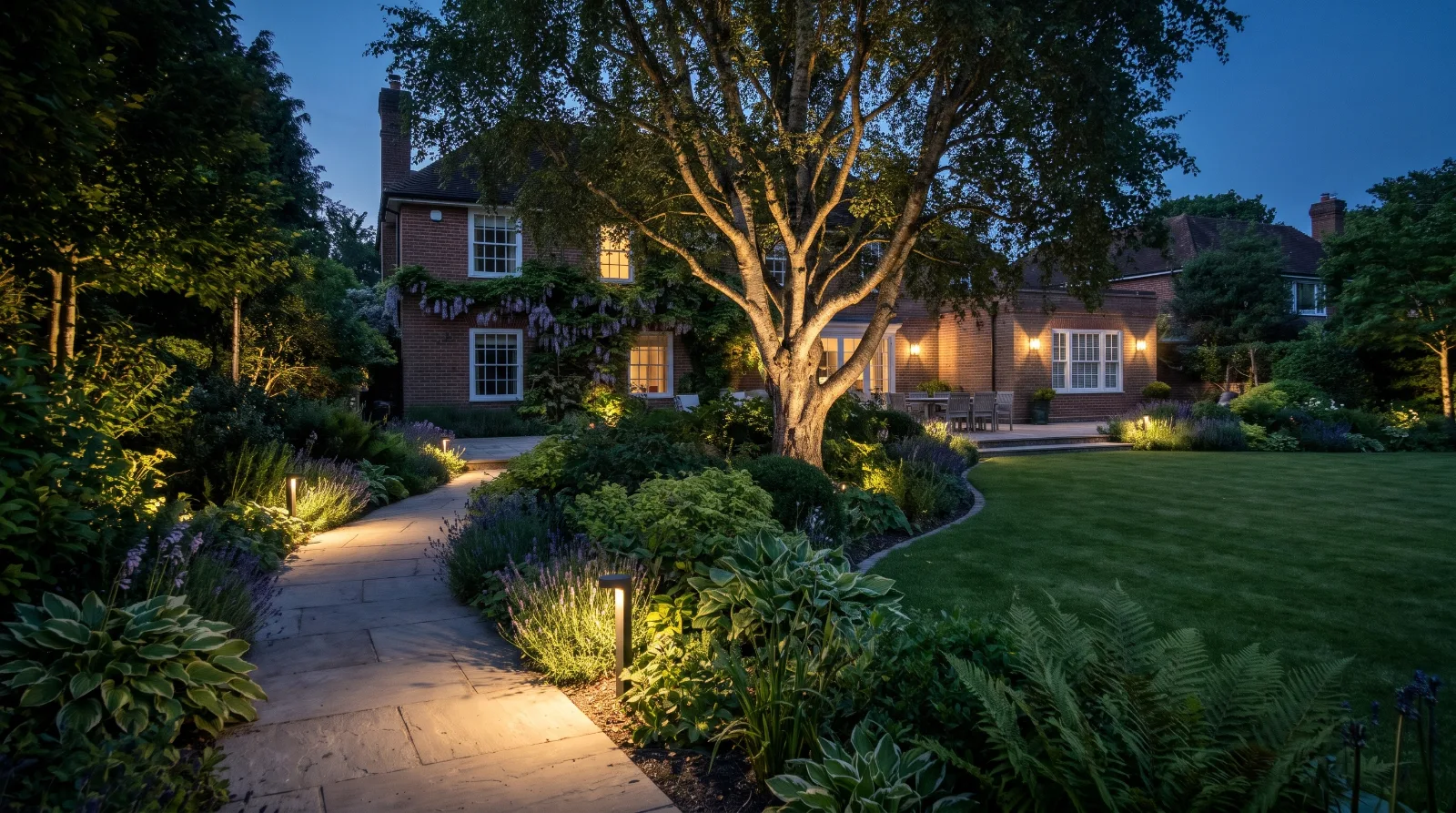
Low-level lighting is one of the most effective ways to illuminate a garden path. By placing light close to the ground and directing it across the walking surface, you can make the route easier to follow without shining light directly into people's eyes.
Several fitting styles work well for this purpose.
Recessed Path Lights
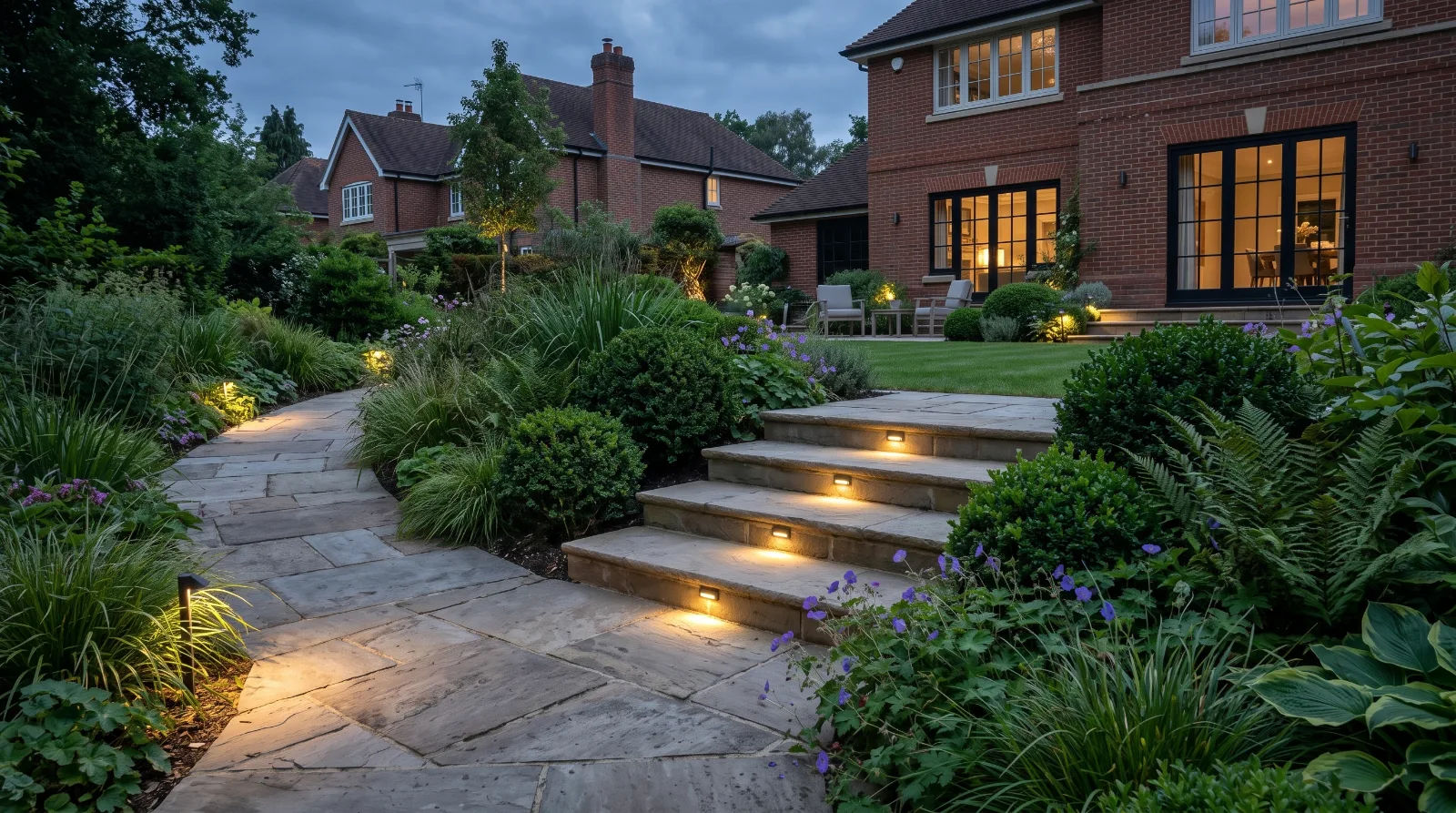
Recessed lights can be installed into suitable paving, low retaining walls or other hard landscaping features. They offer a discreet finish and work particularly well in contemporary gardens where clean lines and uncluttered surfaces are important.
Positioned carefully, these fittings can highlight the edges of a path or illuminate sections where the route changes direction. They are especially useful where conventional post lights might interrupt the layout.
However, recessed fittings need to be selected for their installation location, with appropriate protection against water and ground moisture. Their position should also avoid creating glare or bright patches that make the path harder to read.
Low-Level Wall Lights
Where a garden path runs alongside a wall, raised border or retaining structure, small wall-mounted lights can provide useful illumination without taking up space on the path itself.
They are a good option for steps leading between different garden levels or for pathways bordered by brick and stone. The light can wash across the surface and highlight changes in height while complementing the surrounding materials.
Bollard and Post Lights
Bollard lights create a clear visual route through the garden and can work well along longer paths, open lawns and entrances.
Choose designs that direct light downwards rather than exposing a bright light source at eye level. Staggering fittings along alternate sides can also produce a more natural appearance than arranging identical lights in a perfectly straight line on both sides.
The spacing should be based on the fitting's brightness, beam spread and the shape of the path. The goal is to create a reasonably consistent level of visibility without excessive overlapping light.
2. Highlight Garden Steps for Safer Movement
Garden steps require particular attention because changes in level can become difficult to distinguish after dark. Lighting should make the individual steps and their edges clear, rather than simply making the surrounding area brighter.
Recessed Step Lights
Small fittings installed into suitable step risers can direct light across the tread below. This creates a clean, integrated appearance that works well with stone steps, paved terraces and contemporary landscaping.
For the best result, plan the lighting as part of the step construction rather than deciding where to fit it after the landscaping is complete. This helps keep the installation neat and reduces the need to alter finished paving.
Lighting Beside Each Step
Where recessed fittings are unsuitable, low-level lights positioned along the side of a staircase can illuminate the route without altering the step surfaces.
This approach can work particularly well for natural stone steps, landscaped slopes and paths bordered by retaining walls. The fittings should be positioned so that the changes in level remain visible throughout the staircase.
Avoid relying on a single light at the top or bottom of a flight. It may illuminate the general area while leaving individual steps in shadow.
Concealed Lighting Beneath Step Edges
LED strip lighting or linear fittings installed beneath suitable step edges can create a subtle glow across the treads. This produces a contemporary effect and can emphasise the shape of broad stone steps.
However, the fittings need to be designed for outdoor use and installed with appropriate weather protection. The light should help reveal each tread without shining directly into the eyes of people using the steps.
For traditional gardens, smaller recessed fittings may be more sympathetic to the materials and overall character of the space.
3. Choose Lighting That Complements Your Garden Design
Garden lighting should work with the materials and architectural style already present. A fitting that looks attractive in isolation may feel out of place when installed alongside the house, patio or planting.
Garden style or feature | Suitable lighting approach | Overall effect |
|---|---|---|
Natural stone paths | Discreet recessed lights or low-level wall lights | Highlights stone texture without dominating it |
Contemporary porcelain paving | Minimal recessed fittings or linear lighting | Creates a clean, architectural finish |
Traditional brick paths | Classic wall lights or understated bollards | Complements the warmth of the materials |
Gravel pathways | Shielded bollard lights or carefully positioned low lights | Defines the route without creating excessive glare |
Garden steps on a slope | Recessed riser lights or side-mounted fittings | Makes changes in height easier to distinguish |
Paths through planting | Low-level fittings positioned along the route | Creates a gentle transition between the path and borders |
Routes to a garden room | Coordinated path lights and discreet entrance lighting | Connects the garden room with the rest of the space |
Consistency is important, but every fitting does not have to be identical. Combining two or three complementary styles can create a layered scheme, provided they share a considered approach to colour, brightness and positioning.
4. Should You Choose Warm or Cool White Lighting?
Colour temperature affects how your path and surrounding landscape look after sunset. Warm white light, typically around 2700K to 3000K, produces a softer, golden appearance that suits most residential gardens.
It works particularly well with timber, brick, natural stone and established planting. For garden steps and paths, warm white lighting can provide clear visual definition while maintaining a relaxed atmosphere.
Neutral or cooler white lighting can suit some contemporary settings, especially where the design features pale paving, rendered walls and modern architectural finishes. However, using very cool white light throughout a residential garden can make the space feel stark.
For most gardens, warm white is a useful starting point. More important than the colour temperature alone is how effectively the fittings illuminate the walking surface without producing glare or strong contrasts.
It is also worth keeping nearby lights reasonably consistent in colour. A mixture of distinctly golden and bluish-white fittings can make a carefully landscaped garden feel visually disjointed.
5. Combine Path Lighting with Planting and Landscape Features
A path should be visible, but its lighting can also help reveal the garden around it. Combining practical illumination with subtle feature lighting adds depth and makes the landscape more interesting after dark.
Illuminate Selected Plants
Ornamental grasses, shrubs and specimen trees can look particularly attractive when softly illuminated from an appropriate angle.
A low-level spotlight directed towards a tree trunk can highlight its bark and branching structure, while discreet lighting beside ornamental grasses can reveal their texture and movement.
Keep these lights separate from the main path lighting where possible. The walking surface should remain clearly visible, and decorative lighting should not create distracting glare or deep shadows across the route.
Highlight Retaining Walls and Changes in Level
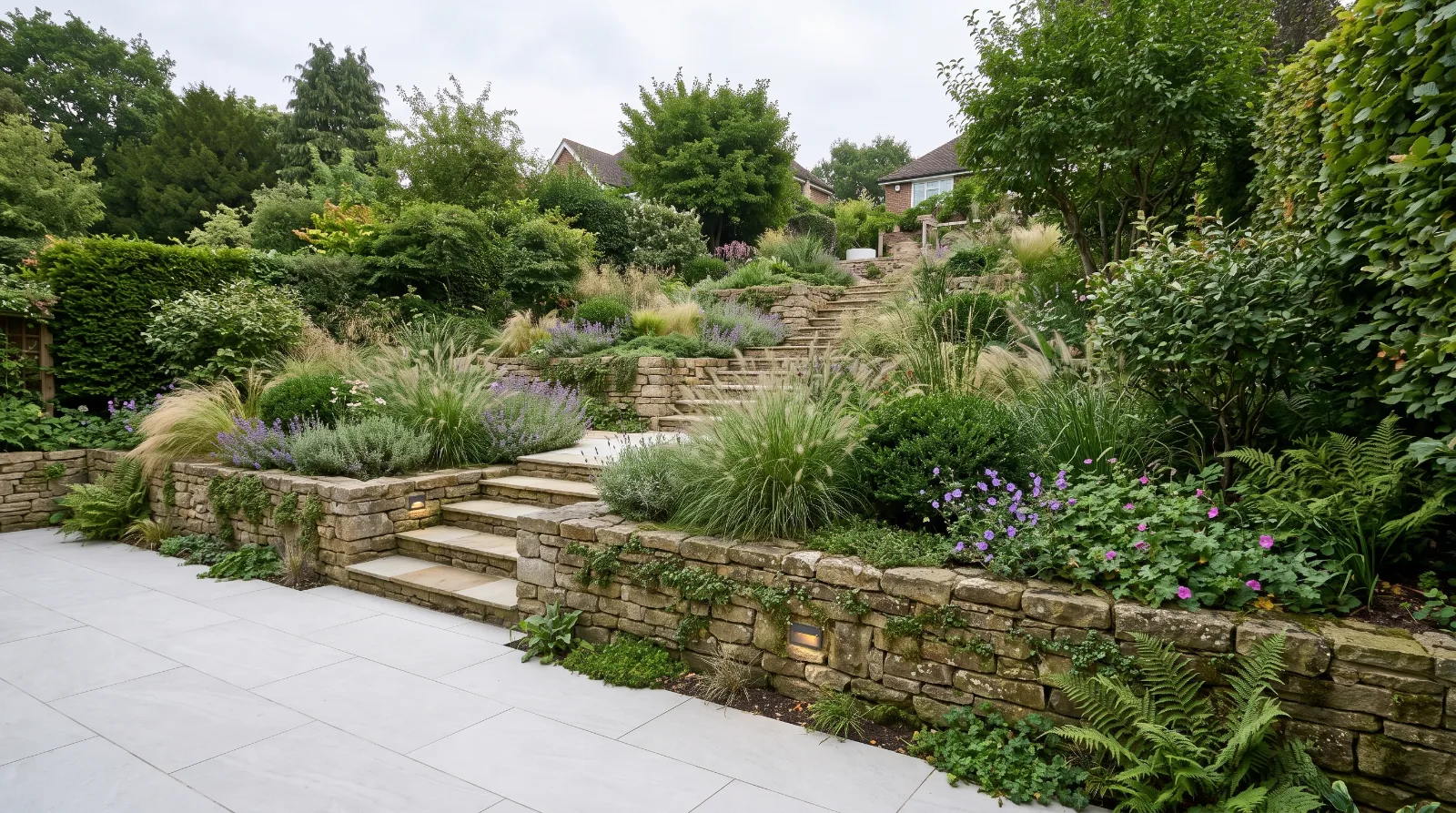
Retaining walls often play an important role in sloping gardens and terraced landscapes. Carefully positioned lighting can emphasise their structure while improving visibility around nearby steps and pathways.
Small wall lights or fittings integrated into the surrounding hard landscaping can create a consistent transition between different levels.
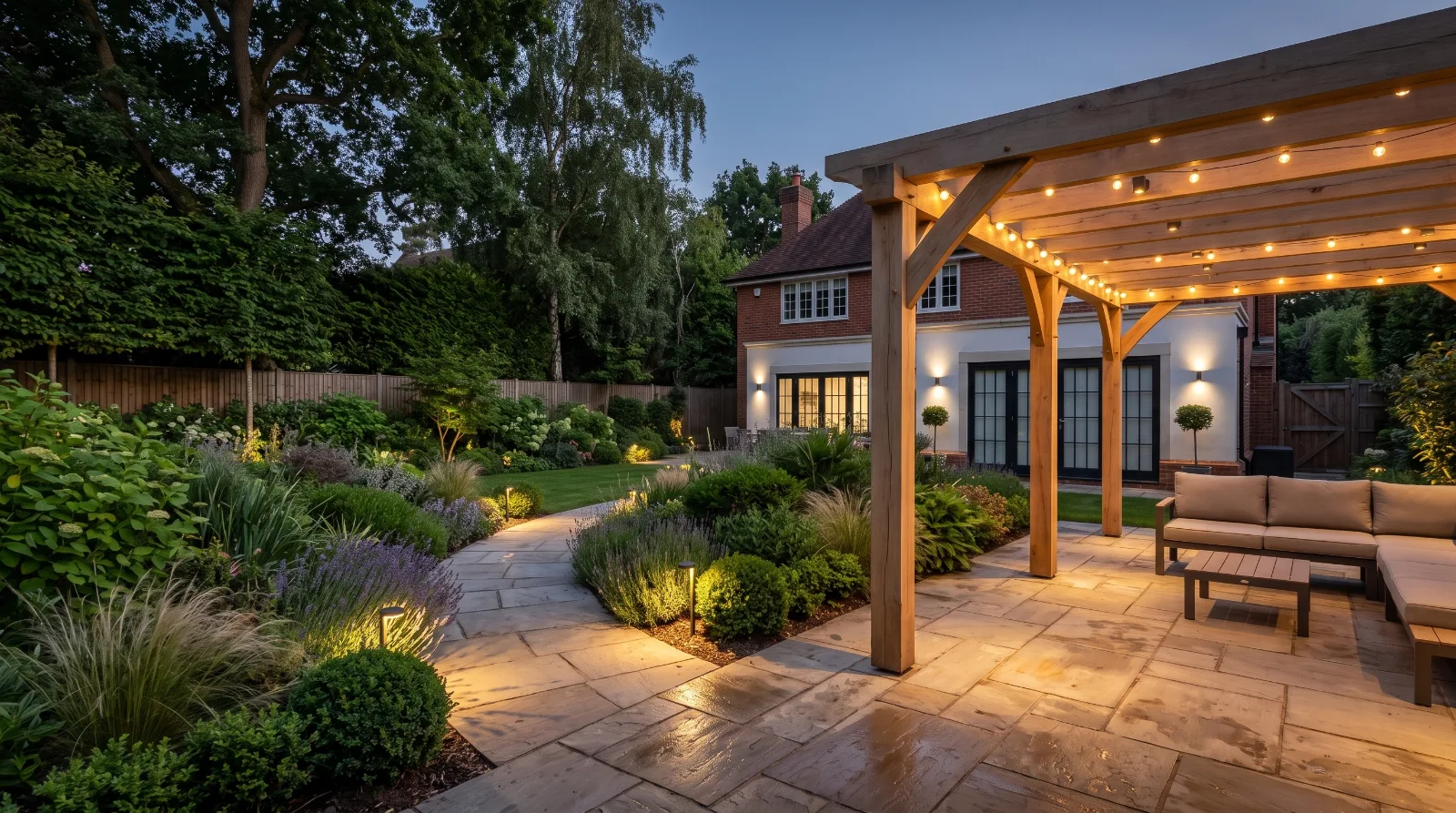
Create a Clear Route to the Patio or Garden Room
Where a path connects the house, patio, garden room or seating area, use lighting to make the route feel continuous.
You could combine low-level path lights with subtle illumination around the destination itself. This provides a clear visual connection without needing to illuminate the entire garden.
6. Solar or Wired Garden Path Lights?
The best lighting system depends on how regularly the path is used, how reliable the illumination needs to be and how much installation work is involved.
Feature | Solar lighting | Wired lighting |
|---|---|---|
Installation | Generally straightforward, with no mains connection at each fitting | Requires planned cable routes and suitable electrical installation |
Running costs | Uses energy collected from sunlight | Uses electricity from the connected supply |
Brightness and consistency | Depends on sunlight, battery condition and product quality | Generally more consistent when correctly specified |
Shaded gardens | Performance may be limited beneath trees or beside tall fences | Can be suitable for shaded routes |
Best suited to | Informal paths and areas where simple installation is preferred | Frequently used paths, steps and permanent landscape schemes |
Solar lights can be a convenient choice for an informal garden path, particularly where the fittings receive enough daylight to charge effectively. However, performance may become less reliable during darker winter months, especially in shaded areas.
For frequently used routes and staircases, a properly designed wired system may offer more dependable illumination. Low-voltage LED systems are also worth considering for suitable garden installations.
Any mains-powered outdoor lighting should be installed safely by a suitably qualified professional, with equipment and connections appropriate for outdoor exposure.
7. Get the Brightness, Weather Protection and Positioning Right
Good garden lighting depends on more than the appearance of the fittings. Their brightness, installation location and protection against the elements all affect how well the system performs.
Avoid excessive brightness. Strong lights can create glare and make nearby areas appear darker by comparison. Use enough illumination to reveal the path, steps and obstacles without flooding the whole garden with light.
Choose suitable outdoor fittings. Check the ingress protection (IP) rating for the intended position. A fitting exposed to rain, splashback or ground moisture needs suitable protection for those conditions. Recessed ground lights may require a higher level of water protection than fittings installed in a sheltered position.
Keep the route evenly readable. Pay particular attention to bends, narrow sections, entrances and changes in level. Avoid isolated bright spots with large, poorly illuminated gaps between them.
Consider neighbours and wildlife. Direct light onto the path rather than towards nearby windows or into the sky. Timers, motion sensors and switching off unnecessary lighting can reduce light spill and disturbance to nocturnal wildlife.
Plan lighting before completing the landscaping. When paths, steps and retaining walls are being constructed, it is easier to incorporate cable routes, recessed fittings and suitable access for maintenance.
These details can make a significant difference to the final appearance and long-term reliability of the installation.
Create a Garden That Works Beautifully After Dark
Garden path and step lighting can improve visibility, highlight quality landscaping and make outdoor spaces more inviting throughout the year. From discreet recessed fittings to contemporary linear lights and classic bollards, the best solution depends on the garden's layout, materials and how each route is used.
At Surrey Oak Landscapes, we consider lighting as part of the wider landscape design, taking into account paths, steps, patios, planting and changes in ground level. This helps create a cohesive finish in which practical lighting and visual appeal work together.
Whether you are improving an existing walkway or planning a complete garden transformation, a considered lighting scheme can help you get more from your outdoor space.
About the author