How Much Does Tree Surgery Cost in Surrey?
How much does tree surgery cost in Surrey? Explore estimated prices for pruning, crown reduction, tree removal and stump grinding, plus the factors that affect your final quotation.
Tree surgery can help keep trees healthy, manage overgrown branches, improve safety and make a garden more practical. However, the cost of hiring a tree surgeon can vary considerably depending on the work required.
Pruning a small ornamental tree is a very different job from reducing a mature oak or removing a large tree growing close to a house. Access, equipment, waste disposal and the condition of the tree can all affect the final price.
For homeowners in Surrey, understanding the main costs involved can make it easier to plan tree maintenance and compare quotations. Whether you need crown reduction, routine pruning, tree removal or stump grinding, the first step is understanding what the work involves.
How Much Does Tree Surgery Cost in Surrey?
Tree surgery prices depend on the size of the tree, the type of work and how straightforward the job is to carry out. The following table provides indicative estimates for common residential tree surgery services.
Important price disclaimer: The prices below are estimates for general budgeting only, based on published UK and Surrey cost guides available in 2026. They are not fixed prices, guaranteed market rates or quotations from Surrey Oak Landscapes. Actual costs may be lower or higher depending on the tree, site conditions, access, equipment, labour, waste disposal and the work included. VAT treatment may also differ between quotations, so always confirm whether it is included.
Type of tree surgery | Indicative estimated cost |
|---|---|
Pruning a small tree | £150–£400 |
Crown reduction on a medium-sized tree | £200–£550 |
Removing a small tree, under approximately 5m | £150–£350 |
Removing a medium-sized tree, approximately 5–10m | £300–£750 |
Removing a large tree, approximately 10m or taller | £700–£1,500+ |
Stump grinding | £80–£320 per stump |
Emergency tree surgery | £300–£800+ |
These ranges are intended as broad planning figures, not prices that apply to every job. Large trees in difficult locations can cost considerably more, particularly where sectional dismantling, specialist access equipment or complex waste removal is required.
The quoted height ranges are also approximate. A tree's spread, trunk diameter, condition and position can matter just as much as its height.
1. What Affects the Cost of Tree Surgery?
Even two trees of similar heights can require very different amounts of work. Before providing a quotation, a tree surgeon needs to consider the tree itself and the conditions around it.
Tree size and species
The size of the tree is one of the main factors affecting cost. Larger trees generally require more time, equipment and handling of branches and timber.
However, height alone does not determine the price. A broad, mature tree with heavy limbs may require more work than a taller tree with a relatively narrow canopy.
The species also matters. Some trees have dense canopies, heavy branches or growth patterns that require a more considered pruning approach. The condition of the tree can add further complexity if damaged or decaying sections need careful handling.
The type of work required
Different tree surgery services involve different levels of work.
Routine pruning may involve removing selected branches, while crown thinning focuses on selectively reducing the density of the canopy. Crown reduction changes the overall size and spread of the crown and needs to be carried out appropriately for the species and condition of the tree.
Tree removal is a different operation altogether. Depending on the circumstances, a tree may be felled in one piece where space and safety allow, or dismantled in sections when it is close to buildings, fences, roads or other obstacles.
The more complicated the work, the more time and equipment it may require.
Access to the tree
Access can make a noticeable difference to the cost of a tree surgery job.
A tree in an open garden may be relatively straightforward to reach with equipment and move debris away from. A tree at the back of a property with narrow side access, steps or restricted working space can take considerably longer.
Where access is difficult, additional equipment or alternative working methods may be needed. The same applies when machinery cannot reach the tree or when branches and timber have to be carried through the property or garden by hand.
Proximity to buildings and boundaries
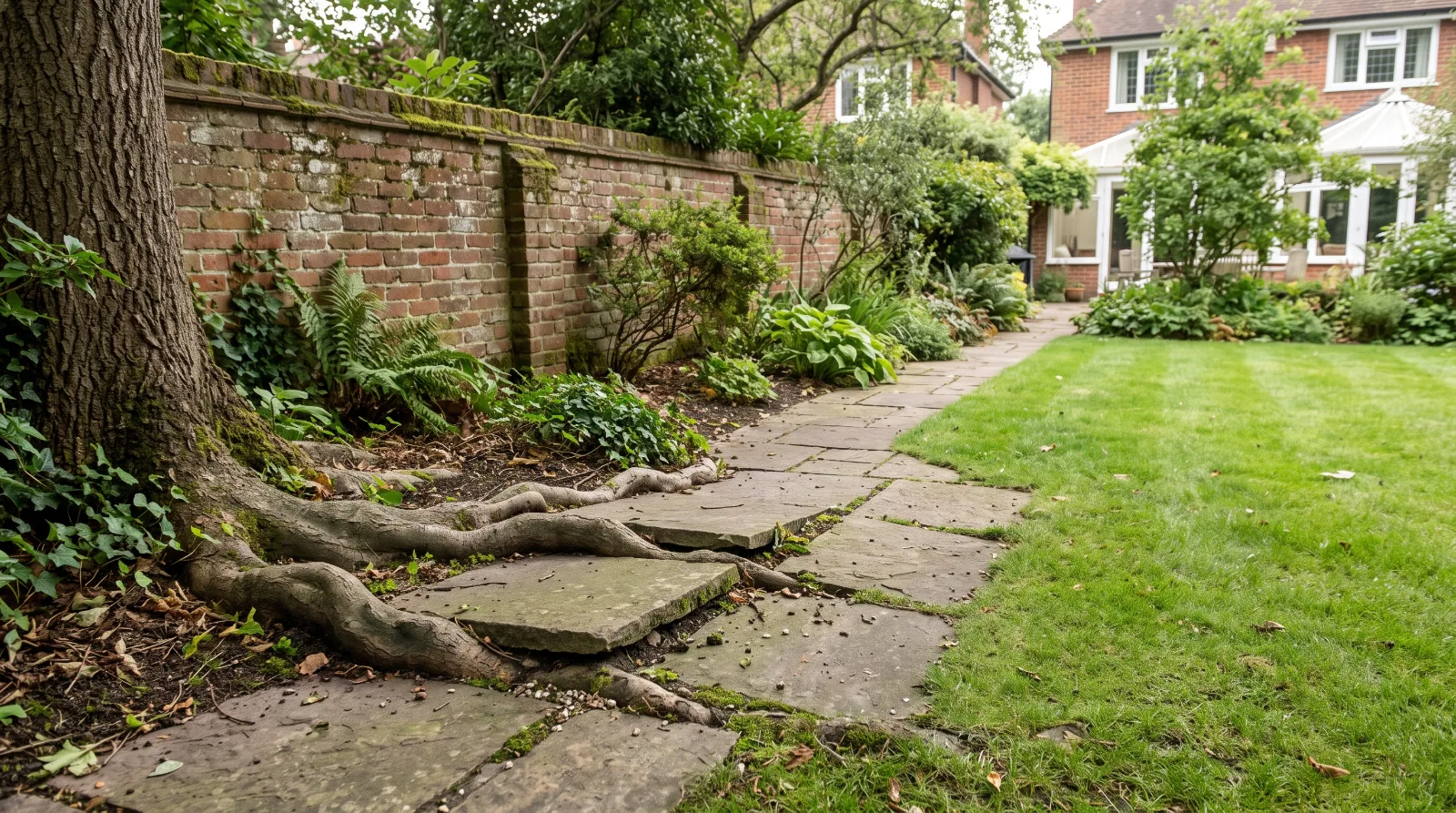
Trees growing close to houses, garages, conservatories, fences and neighbouring properties may require additional care.
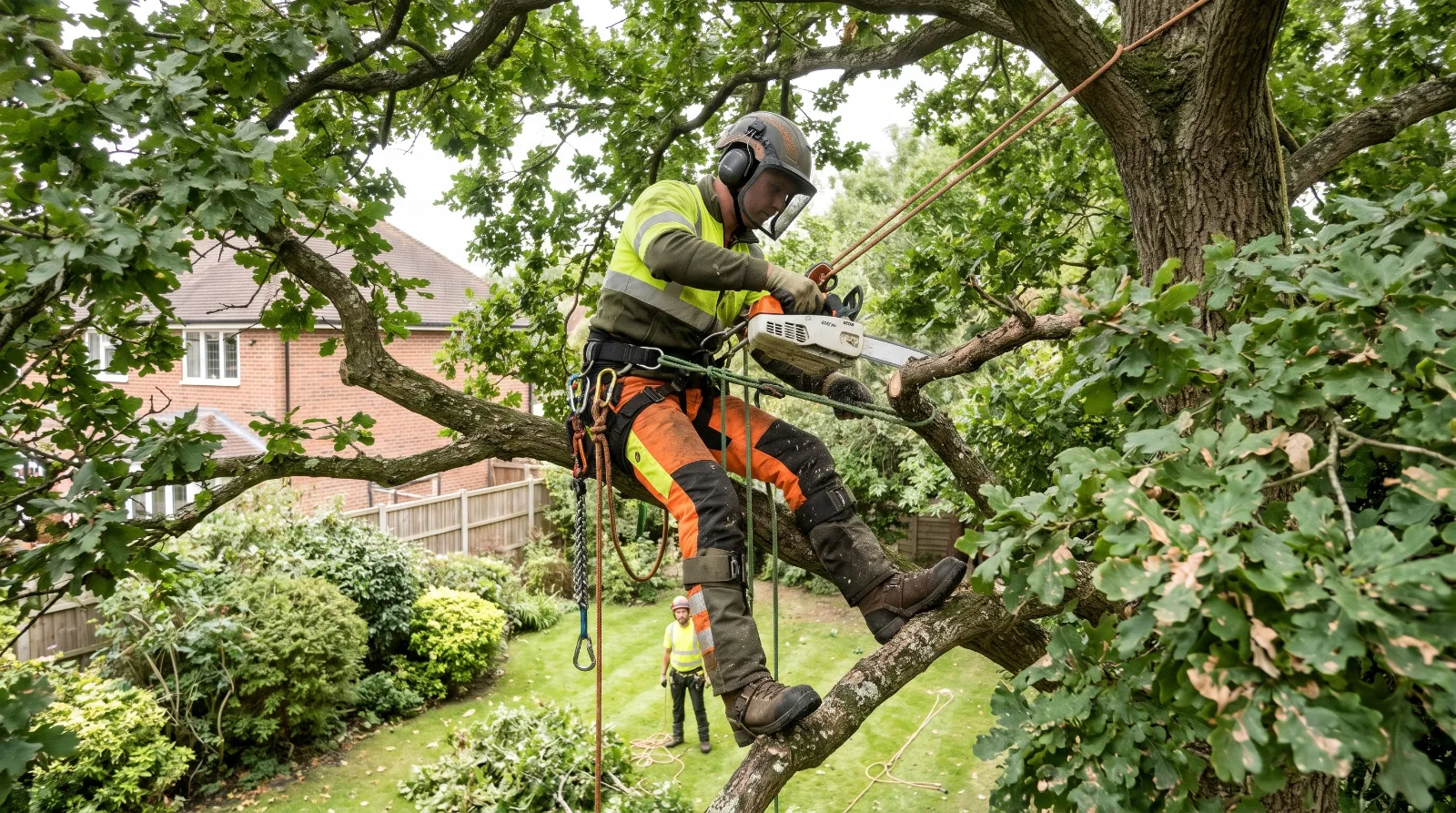
Branches may need to be lowered in controlled sections rather than allowed to fall freely. This can require specialist rigging, more ground staff and additional time.
Overhanging roads, pavements or other public areas can create further requirements, particularly if access needs to be controlled or specialist equipment is necessary.
This is why the position of a tree can affect the quotation just as much as its size.
2. How Much Does Tree Pruning Cost?
Tree pruning can range from removing a few selected branches to carrying out more extensive canopy management. The cost depends on the quantity of work, the tree's size and the technique required.
Crown thinning
Crown thinning involves selectively removing suitable branches to reduce the density of the canopy while generally retaining the tree's natural shape and overall size.
It may be appropriate where a canopy has become dense, although the right approach depends on the tree and the reason for the work.
The cost will reflect the number and size of branches involved, access and the amount of debris to be processed.
Crown reduction
Crown reduction involves reducing the height and spread of the canopy while maintaining an appropriate form for the tree.
It is generally more involved than basic pruning because the work needs to be carefully planned around the tree's structure and future growth.
The size of the original canopy, the amount of reduction required and the tree's surroundings all influence the price.
Deadwood removal
Removing dead or damaged branches may be necessary to manage particular risks or maintain a tree's condition. The cost depends on the amount of deadwood, its position in the canopy and how safely it can be removed.
A tree with a small number of accessible dead branches may require relatively little work, while extensive deadwood high in a mature tree may involve more time and equipment.
The most suitable pruning method should be determined by the tree's condition and the intended outcome, rather than simply choosing the cheapest option.
3. How Much Does Tree Removal Cost?
Tree removal generally costs more than straightforward pruning because the operation may involve dismantling the tree, managing falling timber, processing branches and clearing the site.
Small tree removal
Removing a small tree in an open garden can be comparatively straightforward when there is adequate space for safe working and the tree can be felled without damaging surrounding features.
The price may increase if the tree sits beside a boundary, has difficult access or requires additional handling of the timber.
Medium tree removal
A medium-sized tree may need to be removed in sections, depending on its position and the space available.
The quotation will account for the dismantling method, equipment, labour and the amount of material that needs to be moved or processed. A tree near a shed, garage or neighbouring fence may need more controlled work than one in an open lawn.
Large tree removal
Removing a large, mature tree can be a substantial project, particularly in a residential garden.
The work may require a climbing team, specialist rigging, a wood chipper and other equipment. Where the tree stands close to buildings or other obstacles, it may need to be dismantled piece by piece.
In these circumstances, the quoted price can exceed the indicative ranges in the table. A site assessment is particularly important before budgeting for large-tree removal.
4. Does Tree Stump Removal Cost Extra?
Yes, stump removal is often quoted separately from removing the main tree.
Once the tree has been felled, the remaining stump may still occupy valuable space, interfere with future landscaping or make it difficult to establish a new lawn.
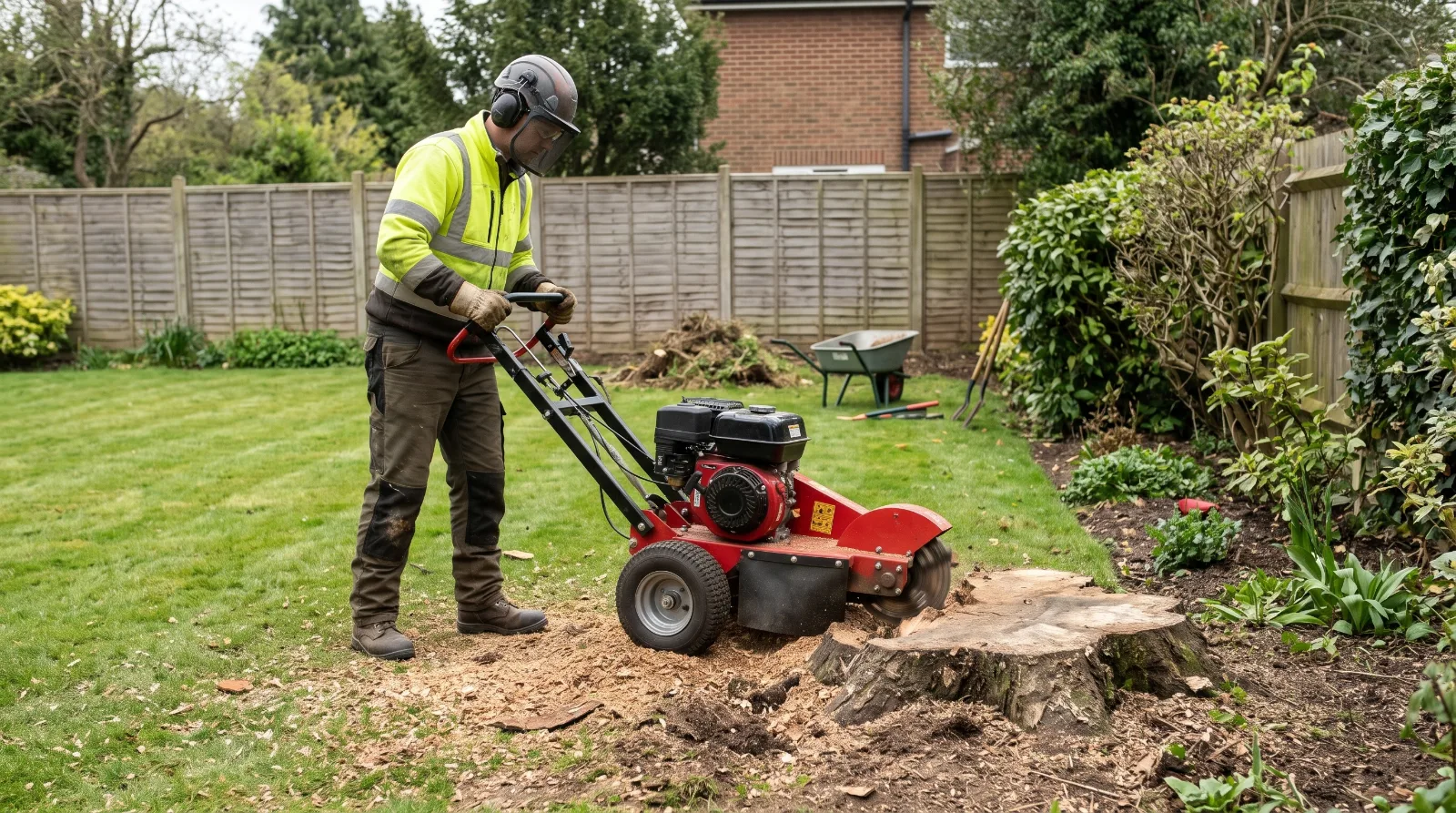
One common option is stump grinding, which uses specialist equipment to grind the stump down below the surrounding ground level. The resulting area can then be prepared for an appropriate new use, depending on the depth required and the condition of the soil.
Stump grinding prices depend on the stump's diameter, the size and spread of its roots, access for the machinery and any nearby obstacles.
It is important to clarify exactly what is included in the tree removal quotation. Some contractors may include stump work in a combined price, while others list it separately. Grinding a stump also does not mean that every root has been removed from the ground.
If you plan to install a patio, driveway or new planting scheme in the same area, explain this before the work begins so the stump and ground preparation can be considered together.
5. What About Green Waste Removal?
Tree surgery can generate a considerable amount of waste, particularly when removing a mature tree or carrying out substantial pruning.
Branches may be chipped, smaller material processed and larger timber cut into manageable sections. Whether all waste is removed or some material remains on site can affect the quotation.
Before agreeing to the work, confirm whether the price includes:
Chipping and removal of branches.
Removal of logs and larger pieces of timber.
Disposal of leaves and other green waste.
Stump grinding and handling of the resulting material.
Clearing the work area at the end of the job.
If you would like to keep logs for future use or retain suitable woodchip for the garden, mention this when requesting the quotation. The contractor can then explain what can reasonably be left on site and whether doing so affects the price.
6. Why Does Emergency Tree Surgery Cost More?
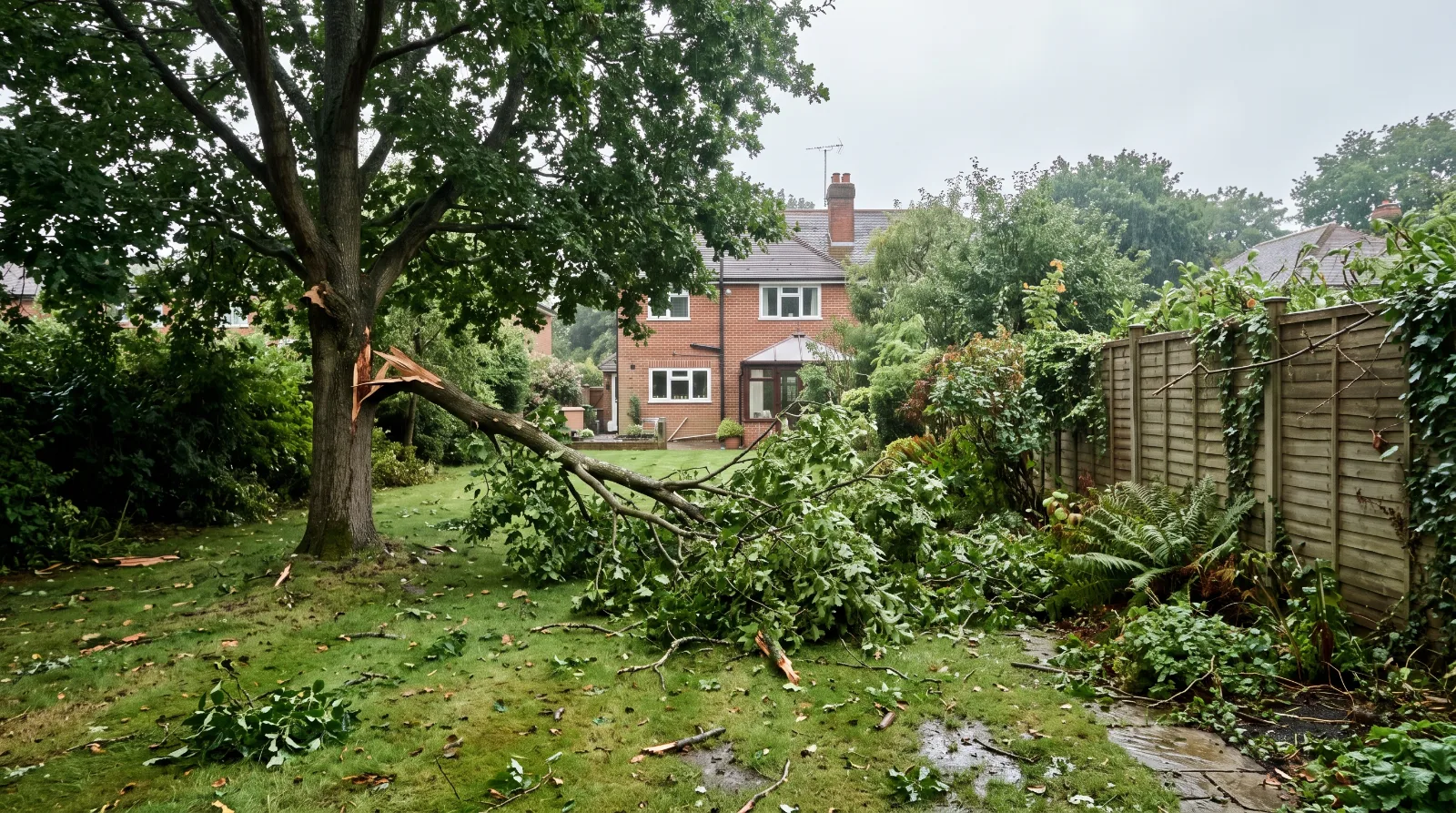
Emergency tree surgery may be required after a storm, when branches have fallen or when a tree or large limb presents an immediate safety concern.
These jobs can be more difficult to price because the extent of the damage, the tree's stability and the surrounding hazards may not be clear until the site has been assessed.
Work may need to be arranged at short notice, outside normal working hours or with additional equipment and personnel. Where a tree is obstructing a road or threatening a building, access and safety arrangements can add further complexity.
If a tree has suffered storm damage, do not assume that it is safe simply because it is still standing. Avoid the immediate area if there are hanging branches, a visibly lifted root plate or signs that the tree could move, and seek professional advice.
Emergency work should be based on the actual risks and necessary scope of work, rather than treated as an ordinary planned pruning job.
7. How to Compare Tree Surgery Quotations
Obtaining more than one quotation can help you understand the scope and cost of the work. However, the cheapest price is not necessarily the best comparison if different contractors are including different services.
When reviewing a quotation, check the following:
The exact work proposed: Confirm whether the price covers pruning, crown reduction, removal, stump grinding or a combination of services.
Waste disposal: Establish whether branches, logs and woodchip will be removed or left on site.
Equipment and access: Ask whether the quoted price includes any specialist access equipment or additional arrangements required for the job.
Insurance and competence: Check that the contractor has appropriate insurance and relevant training for the proposed work. For more complex tree surgery, suitable arboricultural qualifications and experience are important.
VAT and additional costs: Confirm whether VAT is included and whether any likely extras have been identified.
Written quotation: Make sure the agreed scope, price and any conditions are clearly recorded before work begins.
A properly detailed quotation makes it easier to understand what you are paying for and reduces the chance of disagreements about what was included.
8. Do You Need Permission Before Carrying Out Tree Surgery?
In some cases, yes. Before arranging pruning or removal, check whether the tree is protected by a Tree Preservation Order (TPO) or stands within a conservation area.
In England, work on a protected tree generally requires the relevant local planning authority's consent, while certain tree work in a conservation area may require advance notice. Exceptions can apply, so the exact position should be checked before work begins.
This is especially important if you are considering removing a tree because it is overgrown, blocks a view or affects a planned landscaping project.
The requirements can affect when the work is carried out and what steps need to be taken before a contractor starts. Do not assume that a tree can be removed simply because it is located in a private garden.
Check the applicable requirements with the relevant local council before proceeding, and make sure any necessary consent or notice is dealt with.
Get a Tree Surgery Quote from Surrey Oak Landscapes
The cost of tree surgery depends on the tree, the work required and the conditions on site. Broad price guides can help with initial budgeting, but a proper assessment is needed to establish the scope of work and provide a reliable quotation.
Surrey Oak Landscapes provides tree surgery and landscaping services to help homeowners manage their outdoor spaces. Whether you need pruning, crown reduction, tree removal or work as part of a wider garden project, the right approach starts with understanding the tree and its surroundings.
Need tree surgery at your Surrey property?
About the author