Tree Stump Removal vs Stump Grinding: What's the Difference?
Should you grind a tree stump or remove it completely? Compare the methods, costs, remaining roots and ground disturbance to decide which option suits your garden plans.
Removing a tree can open up valuable space in a garden, but the remaining stump can become an obstacle when planning new planting, laying a lawn or installing a patio. Even after the tree has been cut down, the stump and its roots can remain in the ground for years.
There are two common ways to deal with a tree stump: stump grinding and full stump removal. Although the terms are sometimes used interchangeably, they involve different methods and produce different results.
Stump grinding uses specialist machinery to break the stump down below ground level, leaving the main roots in place to decay naturally. Full stump removal involves extracting the stump and, depending on the job, a greater portion of the main root system.
For homeowners in Surrey, the right option depends on what you want to do with the space, the size of the stump, access to the garden and the amount of ground disturbance you are prepared to accept.
What Is Stump Grinding?
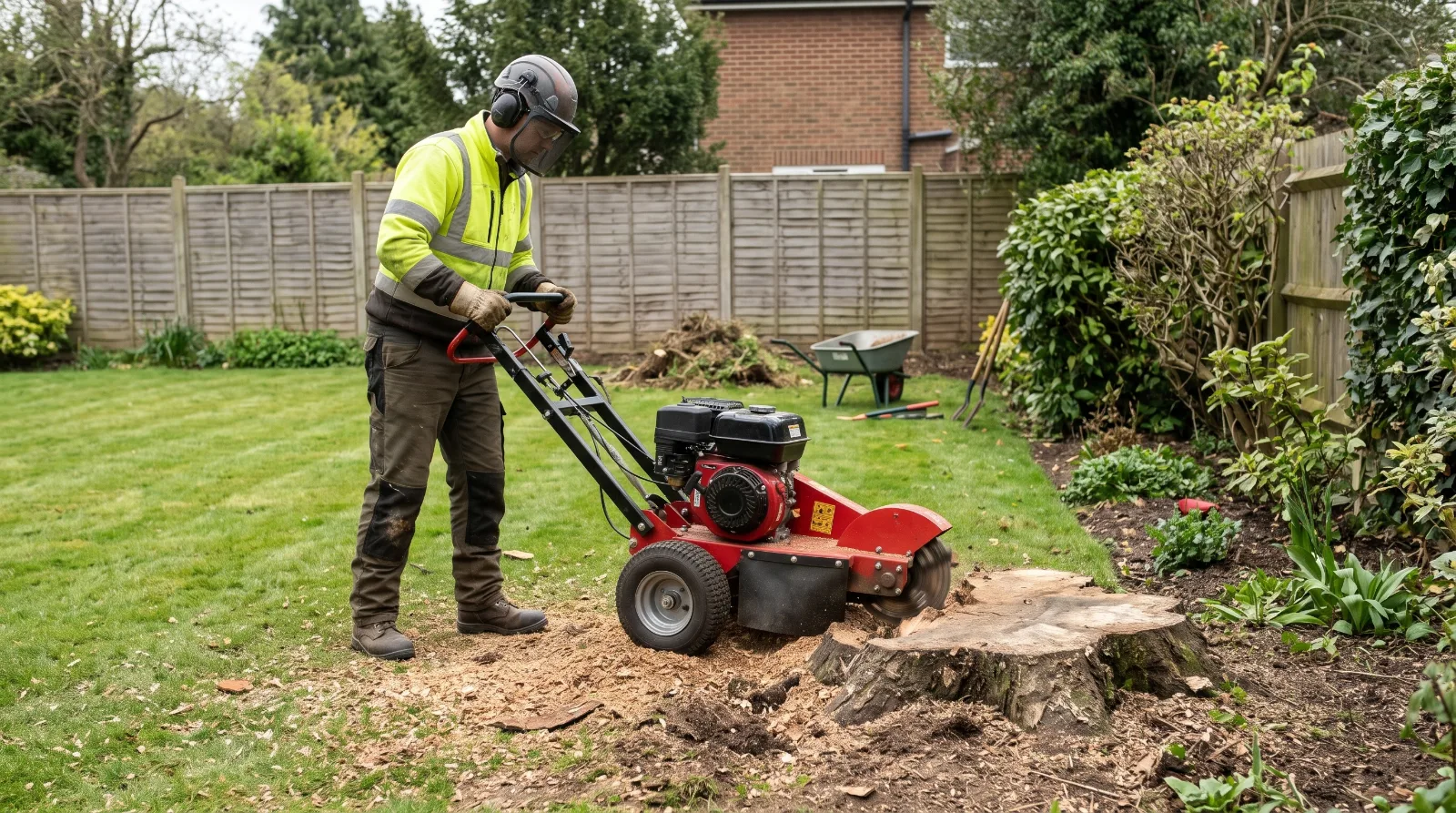
Stump grinding is a method of reducing a tree stump using a specialist machine fitted with a rotating cutting wheel. The machine gradually grinds the wood into small chips, allowing the stump to be lowered below the surrounding ground level.
The depth of grinding depends on what you plan to do with the area afterwards. A relatively shallow grind may be sufficient for reinstating a lawn, while deeper grinding may be needed where you intend to replant or carry out further landscaping.
The main roots generally remain underground after grinding and decay over time.
Stump grinding is commonly used when homeowners want to reclaim garden space without excavating a large section of ground.
Advantages of stump grinding
Less ground disturbance: It usually requires less excavation than extracting the entire stump and root plate.
Suitable for lawn reinstatement: The area can often be prepared for topsoil and new turf or grass seed once the work is complete.
Useful for garden redesigns: It can clear the visible stump so the area can be incorporated into a new planting scheme.
Generally quicker for accessible stumps: A suitable grinder can reduce a stump without digging out the entire root system.
Potentially lower cost: Grinding is often more affordable than full extraction, although stump size and access can significantly affect the price.
What are the limitations?
Stump grinding does not remove every root from the ground. The remaining roots gradually break down, meaning the area may not be suitable for every type of construction.
The grinding process also produces wood chips and may require some additional work to restore the ground. If you intend to install a substantial paved area or build a structure nearby, the required depth and treatment of the remaining roots need to be considered before choosing this method.
Some tree species can also produce new shoots from surviving roots, so grinding does not necessarily prevent all regrowth.
What Is Full Tree Stump Removal?
Full stump removal involves physically extracting the stump from the ground rather than simply grinding it down. Depending on the size of the tree and the site conditions, this may involve digging around the stump, cutting accessible roots and using suitable machinery to remove the stump or root plate.
The term full removal can mean different things in different quotations. Some contractors remove the stump and major roots close to it, while others may include more extensive root extraction. It is worth confirming exactly what is included.
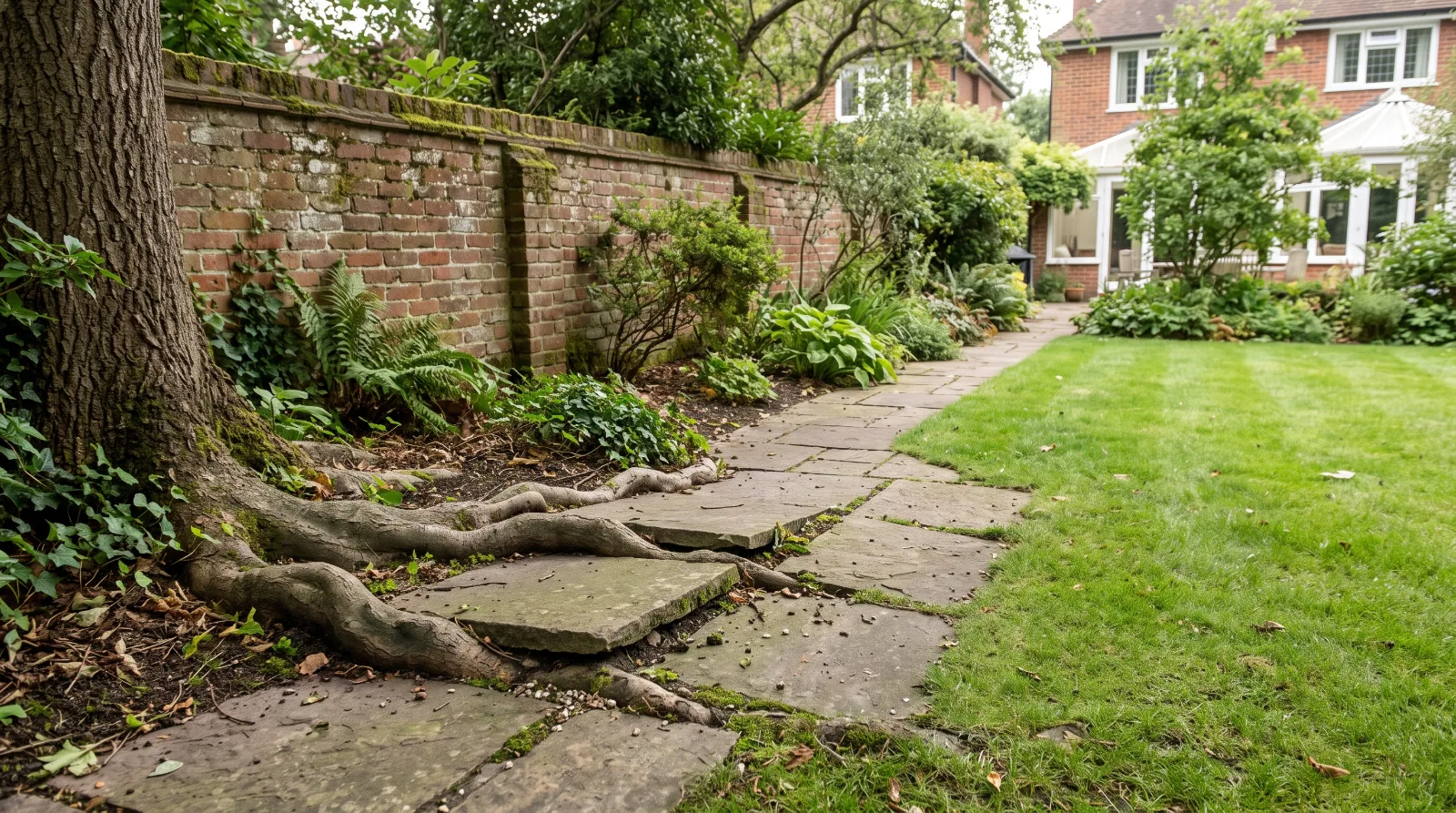
Removing a large stump can involve considerably more work than grinding it down, particularly where the main roots extend beneath paving, fences or other structures.
Advantages of full stump removal
Greater clearance: Removing the stump and main root plate can leave more freedom for subsequent groundworks.
Useful for certain landscaping projects: It can be appropriate where new foundations, retaining structures or other construction work would conflict with the stump.
Less visible obstruction: The stump is physically extracted rather than left to decay below ground.
Potentially easier ground preparation: Depending on the work completed, the area can be backfilled and prepared for the next stage of a project.
What are the limitations?
Full extraction generally creates more ground disturbance than stump grinding. The resulting hole needs to be backfilled and the ground reinstated appropriately.
Large root systems can be difficult to extract, especially when they extend beneath existing paving or close to walls and underground services. Removing more roots may require larger machinery and additional labour.
It is also important to understand that removing a stump does not automatically mean every root throughout the garden has been removed. The extent of extraction depends on the agreed scope of work and what is practical and safe on the site.
Stump Removal vs Stump Grinding: The Main Differences
Feature | Stump grinding | Full stump removal |
|---|---|---|
Method | Grinds the stump below ground level | Extracts the stump and, as agreed, the main root plate |
Remaining roots | Generally left to decay underground | More of the main root system is removed |
Ground disturbance | Usually lower | Usually greater |
Cost | Often the more economical option | Can be more expensive due to excavation and handling |
Lawn reinstatement | Often suitable with appropriate grinding depth and preparation | Suitable after the area is properly backfilled and prepared |
New planting | Can be suitable, depending on the stump, roots and planting position | May provide greater clearance for planting |
Patio or driveway installation | Depends on the required depth and construction design | May be preferable where the stump or roots conflict with the proposed work |
Access requirements | Requires suitable access for a stump grinder | May require more space for excavation equipment and removal |
Neither option is automatically better in every situation. The most appropriate method is the one that clears the area sufficiently for your plans without creating unnecessary work.
Which Option Is Best for Your Garden?
The easiest way to choose is to start with what you want to do with the area once the stump is gone.
If you want to lay a new lawn
Stump grinding is often a practical choice when the aim is to restore a lawn.
The stump can be ground below the surface, after which the area can be cleared of excess wood chips and prepared with suitable topsoil. The required depth depends on the soil depth needed and the condition of the ground.
Before reseeding or laying turf, make sure the area is properly prepared and level. Wood chips should not simply be mixed through the surface soil as a substitute for suitable topsoil.
Full removal may still be appropriate for a large or awkward stump, but extracting the entire root plate is not always necessary just to establish grass.
If you want to plant a new tree or shrubs
Both methods may be suitable, depending on what you intend to plant and where it will go.
Grinding can provide enough clearance for planting nearby or within a suitably prepared area, particularly when the old stump is not obstructing the new planting position. However, remaining roots and decomposing wood may affect the available planting space.
Full extraction may provide more room where a new tree needs to occupy the same position as the old one. Even then, the ground may require further preparation before replanting.
If you are planning a replacement tree, consider the mature size of the species and allow appropriate space for its future root system.
If you want to install a patio or driveway
Hard landscaping requires more careful consideration because the ground needs to support the proposed construction.
Stump grinding may be sufficient in some situations, but it does not remove the main roots. As those roots decay, the ground can change over time, which may be a concern beneath paving or other surfaces that need stable support.
Where a new patio, driveway or path will occupy the stump's location, discuss the intended construction with your contractor before deciding how much of the stump and root system needs to be removed.
Full extraction may be more appropriate where the stump or root plate conflicts with the proposed formation or foundation. However, the best solution depends on the actual design and ground conditions rather than a simple rule that all roots must be removed.
If you want to build a garden room or other structure
Projects involving foundations need a more careful assessment of the ground.
Grinding a stump down does not make the remaining root system disappear. Depending on the location and proposed structure, the remaining roots may need to be addressed as part of the foundation and groundworks design.
Before arranging stump removal, tell your contractor what you intend to build and where the foundations will sit. A suitable assessment can help establish whether grinding is sufficient or whether further excavation is necessary.
If the stump is close to an existing building or there are concerns about root-related structural movement, seek appropriate professional advice rather than assuming stump removal alone will resolve the problem.
How Much Does Stump Grinding or Removal Cost?
The cost depends on the size and species of the tree, the diameter of the stump, access for machinery and the extent of work required.
Stump grinding is often less expensive because it generally involves less excavation and does not require the entire stump to be extracted. Full removal can cost more when roots are extensive or the stump is difficult to access.
Additional factors include:
Stump size: Larger stumps usually require more time and machinery.
Root spread: Extensive or substantial roots can make extraction more complicated.
Access: Narrow side passages, steps and restricted working areas may limit equipment choices.
Nearby structures: Stumps close to walls, fences, patios or drains require additional care.
Waste handling: The quotation may or may not include removing wood chips, root material and soil.
Ground reinstatement: Backfilling, adding topsoil, levelling and preparing the area for new landscaping can add to the overall cost.
Published UK cost guides give different estimates depending on the stump size and work included, so figures should be used for initial budgeting only.
When requesting a quotation, ask whether the price includes the grinding or extraction itself, waste removal and any ground reinstatement you need. This makes it easier to compare quotations fairly.
For broader pricing information, see our guide to How Much Does Tree Surgery Cost in Surrey?
Can You Leave a Tree Stump in the Garden?
Removing every stump is not always necessary. If the stump is in an out-of-the-way part of the garden, it does not create a trip hazard and it does not interfere with future landscaping, leaving it to decay naturally may be a reasonable option.
An old stump can provide habitat for fungi and invertebrates, contributing to garden biodiversity. It can also be incorporated into an informal planting scheme or retained as a natural feature.
However, you should consider whether the stump is safe, whether it could produce unwanted shoots and whether its position will cause difficulties when maintaining the garden.
If the stump is in the middle of a lawn, blocks access or occupies the site of planned paving, grinding or removal may be more practical.
The decision should reflect how you use the garden rather than assuming every stump needs to be removed.
What to Check Before Stump Grinding or Removal
Before arranging the work, consider the following:
Underground services: Buried cables, pipes and drains may be close to the stump. Their locations need to be established and the work planned accordingly.
Nearby structures: Walls, fences, buildings and existing paving can restrict access or affect the appropriate removal method.
Future landscaping: Tell the contractor whether the area will become a lawn, planting bed, patio, driveway or building site.
Waste disposal: Confirm whether the quotation includes the removal of wood chips and extracted material.
Access for machinery: Check whether the equipment can reach the stump without causing unacceptable damage to the garden.
Permission and restrictions: If the tree was protected or its removal was subject to restrictions, check whether any additional requirements apply to the proposed work.
Stump grinders and excavation equipment can be hazardous, particularly around underground services and existing structures. For large stumps or restricted sites, using an experienced professional helps ensure the work is planned appropriately.
Remove Your Tree Stump with Surrey Oak Landscapes
The main difference between stump grinding and full stump removal is how much of the stump and root system is taken out of the ground. Grinding is often suitable for clearing space for a lawn or general garden improvements, while more extensive extraction may be necessary where the stump conflicts with planned construction or landscaping.
At Surrey Oak Landscapes, we provide tree surgery and landscaping services to help homeowners make better use of their outdoor spaces. Whether you need to clear an old stump, prepare an area for new planting or incorporate stump work into a wider garden transformation, the right approach starts with understanding your plans and the site conditions.
Need help clearing a tree stump in your Surrey garden?
About the author