Tree Pruning vs Tree Removal: What Does Your Tree Need?
Tree pruning or removal? Learn how to decide what your tree may need, including crown reduction, deadwood, structural issues, tree health and safety.
Trees can be one of the best features in a garden, providing shade, privacy, seasonal interest and structure. But as trees grow, homeowners sometimes start to wonder whether a tree simply needs some pruning or whether it has reached the point where removal should be considered.
The two options are very different.
Tree pruning involves selectively removing branches to manage the tree's size, shape, condition or surroundings. Tree removal means taking the tree down completely, normally in sections where the tree is large or access is restricted.
Choosing between the two is not always straightforward. A large tree may look intimidating but still be perfectly manageable with suitable pruning, while a smaller tree may have defects that make removal worth considering.
So how do you know which approach is appropriate?
What Is Tree Pruning?
Tree pruning is the selective removal of branches from a tree.
The purpose can vary depending on the tree and its location. Pruning may be carried out to remove dead, damaged or diseased branches, manage the size of the canopy, improve clearance or address specific structural issues.
Common forms of tree pruning include:
Type of pruning | Typical purpose |
|---|---|
Crown reduction | Reduce the overall size of the canopy |
Crown lifting | Remove lower branches to increase clearance |
Crown thinning | Reduce selected branches to improve light and canopy density |
Deadwood removal | Remove dead or damaged branches |
Formative pruning | Develop a suitable structure in younger trees |
Good pruning should be selective rather than simply cutting branches wherever they appear inconvenient.
What Is Tree Removal?
Tree removal involves taking the entire tree down.
For larger trees, this is normally done progressively rather than by simply cutting through the trunk at ground level. Branches and sections of the trunk can be lowered or removed in manageable pieces to control where material falls.
A tree may be considered for removal where it is:
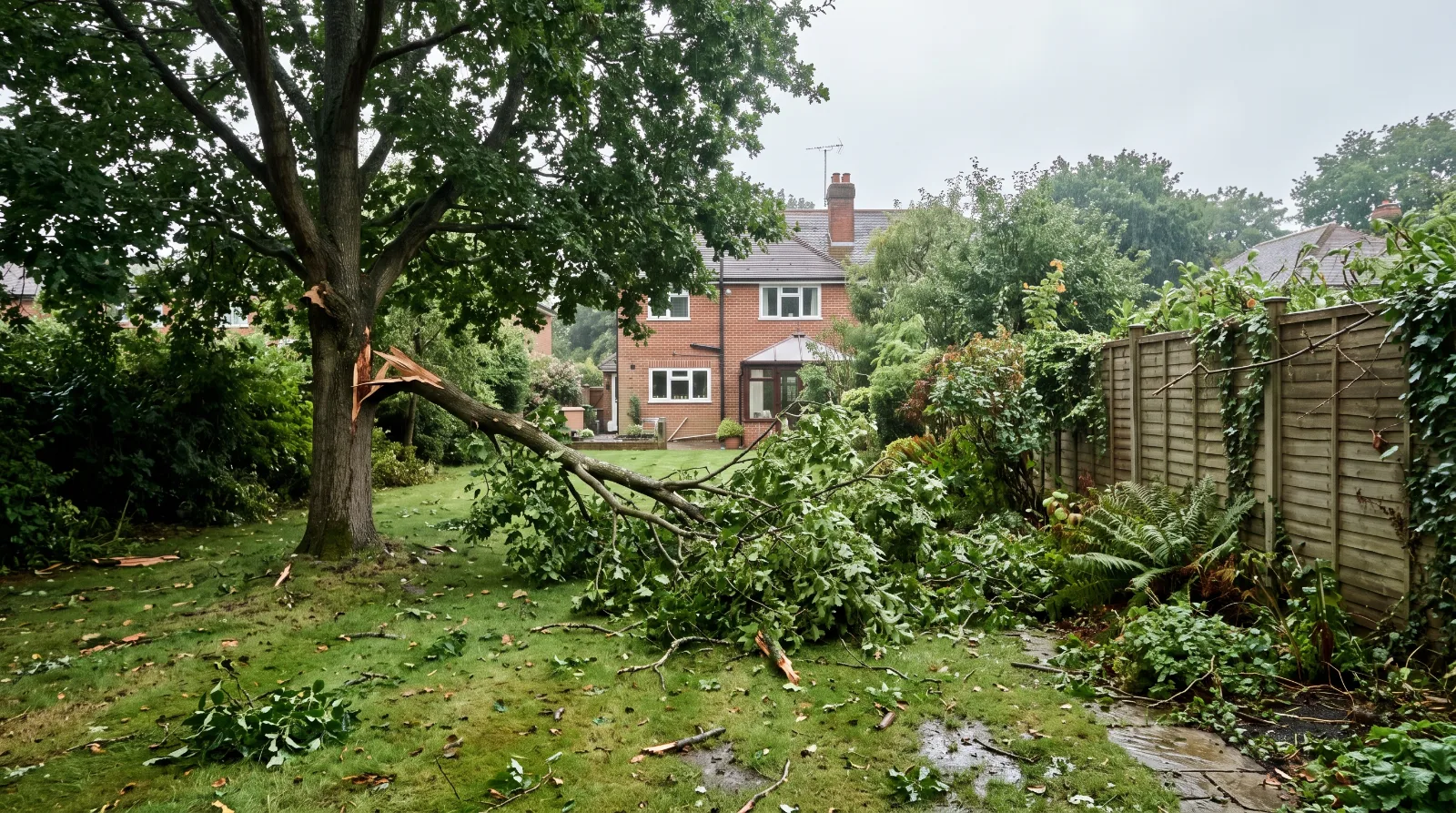
Dead or significantly declining
Structurally unsafe
Causing serious problems that cannot reasonably be managed through pruning
Growing in an unsuitable location
Interfering with necessary building or construction work
However, a tree that is dead or declining is not automatically a candidate for complete removal. Some dead trees can provide valuable habitat, provided their condition and stability allow them to remain safely in place.
When Is Pruning Usually the Better Approach?
Pruning can often be considered when the tree is fundamentally suitable for its location but has become too large, congested or difficult to manage.
The tree has outgrown its space
A tree may have become too large for its surroundings without being inherently unsuitable.
Appropriate size management can sometimes reduce the canopy while retaining the tree as a feature of the garden. Carrying out this type of work before a tree becomes excessively large can make future management easier.
Branches are dead or damaged
Removing dead, diseased or damaged branches can improve the condition and appearance of a tree and remove individual branches that pose a potential hazard.
Branches are obstructing a garden
Branches may extend over paths, seating areas, buildings or other parts of the garden.
Selective pruning can sometimes provide the clearance required without removing the whole tree.
You want more light
A dense canopy can reduce the amount of light reaching parts of the garden.
Depending on the species and structure of the tree, selective pruning can sometimes reduce canopy density while retaining the tree itself.
When Might Tree Removal Be Considered?
Complete removal is a much more significant decision and should be based on the condition and circumstances of the individual tree.
The tree has serious structural defects
A tree with major defects may require a detailed assessment to determine whether those issues can be managed or whether removal is appropriate.
Visible warning signs can include large dead branches, significant decay, major splits, substantial trunk defects or serious structural changes.
These signs do not automatically mean the tree must come down, but they should not be ignored.
The tree is dead and cannot safely remain
Some dead trees can be retained for wildlife where it is safe to do so. However, if a dead tree presents an unacceptable risk to people or property, removal or reduction may be necessary.
The location has become unsuitable
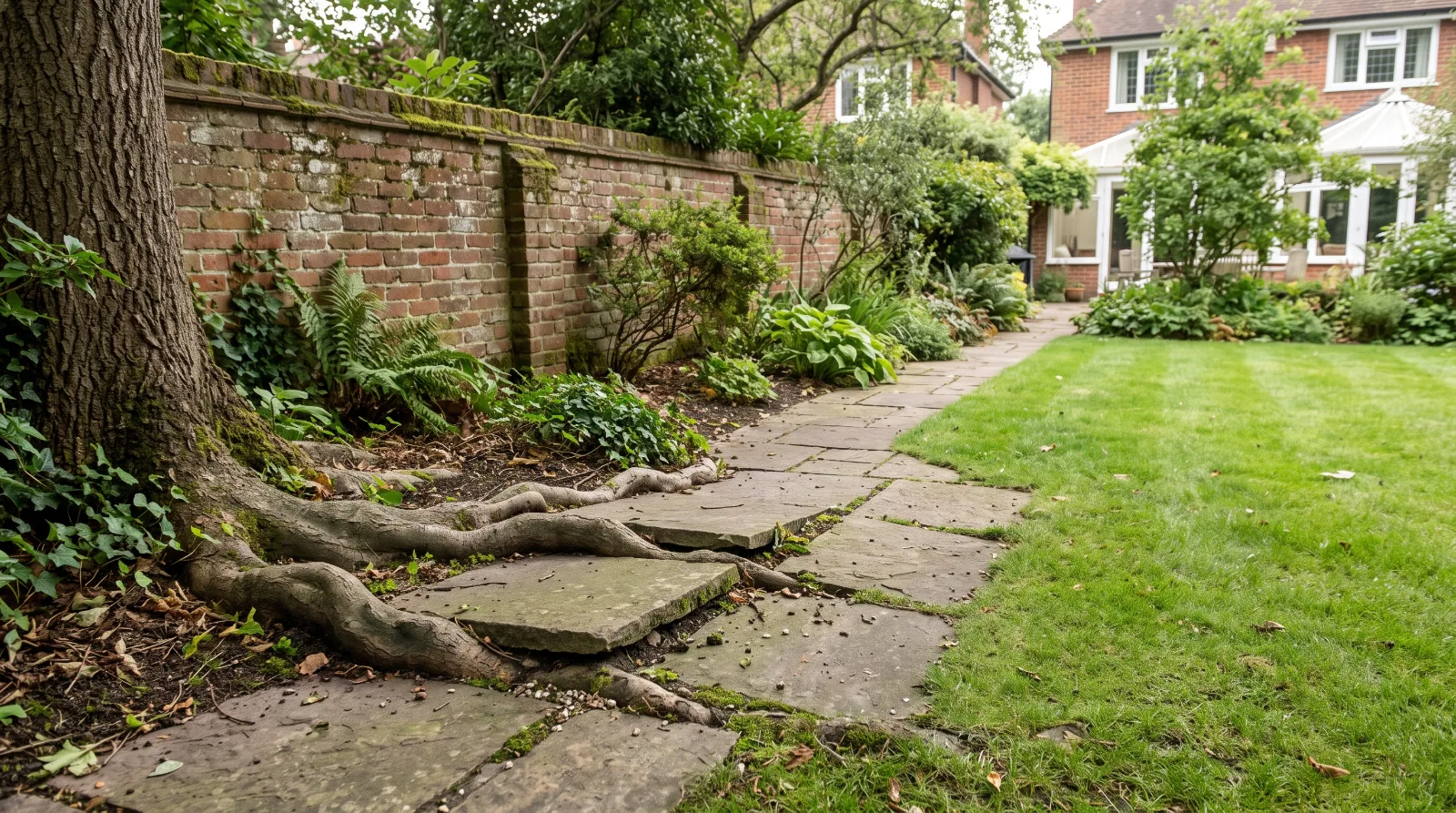
A tree may have been appropriate when originally planted but become problematic as it grew.
For example, it may now occupy a very confined space, interfere with planned building work or have become difficult to manage safely.
Pruning would no longer provide a sensible solution
Sometimes repeated or heavy pruning is simply not a practical long-term answer.
If a tree continually needs major intervention to keep it within its available space, replacing it with a more suitable tree may ultimately make more sense.
Tree Pruning vs Tree Removal
Consideration | Pruning | Removal |
|---|---|---|
Keeps the tree | Yes | No |
Can reduce canopy size | Yes | Completely |
Can remove damaged branches | Yes | Yes |
Retains shade and screening | Usually | No |
Removes the entire tree | No | Yes |
May require stump work | Sometimes | Usually |
Can preserve an established feature | Yes | No |
Suitable for major defects | Depends on assessment | Sometimes |
The important point is that pruning and removal are not interchangeable solutions.
The right choice depends on the condition of the tree, its location, its structure and what you are trying to achieve.
Can a Large Tree Simply Be Cut Back?
Not necessarily.
It can be tempting to drastically reduce a large tree because it seems like the quickest way to make it smaller. However, heavy pruning can result in vigorous regrowth and may negatively affect the tree's structure and appearance. Appropriate pruning should take the species, condition and natural growth habit into account.
This is why professional tree work is about much more than deciding how much of the canopy to remove.
A tree surgeon should assess the tree first and establish what the work is intended to achieve.
What About Crown Reduction?
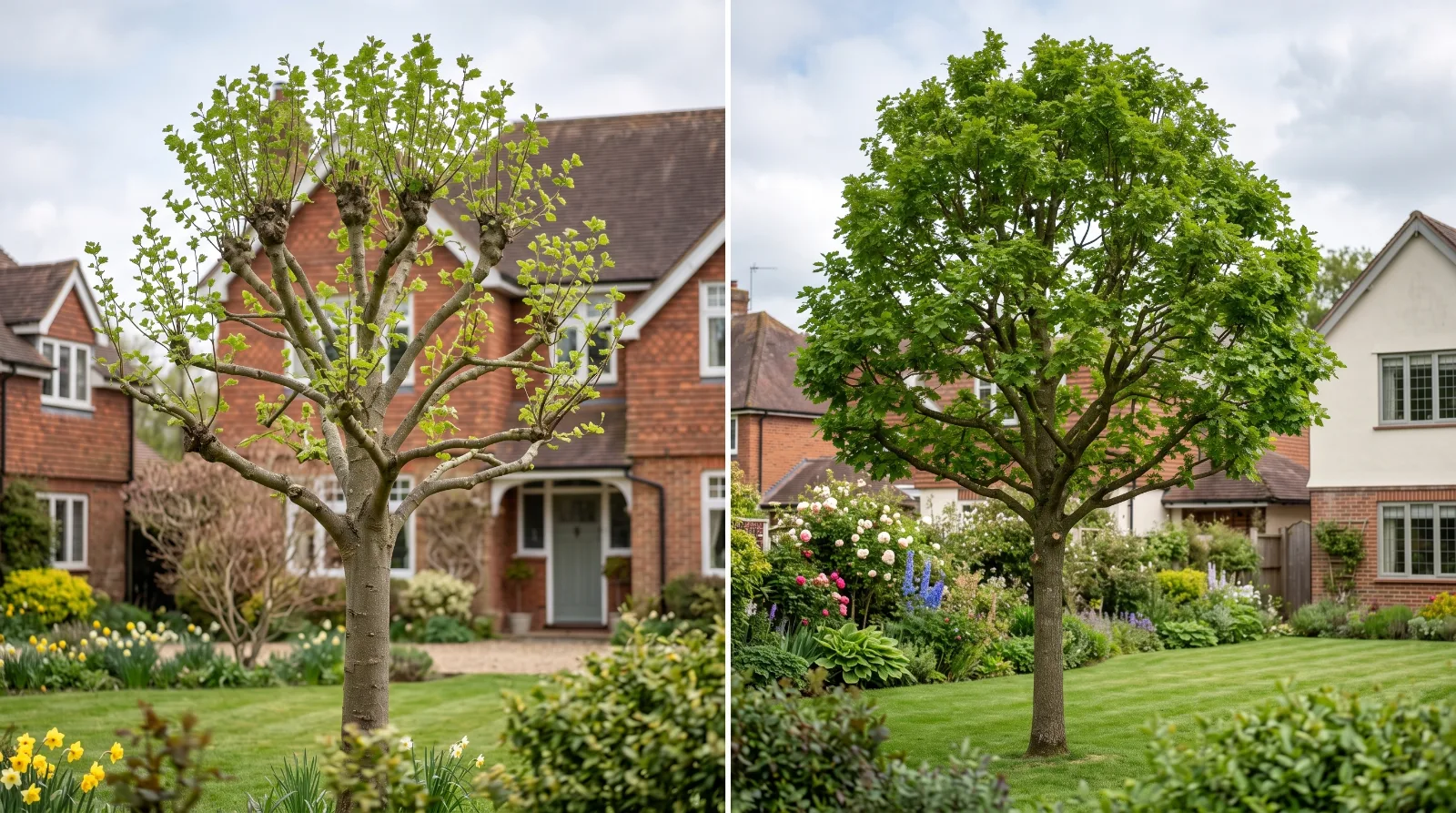
Crown reduction is one of the options used when a tree has become too large for its available space.
Rather than removing the entire canopy, selected branches are shortened to reduce the overall dimensions while retaining the tree's basic form.
The work needs to be carried out carefully because removing too much growth at once can encourage vigorous regrowth and leave the tree looking unnatural.
A reduction can therefore be very different from simply “cutting the tree down to size.”
What About Crown Lifting?
Crown lifting involves removing selected lower branches to increase the clearance beneath the canopy.
It can be useful where branches interfere with:
Lawns
Paths
Driveways
Seating areas
Buildings
Garden access
It can also make it easier to maintain the area beneath the tree.
However, removing too many lower branches can alter the tree's proportions, so the work should be planned carefully.
Could Crown Thinning Help Instead?
Crown thinning involves selectively removing some branches throughout the canopy rather than shortening the entire tree.
It can be considered where the aim is to reduce congestion and allow more light through without dramatically changing the overall size.
Again, the amount that should be removed depends on the individual tree. Over-thinning can spoil the natural appearance of a tree and encourage unwanted regrowth.
What Happens During a Tree Assessment?
Before deciding whether pruning or removal is appropriate, a tree professional can assess several things.
Tree species
Different species have different growth habits, pruning tolerances and typical structural characteristics.
Tree condition
The trunk, branches, crown and signs of decay or disease can all provide useful information.
Structural stability
The way branches attach, the presence of defects and the general structure of the tree can affect the recommended approach.
Surroundings
The distance from buildings, roads, paths, fences and other areas where people may be present is important.
Your objective
The right work depends partly on why you want the tree changed in the first place.
A homeowner wanting more light may need a different solution from someone concerned about a damaged branch or a tree that has outgrown its location.
What Happens After Tree Removal?
Removing the visible tree does not necessarily mean the job is completely finished.
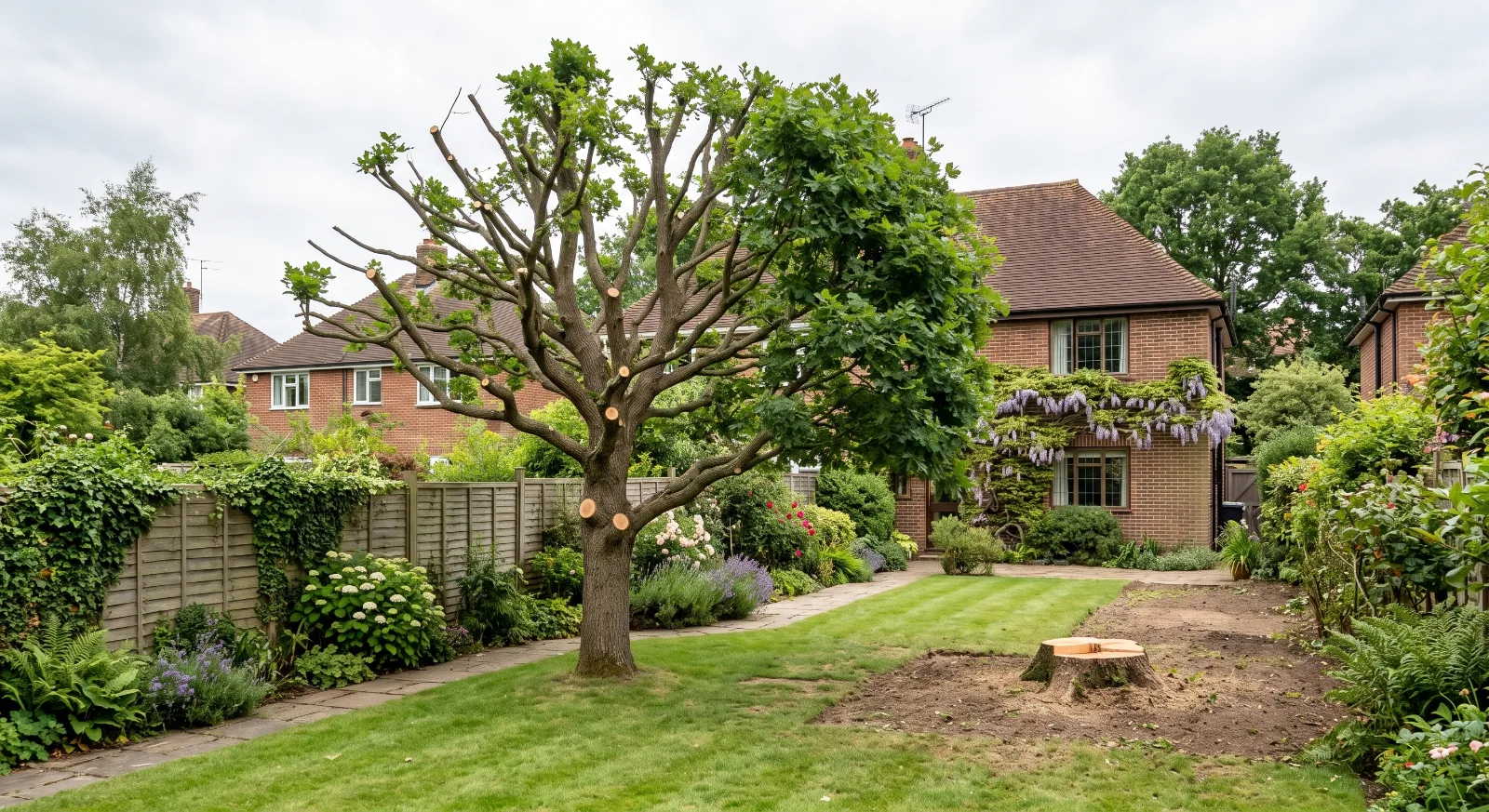
You will normally be left with a stump unless stump removal or grinding has also been included.
Stump grinding
A stump grinder can reduce the remaining stump below ground level, leaving space that can potentially be reused for landscaping or replanting.
Stump removal
The entire stump and, where practical, associated roots can be excavated. This can involve considerably more digging and ground disturbance.
The best option depends on what you plan to do with the area afterwards.
For example, if you want to install a lawn, planting bed or new paving where the tree stood, the required level of stump removal may be different.
What Happens to the Waste?
Tree surgery can produce branches, logs and woodchip.
Some material can be processed into woodchip or reused within the property, while other material may need to be removed.
The amount of waste depends on the size and type of work.
For a removal project, it is worth checking whether timber, logs and woodchip are being taken away or left on site as part of the agreed work.
Do You Always Need to Remove the Stump?
No.
A stump can sometimes be left in place if it does not interfere with the intended use of the garden.
It can also provide habitat as it naturally decomposes. However, if the area is going to become a new patio, lawn, path or planting bed, stump grinding or removal may be more practical.
What About Trees Protected by a Tree Preservation Order?
Before carrying out tree work, it is important to establish whether the tree has legal protection.
A Tree Preservation Order (TPO) can protect individual trees or groups of trees, while trees within Conservation Areas can also be subject to specific controls. Depending on the circumstances, permission or notice may be required before work can legally begin.
This means you should not assume that because a tree is in your garden, you can automatically prune or remove it.
If you're unsure, check the position before arranging the work.
What About Wildlife?
Trees can provide important habitat, including nesting sites and places used by bats and other wildlife.
Before pruning or removing a tree, the site should be checked for active bird nests and other signs of protected wildlife.
This is another reason to plan tree work rather than treating it as a simple garden clearance job.
Can Pruning Save a Tree That Looks Unhealthy?
Sometimes.
A tree with dead, damaged or diseased branches may only require selective pruning, while other trees may have deeper structural or health problems.
The important distinction is between a tree that has a manageable issue and one that is in serious decline.
Where the condition is uncertain, a professional assessment can help establish whether the tree can be retained and managed or whether more substantial action should be considered.
Removing a healthy tree simply because it has become inconvenient should not automatically be the first solution.
How Much Does Tree Surgery Cost?
There is no universal price for tree surgery.
The cost can vary depending on:
Tree height
Tree species
Number of trees
Type of work
Accessibility
Surrounding buildings and structures
Equipment required
Amount of waste
Stump grinding or removal
Complexity of the job
A small pruning job may be relatively straightforward, while removing a large tree in a confined garden can require considerably more equipment, labour and planning.
This is why a site assessment is usually more useful than trying to estimate the price from tree height alone.
How to Decide Between Pruning and Removal
Before deciding what your tree needs, ask yourself:
Is the tree fundamentally healthy and suitable for its location?
What problem are you trying to solve?
Could selective pruning address that problem?
Are there visible structural defects or serious decay?
Is the tree becoming too large for its surroundings?
Will the garden need the space for another purpose?
Does the tree have any legal protection?
Could wildlife be affected by the work?
These questions provide a better starting point than simply deciding that a tree looks too large or untidy.
Pruning or Removal: Start With an Assessment
Tree pruning and tree removal serve different purposes.
Pruning can help manage size, improve clearance, remove damaged branches and retain an established tree as part of the garden. Removal may be considered where a tree is dead, seriously compromised, unsuitable for its location or cannot reasonably be managed through pruning.
The decision should therefore be based on the individual tree rather than a one-size-fits-all rule.
A healthy mature tree can be a major asset to a garden, so where retention is practical, careful management can often preserve the benefits of the tree while addressing the problem that prompted the work in the first place.
Need Tree Surgery in Surrey?
Whether your tree needs routine pruning, crown work, deadwood removal or a more detailed assessment, understanding the condition of the tree is the first step.
Surrey Oak Landscapes can help with tree surgery alongside wider garden maintenance, planting and landscaping work, so changes to your trees can be considered as part of the garden as a whole.
Concerned about a tree in your Surrey garden? Get in touch with Surrey Oak Landscapes for a free, no-obligation quote.
About the author