Porcelain Patio Maintenance: How to Keep It Looking New
Keep your porcelain patio looking its best with practical maintenance tips for Surrey gardens, including cleaning, stain removal, joint care and seasonal upkeep.
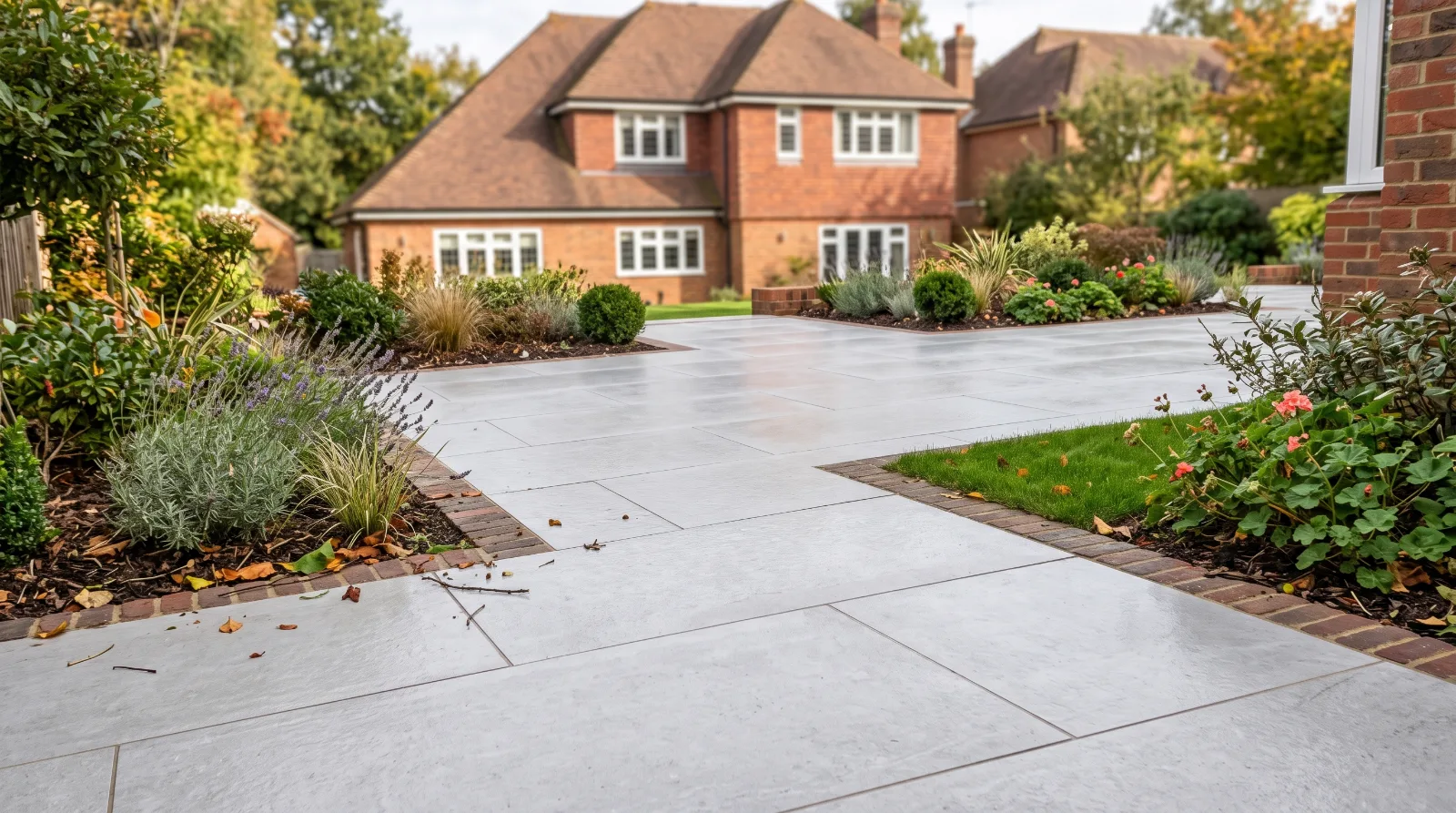
Porcelain paving has become a popular choice for UK patios because it gives gardens a clean, modern finish without requiring the same level of maintenance as some natural stone surfaces.
Its low water absorption makes porcelain resistant to many everyday stains and easier to clean, but that does not mean it can simply be installed and forgotten. Leaves, soil, mud, food, algae, plant debris and general outdoor dirt can still build up on the surface, particularly through the wetter months.
The good news is that keeping a porcelain patio looking smart does not usually require a complicated routine.
Why Porcelain Paving Is Relatively Easy to Maintain
Outdoor porcelain is a dense, vitrified material with very low porosity. This means water and many surface contaminants have less opportunity to penetrate the paving compared with more absorbent materials.
Most everyday dirt therefore remains on the surface and can usually be removed with regular brushing and washing.
That makes porcelain particularly practical for patios used for outdoor dining, entertaining and everyday family life. However, the paving itself is only one part of the finished patio. The joints, edges and surrounding drainage areas also need attention.
How Often Should You Clean a Porcelain Patio?
There is no need to deep-clean porcelain every few weeks. A simple maintenance routine throughout the year is usually enough.
Maintenance task | Suggested frequency |
|---|---|
Sweep away leaves and loose debris | Weekly or as needed |
Remove food and drink spills | As soon as possible |
General wash | Every few months or when needed |
Deeper clean | Around once or twice a year |
Check joints and edges | Spring and autumn |
Clear drainage channels | Regularly, especially after leaf fall |
The exact frequency will depend on how exposed your patio is, how much surrounding planting you have and how heavily the area is used.
A patio underneath trees, for example, may need more frequent sweeping because leaves, seeds and organic debris can leave marks if they are allowed to sit on the paving while wet.
Start With Regular Sweeping
The simplest way to keep porcelain paving looking good is also one of the most effective.
Regularly sweep away:
Fallen leaves
Grass cuttings
Soil and mud
Small stones
Twigs and other garden debris
Organic material is particularly worth removing promptly. Leaves and other plant matter can leave brownish marks as they break down on the surface, especially when they remain damp for long periods.
Keeping the patio clear also makes deeper cleaning much easier later.
How to Clean Porcelain Paving
For general dirt, you usually do not need an aggressive chemical cleaner.
A practical cleaning routine is:
1. Sweep the patio thoroughly
Remove loose debris before adding water. This prevents dirt from simply being moved around the surface.
2. Wet the paving
Use clean water to loosen surface dirt.
3. Use warm water and a suitable cleaner where necessary
For routine cleaning, warm water and a mild, suitable cleaning solution can often be enough. Some manufacturers specifically recommend warm soapy water for everyday maintenance.
4. Scrub stubborn areas
Use a suitable stiff outdoor brush to work on areas with accumulated dirt.
5. Rinse thoroughly
Remove loosened dirt and any cleaning residue from the surface.
For ordinary maintenance, this simple process can be enough to restore much of the original appearance.
What About Pressure Washing?
A pressure washer can be useful for a heavily soiled porcelain patio, but it needs to be used carefully.
The biggest mistake is assuming that because porcelain itself is hard and durable, extremely high pressure is automatically safe. The joints are usually more vulnerable than the paving surface, and excessive pressure can dislodge jointing material.
When pressure washing porcelain:
Use an adjustable pressure washer where possible
Avoid immediately using the highest setting
Use a fan or adjustable nozzle rather than a concentrated point jet
Keep the nozzle moving rather than holding it in one position
Take extra care around joints and slab edges
Test an inconspicuous area first
A lighter, controlled clean is generally preferable to blasting the surface with maximum pressure.
If the patio has delicate or deteriorating joints, professional cleaning may be the safer option.
Dealing With Common Patio Stains
Porcelain is resistant to many everyday stains, but outdoor patios are exposed to plenty of things that can leave marks.
Food and drink
Spilt drinks, sauces and food should ideally be cleaned up promptly rather than being left to dry onto the patio.
Start with water and a mild suitable cleaner. Avoid aggressively scrubbing the area with unsuitable products.
Leaves and organic stains
Wet leaves, grass cuttings and other plant material can leave discolouration when they sit on the paving for extended periods.
Regular sweeping is the simplest way to reduce this problem. More persistent marks may require a cleaner specifically designed for outdoor porcelain.
Grease and barbecue marks
Outdoor cooking areas can be particularly prone to grease and oil deposits.
These may need a specialist porcelain-safe cleaning product rather than ordinary soapy water. Always check that a cleaning product is suitable for the paving before applying it over a large area.
Cement or grout residue
Newly installed porcelain patios can sometimes have residue left behind from grouting or installation.
This is much easier to deal with before it has fully hardened. Specialist products are available for removing cement and grout residue, but they should be used carefully and according to the product instructions.
Don't Use Just Any Cleaning Product
One of the easiest ways to cause problems is to assume that a product safe for one type of paving will automatically be suitable for porcelain.
Before using a strong cleaner, check that it is specifically suitable for outdoor porcelain. It is also sensible to test any unfamiliar product on a small, inconspicuous section first.
Avoid experimenting with harsh chemicals simply because a stain looks difficult to remove. An aggressive cleaner can create a bigger problem than the original mark.
Look After the Joints Too
A porcelain patio is only as good as the installation around it.
Check the joints periodically for:
Cracking
Missing material
Loose or deteriorating areas
Weed growth
Dirt build-up
This is particularly important after heavy cleaning. If jointing material has been removed, simply continuing to wash the area can make the problem worse.
The type of jointing used will determine how it should be maintained and repaired, so follow the appropriate care instructions for the system installed on your patio.
Keep Drainage Areas Clear
Water should not be left sitting on a patio for long periods.
Make sure drainage channels, gullies and surrounding areas are kept clear of leaves and debris. This is particularly important during autumn and winter when falling leaves can quickly accumulate.
If you notice water consistently pooling in the same area after cleaning or rainfall, the problem may be more than surface dirt. It can indicate an issue with the patio's falls, drainage or surrounding levels.
Does Porcelain Need Sealing?
Porcelain paving does not automatically need to be sealed simply because it is installed outdoors.
Its low porosity already makes it relatively resistant to staining, although specialist sealers can be used in certain situations to make maintenance easier. Any sealer should be specifically suitable for porcelain because unsuitable products can leave a surface film rather than properly bonding with the material.
For most patios, regular cleaning and good maintenance are more important than automatically applying a sealer.
A Simple Year-Round Maintenance Routine
Keeping a porcelain patio looking new is mainly about staying on top of small jobs rather than waiting until the paving becomes heavily stained.
Spring
Give the patio a thorough sweep and clean after the wetter winter months. Check joints, edges and drainage points for any signs of deterioration or debris.
Summer
Deal with food and drink spills promptly, particularly around outdoor dining areas. Keep the paving free of grass cuttings and soil from surrounding planting.
Autumn
Increase sweeping as leaves begin to fall. Try not to allow wet leaves and organic debris to sit on the paving for prolonged periods.
Winter
Keep drainage points clear and remove accumulated dirt or leaves when weather conditions allow. Avoid turning a small build-up of debris into a larger cleaning job in spring.
Keeping Your Porcelain Patio Looking Its Best
Porcelain paving is relatively easy to maintain, but a low-maintenance material still benefits from regular care.
The most effective routine is simple: sweep regularly, remove spills promptly, clean the surface when required and take care around the joints when using a pressure washer or cleaning products.
Good maintenance also starts with good installation. Correct preparation, suitable jointing, appropriate falls and effective drainage all contribute to how well a porcelain patio performs over time.
If your Surrey garden needs a new porcelain patio or your existing paving needs attention, Surrey Oak Landscapes can help with patio design, installation and landscaping to create an outdoor space that looks good and works properly from the ground up.
About the author