Porcelain or Natural Stone: Which Is Right for Your Patio?
Choosing between porcelain and natural stone? Discover the key differences to help you choose the right paving for your patio and garden.
Choosing paving for a new patio is about more than simply picking a colour you like. The material you choose affects the overall character of the garden, how much maintenance the surface needs, how it works with the architecture of your home and how well it performs over time.
Two of the most popular options for UK gardens are porcelain and natural stone. Both can create a high-quality patio, but they offer very different finishes and characteristics.
So which should you choose?
The answer depends on the look you want, how you use your garden and how much ongoing maintenance you are prepared to take on.
Porcelain Paving
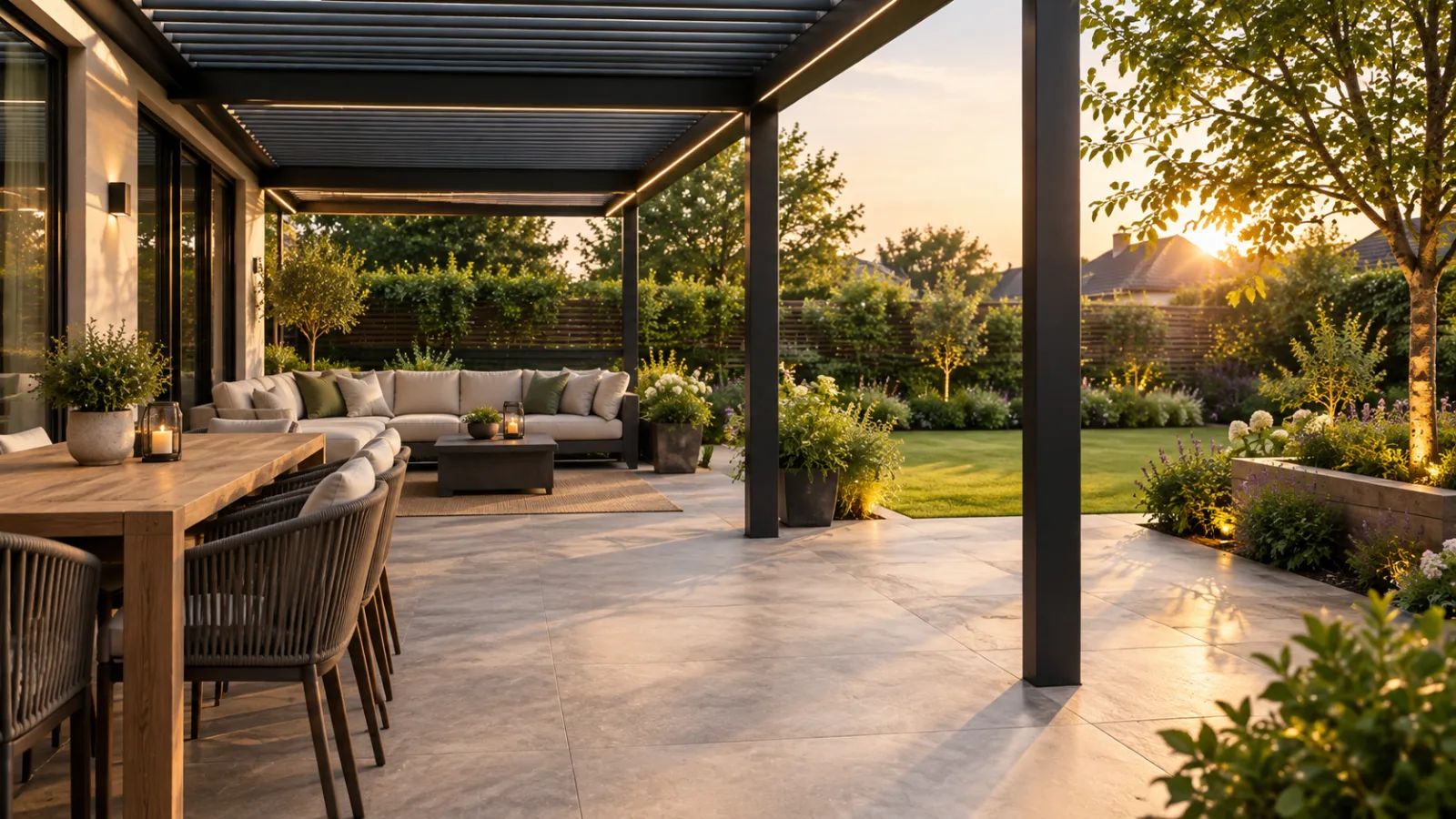
Porcelain has become increasingly popular in contemporary garden design because of its clean appearance and relatively low maintenance requirements.
It is manufactured to have a consistent finish, with many ranges available in large-format slabs and modern neutral colours. Porcelain can also replicate the appearance of natural stone, timber and other materials while maintaining a more uniform overall look.
One of its practical advantages is its low porosity. Quality outdoor porcelain has a very low water absorption rate, which helps make the surface resistant to staining, moisture and the growth of algae and moss. It is also designed for outdoor use and can perform well through changing UK weather conditions.
Contemporary homes
Modern garden designs
Large-format paving
Outdoor kitchens and dining areas
Gardens where low maintenance is a priority
Clean, structured layouts
It is worth remembering that porcelain is not simply a case of placing tiles onto any existing surface. It requires suitable preparation and installation methods, and some porcelain products require a primer to create a strong bond with the bedding mortar.
Natural Stone Paving
Natural stone has a completely different appeal.
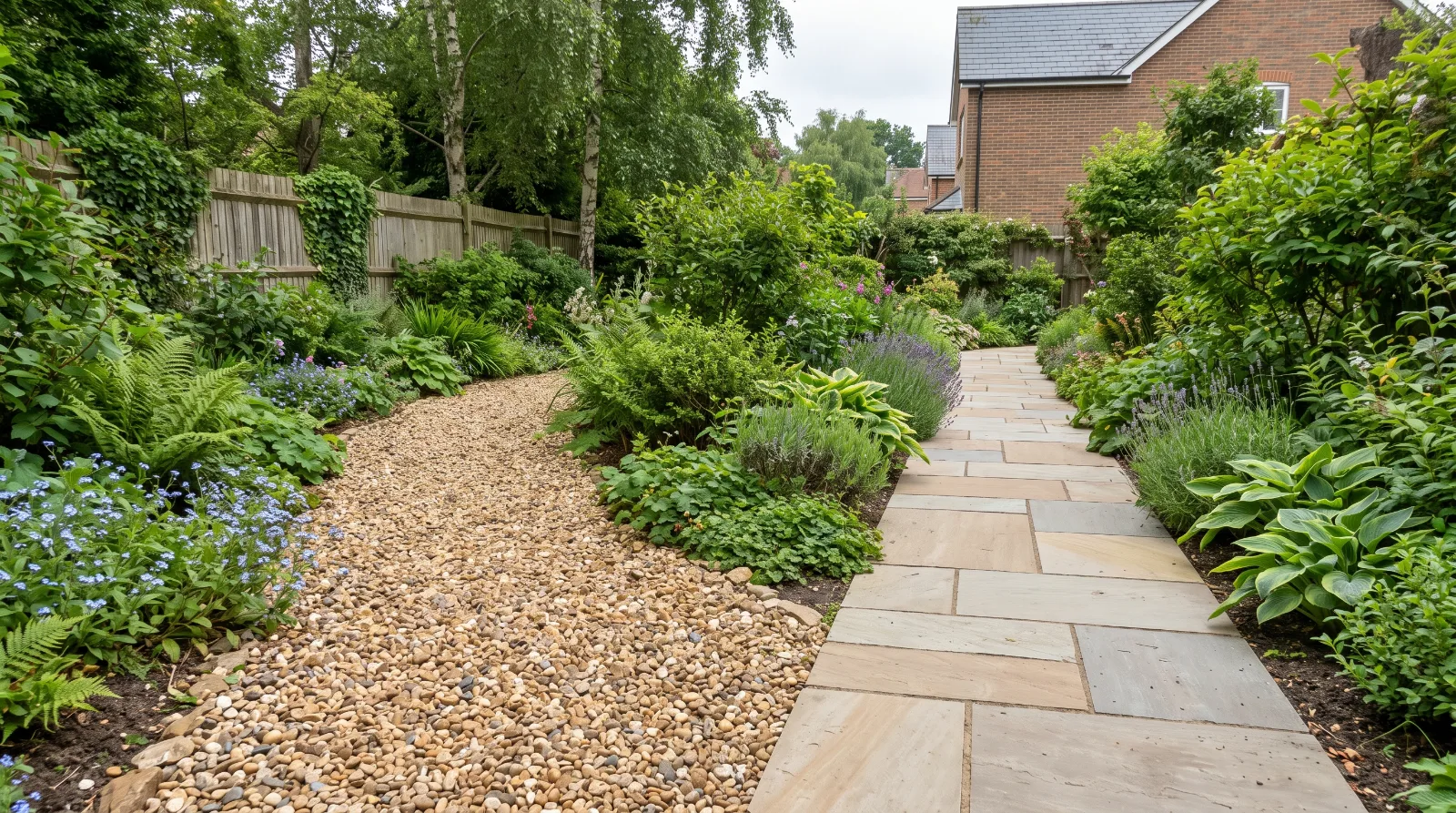
Rather than being manufactured to look consistent, natural stone has genuine variations in colour, texture, grain and surface character. No two pieces are exactly the same, which can give a patio a more organic and individual appearance.
Common choices include sandstone, limestone and granite, with the appearance varying considerably depending on the particular stone and finish.
Natural stone can be particularly effective alongside:
Traditional properties
Country-style gardens
Informal planting
Cottage-inspired landscapes
More naturalistic garden designs
Projects where texture and variation are important
Natural stone can also change in appearance over time as it weathers, which some homeowners see as part of its appeal. Maintenance requirements can vary depending on the stone, its finish and how it is installed. Lighter natural stones can be more prone to weathering and staining than some porcelain products.
Porcelain vs Natural Stone: At a Glance
Feature | Porcelain | Natural Stone |
|---|---|---|
Appearance | Clean and consistent | Natural variation and texture |
Maintenance | Generally low | Varies by stone and finish |
Water absorption | Very low | Varies |
Style | Contemporary to modern | Traditional to natural |
Colour variation | More controlled | Naturally varied |
Staining resistance | Generally high | Depends on stone |
Character | Precise and refined | Organic and individual |
Neither material is automatically right for every garden. The wider design should always be considered.
Which Material Suits Your Garden?
When deciding between porcelain and natural stone, start with the property itself.
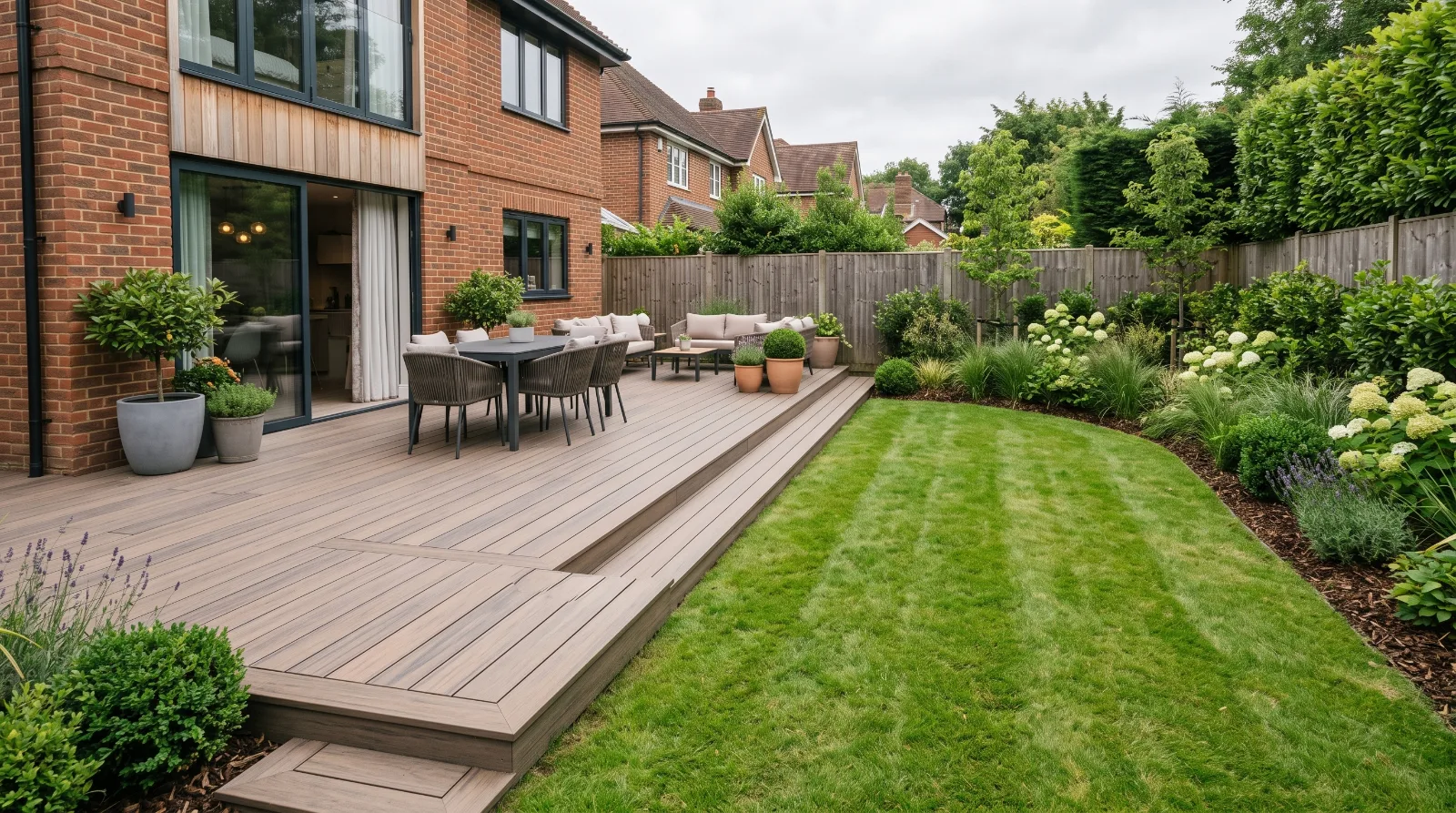
A contemporary house with crisp architectural lines may suit the cleaner appearance of porcelain, particularly when combined with restrained planting, strong edging and modern garden structures.
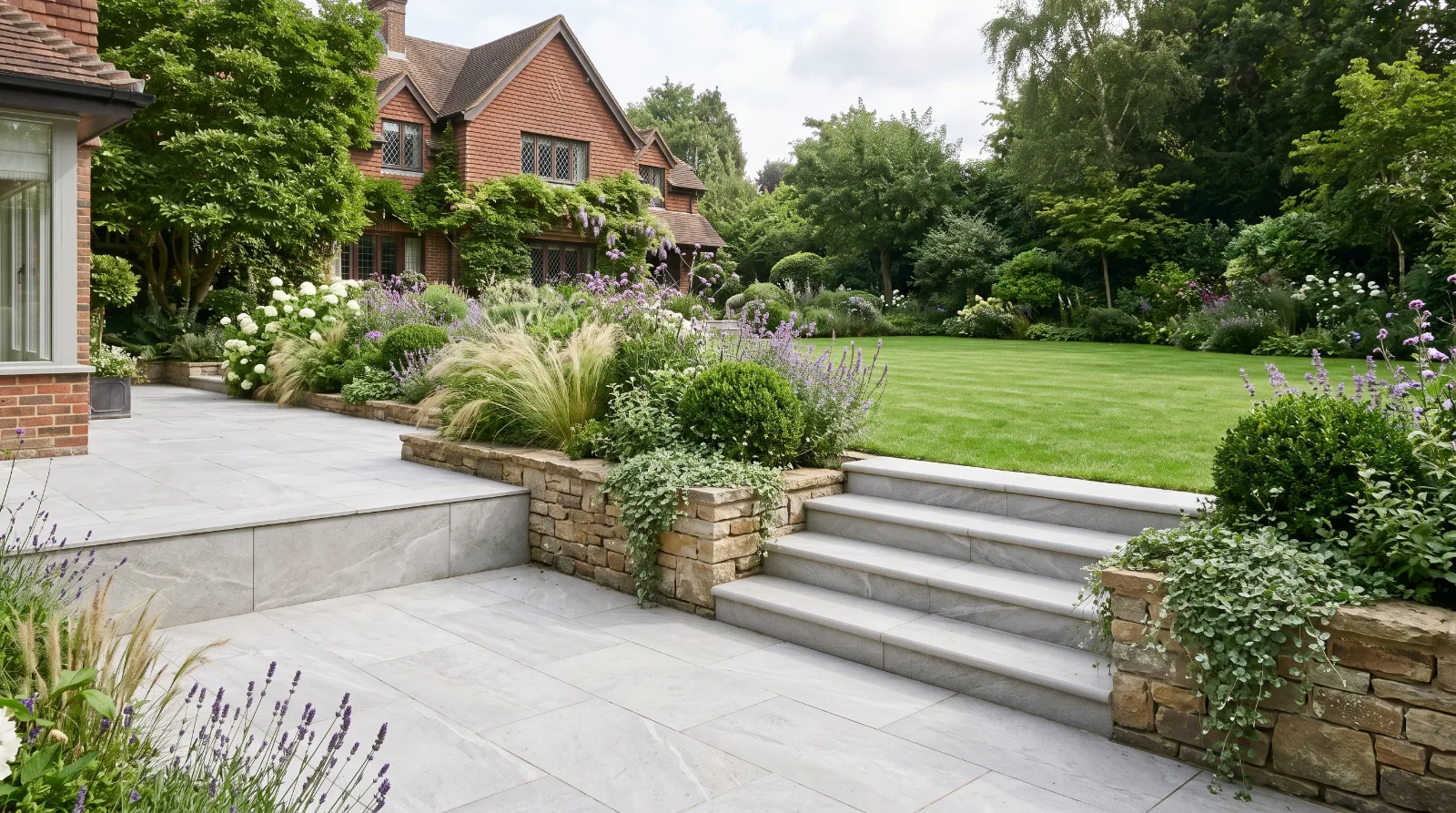
A period property or traditional Surrey garden may benefit from the natural variation and softer appearance of stone.
That does not mean porcelain is only for modern gardens or natural stone is only for traditional ones. Today's paving ranges offer far more choice than they once did. Porcelain can now replicate natural stone convincingly, while natural stone can be selected and laid in ways that suit more contemporary spaces.
The important thing is to consider the patio as part of the whole landscape rather than as a standalone surface.
Think About Maintenance
Maintenance is another major consideration.
Porcelain is generally straightforward to keep clean because its low-porosity surface is resistant to staining and does not typically require sealing.
Natural stone can require more consideration. The level of maintenance depends on the stone selected, its finish and the conditions around the patio.
That does not make natural stone a poor choice. For many gardens, the natural ageing and variation of stone are exactly what make it attractive.
The right question is not simply which material requires less maintenance, but which material suits the way you want your garden to look and function over time.
Don't Overlook Patio Preparation
A quality patio needs more than good paving.
The preparation underneath the finished surface plays a major role in how the patio performs over time. Levels, drainage, the sub-base, bedding and jointing all need to be considered as part of the installation.
For porcelain, installation details are especially important because of its low porosity and the way it bonds to the bedding. Manufacturers can specify particular primers, jointing systems, laying methods and movement joints depending on the product and application.
Good planning at this stage can help avoid problems later.
Choosing the Right Patio for Your Garden
The best choice is not necessarily the paving that looks best in a photograph.
Think about:
The style of your property
How the patio will be used
How much maintenance you want
The surrounding planting
The size and shape of the space
Drainage and existing levels
How the patio connects to paths, steps and other landscaping
The overall look you want to achieve
A patio should feel like a considered part of the garden rather than a separate surface added afterwards.
Planning a New Patio?
Whether you are creating a contemporary entertaining space or a more traditional garden patio, choosing the right paving is an important part of the process.
Porcelain offers a clean, consistent and low-maintenance finish, while natural stone provides genuine variation, texture and character. The right choice depends on your property, your garden and how you want to use the space.
Get in touch with Surrey Oak Landscapes to discuss your patio project and request a free, no-obligation quote.
About the author