Pleached Trees vs Hedging: Which Is Better?
Considering pleached trees or traditional hedging? Compare their privacy, cost, maintenance and appearance to find the best screening solution for your garden.
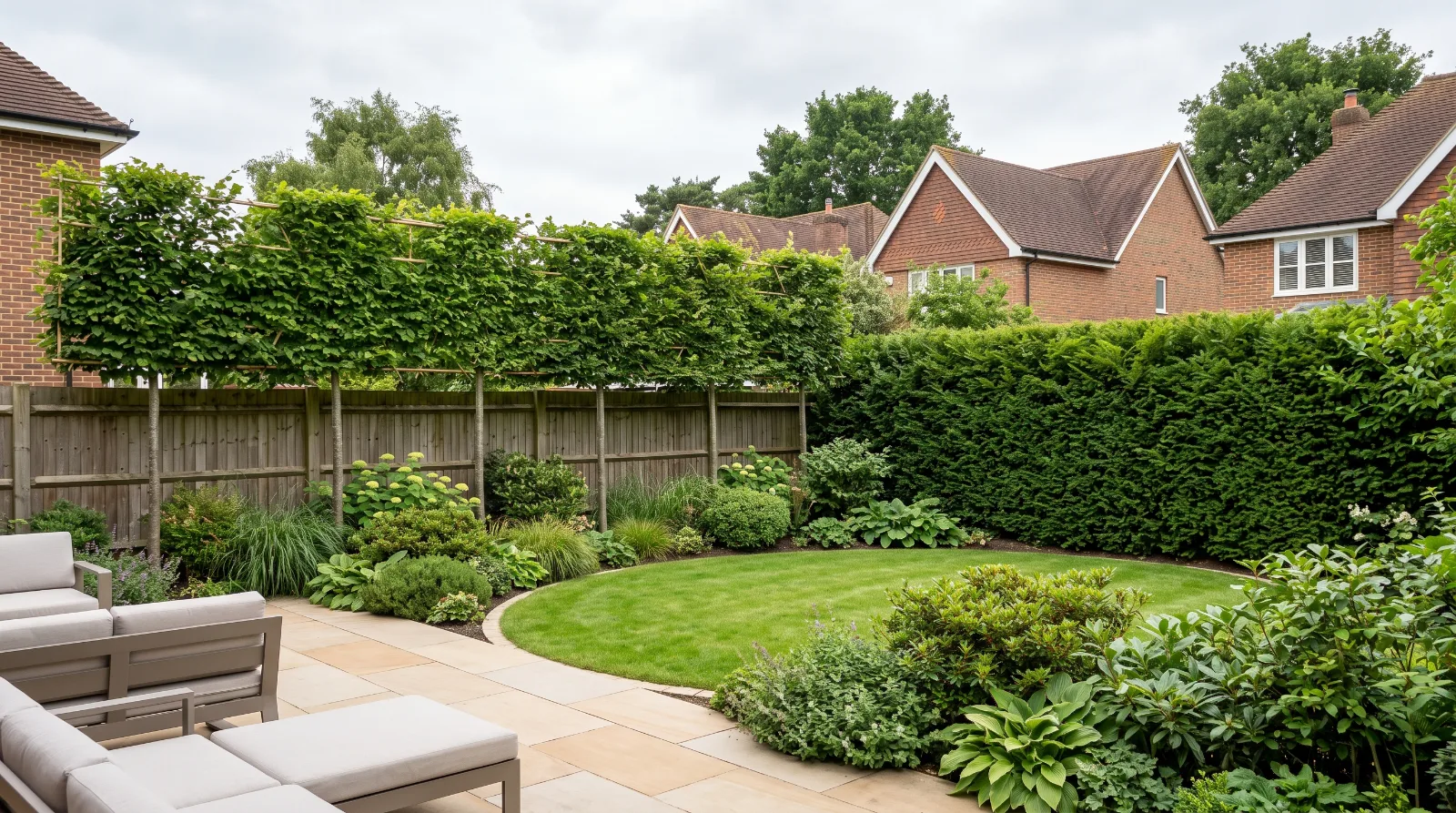
Creating privacy in a garden doesn't have to mean building a taller fence. Trees and hedging can provide screening while adding greenery, structure and character to your outdoor space.
Two popular options are pleached trees and traditional hedging. Both can make a garden feel more secluded, but they work in different ways. Pleached trees create an elevated screen above clear trunks, while hedges provide a continuous wall of foliage from near ground level upwards.
So, which is better for your garden? The right choice depends on how much privacy you need, the style of your garden, the space available and how much maintenance you are prepared to undertake.
What Are Pleached Trees?
Pleached trees are trees that have been trained to grow into a flat, horizontal framework of branches and foliage above a clear trunk. When several are planted in a row, their trained canopies form an elevated screen.
They are often used in contemporary and formal gardens where homeowners want privacy without losing the open feel of the space below.
Pleached hornbeam, lime and evergreen varieties are among the options worth considering, depending on the garden's conditions and the desired appearance.
Why choose pleached trees?
Pleached trees are particularly useful when overlooking is a concern. For example, a row of suitably positioned trees may help screen views from neighbouring upstairs windows while leaving the space beneath the canopy open.
They also create a strong architectural feature, bringing height and rhythm to a boundary without filling the entire garden with dense planting.
However, the level of privacy depends on the species, canopy size and season. Deciduous varieties may provide less screening in winter, so plant selection matters.
What Is Traditional Hedging?
A traditional hedge consists of closely planted shrubs or trees that grow together to form a continuous boundary or screen.
Hedging can be clipped into a neat, formal shape or allowed to grow more naturally, depending on the species and garden design. Options range from evergreen varieties that retain their foliage throughout the year to deciduous hedges that change with the seasons.
Why choose hedging?
Hedges are particularly effective when you want privacy at ground level. They can screen a patio, soften a fence, divide different parts of a garden or create a green boundary around the property.
A mixed or native hedge can also provide useful shelter and habitat for wildlife.
The main consideration is time and maintenance. Smaller hedging plants need time to establish and fill out, while established hedges require trimming to maintain their desired size and shape.
Pleached Trees vs Hedging: What Are the Main Differences?
Both options can provide screening, but each suits different priorities.
Feature | Pleached trees | Traditional hedging |
|---|---|---|
Privacy | Elevated screening above clear trunks | Screening from near ground level upwards |
Appearance | Structured, architectural and formal | Formal, natural or informal |
Space below | Generally remains open beneath the canopy | Occupies space along the ground |
Initial cost | Usually higher for mature, trained specimens | Often more affordable with smaller plants |
Time to establish | Provides immediate structure when suitable specimens are planted | Smaller plants need time to grow together |
Maintenance | Pruning to maintain the trained canopy and shape | Trimming to maintain height, width and density |
Seasonal screening | Depends on whether the chosen tree is evergreen or deciduous | Evergreen and deciduous options are available |
Wildlife value | Provides some habitat and shelter | Can provide substantial cover and food, especially when species-rich |
Costs and maintenance vary considerably according to the species, plant size, quantity and installation requirements. A mature hedge can also be expensive, while young pleached trees may take time to achieve their intended screening effect.
Which Option Is Better for Privacy?
The best choice depends on where you need the screening.
Choose pleached trees for elevated privacy
Pleached trees can be particularly effective when neighbouring windows overlook a patio or seating area. Their elevated canopies can help screen these views while allowing space for lower planting, lawn or a pathway beneath.
They are also useful where a formal boundary treatment is preferred without creating a solid wall of greenery at ground level.
However, they need careful positioning and enough room for the trees to mature. The canopy height, spacing and foliage density all affect how effectively they screen a particular view.
Choose hedging for privacy at ground level
Traditional hedging is often the more practical choice when you want to screen a garden from neighbouring ground-level views, a road or an overlooked seating area.
A dense evergreen hedge can provide year-round screening, while deciduous hedging offers a more seasonal appearance.
If immediate privacy is important, larger, established hedging may be worth considering. Smaller plants are generally cheaper, but the hedge may take several years to reach its intended density and size.
Which Is More Affordable?
Traditional hedging is usually the more economical starting point, particularly if you are happy to plant smaller specimens and allow them to establish over time.
Pleached trees tend to involve a higher initial investment because you are purchasing trained trees with established clear trunks and shaped canopies. Delivery, positioning, staking and installation can also affect the overall cost.
However, comparing price alone can be misleading. The amount of space available, the level of privacy needed and the desired timescale all influence which option represents better value.
For a smaller garden where privacy is needed above a boundary fence, a few carefully positioned pleached trees may be more suitable than a wide hedge. For a longer boundary requiring dense screening from the ground up, hedging may be more practical.
The best approach is to consider the whole planting scheme rather than the purchase price of an individual plant.
How Much Maintenance Do They Need?
Neither option is maintenance-free, but the work involved is different.
Pleached trees need pruning to preserve their flat canopy and trained shape. During establishment, their support framework and ties may also need checking, and young trees require appropriate watering.
Hedges usually need trimming to maintain their height, width and density. Fast-growing varieties can require more frequent attention, particularly during the growing season. Evergreen species and slower-growing alternatives may have different maintenance requirements.
For either option, suitable soil preparation, watering while the plants establish and selecting species suited to the location will help support healthy growth.
If you prefer a garden that needs less routine maintenance, discuss growth rates, eventual size and pruning requirements before deciding.
Can You Combine Pleached Trees and Hedging?
Yes. Combining the two can provide an effective balance between privacy and an open garden layout.
For example, a dense hedge along a boundary could provide screening at ground level, while pleached trees behind or above a suitable lower boundary treatment add height and architectural structure.
Another approach is to use a hedge along one side of the garden and pleached trees near a patio where views from neighbouring upper floors are more of a concern.
The design needs to account for mature plant sizes, spacing, light levels and the available planting area. Planting both without considering their eventual growth can create overcrowding and unnecessary maintenance.
A considered planting scheme helps the different elements work together rather than compete for space.
Which Is Right for Your Garden?
If you want an elegant, structured screen above a fence while retaining an open feel beneath it, pleached trees may be the better choice.
If you need a continuous green boundary, ground-level privacy and a more traditional appearance, hedging is often the more suitable option.
There is no single answer for every garden. The right solution depends on the views you want to screen, the space available, your budget and the atmosphere you want to create.
At Surrey Oak Landscapes, our premium planting schemes and specimen tree installation service can help you explore suitable options for your garden. We can source quality trees and planting to complement your outdoor space, whether you need screening along a boundary or a more comprehensive garden transformation.
About the author