How to Plan an Outdoor Dining Area for Your Garden
Planning an outdoor dining area? Discover how to choose the right location, table size, paving, shade, lighting and planting to create a comfortable dining space in your Surrey garden.
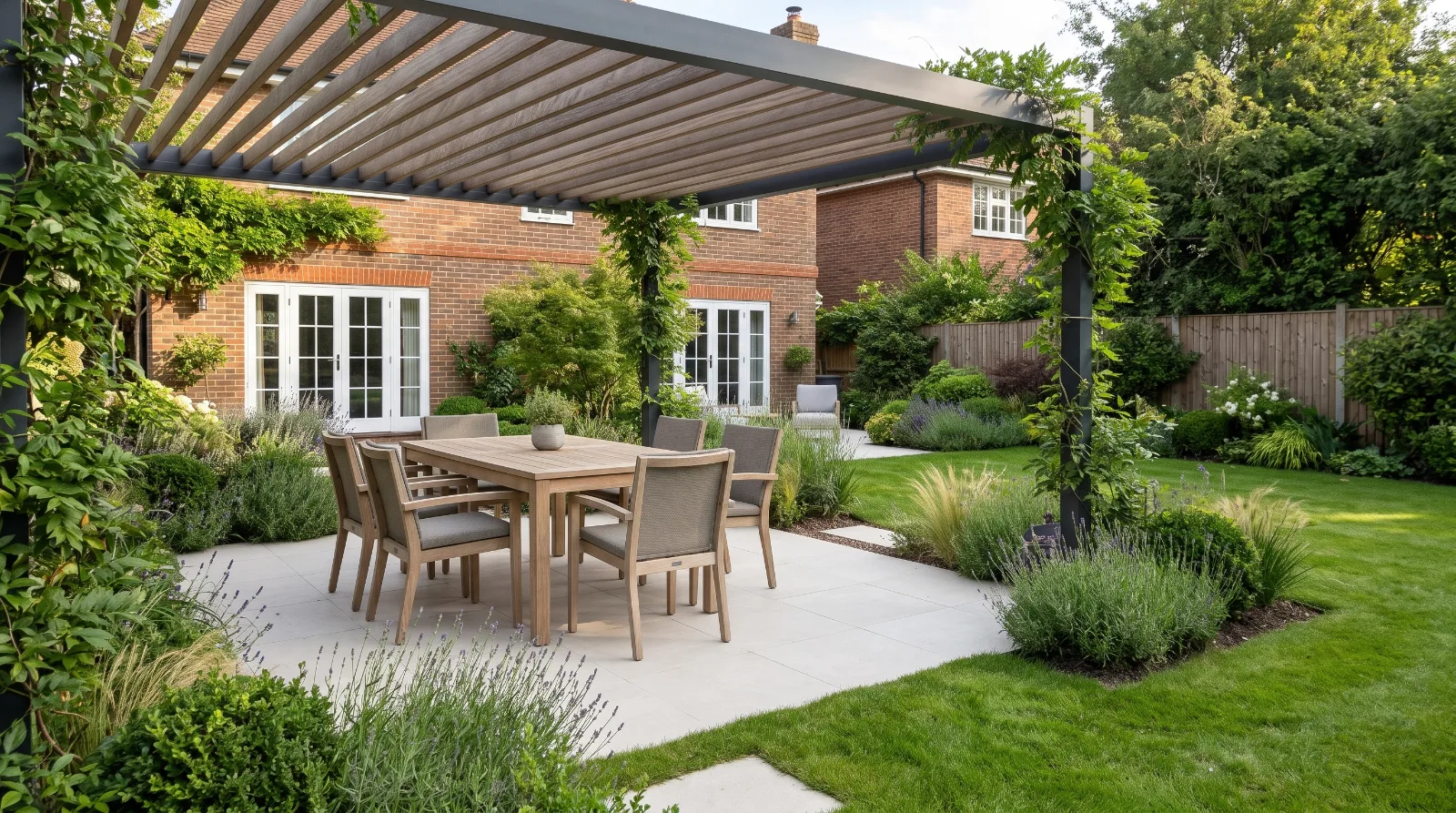
An outdoor dining area can turn an ordinary patio into one of the most useful parts of your garden. Whether you want somewhere to enjoy family meals, host summer gatherings or have a quiet breakfast outside, a well-planned space makes eating outdoors more comfortable and enjoyable.
However, creating a good outdoor dining area involves more than choosing a table and chairs. The position, available space, paving, shade, lighting and access to the house all influence how well the area works. A table that looks perfect in a showroom may feel cramped on a small patio, while a poorly positioned dining area can become uncomfortable in direct sunlight or exposed to strong winds.
For homeowners in Surrey, the aim is to create an outdoor space that complements the property, fits the garden and is practical enough to use regularly. Here is what to consider when planning an outdoor dining area.
1. Choose the Right Location
The location of your dining area will influence almost every other design decision. Ideally, it should be convenient to reach from the house while leaving enough room for the rest of the garden to function as intended.
A patio directly outside the kitchen or dining room can make carrying food and drinks easier. This is particularly useful if you plan to entertain regularly or use an outdoor kitchen.
However, placing the dining area further into the garden can create a more secluded setting. A space surrounded by planting, for example, may feel more private and separate from the house.
Before deciding on the position, consider:
Access to the house: A short, practical route makes everyday use easier.
Sunlight: Observe how the sun moves across the garden at different times of day.
Wind exposure: Open areas and exposed corners can become uncomfortable during breezy weather.
Privacy: Nearby windows, overlooking properties and boundary positions can affect how relaxed the space feels.
Available space: Make sure the table, chairs and surrounding circulation space fit comfortably without blocking important routes.
Think about when you are most likely to use the area. If you prefer evening meals, a location that receives afternoon or evening sun may be attractive. If you plan to eat outside at lunchtime, some form of shade may be more important.
2. Get the Size of the Dining Area Right
One of the most common mistakes is planning the patio around the dimensions of the table alone. Chairs need space to move backwards, people need room to sit down and stand up, and there should be a comfortable route around the dining area.
As a general planning guide, allow approximately 75–90cm behind occupied chairs where possible. More room is useful if people need to walk behind seated guests or if the route is frequently used.
The following measurements are illustrative starting points for planning the overall space, including the table, chairs and clearance. Actual requirements depend on the furniture design and how the area will be used.
Dining arrangement | Suggested usable area |
|---|---|
Compact dining set for two to four people | Around 2.5m × 2.5m or more |
Four-person dining area with comfortable circulation | Around 3m × 3m |
Six-person dining area | Around 3.5m × 3m |
Eight-person dining area | Around 4m × 3m or more |
These dimensions are not fixed standards. Deep chairs, wide armrests, extending tables and busy walking routes may require additional space.
Before installing paving or buying furniture, mark out the proposed table and chair positions on the ground. Include the space needed when chairs are pulled out, and check that doors, gates and main garden paths remain accessible.
Getting these dimensions right early can help avoid a finished patio that feels overcrowded.
3. Choose Furniture That Suits Your Garden
The right furniture should fit the available space and suit how you intend to use it.
Rectangular dining tables
Rectangular tables are often practical for larger family meals and entertaining. They can accommodate several guests and work well on long, narrow patios.
They are also suitable where the dining area needs to sit alongside a wall, house extension or planting border, provided there is enough room for the chairs and circulation.
Round dining tables
Round tables can suit smaller or more compact dining areas because they avoid sharp corners and create a more informal arrangement.
They can also encourage conversation, making them useful for relaxed meals with family and friends. However, larger round tables can take up considerable space, so check the full footprint before choosing one.
Extending tables
An extending table is worth considering if you usually dine with a small group but occasionally entertain more guests. It can provide additional seating when needed without requiring a permanently oversized table.
Remember to plan for the table at its fully extended size, not just its everyday dimensions.
Furniture materials
Outdoor furniture is available in timber, aluminium, steel, synthetic woven materials and other weather-resistant finishes.
Choose furniture that suits the style of your garden and consider how much maintenance it will require. Timber may need periodic care, metal finishes should be appropriate for outdoor exposure, and cushions need somewhere dry to be stored when not in use.
Furniture should also be stable on the finished surface. A level paved area will generally be more practical for dining than uneven lawn, where chair legs can sink into soft ground.
4. Select Suitable Paving or Flooring
The surface beneath your dining area affects its appearance, comfort and long-term usability.
For many gardens, a paved patio provides a stable base for a dining table and chairs. It also makes it easier to move furniture, serve food and clean up after meals.
Porcelain paving
Porcelain paving offers a consistent appearance and is available in a range of colours and finishes. Larger-format slabs can suit contemporary gardens, while warmer tones can complement traditional properties.
Choose a product intended for outdoor use, with a finish appropriate for the conditions. Correct installation and suitable drainage are essential.
Natural stone
Natural stone can introduce colour variation and texture, making it suitable for both traditional and contemporary garden designs.
Its appearance varies according to the type of stone, finish and laying pattern. Consider the maintenance requirements and ensure the selected product is suitable for outdoor paving.
Block paving
Block paving can work well where you want the dining area to connect with a wider paved garden or driveway. Borders and contrasting patterns can define the dining zone without requiring a completely different surface.
Decking
Decking can create a warm, defined outdoor dining area, particularly where a raised platform is appropriate. However, the structure needs suitable support, drainage and a finish that remains practical in wet weather.
Whatever surface you choose, the dining area should be reasonably level and stable, with appropriate falls so rainwater does not collect around the table or against the house.
5. Add Shade and Weather Protection
British weather can change quickly, so some form of shade or shelter can make an outdoor dining area more comfortable and flexible.
The right option depends on how often you entertain, the direction of the sun and whether you want an open or covered space.
Parasols
A garden parasol is a flexible option that can provide shade when needed. It can be particularly suitable for a smaller patio where a permanent structure may be unnecessary.
Consider its footprint, the position of its base and whether it will shade the table at the times you usually dine. A secure, suitable base is essential, and parasols should be closed or stored when strong winds are expected.
Pergolas
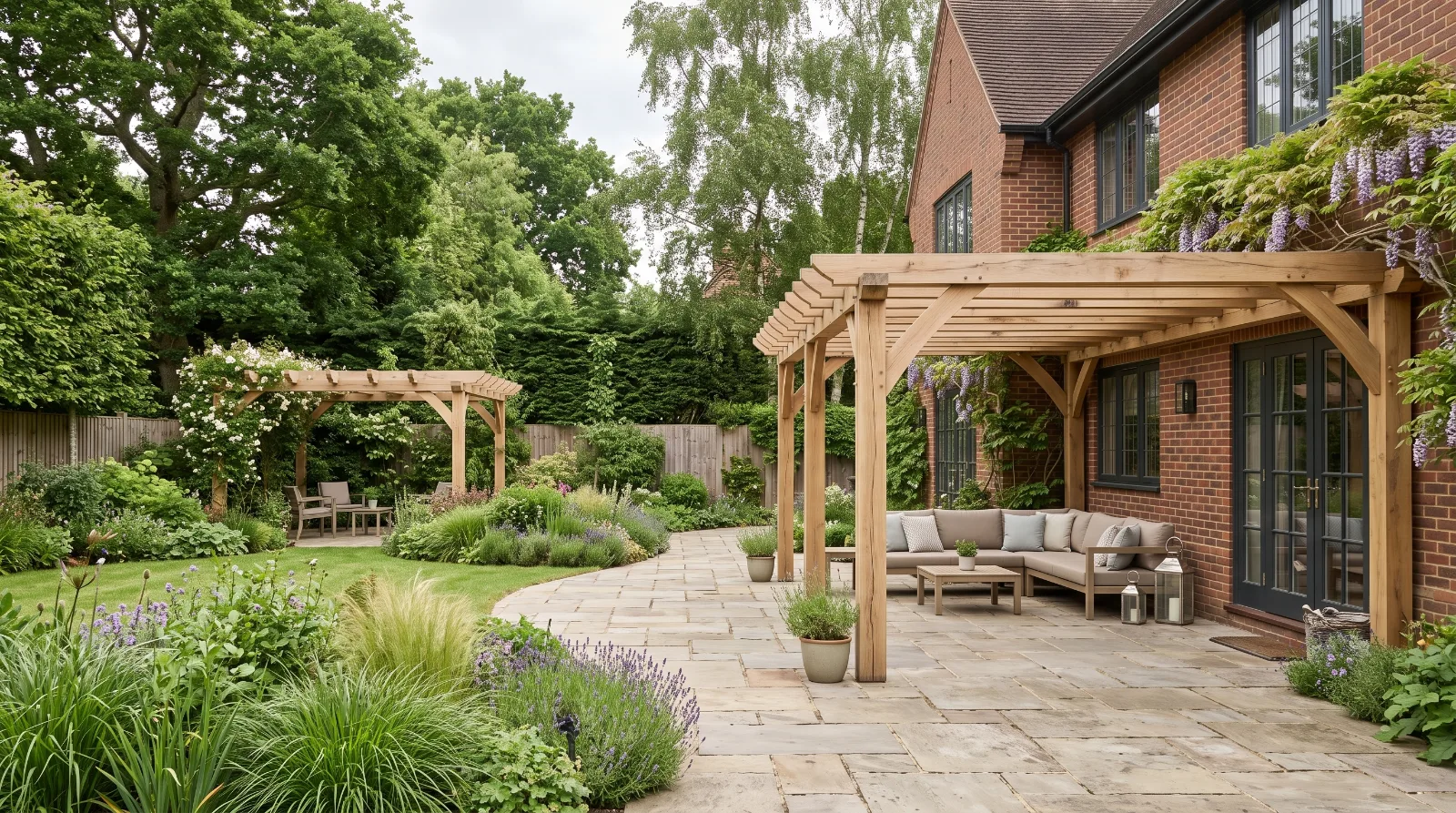
A pergola can define the dining area and create a more structured outdoor room. Traditional open-roof designs provide partial shade, while suitable canopies or adjustable louvred roofs can offer greater control over sunlight and rain protection.
The structure should be designed around the furniture layout, with sufficient space for people to move comfortably around the table.
Covered seating areas
A more substantial covered structure may be suitable if you want to use the dining area in a wider range of weather conditions.
Consider the roof design, ventilation, drainage and the effect on daylight reaching the house. A covered area can also create opportunities for integrated lighting and other outdoor living features.
Shade and shelter should be planned around the actual use of the space rather than added simply for appearance.
6. Consider Privacy and Surrounding Planting
The dining area should feel connected to the garden, not like a table placed on an isolated patch of paving.
Planting can help soften the patio edges, frame views and create a more secluded atmosphere. However, the planting scheme needs to suit the available space and the conditions around the dining area.
Consider:
Ornamental grasses: Useful for adding movement and texture around the patio.
Compact shrubs: Can provide structure and screening without occupying too much space.
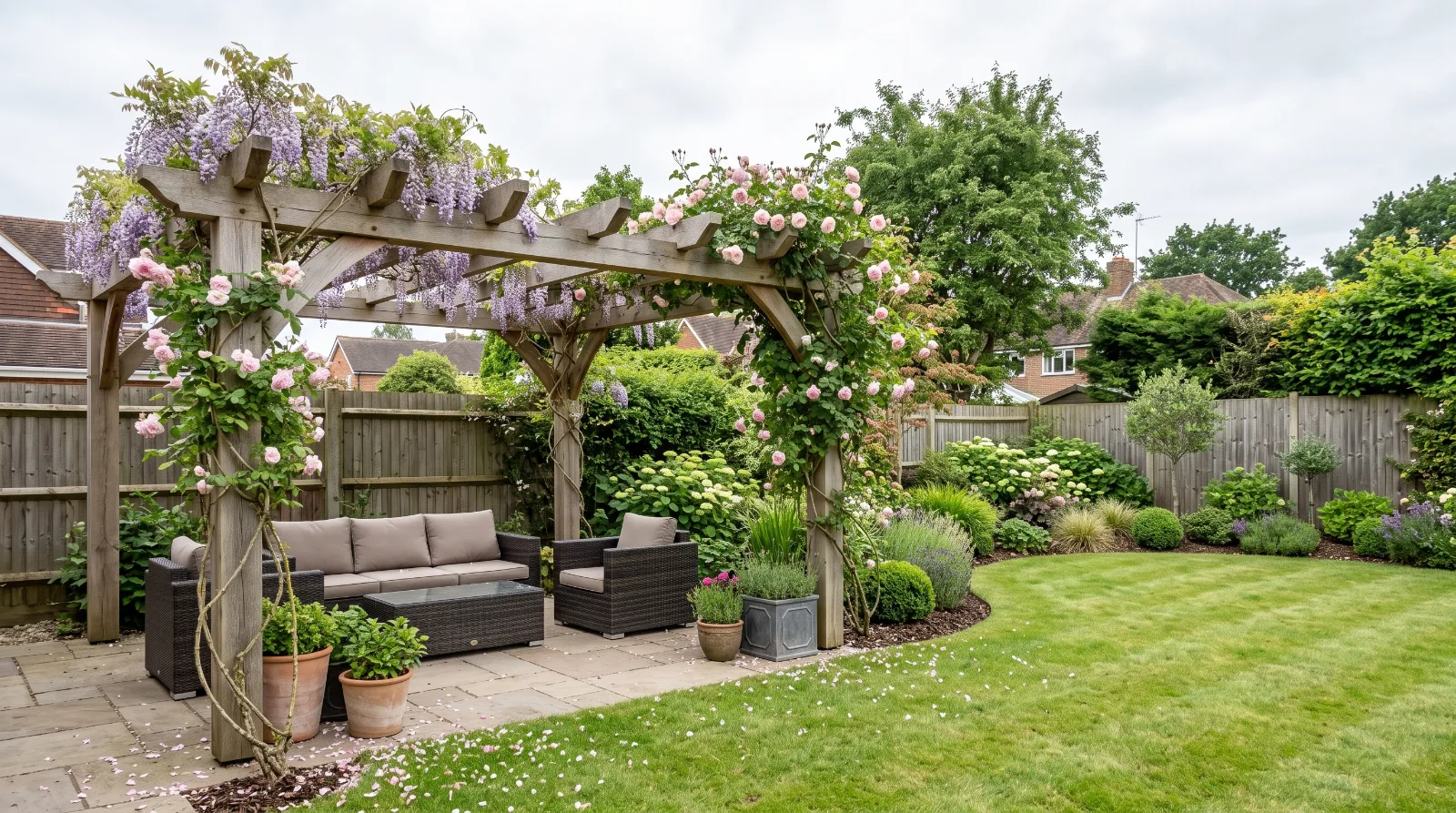
Climbers: May soften a suitable pergola or trellis, provided the structure can support the chosen plant.
Containers: Offer flexibility where you want greenery without committing to permanent planting beds.
Pleached trees or screening plants: May help reduce overlooking where space and growing conditions allow.
Avoid positioning large plants where they obstruct access, interfere with the chairs or make the area difficult to maintain.
If privacy is a concern, combine planting with the layout of the dining area. Screening one side of the patio may be enough to make the space feel more enclosed without surrounding it with dense barriers.
7. Plan Garden Lighting for Evening Meals
Lighting can help an outdoor dining area remain practical after sunset while creating a more inviting atmosphere.
The key is to provide enough light for eating and moving around safely without making the whole garden excessively bright.
Consider different types of lighting for different purposes.
Pergola lighting can illuminate the dining table from above where the structure and fittings are suitable.
Wall lights can provide useful illumination near doors and covered seating areas.
Low-level lighting can help identify nearby steps, path edges and changes in level.
Feature lighting can highlight trees, planted borders or a garden wall beyond the dining area, creating depth without relying on bright floodlights.
Choose outdoor-rated fittings suitable for their location, and plan the electrical work and cable routes before the patio or pergola is completed. Permanent mains-powered installations should be carried out by a suitably competent professional.
It is also worth using controls that allow you to switch off decorative lighting when it is no longer needed.
8. Make Space for Cooking and Serving
If you plan to use a barbecue or outdoor kitchen, consider its position when planning the dining area.
The cooking area should be convenient to reach without forcing people to pass through a cramped space between the table, chairs and garden entrance. There should also be enough room to prepare and serve food safely.
A barbecue needs suitable clearance from buildings, pergolas, fences, overhanging branches and other combustible materials, in line with the manufacturer's instructions.
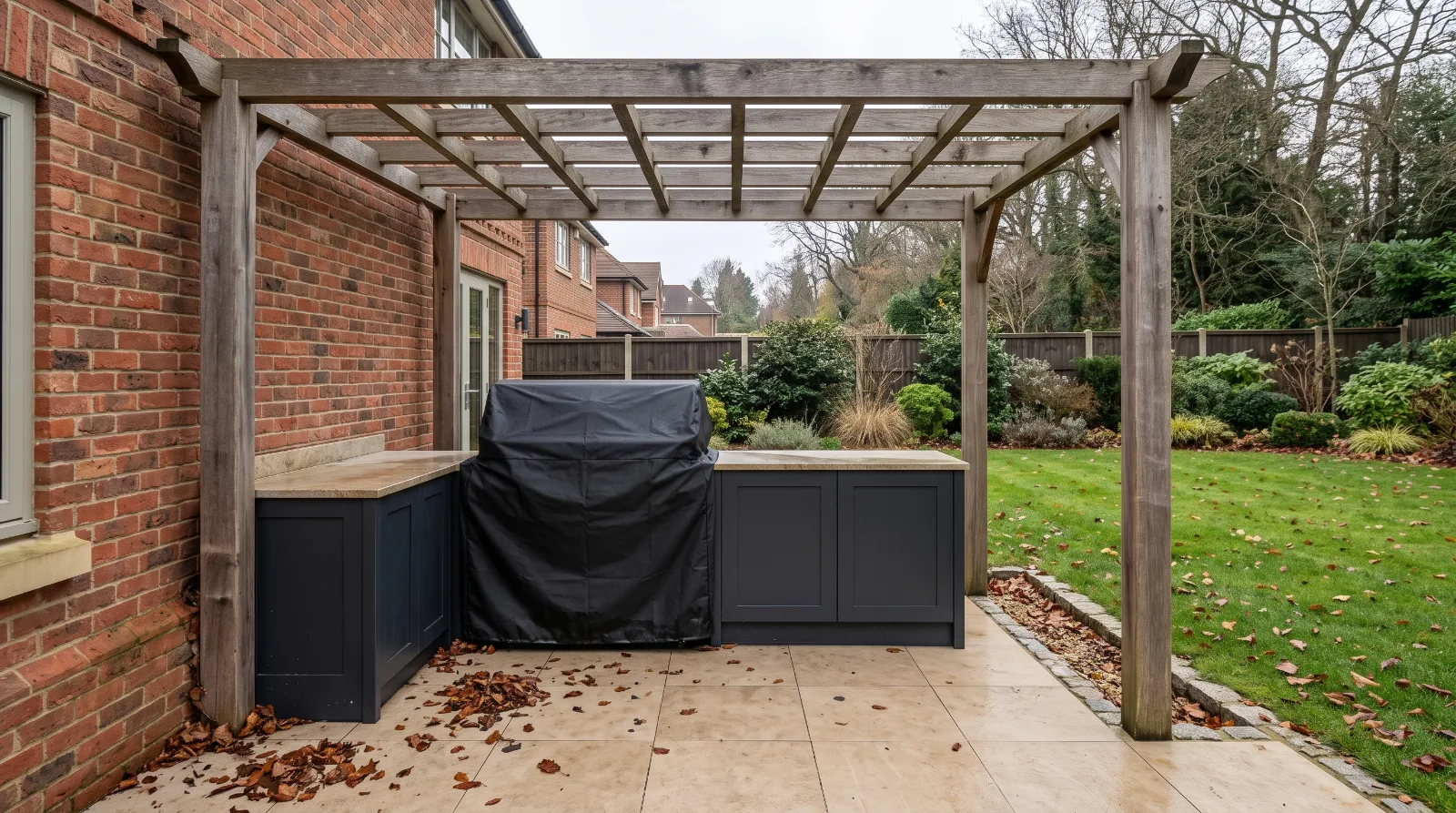
For a larger outdoor kitchen, allow space for worktops, storage, preparation and movement around the cooking equipment. Positioning it near the dining table can be practical, but the layout should avoid congestion and keep smoke away from seating where possible.
For a smaller garden, a simple dining table and a portable barbecue may be more appropriate than a permanent cooking installation.
9. Don't Overlook Drainage and Ground Preparation
A comfortable dining area needs more than attractive paving. The surface and its supporting structure must be suitable for the site conditions.
Before installation, assess the existing ground levels, soil conditions and how rainwater currently moves through the garden. Poorly planned levels can allow water to collect on the patio or run towards the house.
Depending on the site, the project may require excavation, a suitable sub-base, carefully planned paving falls and appropriate drainage measures.
Where the garden slopes, the dining area may need additional groundworks or retaining structures to create a practical level platform.
If you are planning a pergola or other permanent structure, coordinate its foundations with the patio and drainage design from the beginning.
Good preparation helps create a dining area that is easier to maintain and reduces the risk of having to lift finished paving to correct avoidable problems later.
10. Design the Dining Area Around How You Live
The most successful outdoor dining areas reflect the way the household actually uses the garden.
A family that eats outside regularly may prioritise a generous table, easy access from the kitchen and durable paving. Someone who mainly entertains at weekends may prefer an extending table, a covered pergola and integrated lighting.
For a smaller garden, a compact dining set and carefully positioned planters may create a better balance between entertaining space and greenery.
For a larger garden, the dining area can form part of a wider layout with a separate lounge, lawn and planting zones.
Think about storage, furniture covers, cushions and access during winter, too. These practical details can influence how easy it is to keep the space ready for use.
A clear design does not need to include every possible feature. A well-positioned table, comfortable chairs, suitable paving and thoughtful planting can be enough to create an attractive and useful outdoor dining area.
Create Your Outdoor Dining Area with Surrey Oak Landscapes
Planning an outdoor dining area involves balancing furniture, paving, access, planting and shelter so that everything works together. Getting the layout right from the beginning helps create a space that feels comfortable for everyday meals and special occasions.
At Surrey Oak Landscapes, we provide landscaping and groundworks services to help homeowners create outdoor spaces suited to their properties and lifestyles. Whether you are planning a new patio, a pergola-covered dining area or a complete garden transformation, careful planning can bring the different elements together.
Thinking about creating an outdoor dining area in your garden?
About the author