Pergola vs Gazebo: Which Is Better for Your Garden?
Choosing between a pergola and gazebo? Compare the differences in shelter, privacy, maintenance, planting and outdoor entertaining to find the right fit.
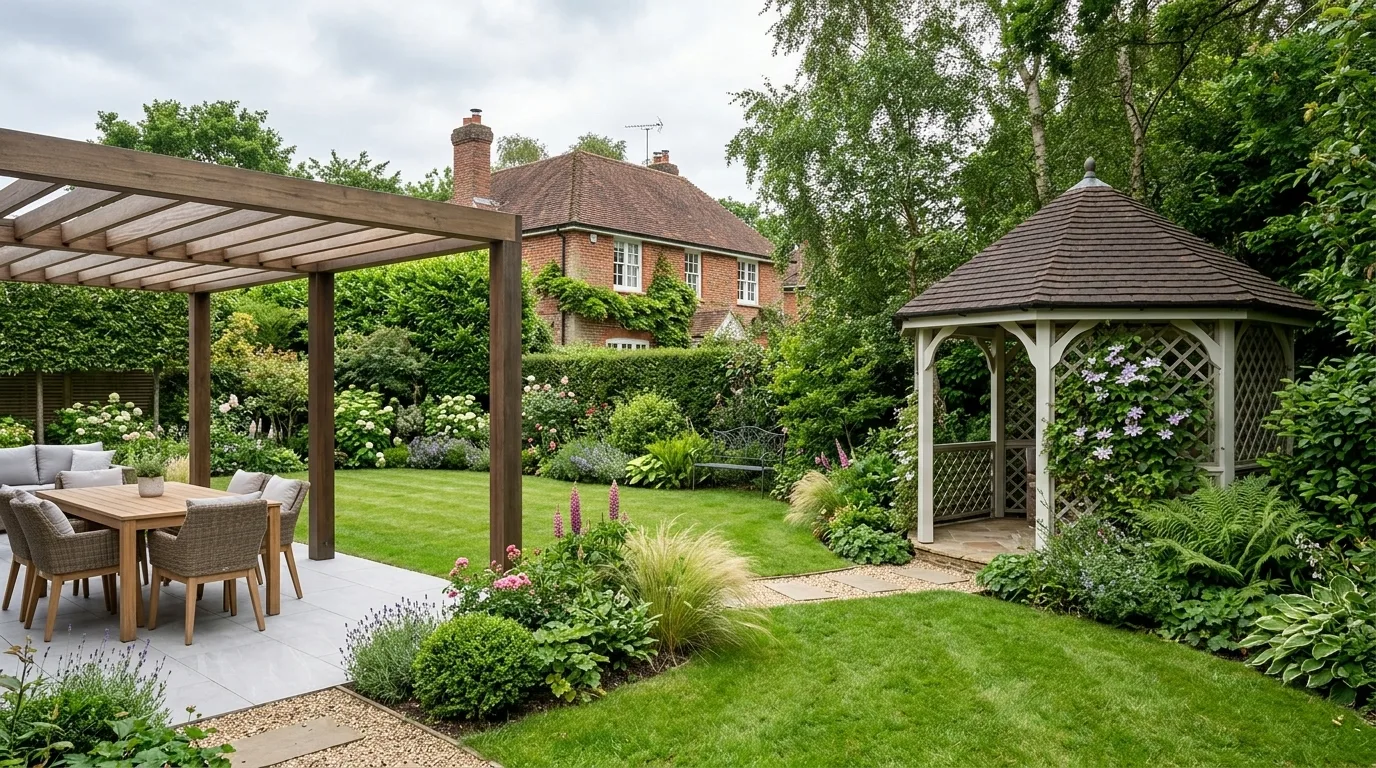
If you're looking to create a more usable outdoor space, a pergola or gazebo can give your garden a dedicated area for dining, relaxing and entertaining.
But while the two structures can look similar at first, they provide a very different experience.
A pergola is usually an open-sided structure with an open, slatted or adjustable roof, making it well suited to creating shade and defining an outdoor living area. A gazebo normally has a more substantial fixed roof and is designed to provide greater shelter from the weather.
Modern pergolas can now include louvred or retractable roofs, which means the difference is not always quite as clear-cut as it once was.
So which one is right for your garden?
What Is the Difference Between a Pergola and a Gazebo?
The biggest difference is the roof.
A traditional pergola has an open framework overhead. Its purpose is to introduce structure and shade while keeping the garden feeling open and connected to the surrounding landscape.
A gazebo is generally a more enclosed, roofed structure designed to provide more reliable protection from sun and rain.
Modern versions can blur the distinction. A louvred pergola, for example, can close its roof when rain arrives, while some modern gazebos are designed with open sides and a lighter architectural appearance.
For this comparison, we're talking about permanent garden structures, rather than temporary pop-up gazebos.
Pergola vs Gazebo at a Glance
Feature | Pergola | Gazebo |
|---|---|---|
Roof | Open, slatted, retractable or louvred | Usually solid and fixed |
Shade | Good, depending on roof design | Strong |
Rain protection | Varies by roof type | Generally better |
Feeling | Open and connected to the garden | More enclosed and sheltered |
Best for | Outdoor dining, seating and entertaining | Sheltered seating and longer outdoor use |
Planting | Excellent for climbing plants | Less central to the structure |
Design style | Modern, natural or architectural | Traditional or contemporary |
Flexibility | High with louvred or retractable roofs | Depends on design |
Privacy | Can be combined with screens and planting | Often easier to enclose |
When Is a Pergola the Better Choice?
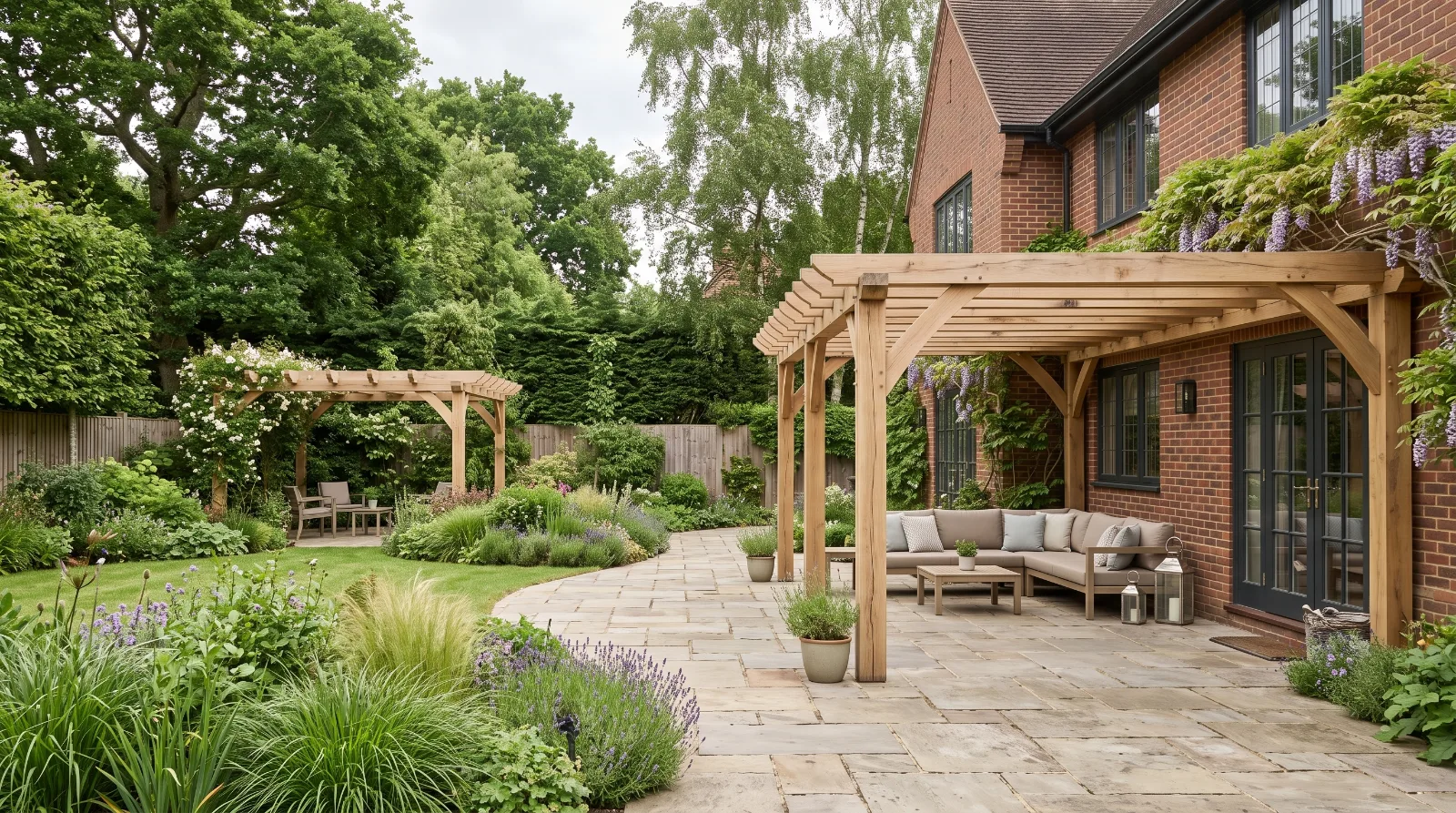
A pergola can be ideal when you want to create a defined outdoor space without making the garden feel enclosed.
Because the sides are generally open, you retain views across the garden and maintain a stronger connection with surrounding planting.
Pergolas work particularly well over:
Outdoor dining areas
Patio seating
Garden lounges
Entertaining spaces
Hot tubs
Garden paths or transitions between areas
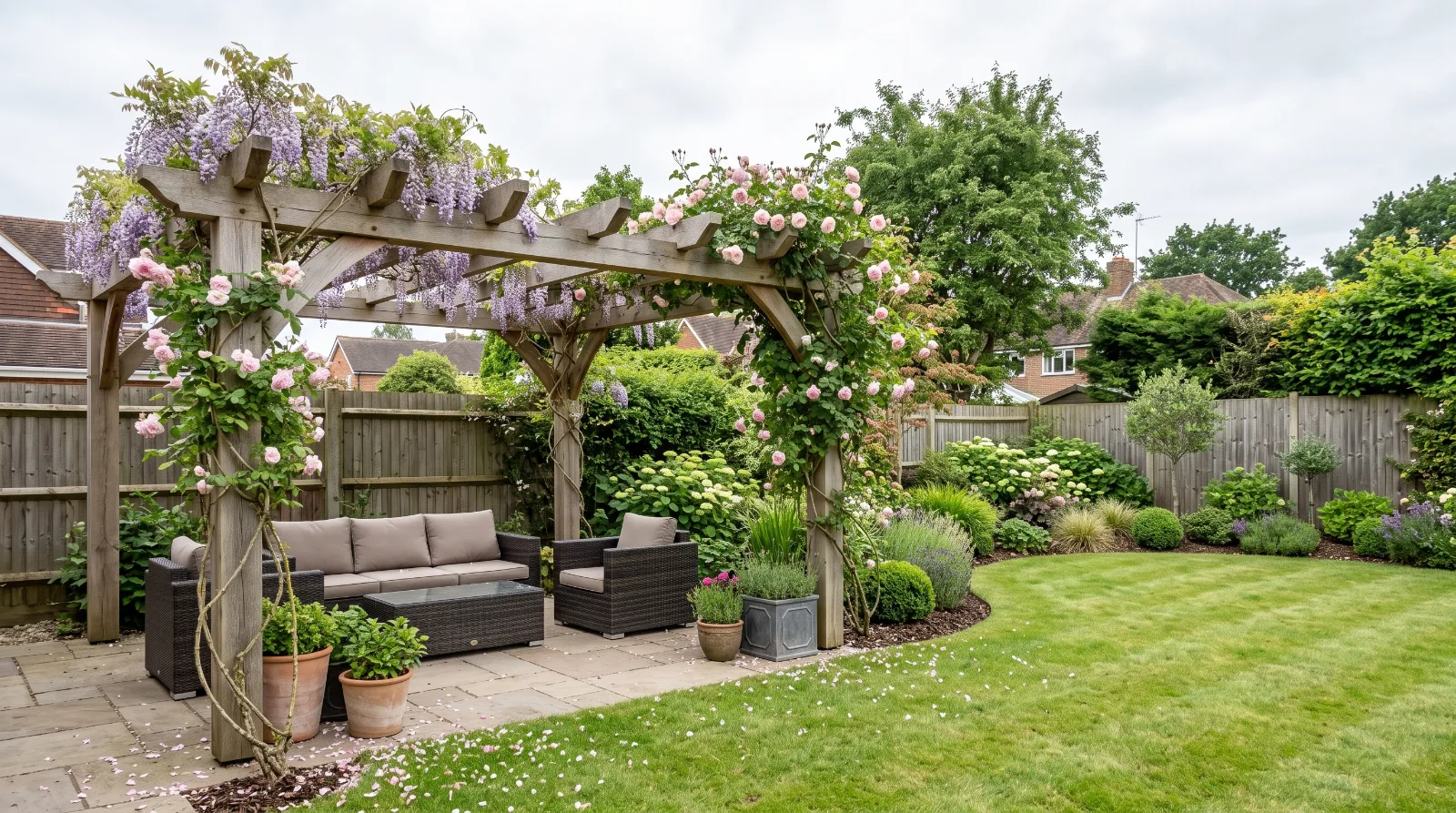
They can also provide a strong framework for climbing plants such as roses, clematis and other suitable climbers, allowing the structure to become part of the planting scheme.
Pergolas With Adjustable Roofs
Modern louvred pergolas have made the traditional pergola considerably more versatile.
An adjustable roof can be opened to allow sunlight through and closed when shade or protection from rain is wanted. Some systems also incorporate drainage within the structure, although the exact level of weather protection depends on the design and manufacturer.
This makes a louvred pergola particularly attractive for homeowners who want an outdoor space that can adapt to changing weather.
When Is a Gazebo the Better Choice?
A gazebo may be more suitable when reliable overhead shelter is the main priority.
A solid roof provides more predictable protection from rain and strong sun, making the structure feel more like a separate outdoor destination.
A gazebo can work well for:
Sheltered outdoor dining
Relaxed seating areas
Larger gardens
More traditional garden designs
Spaces where rain protection is a priority
Outdoor areas that need a stronger sense of enclosure
If your main concern is being able to sit underneath the structure during a typical British shower, a solid-roof gazebo generally has the advantage over a traditional open-roof pergola.
Which Is Better for a Surrey Garden?
There isn't one option that is better for every Surrey garden.
The surrounding property, garden size, existing landscaping and how you want to use the space all matter.
A contemporary Surrey garden with a porcelain patio, clean planting and modern outdoor furniture may suit a sleek pergola particularly well.
A larger garden with a more traditional character may work better with a timber gazebo surrounded by mature planting.
The structure should also feel connected to what is already there rather than looking like a standalone feature that has simply been placed in the garden.
Pergola vs Gazebo for Outdoor Entertaining
Both structures can make outdoor entertaining easier, but they approach it differently.
A pergola can help define an entertaining area without visually closing it off. This works particularly well when the structure sits over a patio or outdoor dining area.
A gazebo creates a stronger sense of separation and can provide more dependable overhead shelter when the weather changes.
For a Surrey garden designed around outdoor entertaining, either can work well alongside:
A patio or paved dining area
Outdoor furniture
Garden lighting
Planting and screening
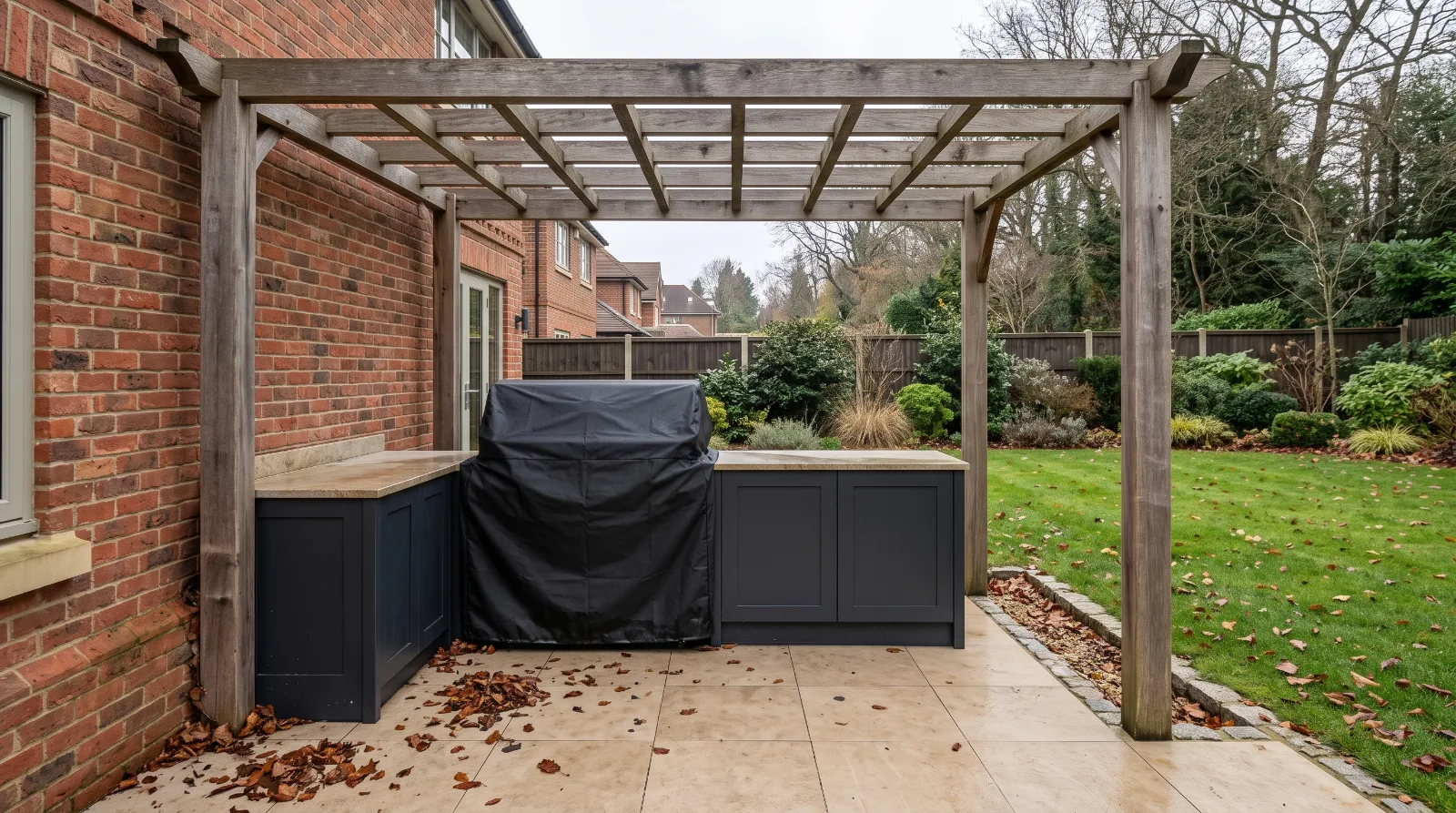
An outdoor kitchen or BBQ area
Garden heating
Lighting can make a particularly noticeable difference after dark. Subtle lighting integrated into a pergola or positioned around a gazebo can turn the structure into a focal point rather than leaving it as a daytime-only feature.
Which Is Better for Privacy?
Neither structure automatically provides privacy, but both can be designed to create a more secluded space.
With a pergola, privacy can be introduced through:
Slatted side screens
Climbing plants
Tall shrubs
Trees
Decorative screening panels
A gazebo can offer more enclosure from the outset, particularly where curtains, screening or solid sides are incorporated into the design.
However, full enclosure is not always desirable. In a smaller Surrey garden, keeping a structure visually open can help the space feel larger and prevent the outdoor area from becoming too enclosed.
Which Is Easier to Maintain?
Maintenance depends heavily on the materials used.
Timber
Timber pergolas and gazebos provide a natural appearance but require more ongoing attention than many modern aluminium structures. Cleaning and periodic treatment can help protect the timber and maintain its appearance.
Aluminium
Aluminium pergolas are increasingly popular for contemporary gardens because they offer a clean appearance and generally require less routine maintenance than timber.
Powder-coated finishes can also provide a consistent colour without the regular staining associated with timber.
Gazebo Roofs and Drainage
A roofed structure should also be checked periodically for debris, water run-off and the condition of its drainage system.
Good drainage around the structure itself is important too, particularly where it sits on a patio or other hard surface.
Which Works Better With Planting?
A pergola has a natural advantage when planting is an important part of the design.
Its open framework can support climbing plants and provide height above a patio or planting border. Over time, plants can soften the structure and make it feel increasingly integrated with the garden.
A gazebo can also be surrounded by planting, but the roof and enclosed form generally make it feel more like a destination within the garden.
For a planting-led Surrey garden, a pergola can therefore provide a useful transition between hard landscaping and softer planting.
Which Is Better for a Small Garden?
Scale is more important than the label.
A large structure can overwhelm a small garden whether it is technically a pergola or a gazebo.
For compact spaces, a smaller pergola can work particularly well because its open sides maintain visual space around the seating area. A carefully positioned structure can also make better use of limited space.
A gazebo can still work in a small garden, but its enclosed appearance and solid roof can have a stronger visual presence.
What About Groundwork and Foundations?
Both permanent structures need an appropriate base and secure fixing.
However, there is no single foundation depth or universal sub-base specification that applies to every pergola or gazebo. The appropriate construction depends on the structure, its weight, the ground conditions, how it is fixed and the surface it is being installed onto.
This is particularly important in Surrey, where ground conditions vary significantly between areas. Some parts of the county are influenced by London Clay, while other areas include chalk, greensand and different geological formations.
For this reason, the structure and its base should be designed for the individual garden rather than applying one standard excavation depth to every project.
Do Pergolas and Gazebos Need Planning Permission?
Many garden structures can fall within permitted development rules when they meet the relevant requirements, but the rules depend on factors including the structure's height, position, size and relationship to the house and boundary.
Properties with additional planning restrictions, such as certain listed buildings or sites affected by local restrictions, may need further checks before work begins.
For a Surrey property, particularly one with unusual site constraints or heritage restrictions, it's sensible to establish the planning position before finalising the structure and its location.
Pergola or Gazebo: Which Should You Choose?
Your decision ultimately comes down to how you want to use the space.
Choose a pergola if you want... | Choose a gazebo if you want... |
|---|---|
An open, connected feel | More dependable overhead shelter |
A modern or architectural feature | A defined outdoor destination |
Space for climbing plants | A more enclosed atmosphere |
Adjustable shade options | A fixed roof |
A structure over a patio | A sheltered seating or dining area |
Strong integration with planting | Greater protection from rain |
There is also no reason a garden has to fit neatly into one style. A well-designed outdoor space can combine a pergola with planting, patios, lighting and screening to create different areas for different uses.
Which Structure Is Right for Your Garden?
A pergola is often the better fit when you want shade, structure, planting and an open connection with the garden.
A gazebo is generally better when shelter and a more enclosed outdoor space are the priority.
Modern louvred pergolas sit somewhere between the two, offering an adaptable roof while retaining the open character associated with pergolas.
The most important thing is not simply choosing the structure you like the look of. Consider how much shelter you need, how large your garden is, how the structure will connect to the patio and planting, and how you expect to use the space throughout the year.
Create an Outdoor Space That Works for Your Garden
A pergola or gazebo can become much more than a standalone garden feature. When planned alongside paving, planting, lighting and outdoor furniture, it can become a natural extension of the way you use your garden.
Surrey Oak Landscapes can help design and build outdoor living spaces around your garden, from pergolas and patios to planting, lighting and complete garden transformations.
About the author