Patio vs Decking: Which Is Better for Your Garden?
Choosing between a patio and decking for your Surrey garden? Compare the key differences, from maintenance and durability to drainage, costs and garden levels.
If you're planning to transform your garden, one of the biggest decisions is choosing what to use for the main outdoor living area. For many homeowners, the choice comes down to patio vs decking.
Both can create a practical space for seating, dining and entertaining, but they give a garden a very different look and feel. They also differ in maintenance, durability, drainage, installation and how well they suit different types of gardens.
So, which is better for your garden?
There isn't one answer that suits every property. The right choice depends on your garden, how you plan to use the space and how much maintenance you are prepared to take on.
Patio vs Decking at a Glance
Factor | Patio | Decking |
|---|---|---|
Appearance | Stone, porcelain or paving finishes | Timber or composite boards |
Maintenance | Generally low | Low for composite, higher for timber |
Durability | Very durable when properly installed | Depends heavily on material and maintenance |
Garden style | Traditional or contemporary | Natural and relaxed |
Sloping gardens | Usually requires more groundwork | Can be raised to follow levels |
Wet weather | Good with suitable drainage | Requires good airflow and drainage underneath |
Seating and dining | Stable, solid surface | Comfortable outdoor living area |
Long-term upkeep | Cleaning and occasional repairs | Timber may need regular treatment |
The choice of material also makes a major difference. Porcelain and natural stone patios have different maintenance requirements, while timber and composite decking perform differently in terms of upkeep and weathering.
What Are the Main Differences Between a Patio and Decking?
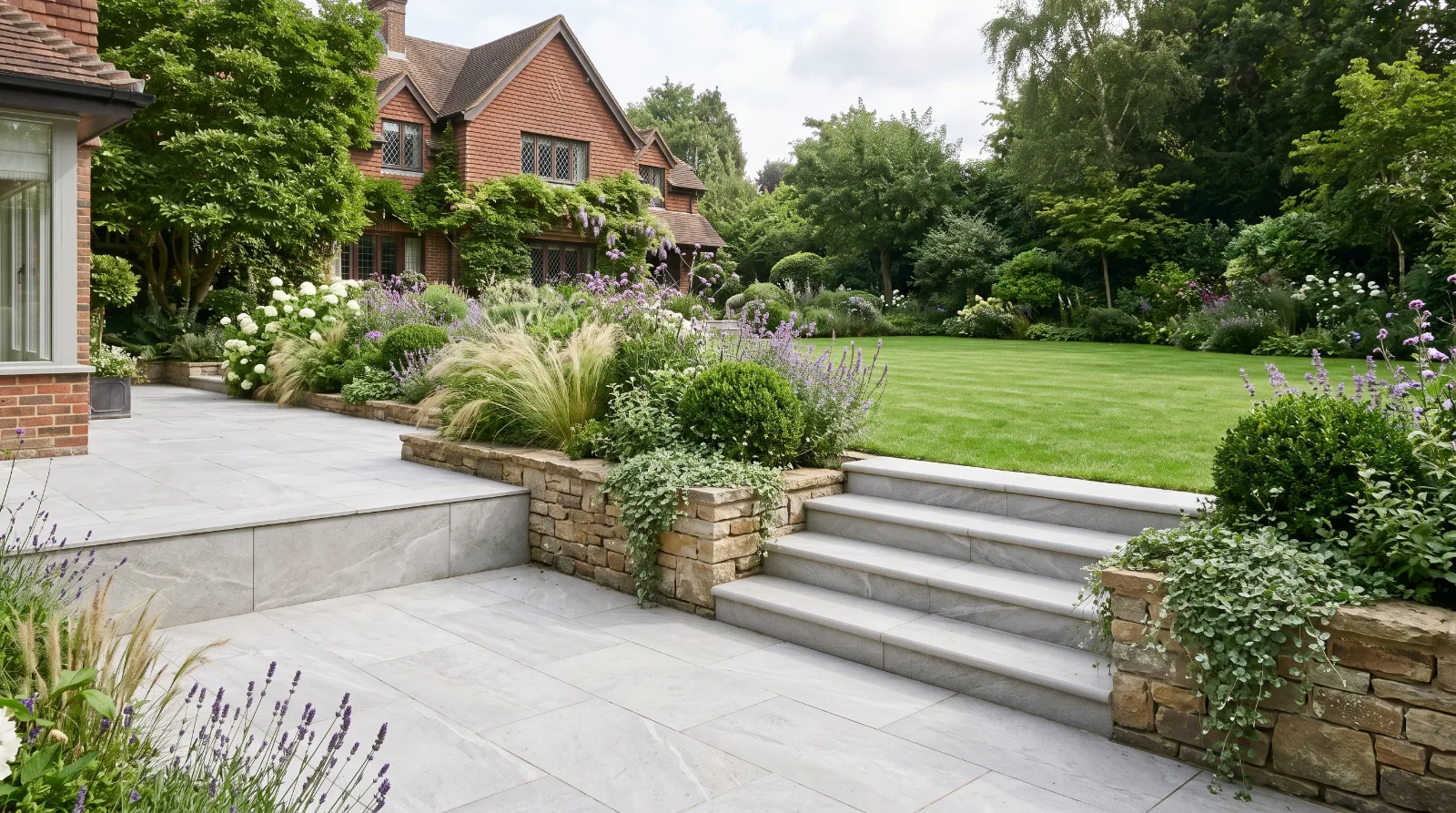
A patio is a hard surface constructed using materials such as porcelain, natural stone, concrete paving or other paving products. It creates a solid, permanent surface that works particularly well for dining areas, garden furniture and entertaining spaces.
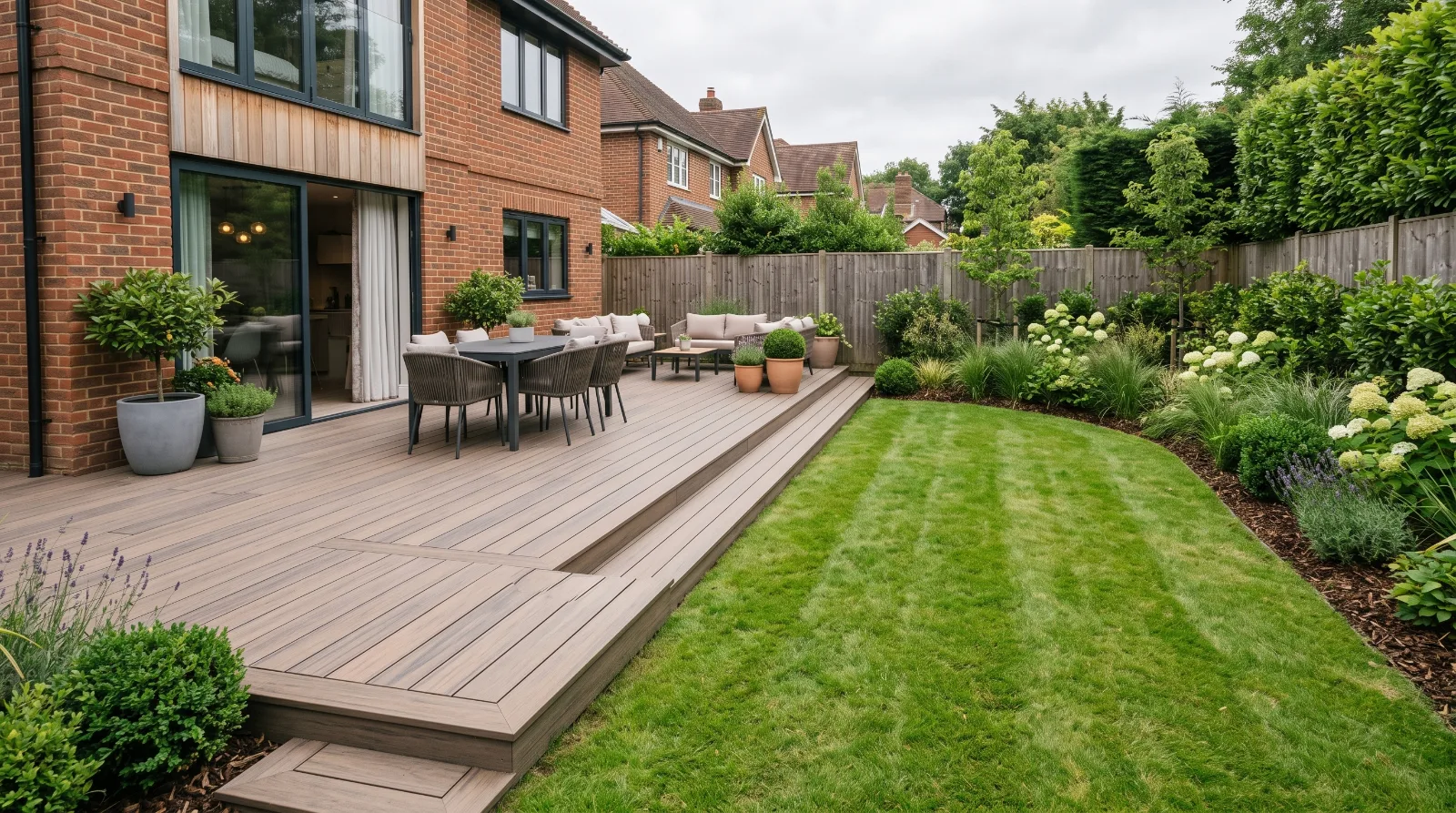
Decking is constructed from individual boards fixed to a supporting frame. It can be made from treated timber or composite materials and can be built at ground level or raised above the garden.
This difference in construction can make decking particularly useful where there are changes in level, while patios can provide a more substantial, permanent finish where suitable groundwork is possible.
Patio Benefits and Considerations
Patios are a popular choice for homeowners looking for a durable outdoor surface with relatively little ongoing maintenance.
Durable and Long Lasting
A properly constructed patio can provide many years of use. The longevity depends not just on the paving material but also on the preparation underneath it.
A strong, well-prepared sub-base and suitable drainage are important to prevent problems such as movement, cracking and standing water.
Porcelain is particularly resistant to staining and weathering, while natural stone offers a more varied appearance that changes naturally over time.
Easy to Maintain
Patios generally require straightforward maintenance. Regular sweeping and cleaning can help prevent dirt, moss and algae from building up.
Porcelain paving is particularly low maintenance because its dense surface is resistant to staining and does not normally require sealing. Natural stone is more porous and may benefit from sealing depending on the material and the finish you choose.
Wide Range of Styles
One of the biggest advantages of a patio is the range of available finishes.
You can choose from:
Porcelain paving
Indian sandstone
Limestone
Slate
Concrete paving
Other natural stone options
This means a patio can work equally well with a traditional Surrey property or a more contemporary garden design.
Decking Benefits and Considerations
Decking creates a different atmosphere from paving and can make an outdoor space feel more like an extension of the home.
Works Well With Different Garden Levels
One of the biggest advantages of decking is its flexibility when dealing with changes in ground level.
A raised deck can help create a usable seating area where a garden slopes or where levelling the entire area for paving would require substantial excavation.
This can make decking particularly useful for gardens with awkward changes in height.
Creates a Warmer, More Relaxed Look
Timber decking has a natural appearance that can work well with planting, lawns and other garden features.
Composite decking can provide a similar board-style appearance while offering a wider selection of colours and generally requiring less maintenance than timber.
Timber Requires More Maintenance
Timber decking needs more attention than most patio surfaces.
Depending on the type of timber and its condition, maintenance can include cleaning, staining, oiling or other treatments. Exposure to rain, moisture and sunlight can cause timber to weather and change colour over time.
If you want the appearance of decking without as much regular treatment, composite decking is an alternative worth considering. However, composite is still not completely maintenance-free and will need cleaning.
Which Is Easier to Maintain?
For homeowners who want to spend as little time as possible maintaining their outdoor space, the materials chosen may be more important than simply choosing patio or decking.
A porcelain patio is generally very straightforward to maintain, usually requiring regular cleaning rather than sealing.
Natural stone can require more maintenance, particularly where staining, algae or weathering are concerns.
Timber decking requires more regular care to maintain its appearance and protect the boards. Composite decking generally requires less maintenance, although it should still be cleaned periodically.
Which Is Better for a Sloping Garden?
For a garden with significant changes in level, decking can sometimes provide a more straightforward way of creating a level outdoor area.
A timber or composite deck can be constructed above the existing ground and designed around changes in height.
A patio can also work on a sloping garden, but creating level paved areas may require additional excavation, retaining structures, steps or other groundwork.
The best solution depends on how steep the garden is and how you want the different areas to connect.
Which Is Better for Drainage?
Drainage should be considered with both patios and decking.
A patio needs suitable falls so that rainwater does not remain on the surface. Poorly designed falls or inadequate drainage can lead to puddles and water collecting against buildings.
Decking allows water to pass between the boards, but the area underneath still needs to be properly constructed. Good airflow and suitable drainage below the deck can help prevent moisture from remaining trapped around the supporting structure.
In either case, drainage should be considered as part of the overall garden design rather than treated as an afterthought.
Which Is More Suitable for Entertaining?
Both options can create an excellent entertaining area.
A patio provides a solid surface for dining tables, chairs, barbecues and heavier garden furniture. It can also be combined with features such as outdoor kitchens, pergolas, planting beds and garden lighting.
Decking can create a more relaxed outdoor-living feel and works particularly well with lounge furniture, outdoor seating and raised areas.
The choice often comes down to the style you want rather than one being inherently more suitable.
Patio or Decking: What About Cost?
The cost of either option can vary considerably.
For patios, the final price can be affected by:
Size of the area
Choice of paving
Excavation and ground preparation
Sub-base requirements
Access to the garden
Drainage
Steps and retaining structures
Complexity of the design
For decking, costs can vary depending on whether you choose softwood, hardwood or composite, as well as the height and complexity of the supporting structure.
Ground preparation and installation can make a significant difference to the overall price of either option, so comparing material prices alone does not give a complete picture.
Which Should You Choose for Your Garden?
The best choice depends on what you want from the space.
A patio may suit you if you want:
A solid, permanent outdoor surface
Low ongoing maintenance
A traditional stone or contemporary porcelain finish
A stable surface for dining and entertaining
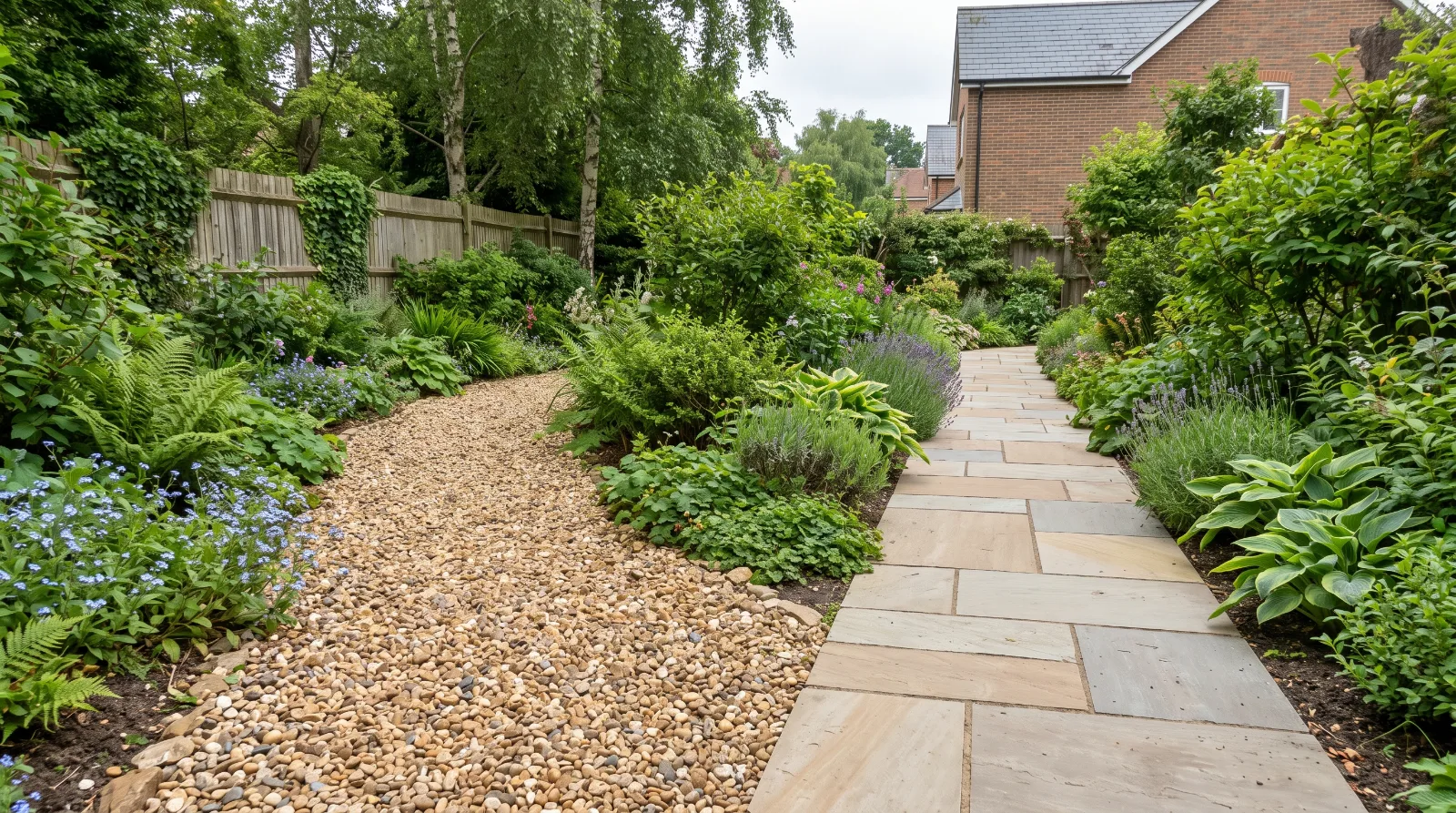
A surface that can integrate with paths and other hard landscaping
Decking may suit you if you want:
A warmer, more relaxed appearance
A raised outdoor area
A solution for dealing with changes in garden level
A timber or composite finish
An outdoor space that feels more like an extension of your living area
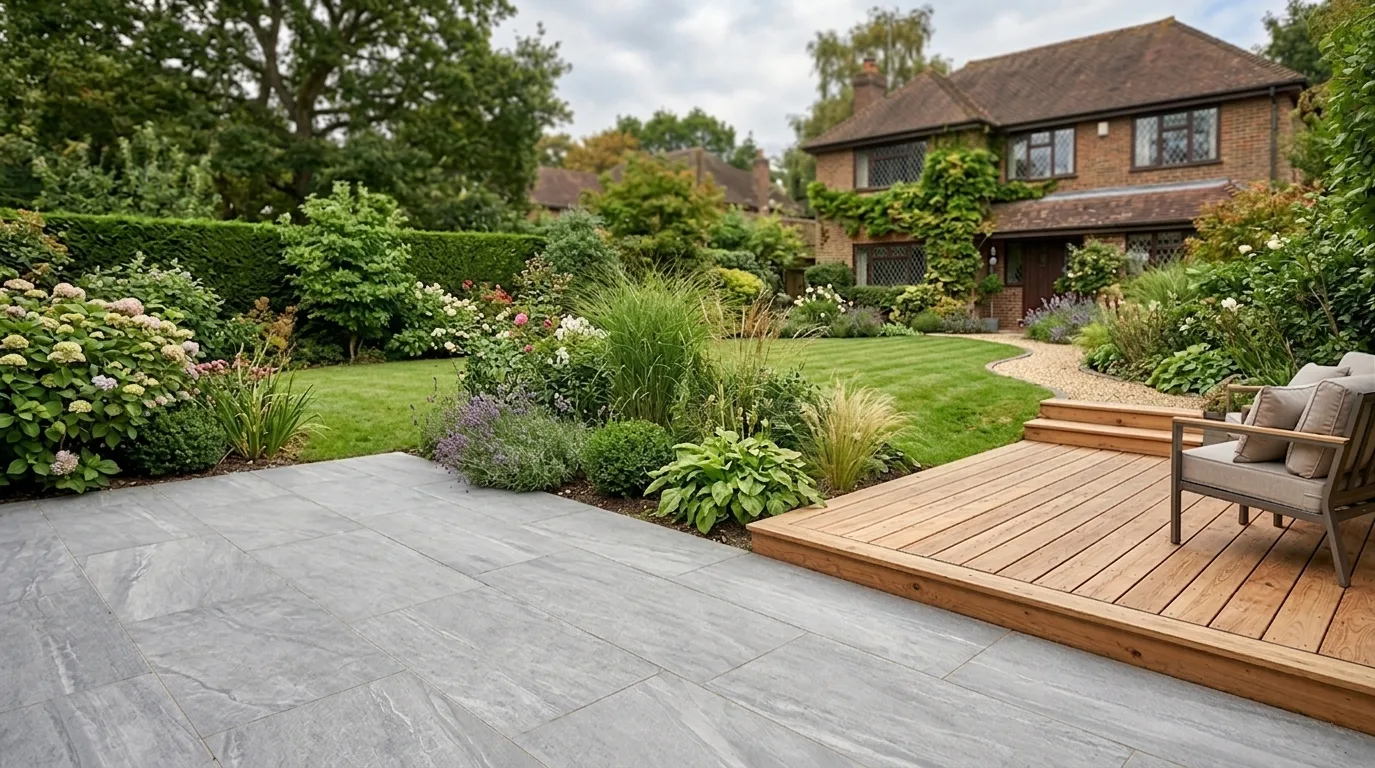
There is also no reason a garden has to use only one material. Patios and decking can be combined to create separate zones, such as a paved dining area connected to a raised deck or seating space.
Patio vs Decking: The Right Choice for Your Garden
Patio and decking can both transform a garden, but they create very different results.
A patio offers a solid, durable surface with a wide choice of paving materials and generally straightforward maintenance. Decking provides more flexibility with levels and creates a warmer, more informal outdoor-living feel.
Rather than choosing based solely on appearance, consider the shape and levels of your garden, how you use the space, your preferred maintenance level and the overall style of your home.
For homeowners in Surrey, a well-planned patio or decking area can become a practical part of the garden rather than simply another surface.
If you're considering a new patio, decking area or complete garden transformation, Surrey Oak Landscapes can help you plan a solution around your garden, property and how you want to use the space.
About the author