Patio Ideas for Surrey Gardens
Looking for patio ideas for your Surrey garden? Explore paving styles, outdoor dining areas, multi-level patios, planting, lighting and practical drainage ideas.
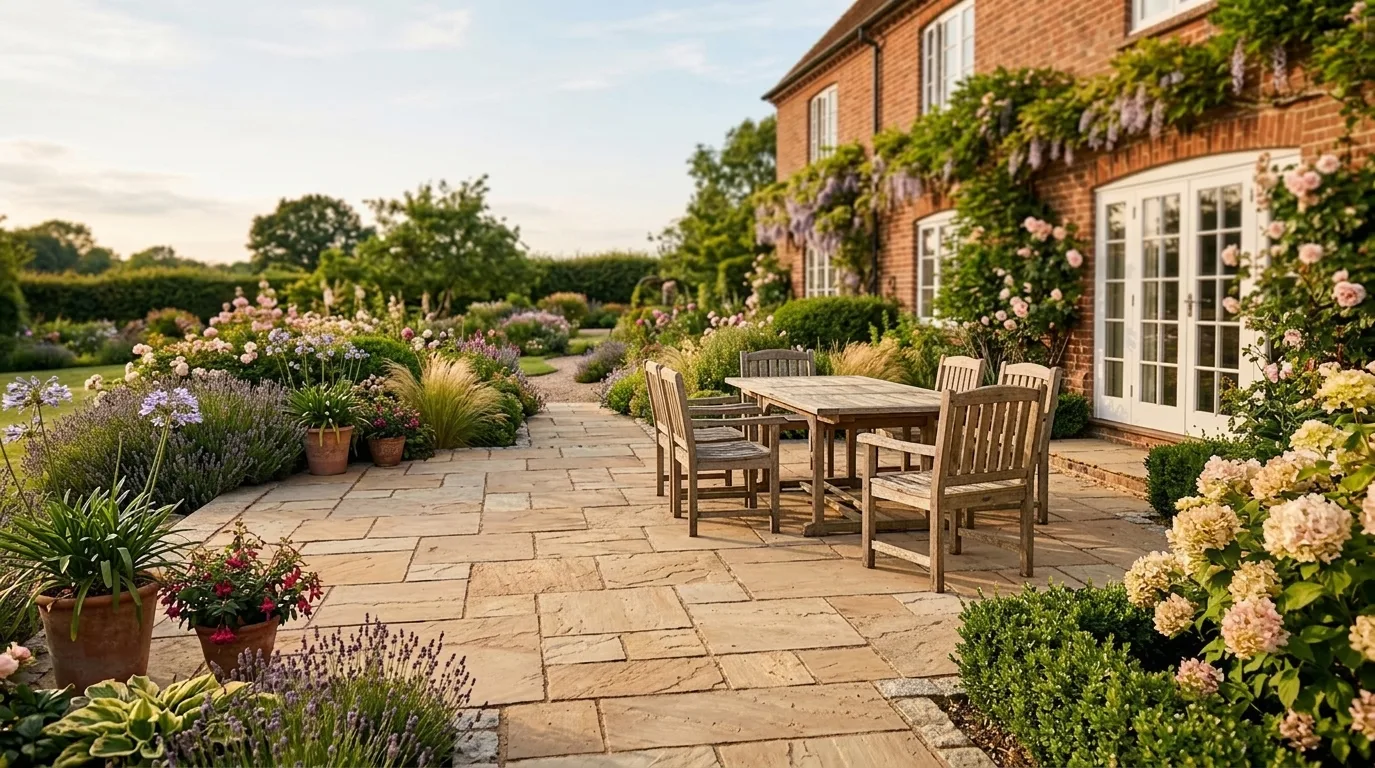
A well-designed patio can completely change how you use your garden. It can create a dedicated area for outdoor dining, provide somewhere comfortable to sit and relax, or connect your home with the wider garden.
For Surrey homeowners, there is more to planning a patio than choosing a paving colour. The size and shape of the garden, existing levels, planting, access and drainage all need to be considered alongside the overall style of the property.
Whether you have a compact garden in Reigate or a larger garden in the Surrey countryside, these patio ideas can help you make the most of your outdoor space.
1. Create a Patio That Extends From the House
One of the most effective patio designs is to create a direct connection between the house and the garden.
Positioning the patio immediately outside the kitchen or living area makes it easier to move between indoor and outdoor spaces, particularly where there are large or bi-fold doors.
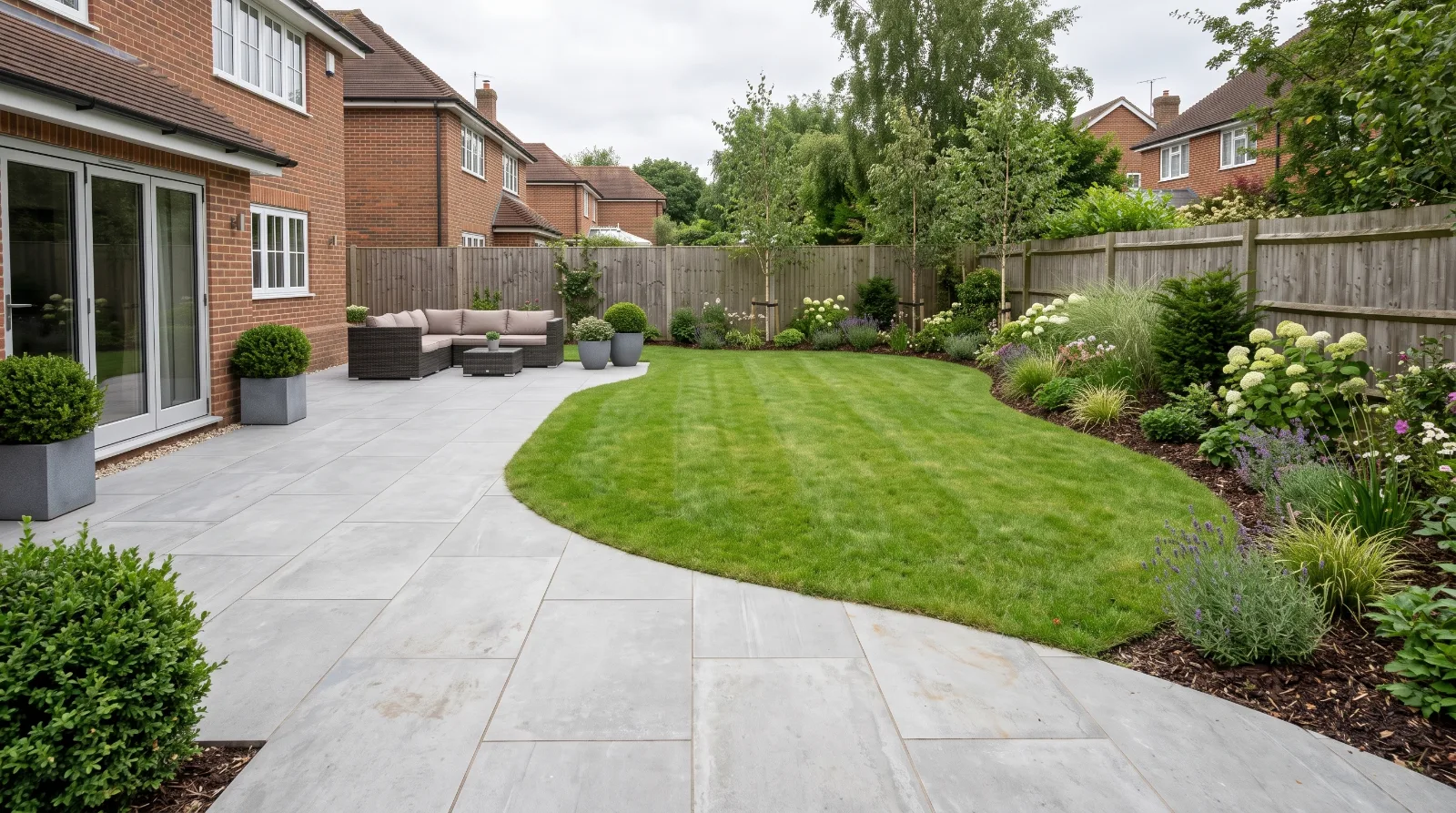
The shape does not always need to follow the outline of the house exactly. A wider patio can create more room for dining, while a curved or angled edge can help it transition naturally into lawns and planting.
Think about how you will use the space before deciding on the final dimensions. A dining table, outdoor sofa or barbecue can take up more room than expected, so allow enough space to move comfortably around the furniture.
2. Use Large-Format Paving for a Contemporary Look
Large paving slabs can give a garden a clean, uncluttered appearance, particularly in modern properties.
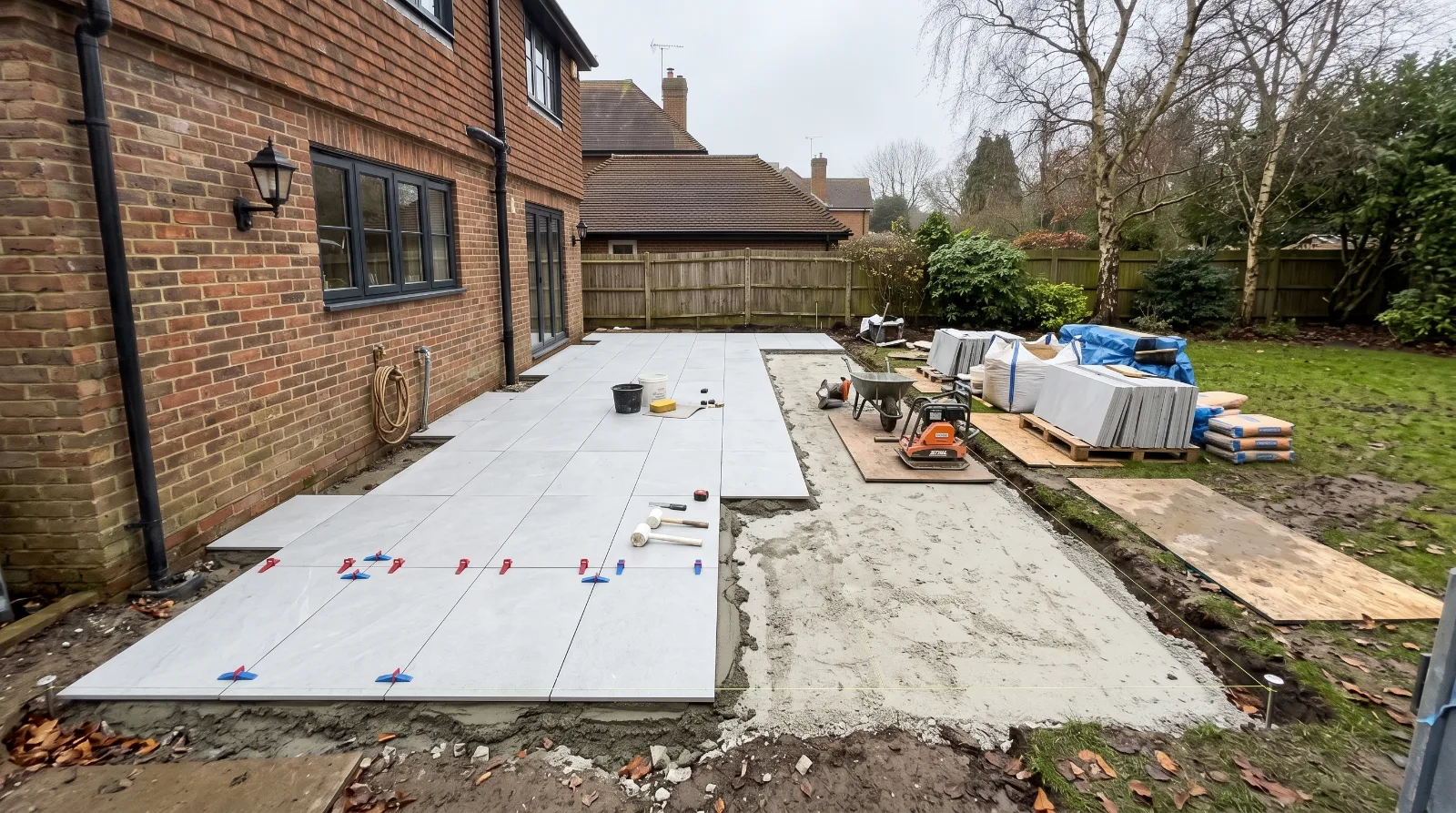
Porcelain paving is a popular option for contemporary gardens, while natural stone can provide more variation in colour and texture. The right choice will depend on the style of your home, the character of the garden and the look you want to achieve.
The laying pattern can make just as much difference as the material itself. Large slabs laid in a simple pattern can emphasize a modern design, while more varied arrangements can create a more traditional or informal feel.
3. Create a Multi-Level Patio
Not every Surrey garden is flat.
A change in level can become one of the most interesting features of a patio design. Rather than trying to flatten the entire garden, different levels can be used to create separate areas for dining, seating and planting.
Steps can connect the levels, while retaining walls or raised planting beds can give the garden additional structure.
The important part is making sure the levels are planned before construction begins. Poorly planned level changes can create awkward steps, drainage problems or transitions that are difficult to use.
4. Combine Paving With Planting
A patio does not need to be surrounded entirely by hard landscaping.
Leaving room for planting around the edges can soften the appearance of the paving and help it feel more connected to the garden.
Consider incorporating:
Planting borders around the patio
Low shrubs along the edges
Grasses for movement and texture
Small trees for structure and shade
Climbers near walls or fences
Planters where planting space is limited
This balance between hard and soft landscaping can be particularly effective in Surrey gardens, where established trees and mature planting can be important parts of the existing landscape.
5. Design a Patio for Outdoor Dining
If you regularly eat outside, design the patio around the dining area rather than trying to squeeze furniture onto an existing space.
Allow enough room for the table and chairs, including space for people to pull chairs out comfortably. Positioning the dining area close to the house can also make serving food and drinks easier.
For larger gardens, you could create a dedicated dining zone while keeping another section of the patio for lounging.
An outdoor kitchen, barbecue or garden room can also become part of the wider layout, creating a complete outdoor entertaining area rather than a patio that serves only one purpose.
6. Create a Cozier Seating Area
Not every patio needs to be large.
A smaller, more enclosed seating area can sometimes feel more inviting than a large expanse of paving.
Use planting, walls, fencing or screening to create a sense of enclosure. Comfortable furniture, softer lighting and a carefully chosen view can make the space feel like an outdoor room.
This approach can work particularly well in smaller Surrey gardens where every part of the space needs to serve a purpose.
7. Add Curves and Softer Shapes
Straight lines are ideal for modern gardens, but curves can work well when you want something less formal.
A gently curved patio can help connect different areas of a garden and make the transition between paving and planting feel more natural.
Curves can also be useful when working around existing trees, unusual boundaries or awkward garden shapes.
The key is to use them deliberately. Too many different curves and angles can make a smaller garden feel cluttered, whereas one strong shape can give the design a clear sense of direction.
8. Use Different Patio Areas to Create Zones
A larger patio does not have to function as one continuous space.
Different areas can be designed for different purposes. For example, one section could be used for outdoor dining, another for relaxing, and a third could lead towards a garden room or outdoor kitchen.
Changing the paving arrangement, introducing planting beds or using a few steps can help define each area without making the garden feel divided.
This type of zoning is especially useful for larger Surrey gardens, where covering a large area with the same paving can make the space feel flat and repetitive.
9. Make Drainage Part of the Design
Drainage is one of the most important parts of any patio project, but it is often overlooked because much of the work is hidden once construction is complete.
A patio needs to be designed so that rainwater does not collect on the surface or flow towards the house. Depending on the site, this can involve carefully planned falls, drainage channels, permeable areas, soakaways or other suitable drainage measures.
The right solution will depend on factors such as the existing levels, soil conditions and how much water the area needs to manage. Government guidance recommends considering how water from paved areas will be dealt with, including options such as permeable surfaces and soakaways where appropriate.
This is especially important on gardens with poor drainage or clay-heavy soil, where water may take longer to soak away.
10. Add Lighting for Evening Use
A patio can become a completely different space after dark.
Low-level lighting can highlight steps, pathways and planting, while wall lights or carefully positioned fixtures can provide practical illumination around seating and dining areas.
Lighting can also be used to draw attention to the textures of paving, garden walls or mature planting.
Planning lighting at the same time as the patio and surrounding landscaping makes it easier to position fittings and cables neatly, rather than having to disturb finished paving later.
Patio Ideas for Small Surrey Gardens
A small garden does not mean you have to give up on having a useful patio.
The key is to avoid trying to fit too many separate features into the space. A simple layout with carefully chosen paving, built-in seating and a small amount of planting can often feel much more spacious than a garden divided into several small sections.
You can also use the paving itself to create the impression of more space. Keeping materials consistent between the patio and nearby pathways can make the garden feel more connected, while planting around the perimeter can soften the boundaries.
For particularly compact gardens, it can be useful to design the patio around the furniture and activities you actually use rather than starting with an arbitrary size.
Patio Ideas for Larger Surrey Gardens
Larger gardens give you more options, but they can also be harder to design well.
Rather than creating one enormous paved area, think about how the garden will be used throughout the day.
You could create:
A dining terrace close to the house
A separate seating area further into the garden
A pathway connecting different spaces
A garden room or outdoor kitchen
Planting areas between sections
Steps or retaining walls where the garden changes level
This creates a sense of movement and gives different parts of the garden their own purpose.
Think About the Patio as Part of the Whole Garden
The best patio designs do not stop at the edge of the paving.
The surrounding lawn, planting, fencing, walls, lighting and pathways all affect how the patio looks and feels.
For example, a contemporary porcelain patio may work well with simple planting and clean-edged borders, while a natural stone patio might suit softer planting and more informal boundaries.
The patio should complement the property and connect naturally with the rest of the landscape rather than looking like a separate surface that has simply been added to the garden.
Planning a New Patio in Surrey
A new patio is an opportunity to improve both the appearance and the way you use your garden.
The right design will depend on the size and shape of the space, the style of your home, the materials you prefer, the existing levels and, importantly, how the site handles rainwater.
Whether you are looking to create a simple seating area, a large entertaining space or part of a complete garden transformation, careful planning from the beginning can make the finished result feel more natural and easier to use.
At Surrey Oak Landscapes, patios can be designed as part of the wider garden, with paving, planting, pathways, lighting and outdoor living areas considered together.
Planning a new patio for your Surrey garden? Get in touch with Surrey Oak Landscapes for a free, no-obligation quote.
About the author