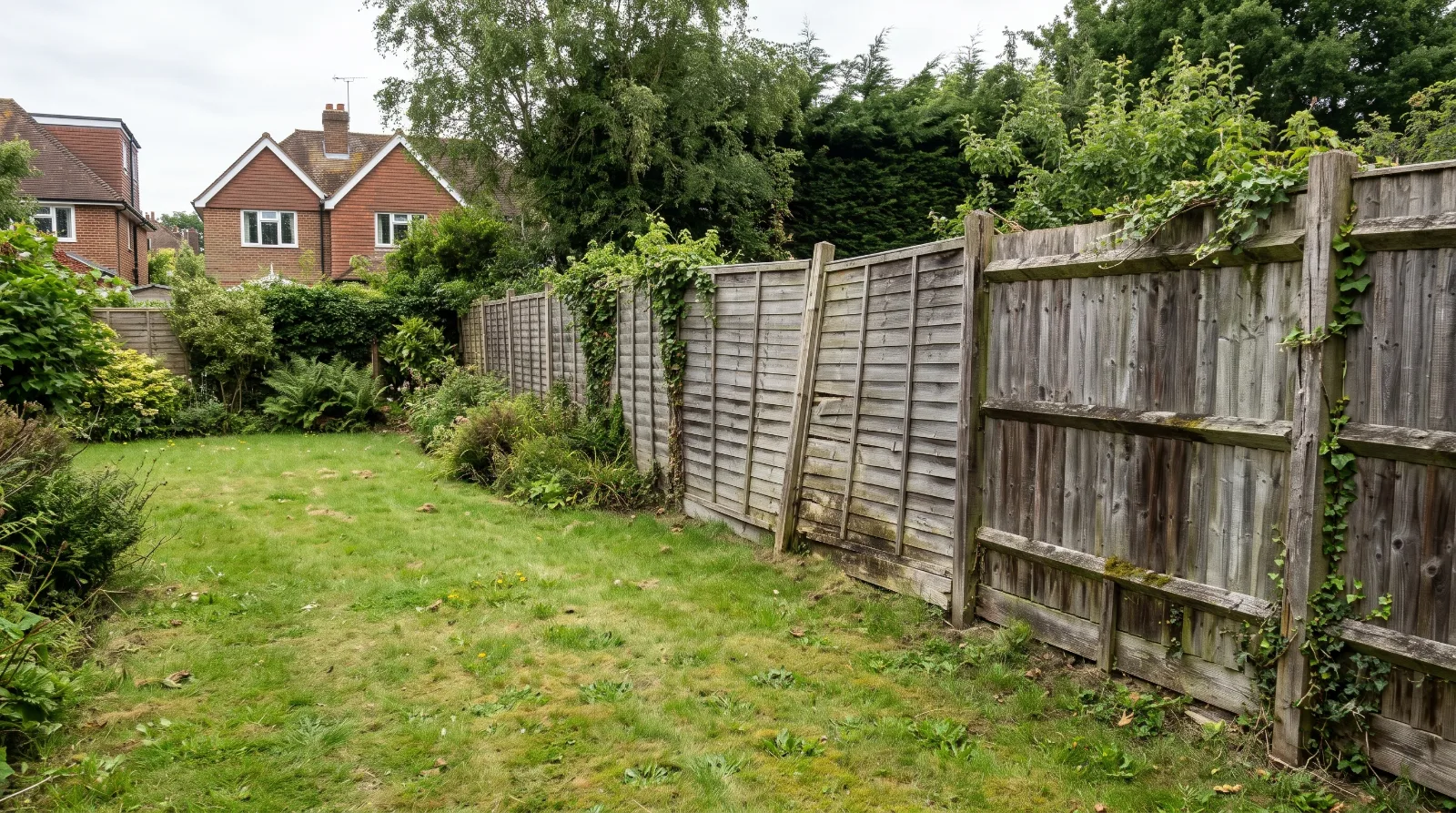
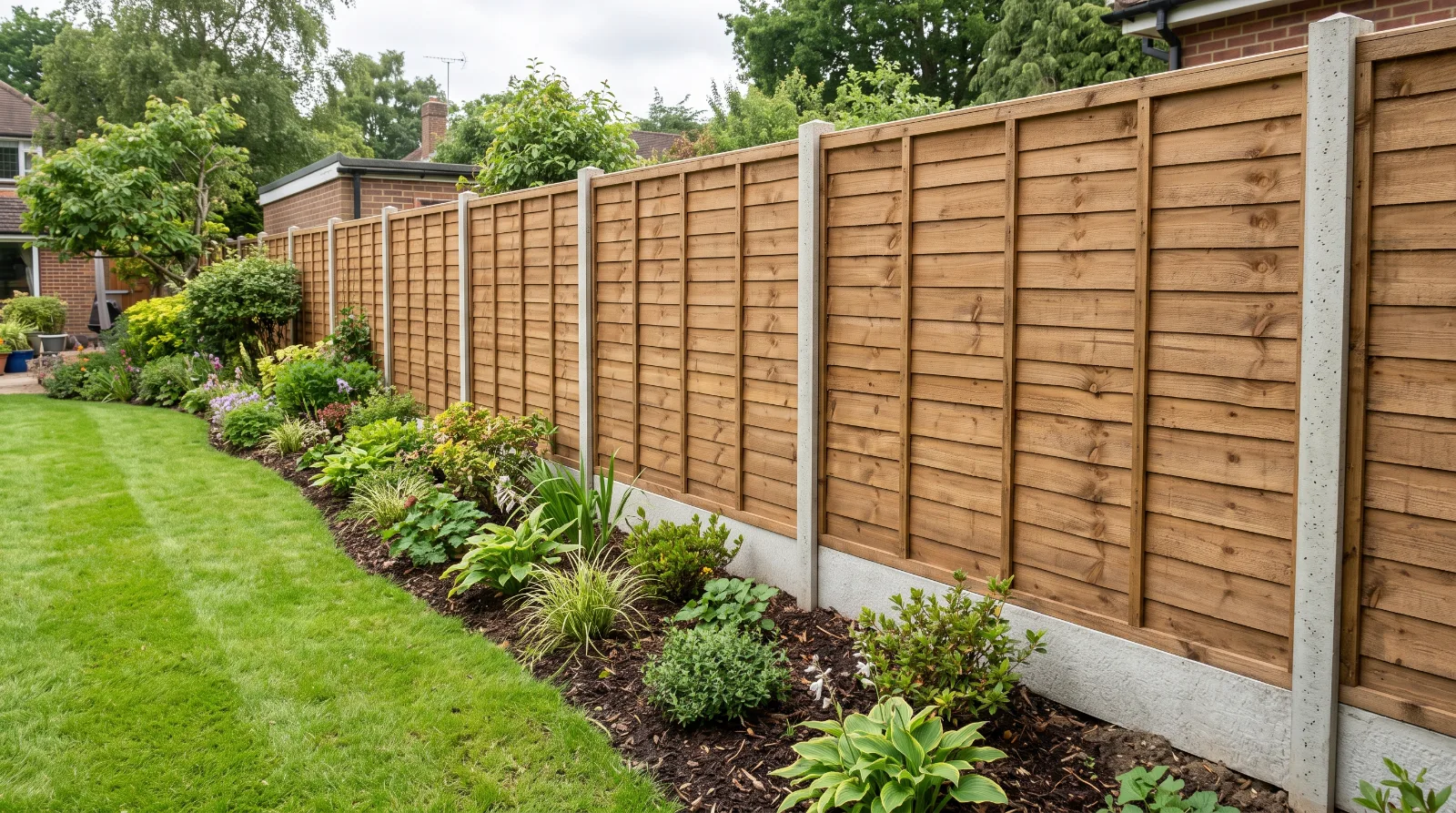
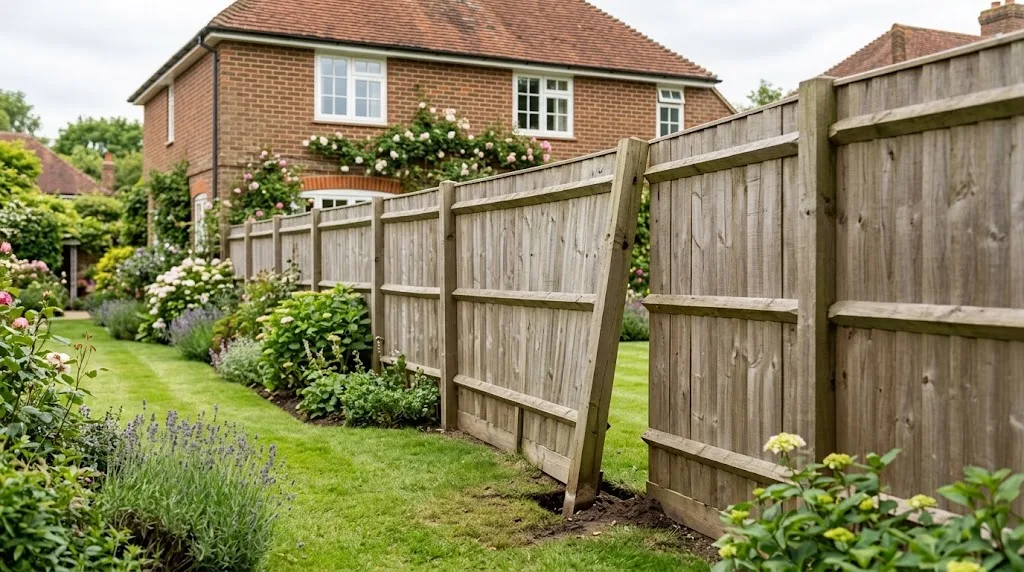
Modern Garden Fencing Ideas for Surrey Homes
Looking to update your garden boundary? Explore modern fencing ideas for Surrey homes, including slatted, composite, hit-and-miss and contemporary timber designs.
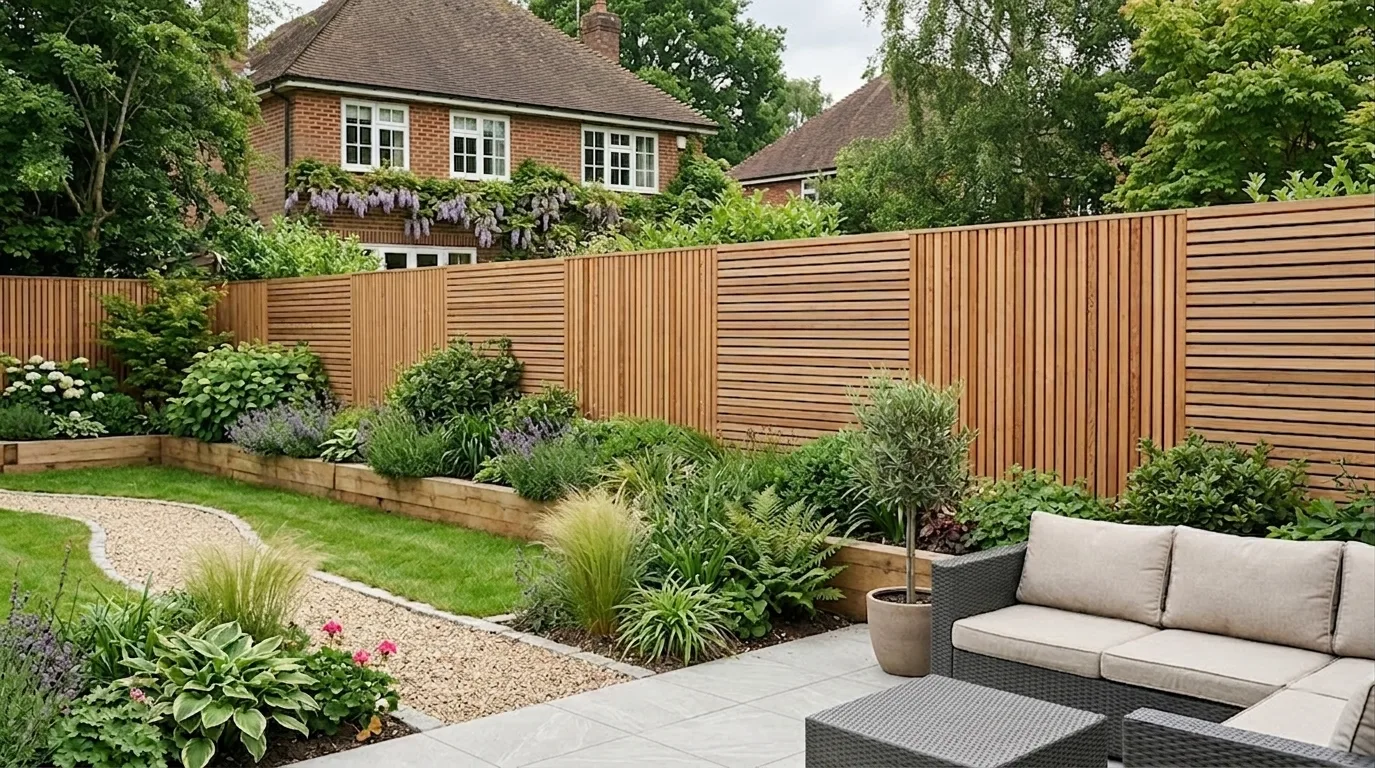
A garden fence does more than mark the edge of your property. It can form the backdrop to your planting, define outdoor living areas and have a surprisingly big effect on how the whole garden feels.
For homeowners looking to update an older garden, replacing a tired boundary with a more contemporary design can make a noticeable difference without changing everything else.
Modern fencing does not necessarily mean completely replacing traditional timber. Clean lines, simple colours and carefully chosen materials can make even a relatively straightforward fence feel much more contemporary.
Here are some modern garden fencing ideas that work particularly well for Surrey homes.
What Makes a Fence Look Modern?
Modern fencing is generally associated with simple lines, consistent spacing and a cleaner overall appearance.
Rather than ornate details, contemporary designs often use the fence itself as a strong architectural backdrop for the rest of the garden.
Popular modern approaches include:
Style | Appearance | Best suited to |
|---|---|---|
Horizontal slatted | Clean, linear and contemporary | Modern gardens and seating areas |
Hit-and-miss | Semi-solid with alternating boards | Privacy with some airflow |
Vertical slatted | Taller, structured appearance | Contemporary or narrow gardens |
Composite | Consistent and low maintenance | Modern, low-maintenance gardens |
Contemporary timber | Natural but neat | Traditional and modern properties |
Current UK landscaping content continues to highlight slatted fencing, hit-and-miss designs and composite materials as popular choices for contemporary gardens.
Horizontal Slatted Fencing
Horizontal slatted fencing is one of the most recognizable contemporary fencing styles.
The repeated horizontal lines create a clean, structured appearance and can work particularly well alongside patios, decking and modern planting.
The spacing between the slats can also influence how the fence feels. Wider gaps allow more light and airflow through, while tighter arrangements provide greater screening.
However, slatted fencing is not automatically fully private. Depending on the design and viewing angle, gaps between boards can allow some visibility through the fence.
For this reason, it is worth considering how much privacy you actually need before choosing a particular slatted design.
Vertical Slatted Fencing
Although horizontal boards are often associated with contemporary gardens, vertical slats can create an equally modern finish.
Vertical lines can give a fence a taller, more streamlined appearance and work well where you want a strong visual boundary without making the design overly heavy.
Narrow vertical slats can also be used as screening around seating areas or as feature sections rather than across an entire boundary. This can be useful when you want to introduce modern detailing without making every part of the garden look the same.
Hit-and-Miss Fencing
Hit-and-miss fencing uses boards arranged so that they overlap or alternate, creating a semi-solid boundary.
This gives the fence more visual interest than a standard solid panel while still providing a good level of screening.
It can also allow some light and air through the boundary. Certain horizontal hit-and-miss systems are designed to look the same from both sides, which can be useful where the fence is shared with a neighbouring property.
For a modern garden, hit-and-miss fencing can work particularly well when combined with strong planting, raised beds or a clean paved terrace.
Composite Fencing for a Contemporary Finish
Composite fencing is another option for homeowners looking for a consistent, modern appearance with relatively low maintenance.
Unlike timber, composite fencing does not normally require regular painting, staining or sealing. It is also designed to resist common problems associated with timber, such as rot and warping, although it still benefits from occasional cleaning.
Composite boards are available in different colours and finishes, making them useful when you want the fence to complement existing paving, decking or the exterior of the house.
It can be particularly effective in gardens where the aim is to create a simple, uncluttered look.
Dark Fencing and Natural Timber
Colour can change the appearance of a fence almost as much as the style itself.
Dark grey, charcoal and black finishes are often used in contemporary garden schemes because they create a strong background for green planting. Dark fencing can visually recede behind shrubs and trees, helping plants become more prominent within the design.
Natural timber is another option when you want something modern without losing the warmth of wood.
The right choice depends on the rest of the garden. A dark fence can create a crisp contrast with pale paving, while natural timber may work better where the garden has softer planting and more traditional materials.
Use Fencing to Frame a Patio
A modern fence can work particularly well when it is designed as part of the patio rather than treated as a separate boundary.
For example, a slatted fence can create a backdrop behind an outdoor dining area, while a darker fence can provide contrast against porcelain paving and lighter furniture.
Rather than having the same fence design around every part of the garden, you can use feature fencing around the main seating area and a simpler boundary elsewhere.
This approach can make the garden feel more deliberately designed and can help define different areas.
Combine Fencing With Planting
Modern fencing does not need to look harsh or overly architectural.
Planting can soften straight lines and help the boundary become part of the garden rather than simply sitting behind it.
Climbing plants, shrubs and ornamental grasses can all be used alongside fencing, while raised borders can bring planting closer to the boundary.
A particularly effective approach is to use a dark or muted fence as a background, allowing foliage and flowers to provide the colour. Current garden design content increasingly treats fencing as part of the wider planting scheme rather than an isolated boundary feature.
Use Modern Fencing to Create Garden Zones
Fencing does not always have to run around the entire perimeter.
Shorter sections of slatted or contemporary fencing can be used to separate different parts of a garden, such as an entertaining area, seating space or more private corner.
This can be especially useful in larger gardens where one open area feels underused or lacks definition.
Using fencing in this way creates structure without completely closing off the garden.
Choose Fencing That Suits Your Home
A modern fence should still make sense alongside the property itself.
A very contemporary composite or slatted design can work well with a modern extension, large glazed doors or contemporary landscaping. A traditional Surrey property may suit a more natural timber design with cleaner detailing rather than an overly industrial finish.
It is also worth looking at the rest of the garden before deciding on a fence style.
Consider:
The colour and material of your patio
Existing decking
The style of your garden furniture
The planting scheme
The colour of the house and outbuildings
How much privacy you need
How much maintenance you want to take on
The best result is usually one where the fence feels like part of the overall garden design rather than something that was added afterwards.
Think About Privacy and Light
One of the main advantages of modern fencing styles is that they give you more control over the balance between privacy and openness.
A fully solid fence provides a stronger visual barrier, while slatted and hit-and-miss designs can allow more light and airflow through.
For overlooked gardens, a combination can work well. You could use more solid fencing where privacy is most important and more open slatted sections where you want to keep the garden feeling bright.
The exact level of screening depends on the spacing, board arrangement and viewing angles, so the appearance should be considered from both your garden and surrounding properties.
Modern Fencing for Smaller Surrey Gardens
Modern fencing can be particularly useful in a smaller garden because strong, simple lines can make the space feel more organised.
Horizontal slats can emphasise the width of a garden, while vertical designs can draw the eye upwards. However, the level of openness matters. Very solid or dark boundaries around a small space can sometimes make it feel more enclosed.
Using a combination of fencing, planting and open space can create a better balance.
Choose the Right Modern Fencing for Your Garden
There is no single type of modern fencing that works for every Surrey property.
Horizontal slats can create a clean architectural look, vertical slats can give a more structured finish, hit-and-miss fencing offers a balance of screening and airflow, and composite can provide a contemporary appearance with less ongoing maintenance.
The most important thing is to consider the fence alongside the rest of the garden.
A good boundary should provide the privacy and practicality you need while also working with your patio, planting, paths and the style of your home.
Give Your Surrey Garden a Modern Finish
Replacing an old boundary can have a much bigger impact on a garden than many homeowners expect.
Whether you choose contemporary timber, slatted fencing, hit-and-miss panels or composite, the right design can provide a clean backdrop for planting, create privacy and help different parts of the garden feel more connected.
If you're planning a garden renovation in Surrey, Surrey Oak Landscapes can help with fencing as part of a wider landscaping project, from new boundaries and screening to patios, planting and complete garden transformations.
About the author