Is Professional Garden Lighting Worth It?
Is professional garden lighting worth the investment? Learn how a well-designed lighting system can improve safety, evening use, atmosphere and your overall garden design.
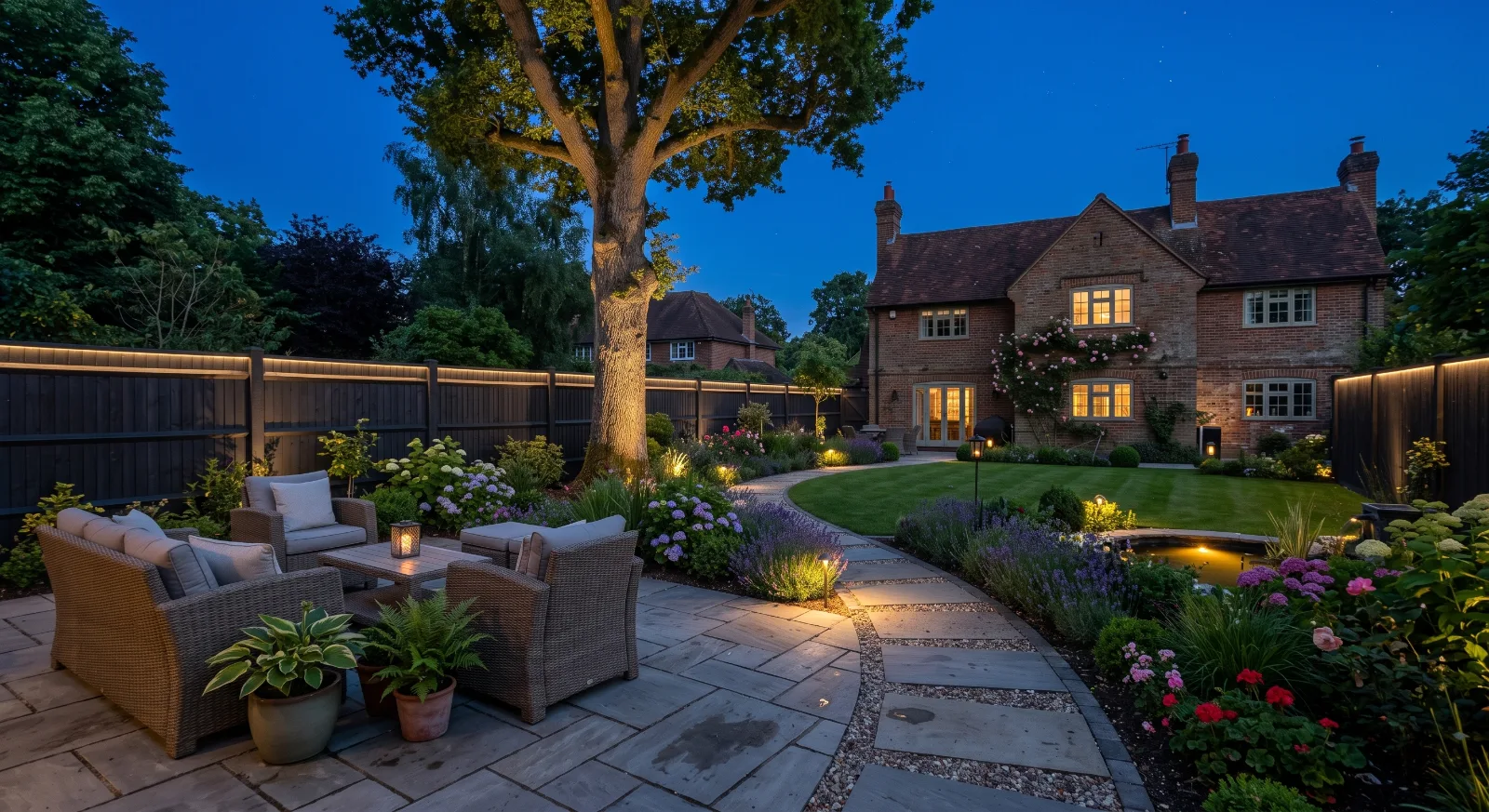
Garden lighting can completely change how an outdoor space looks and feels after dark. It can make paths easier to navigate, highlight planting and architectural features, and allow patios and seating areas to remain useful later into the evening.
But does professional garden lighting justify the extra cost, or could you achieve the same result with off-the-shelf lights?
The answer depends on the size of the garden, the type of lighting you want and how much control you need over the finished system. A few simple solar lights can be enough for some gardens, while a larger landscaped space may benefit significantly from a professionally designed and installed lighting scheme.
What Does Professional Garden Lighting Involve?
Professional garden lighting is more than simply placing lights around the garden.
A properly planned system considers the layout of the space, what needs to be illuminated, where power is required, how cables and fittings will be positioned and how the lighting will look from inside the house as well as from the garden.
A scheme might combine:
Path and step lighting
Patio and seating-area lighting
Uplighting for trees
Lighting for planting borders
Wall and fence lighting
Feature lighting
Lighting around pergolas
Garden room lighting
Architectural lighting
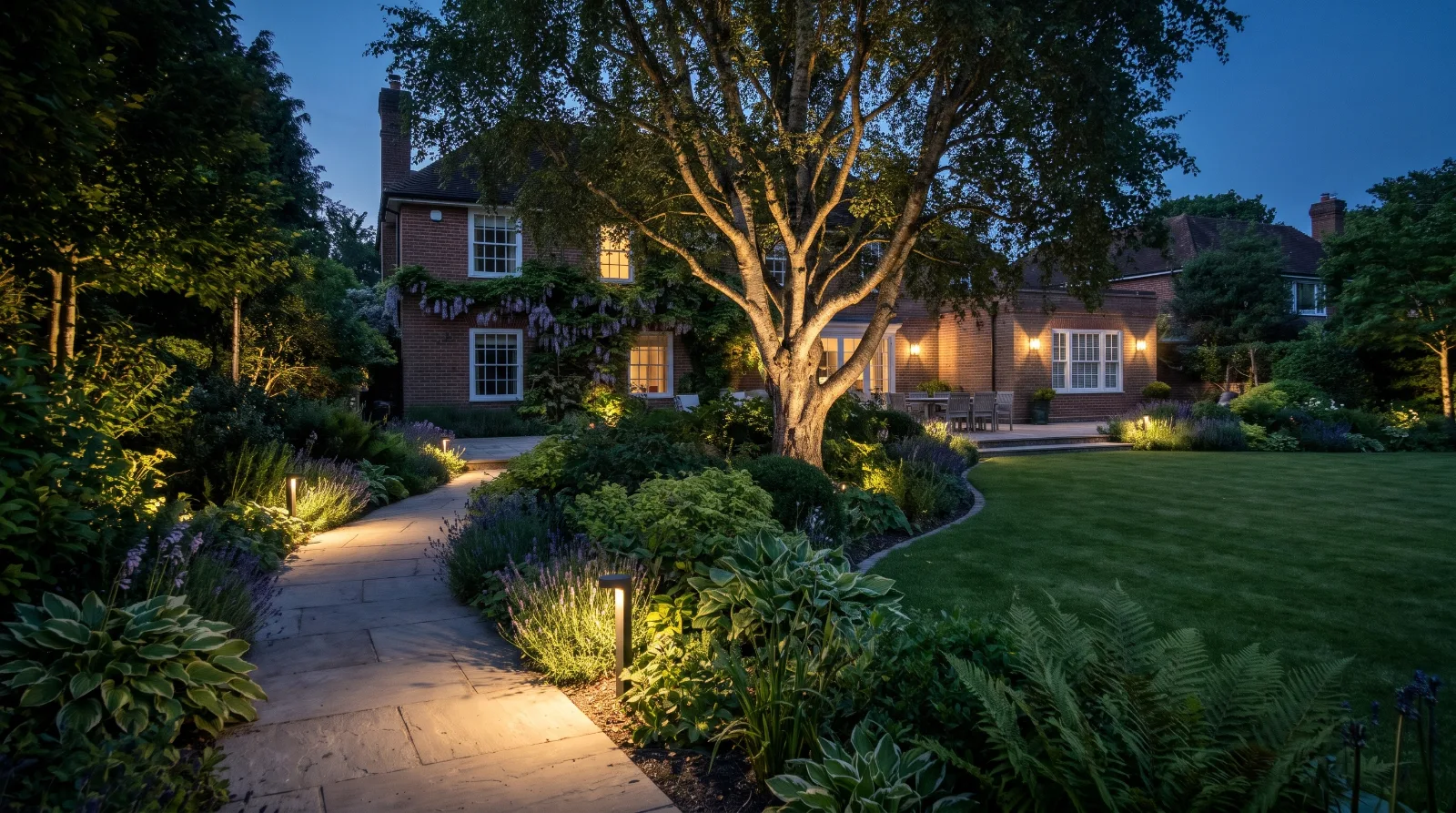
The aim is usually to create layers of light rather than simply making the entire garden brighter.
What Are the Benefits of Professional Garden Lighting?
1. A Better Overall Design
One of the biggest advantages is the way the lighting works as a complete scheme.
Instead of buying individual lights because they look attractive, a professional design can consider which features should be highlighted, where softer background light is needed and which areas should remain darker.
This creates contrast and depth.
For example, a patio might have subtle lighting around its perimeter, while a nearby tree is softly illuminated to create a focal point further into the garden.
This can make a relatively simple garden feel much more considered at night.
2. Better Use of the Garden in the Evening
Lighting can extend the hours in which you can comfortably use an outdoor space.
A garden that becomes unusable after sunset can become a practical dining or entertaining area with the right combination of lighting and seating.
This can be especially useful for patios, pergolas and outdoor kitchens where evening use is part of the design.
Lighting can also make the garden enjoyable from indoors. Carefully positioned lights can highlight planting or architectural features that can be seen through windows and doors, meaning the garden remains part of the view even when you are inside.
3. Improved Visibility Around Paths and Steps
Lighting has a practical purpose as well as an aesthetic one.
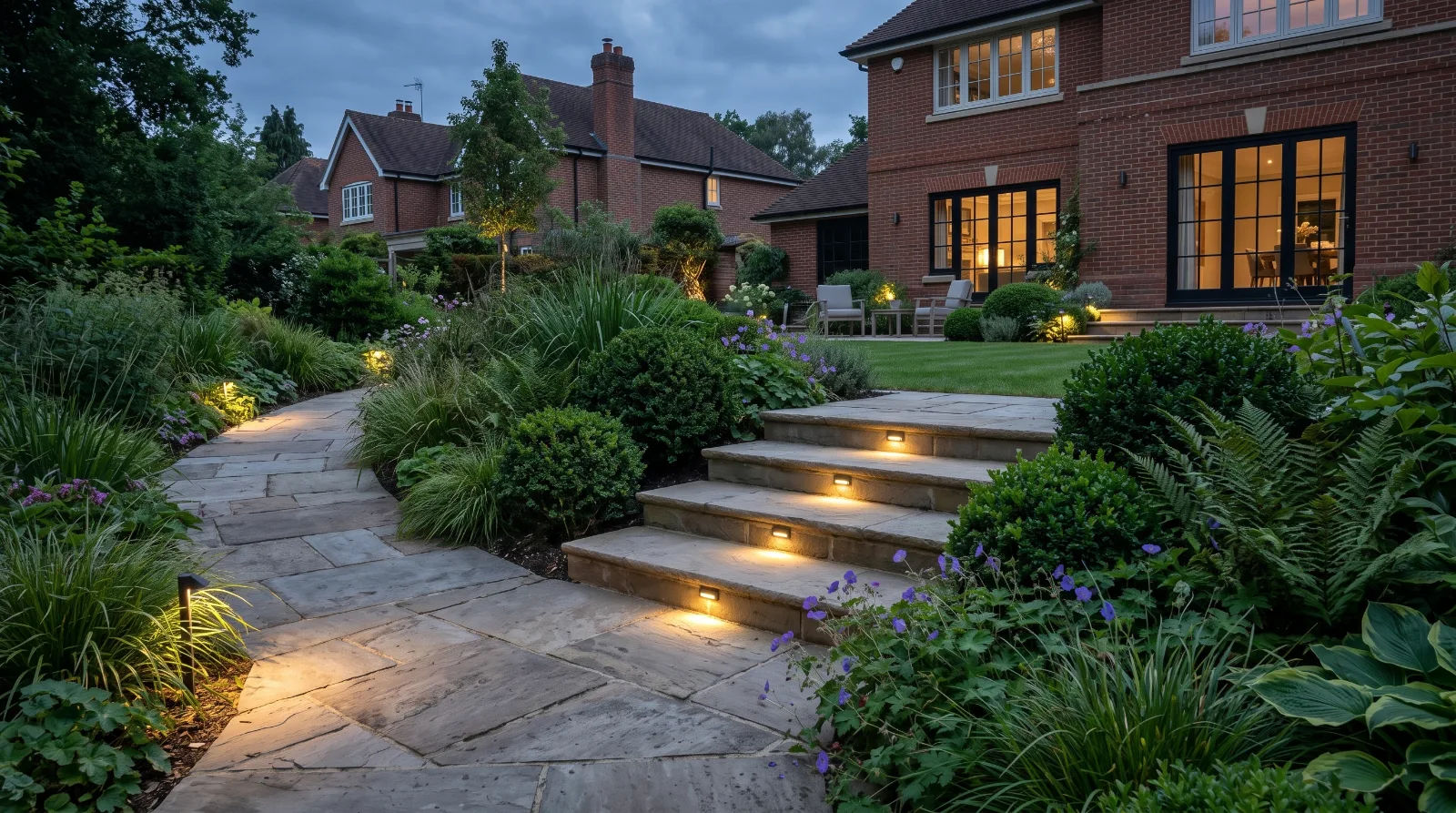
Paths, steps, changes in level and other potential trip hazards should be properly considered when designing the system. Low-level lighting directed across paths and steps can provide visibility without creating harsh glare.
This is particularly important in gardens with:
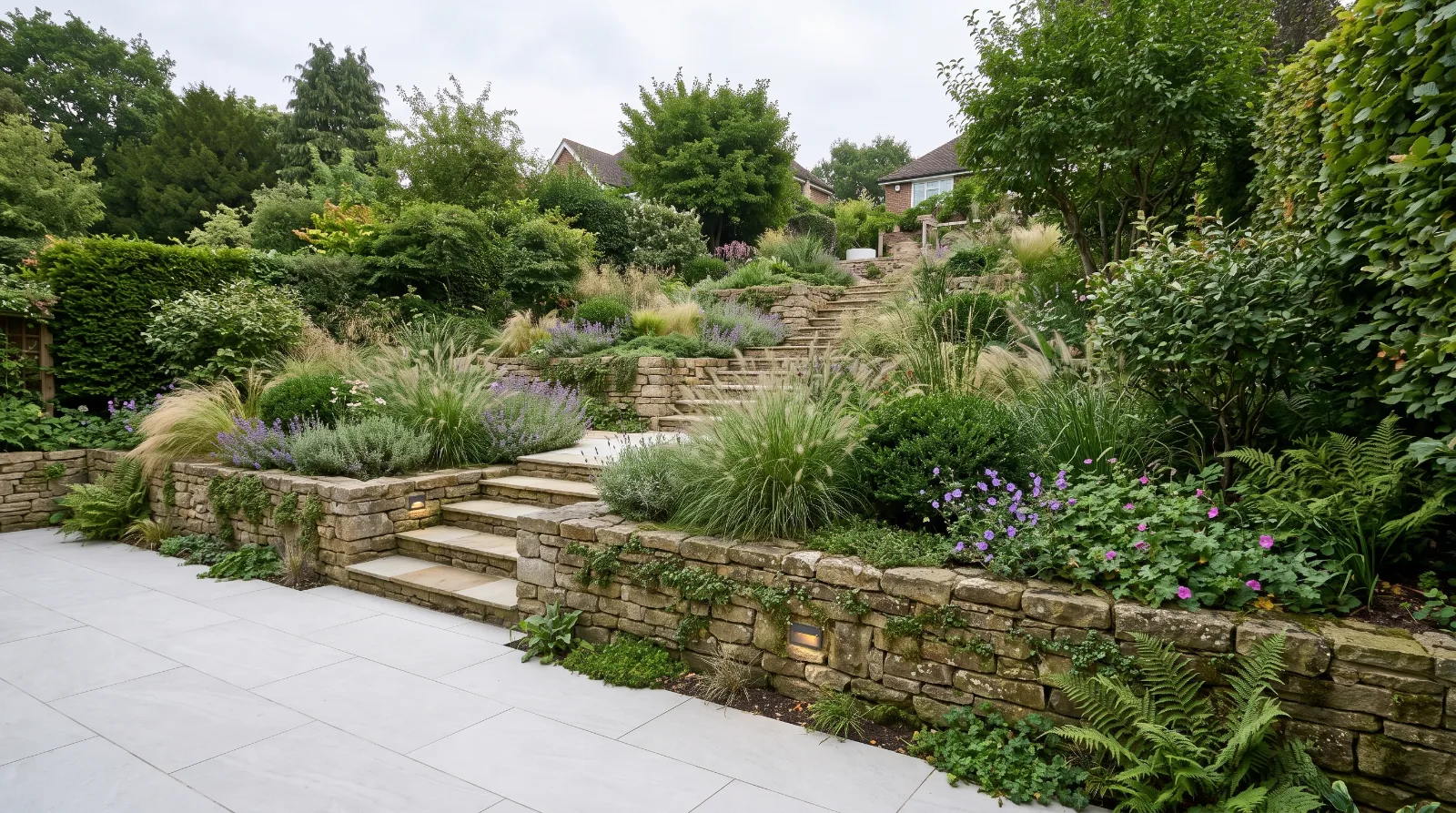
Multiple levels
Garden steps
Long paths
Retaining walls
Uneven areas
Frequently used routes between the house and garden
A professional design can identify these areas before deciding where feature lighting should go.
4. Better Quality of Installation
A professionally installed system can be designed around the garden rather than forcing the garden to work around the lighting.
Cable routes, fittings, transformers, controls and connections can all be planned alongside the landscaping.
This is particularly useful when lighting is being installed as part of a wider garden project.
For example, cables can be positioned before new paving is laid, while lighting around a planting border can be planned before the plants are installed.
This can reduce visible cables and avoid disturbing completed landscaping later.
5. More Control Over the Finished System
Professional systems can offer considerably more control than basic plug-in or solar lighting.
Depending on the installation, you may be able to control different zones separately.
For example:
Zone | Possible use |
|---|---|
Patio | Evening dining and entertaining |
Paths | Movement around the garden |
Planting | Highlighting trees and borders |
Pergola | Ambient lighting |
Garden room | Exterior access |
Feature area | Decorative lighting |
Separate zones mean you do not necessarily need every light switched on at the same time.
The patio could be lit while feature lights remain off, or the paths could remain illuminated while the main entertaining area is not being used.
6. Greater Choice of Lighting Effects
Professional systems can create different effects depending on the fitting and positioning.
Uplighting
Lights positioned at ground level can highlight trees, shrubs, walls and other vertical features.
Downlighting
Lights mounted above the area being illuminated can cast light downwards across paths, seating areas or planting.
Grazing
Light can be positioned close to a wall or textured surface to emphasise its shape and texture.
Path lighting
Low-level fittings can guide people through the garden while providing practical illumination.
Backlighting
A light source positioned behind a plant or feature can create a silhouette effect.
These techniques can be combined to create a much more natural result than using identical lights throughout the garden.
Is Professional Lighting More Energy Efficient?
It can be, particularly where the system uses modern LED fittings and is properly zoned and controlled.
LED lighting is widely used for outdoor applications because it generally consumes less electricity and lasts longer than traditional filament lighting. Electrical Safety First also advises using suitable outdoor-rated products and notes the energy and durability benefits of LED lighting.
However, efficiency is not simply about the type of bulb.
A system with unnecessary lights running for long periods can still use more electricity than a smaller, well-controlled scheme.
Timers, sensors and separate zones can help ensure lights are only operating when they are actually needed.
What About Solar Garden Lighting?
Solar lights have their place.
They can be useful for simple decorative applications and do not require the same electrical installation as a mains-powered system.
However, they are not always suitable when you want consistent brightness, strong feature lighting or reliable performance throughout the year.
Their output depends on available daylight and the capacity of the particular light and battery.
For a carefully designed entertaining garden or a larger landscaped property, professionally installed lighting can offer significantly more control over placement, brightness and operation.
How Much Does Professional Garden Lighting Cost?
There is no standard price because installations vary considerably.
A small garden with a handful of lights will require far less work than a large landscaped garden with multiple lighting zones, feature trees, a pergola, garden room and extensive paths.
The main factors affecting cost include:
Number of lights
Type and quality of fittings
Cable lengths
Number of lighting zones
Control systems
Access
Existing landscaping
Ground conditions
Whether new landscaping is being installed
Electrical work required
It can therefore be more useful to think of lighting as part of the wider garden project rather than trying to assign one price to “garden lighting.”
When Is Professional Garden Lighting Worth It?
Professional lighting tends to provide the most value when the garden has enough features and usage areas to benefit from a coordinated system.
It can be particularly worthwhile for:
Large or complex gardens: Multiple areas can be controlled separately.
New landscaping projects: Lighting can be integrated before paving, planting and other features are completed.
Gardens with multiple levels: Steps, paths and retaining structures can be illuminated properly.
Outdoor entertaining spaces: Patios, pergolas and outdoor kitchens can be designed for evening use.
Feature gardens: Trees, planting and architectural features can become focal points after dark.
Garden rooms: Exterior lighting can connect the building with the rest of the landscape.
For a very small garden where only a basic pathway light is needed, a professional installation may not offer the same level of benefit.
When Might DIY Lighting Be Enough?
Not every garden needs a professionally designed system.
If you simply want a few decorative lights around a small lawn or border, basic solar or plug-in products may be sufficient.
DIY can work particularly well when:
The garden is small
There are no major level changes
You only need decorative lighting
You want a temporary solution
You do not need multiple lighting zones
The important distinction is between simple plug-in lighting and a more complex permanent installation.
Electrical Safety First advises that more complex outdoor electrical work should be handled by a suitably qualified professional, and outdoor electrical equipment should be appropriately protected.
What Should You Look for in a Professional Lighting System?
A high-quality system should not simply contain expensive fittings.
Look for a design that considers the entire garden.
Suitable outdoor fittings
Outdoor lights need to be designed for outdoor conditions and have an appropriate ingress protection rating for their intended location.
Good positioning
The light source should be positioned to illuminate the intended feature without producing excessive glare.
Warm, comfortable light
Warm-toned lighting can create a softer and more natural atmosphere than very cold, bright light. Garden lighting guidance also recommends keeping lighting low and directing it where it is actually needed.
Reliable controls
Timers, zones and other controls can make the system easier to use and prevent lights being left on unnecessarily.
Easy access for maintenance
Transformers, connections and other equipment should remain accessible when maintenance is needed.
Don't Over-Light the Garden
More light does not necessarily mean a better garden.
One of the most common design mistakes is making every part of the space equally bright.
This removes contrast and can make the garden feel flat.
Instead, allow some areas to remain darker while drawing attention to selected features.
A tree, architectural wall, planting border or seating area can become much more effective when surrounded by darker areas.
Keeping lighting controlled can also reduce unwanted light entering neighbouring properties. Sensitive lighting design is increasingly important because excessive artificial light can affect neighbours as well as nocturnal wildlife.
Should Garden Lighting Be Installed Before or After Landscaping?
Ideally, lighting should be considered early.
This is especially important for a complete garden transformation.
If you know where the patio, paths, planting, pergola and other features will be located, the lighting system can be designed around them.
Installing the system after all the hard landscaping is finished can be more disruptive because sections of paving, planting or lawn may need to be disturbed to route cables.
Planning lighting at the same time as the rest of the garden can also help keep the finished system much more discreet.
Can Professional Lighting Increase the Value of a Garden?
There is no guaranteed amount that garden lighting will add to a property's value.
Its benefit is more practical and visual.
Good lighting can make an outdoor space feel more complete, improve evening usability and highlight investment that has already been made in patios, planting, structures and other landscaping.
For a homeowner who regularly uses the garden at night, that can make professional lighting a worthwhile investment even without considering property value.
Is Professional Garden Lighting Worth It?
For a small garden needing a few simple lights, professional installation may not be necessary.
For a larger or more carefully designed outdoor space, however, professional lighting can offer considerably more than a collection of off-the-shelf fittings.
The real value comes from the design, installation, control and integration with the rest of the garden.
A good lighting scheme should make paths easier to navigate, make entertaining areas more usable, highlight the best features of the landscape and create a comfortable atmosphere after dark.
It should also remain subtle enough that the garden still feels natural.
In other words, professional garden lighting is not necessarily about having more lights. It is about using the right lights, in the right places, for the right reasons.
Need Professional Garden Lighting in Surrey?
Whether you are redesigning your entire garden or simply want to make an existing outdoor space more usable after dark, the lighting should work with the rest of the landscape.
Surrey Oak Landscapes can help with garden lighting alongside garden design, planting, hard landscaping and outdoor living features, creating a more cohesive outdoor space.
Planning garden lighting in Surrey?
About the author