How to Plan Garden Lighting for Your Outdoor Space
Planning garden lighting? Learn how to combine practical, ambient and feature lighting to create a well-designed outdoor space that looks great after dark.
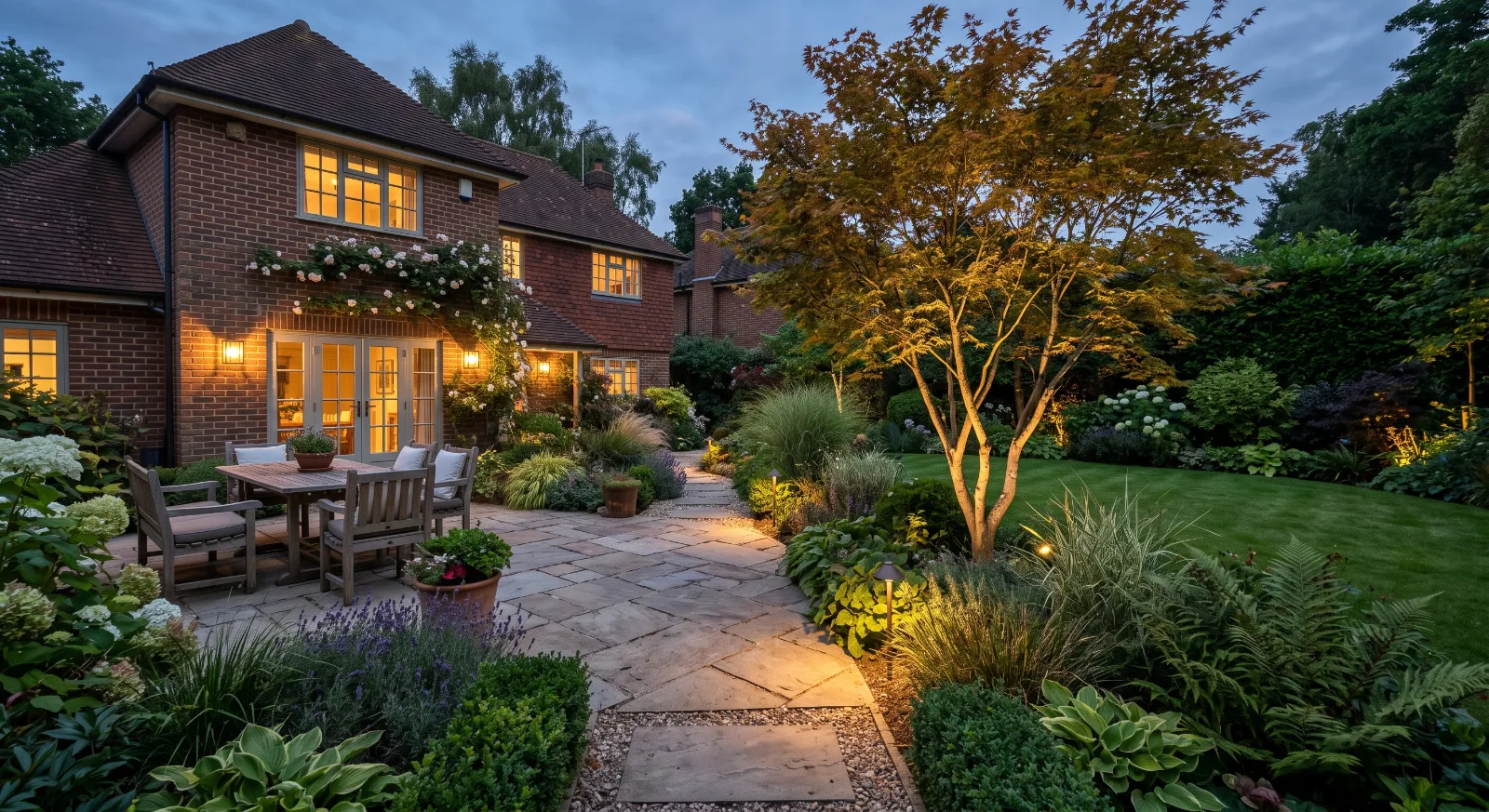
Good garden lighting can completely change how an outdoor space looks and feels after dark. It can make paths easier to use, highlight planting and trees, create a more inviting patio and allow you to enjoy your garden long after the sun has gone down.
The key is planning the lighting around the garden rather than simply adding lights wherever there is space. A well-designed scheme combines practical lighting with softer ambient and feature lighting, creating a garden that feels balanced rather than overly bright.
If you're planning a new garden, patio or landscaping project, it is also worth thinking about lighting before the work begins. Cables, fittings and power supplies are much easier to incorporate while paving, planting and other landscaping are being installed.
Start With How You Use Your Garden
Before choosing lights, think about how you actually use your garden in the evening.
Consider:
Where do you walk after dark?
Where do you sit or eat outside?
Which areas are visible from inside the house?
Are there steps or changes in level?
Are there trees, planting beds or walls you want to highlight?
Do you have a pergola, garden room or outdoor kitchen?
Which parts of the garden can remain darker?
This gives you a starting point for creating different lighting zones rather than trying to illuminate the entire garden equally.
It is often better to have several carefully positioned, lower-level lights than a small number of very bright fittings. Leaving some areas darker also creates contrast and gives the garden more depth.
Think About Lighting in Layers
One of the easiest ways to plan a balanced garden lighting scheme is to think about three different jobs for your lights.
Lighting type | Main purpose | Examples |
|---|---|---|
Practical lighting | Helps with movement and everyday use | Path lights, step lights, entrance lights |
Ambient lighting | Creates a comfortable atmosphere | Wall lights, lanterns, festoon lighting |
Feature lighting | Draws attention to specific features | Tree uplights, spotlights, wall lighting |
You do not necessarily need all three in every part of the garden. The aim is to combine them where appropriate so that no single light source has to do everything.
Plan Lighting for Paths and Steps
Paths, steps and changes in level should be among the first areas you consider.
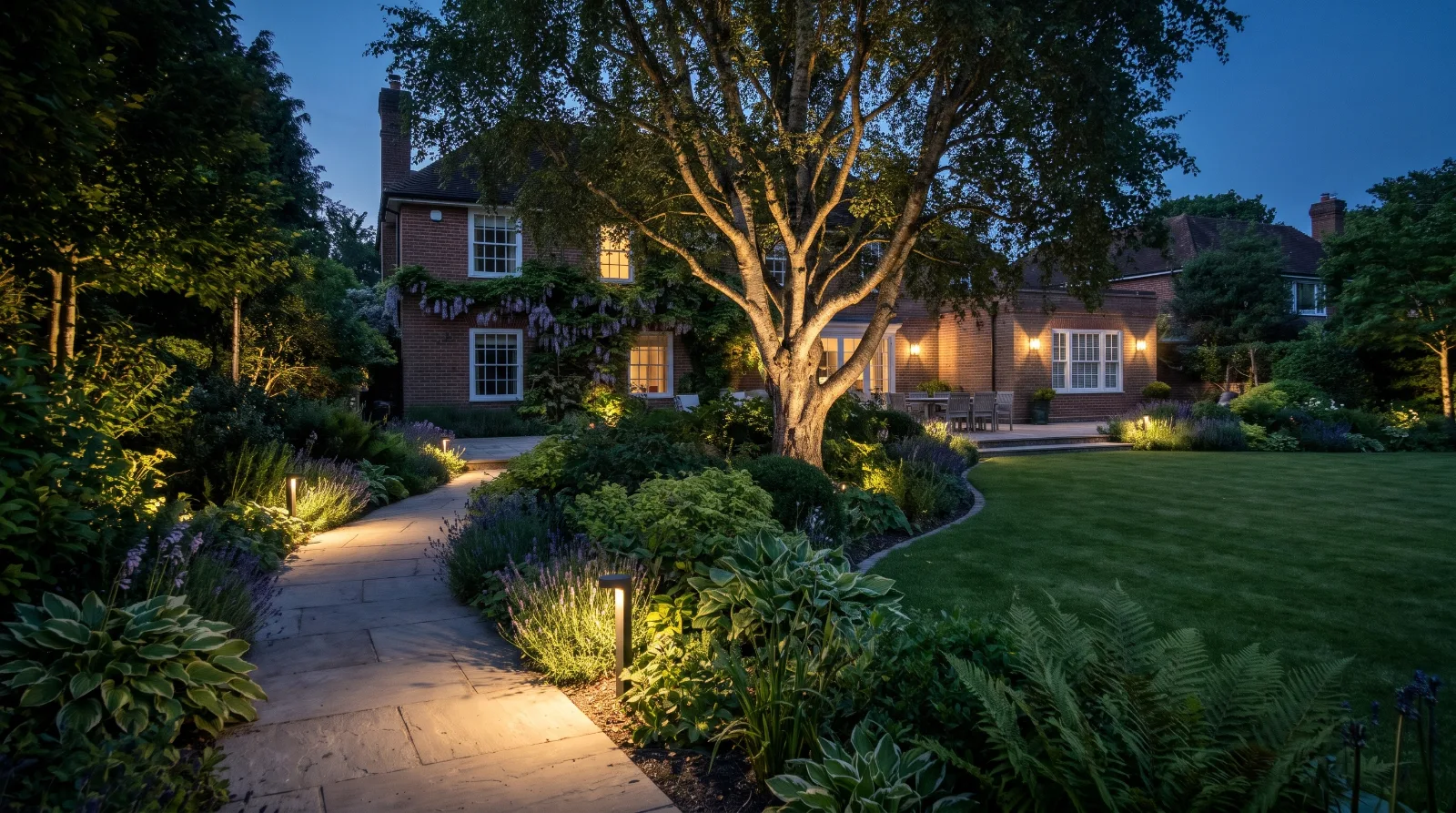
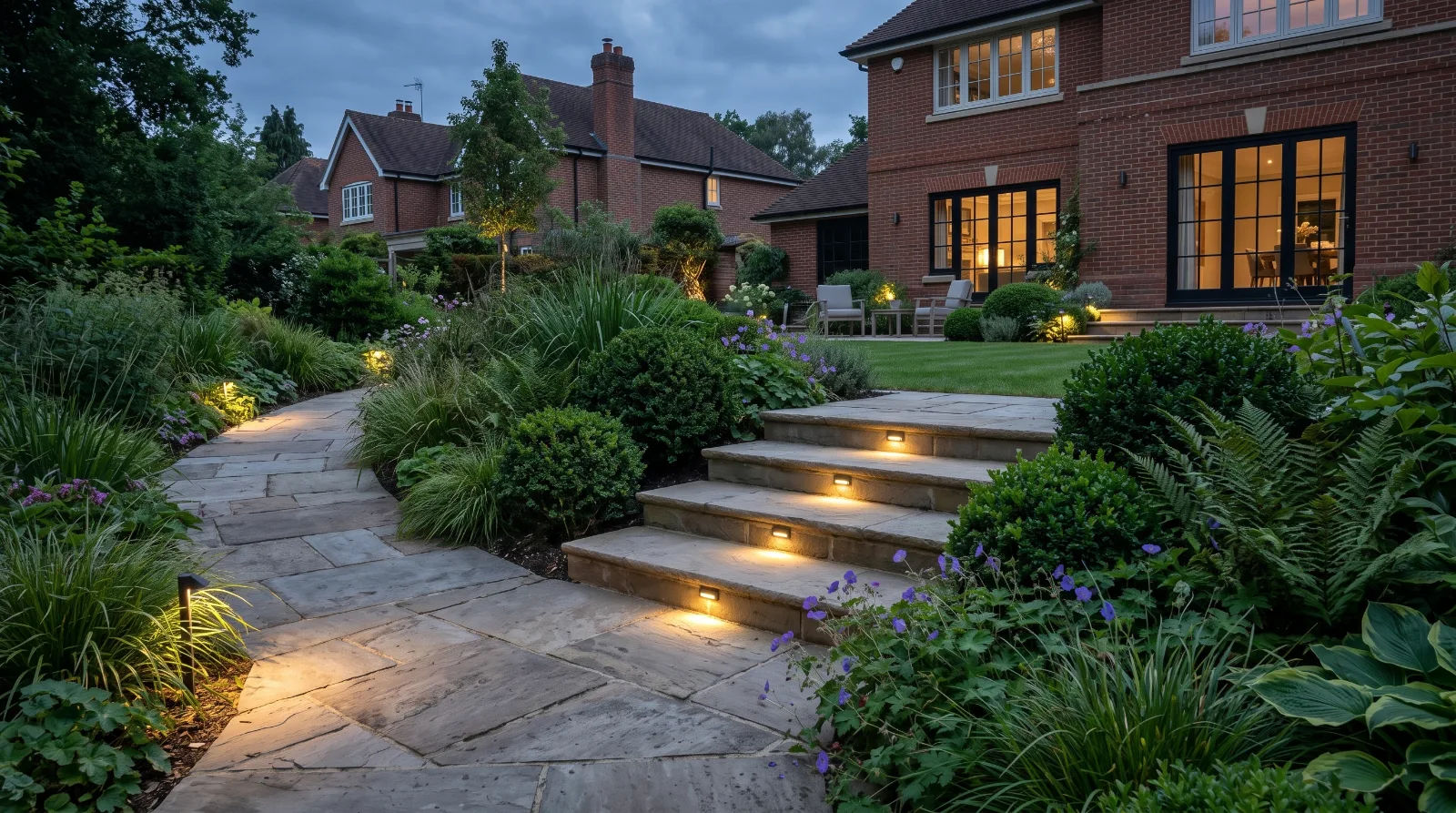
Lighting should make the route easy to see without shining directly into people's eyes. Low-level fittings, recessed lights or carefully positioned downlights can illuminate the surface while keeping the light source relatively discreet.
For steps, consider lighting the tread or riser rather than simply placing a bright light nearby. This can make individual steps easier to see while also giving the area a more finished appearance.
If you have a long garden path, avoid automatically lining both sides with identical lights. Staggered or selectively positioned fittings can create a softer and less repetitive appearance.
Make the Patio or Seating Area Feel Inviting
If your garden has a patio, decking area or outdoor seating space, lighting can help turn it into an extension of the house.
Wall lights can provide useful illumination close to the property, while softer fittings can be used around seating and dining areas. Pergolas and covered structures also provide opportunities for integrated or overhead lighting.
The goal is not to make the entire patio extremely bright. Softer lighting around the edges of a seating area can create a more comfortable atmosphere while still providing enough visibility for dining and conversation.
If you have an outdoor kitchen or cooking area, brighter task lighting may be useful around work surfaces, while the surrounding seating area can remain softer.
Highlight Trees and Planting
Garden lighting does not have to focus only on areas where people walk.
Trees, shrubs, ornamental grasses and planting beds can become major features after dark when they are lit carefully.
A few examples include:
Uplighting a mature tree to highlight its shape
Lighting textured tree bark
Placing subtle lights among planting
Backlighting grasses and taller plants
Highlighting a specimen tree from a distance
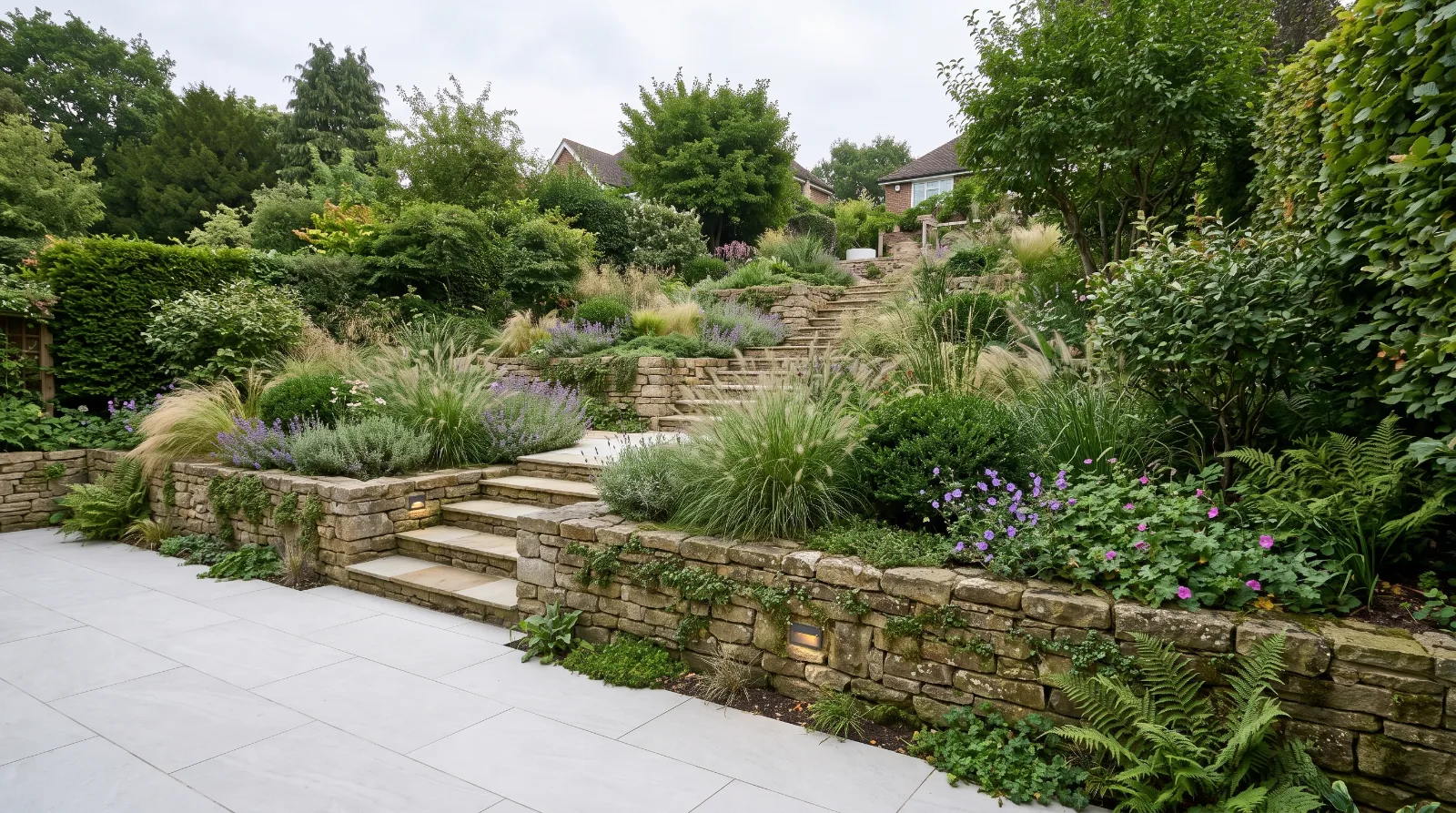
Washing light across a textured garden wall
Try to keep the actual fitting discreet where possible. The aim is usually to notice the illuminated tree or planting rather than the spotlight itself.
You also do not need to light every plant. Choosing a few strong focal points creates more contrast and prevents the garden from becoming visually cluttered.
Consider What You Can See From Inside
This is an easy part of garden lighting to overlook.
If you spend most evenings looking at the garden through your kitchen, dining room or living room windows, those views should influence the lighting design.
A mature tree, planting bed, garden wall or seating area that looks attractive during the day can become a focal point at night with carefully positioned lighting.
Think about your main viewpoints from inside the house and plan some of the feature lighting around them.
Choose the Right Colour of Light
The colour temperature of outdoor lighting can make a significant difference to the finished appearance.
For most residential gardens, warmer light tends to create a softer and more natural atmosphere than very cool, blue-white lighting.
Light appearance | Typical effect |
|---|---|
Warm white | Soft, relaxed and suitable for most gardens |
Neutral white | Cleaner and more functional |
Cool white | Brighter and more contemporary, but can feel harsh if overused |
For a traditional Surrey garden with planting, brickwork and natural materials, warm lighting will often sit more comfortably within the landscape.
The important thing is to keep the colour temperature reasonably consistent throughout the scheme. Mixing noticeably different shades of white can make the lighting feel disconnected.
Think About Glare and Light Spill
A garden can be well lit without being brightly illuminated everywhere.
Poorly positioned spotlights can create glare for people using the garden, while light directed towards neighbouring properties can become intrusive.
Try to position fittings so that the light falls onto the intended surface or feature rather than directly towards eye level.
Shielded fittings and carefully angled spotlights can help control where the light goes. This is particularly important for lights close to boundaries, seating areas and neighbouring properties.
There is also value in deciding what not to light. Keeping some areas of the garden darker can make the illuminated features stand out more clearly.
Plan the Electrical Side Early
If you're installing a new lighting system as part of a landscaping project, the electrical requirements should be considered before paving, decking, planting or other construction begins.
This allows routes for cables and other components to be planned into the overall design rather than having to work around completed landscaping later.
There are several approaches to garden lighting, including mains-powered systems, low-voltage systems and solar fittings. The right option depends on the size of the garden, the number of lights, how reliable you need the system to be and the type of lighting you want to achieve.
For a larger or permanent installation, the electrical side should be planned and installed appropriately by a qualified professional.
Add Controls for Different Situations
You may not want every light switched on every time you use the garden.
Dividing the lighting into separate circuits or zones can give you much more flexibility.
For example:
Path lighting: used whenever you are moving around the garden
Patio lighting: used when sitting or dining outside
Feature lighting: used when you want to enjoy the garden from indoors
Security lighting: activated separately when required
Timers, sensors and smart controls can also make it easier to manage the system without having to switch everything on manually.
Common Garden Lighting Mistakes to Avoid
A few common mistakes can make an otherwise good lighting scheme feel unbalanced.
Using Too Many Lights
More lights do not automatically mean a better-lit garden. Too many fittings can make the space look flat and remove the contrast between light and shadow.
Relying on One Bright Floodlight
A single powerful light can illuminate a large area, but it often creates harsh shadows and glare. Multiple lower-level sources generally provide more control.
Ignoring the Daytime Appearance
Remember that your lighting fittings will still be visible during the day. Choose positions and fittings that work with the overall garden design.
Installing Lighting Too Late
Adding lighting after a patio, path or planting scheme is complete can make installation more disruptive and restrict where cables and fittings can be placed.
Lighting Everything Equally
A garden does not need to be illuminated from one end to the other. Selective lighting creates depth and draws attention to the areas that matter most.
A Simple Garden Lighting Plan
If you're starting from scratch, you can break the process down into five steps:
1. Map the garden
Mark paths, steps, patios, seating areas, trees, planting beds and other important features.
2. Identify your priorities
Decide which areas need practical lighting and which features you want to highlight.
3. Create lighting zones
Separate paths, seating areas, feature lighting and other functions rather than treating the garden as one space.
4. Choose the right fittings
Consider the position, brightness, colour temperature, beam direction and appearance of each fitting.
5. Plan the installation
Work out cable routes, power requirements and controls before landscaping work begins.
Can Garden Lighting Be Added to an Existing Garden?
Yes. A lighting scheme does not have to be designed at the same time as a new garden.
Existing patios, paths, planting, trees, fences and garden structures can all provide opportunities for additional lighting.
However, the installation may require more planning when the landscaping is already complete. Cable routes and access need to be considered carefully to avoid unnecessary disturbance to paving, lawns and planting.
If you're already planning improvements to your garden, combining the lighting with the wider landscaping work can make the installation much more straightforward.
Plan Your Garden Lighting Around the Whole Landscape
The best garden lighting schemes are not simply collections of outdoor lights. They are part of the overall garden design.
Paths should be easy to navigate, seating areas should feel comfortable, trees and planting can become focal points, and darker areas can be left to create contrast.
Whether you're redesigning a small garden or carrying out a complete landscaping project, planning the lighting alongside the rest of the work gives you far more options.
Need Help Planning Garden Lighting in Surrey?
Planning a new patio, garden transformation or outdoor living space? Surrey Oak Landscapes can help incorporate garden lighting into your wider landscaping design, from practical path lighting to feature lighting for trees, planting and entertaining areas.
About the author