How to Make a Small Garden Feel Bigger
Have a small garden? Discover practical ways to make it feel bigger, from clever layouts and planting to paving, zoning and lighting.
How to Make a Small Garden Feel Bigger
A small garden does not have to feel cramped or limited. With the right layout, planting and materials, even a compact outdoor space can feel more open, comfortable and useful.
The key is not necessarily to fit more into the garden. In many cases, it is about making better use of the space you already have.
For homeowners in Surrey, where gardens can range from compact town plots to narrow gardens behind period homes, thoughtful design can make a noticeable difference. Here are some practical ways to make a small garden feel bigger without simply filling it with paving.
1. Create a Clear Connection Between the House and Garden
One of the easiest ways to make a small garden feel more spacious is to make the transition from the house to the garden feel seamless.
Using complementary materials, colours and shapes can help the inside and outside feel like parts of the same space. For example, a patio positioned directly outside the kitchen or living area can extend your usable living space outdoors.
Large or bi-fold doors can strengthen this connection when open, while consistent paving or flooring tones can help the eye move naturally from one area to another.
The aim is to avoid making the garden feel like a separate box at the back of the property.
2. Keep the Design Simple
Small gardens can quickly feel cluttered when too many different materials, colours and features compete for attention.
That does not mean the garden needs to be plain. Instead, choose a simple design language and repeat it throughout the space.
You might use one main paving material, a limited planting palette and one or two complementary materials for fencing, seating or raised beds.
Repetition creates visual consistency, which can make a compact garden feel calmer and more spacious.
3. Use Planting to Soften the Boundaries
Bare fences and walls can make a small garden feel boxed in.
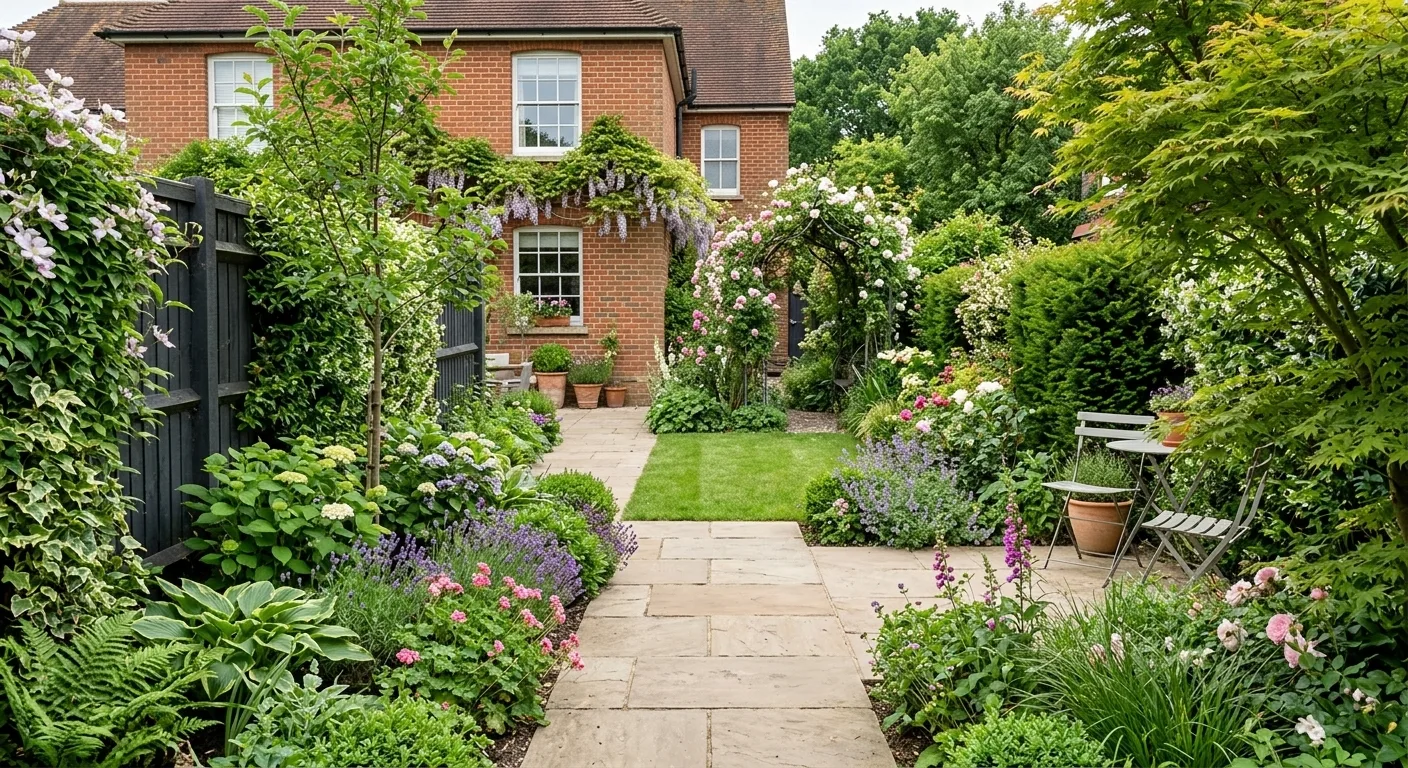
Planting can soften those boundaries and help the garden feel less enclosed. Climbers, shrubs, grasses and other carefully selected plants can add texture and colour without needing a large amount of floor space.
Rather than filling every border with different plants, use a smaller selection repeatedly throughout the garden. This creates a stronger sense of continuity and prevents the space from looking overcrowded.
Vertical planting can be particularly useful when floor space is limited.
4. Draw the Eye Upwards
A small garden does not have to be limited to the ground.
Using height can give the eye somewhere else to travel and make the garden feel more three-dimensional. This could involve:
Trees with a naturally compact form
Climbers trained against walls or fences
Taller grasses and perennials
Raised planting
Vertical screens
Pergolas or simple overhead structures
The aim is to use the full height of the space without making it feel enclosed.
A carefully positioned tree can also provide a focal point and add a sense of height, rather than automatically making a garden feel smaller.
5. Create a Focal Point
Giving the eye somewhere to go can make a small garden feel deeper.
This might be a specimen tree, a seating area, an attractive planting feature, a garden room or another carefully chosen focal point at the far end of the garden.
Instead of seeing the entire garden immediately, the eye is encouraged to move through the space.
You can strengthen this effect by creating a pathway or visual route towards the focal point. Recent garden-design examples use this type of journey to make compact gardens feel more interesting and spacious.
6. Break Up a Long, Narrow Garden
A narrow garden does not always benefit from one straight path running from the house to the back fence.
Breaking the space into subtle zones can create more interest and make the garden feel less like a corridor.
For example, you could have a small dining area close to the house, a planting section in the middle and a quieter seating area towards the back.
These areas do not need to be separated by walls or fences. Changes in paving, planting, furniture or levels can be enough to give each area a distinct purpose.
A gently curved path can also create a sense of movement and prevent the entire garden from being visible at once.
7. Choose Patio and Paving Carefully
Paving can have a major visual impact in a small garden.
Large-format slabs can create fewer visible joints and give the surface a cleaner appearance, while using similar materials across a patio and pathway can make the garden feel more continuous.
However, covering the entire garden in paving is not necessarily the best way to make it appear larger. Breaking hard landscaping up with carefully positioned planting can add depth and prevent the space from feeling like one large paved area.
The right balance depends on how you want to use the garden. A small patio with surrounding planting may work better than a much larger paved area that leaves little room for greenery.
8. Use Built-In Seating and Storage
Furniture can take up a surprising amount of space in a compact garden.
Where possible, built-in seating can make better use of awkward corners and edges. A bench incorporated into a raised border or built against a wall can provide seating without taking up as much floor space as separate chairs.
The same principle applies to storage. Keeping tools, cushions and garden equipment neatly contained prevents them from taking over valuable areas of the garden.
Good small-garden design is often about making every part of the space work harder.
9. Make Use of Changes in Level
A completely flat garden can sometimes feel more two-dimensional.
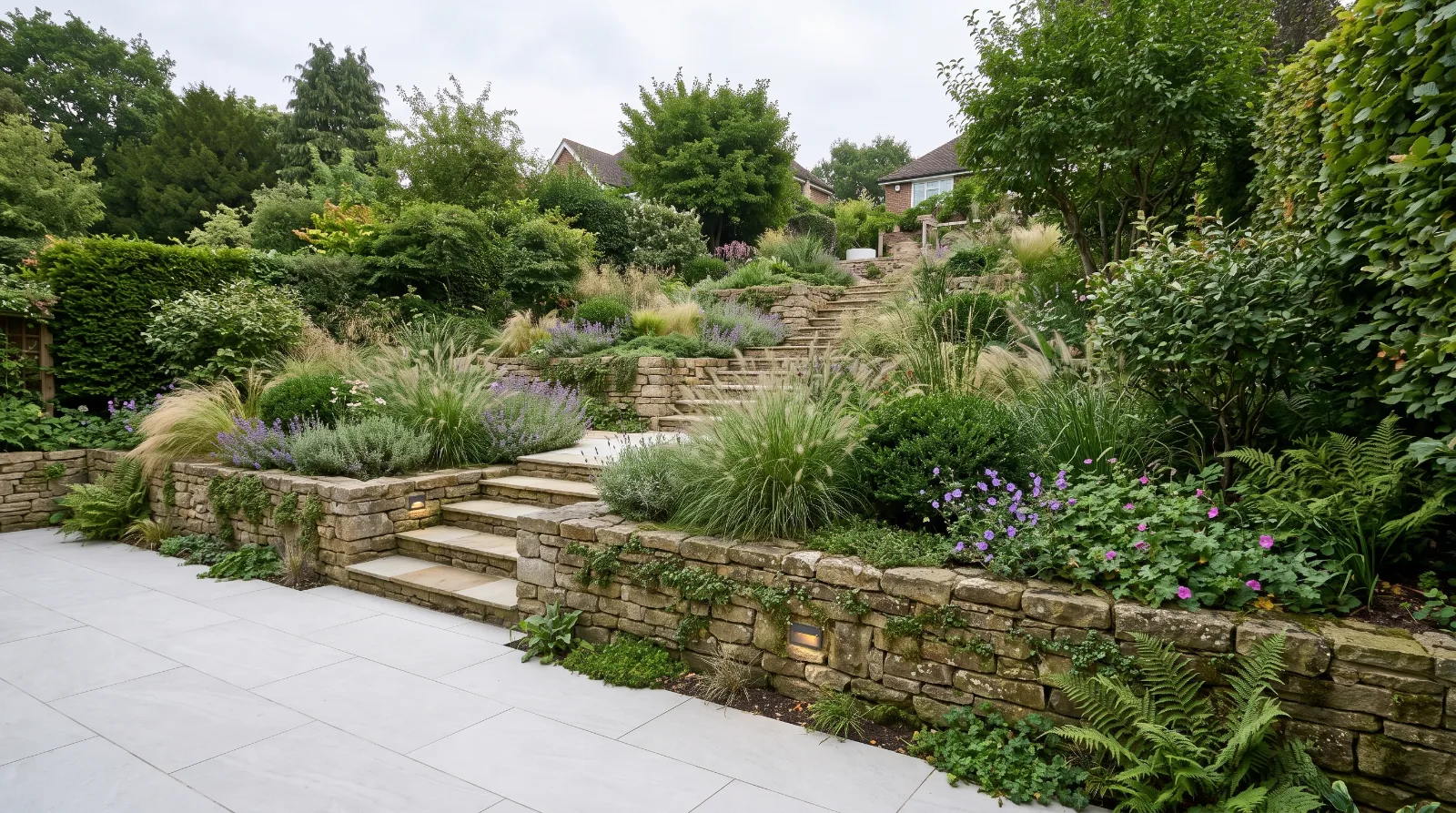
Introducing a carefully considered change in level can create depth and separate different areas without requiring additional floor space.
This might mean raising a seating area, creating a step between zones or using raised planting beds.
Even a relatively small change in height can help distinguish one part of the garden from another. It can also create opportunities for planting and seating that would otherwise be difficult to incorporate.
Any changes in level need to be properly planned, particularly where steps, retaining structures or drainage are involved.
10. Use Lighting to Extend the Space After Dark
A small garden should not stop being useful when the sun goes down.
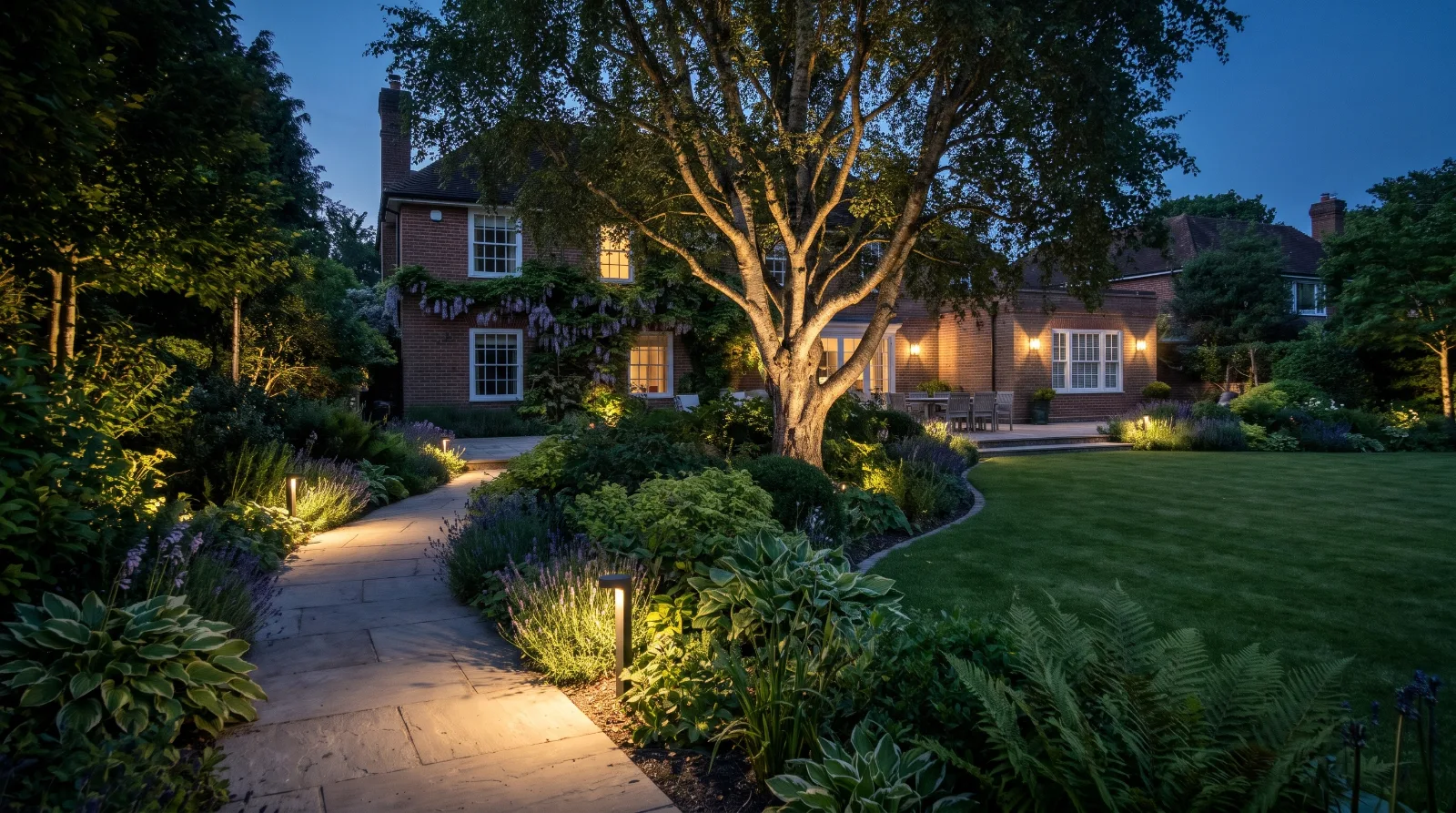
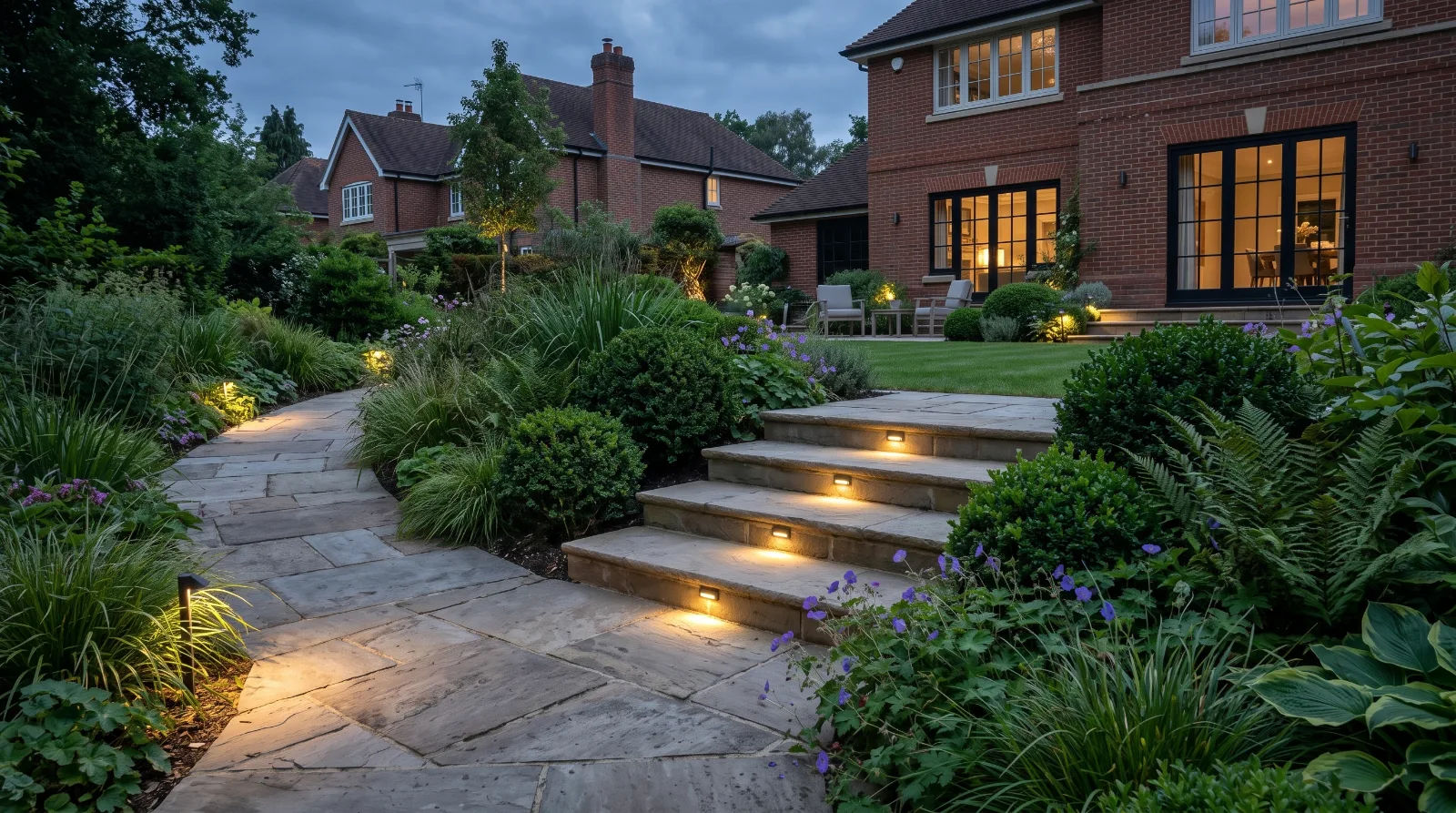
Thoughtfully positioned lighting can highlight planting, pathways, seating areas and architectural features, giving the garden another layer after dark.
Low-level pathway lighting can help guide movement through the space, while lighting around a patio or seating area can make it feel like an extension of the home.
Using a few carefully positioned lights is usually more effective than illuminating everything equally.
Small Garden Ideas for Surrey Homes
Small gardens across Surrey can have very different challenges depending on the property and its surroundings.
A compact town garden may need to work around neighboring boundaries and limited access, while a narrow garden may need careful zoning to avoid feeling like a long corridor. Established trees, existing walls and changes in level can also influence what is practical.
Rather than trying to copy a garden you have seen elsewhere, consider what your own space needs to achieve.
Do you want somewhere to eat outside? More planting? Space for children? A private seating area? Better access to a garden room?
Once the priorities are clear, the layout can be designed around them.
Don't Be Afraid to Use a Feature
There is a common assumption that everything in a small garden needs to be small.
That is not always the case.
A well-chosen specimen tree, large planter, substantial seating area or bold piece of landscaping can actually give the garden a stronger sense of scale.
The important thing is proportion. One deliberate feature can become a focal point, while several competing features can make the garden feel crowded.
This is why scale and proportion are particularly important when designing a compact garden.
Think About the Garden as One Space
Making a small garden feel bigger is not about a single trick.
It comes down to how the different elements work together.
The patio, planting, fencing, pathways, seating, lighting and levels should feel connected rather than like separate additions. A consistent material palette and repeated planting can help create that connection, while a focal point or carefully planned route can give the garden a greater sense of depth.
A compact garden can still include everything you need. The key is deciding what matters most and designing around it.
Ready to Make More of Your Garden?
A small garden can have just as much potential as a larger one when the layout is planned around the space and how you want to use it.
Whether your garden needs a complete redesign or simply a better layout, professional landscaping can help you make better use of the space while bringing together paving, planting, lighting and outdoor living areas.
Get in touch with Surrey Oak Landscapes for a free, no-obligation quote.
About the author