How to Make a North-Facing Garden Work
A north-facing garden doesn't have to feel dark or unusable. Discover practical planting, layout, paving and lighting ideas to make the most of your garden.
A north-facing garden can sometimes feel like a disadvantage, particularly if you want a sunny patio, colourful planting or a lawn that stays lush throughout the year. But a north-facing garden is not automatically a dark or difficult garden.
The key is to understand how light moves through the space and then design around the conditions you actually have. In the UK, north-facing gardens tend to receive less direct sunlight, especially close to the house, while the far end and side boundaries can receive more light during the summer. Nearby buildings, fences and trees can also have a major effect on how much sunlight reaches the garden.
With the right planting, materials and layout, a north-facing garden can feel bright, comfortable and full of interest.
What Is a North-Facing Garden?
A north-facing garden is one where the garden generally faces towards the north from the house.
Because the sun travels across the southern part of the sky in the UK, the area immediately behind the house can spend much of the day in shade. However, this does not mean that the entire garden will remain shaded.
The amount of sunlight depends on several factors, including:
The height of your house
The length and width of the garden
Boundary walls and fences
Nearby buildings
Trees and large shrubs
The time of year
A large, open north-facing garden can receive considerably more light than a small enclosed garden surrounded by tall buildings and fencing.
The first step is therefore to look at your individual garden rather than assuming every north-facing garden has the same conditions.
Where Is the Sunniest Part of a North-Facing Garden?
In many north-facing gardens, the area closest to the house is the shadiest part. The far end of the garden can receive more direct sunlight, particularly during the longer days of spring and summer.
The east and west sides can also receive periods of direct sunlight as the sun moves across the sky.
This creates an opportunity when planning the garden.
Instead of automatically putting your main seating area directly outside the back doors, consider where the sunlight actually reaches the garden. The brightest part of the garden may be a better location for a patio, dining area or outdoor seating.
A simple way to understand your garden's light
Spend a day checking the garden at different times, such as:
Time | What to look for |
|---|---|
Morning | Which areas receive early sunlight? |
Midday | Where does direct sunlight reach? |
Afternoon | Which parts remain bright? |
Evening | Does the far end or side of the garden catch the sun? |
Repeat this at different times of the year if possible. The position and length of shadows change considerably between summer and winter.
Choose Plants That Enjoy Shade
Plant selection is one of the biggest factors in making a north-facing garden successful.
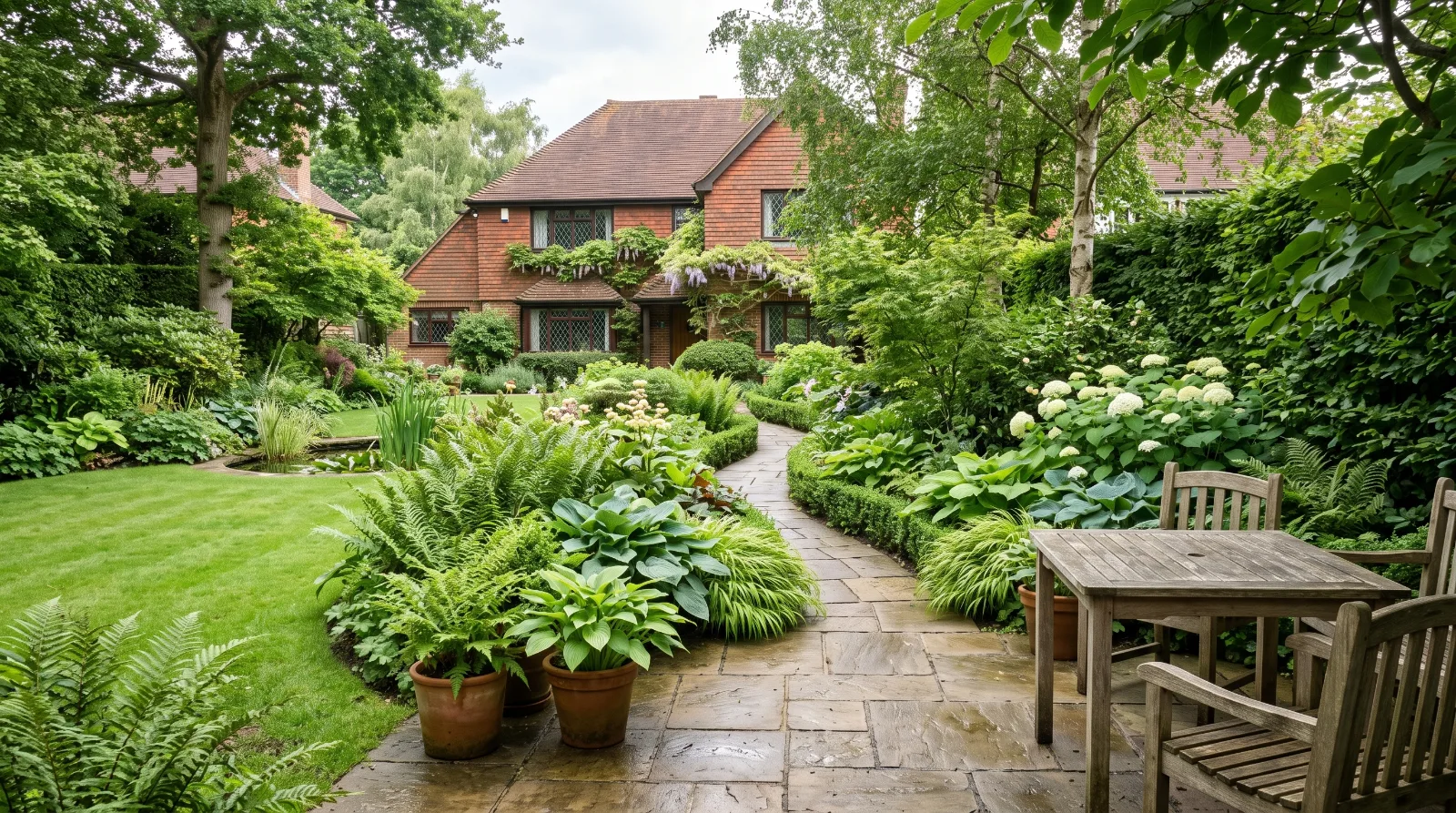
Rather than trying to force sun-loving plants into low-light areas, choose plants that naturally tolerate or prefer shade. This can actually create a garden with more interesting foliage, textures and layers.
Good options for UK gardens can include:
Ferns
Hellebores
Hostas
Heucheras
Hydrangeas
Sarcococca
Bergenia
Foxgloves
Japanese anemones
Some varieties of ivy and shade-tolerant climbers
The exact choice should depend on whether the area is dry shade, moist shade, partial shade or deeper shade. Shade caused by a building can also create different conditions from shade underneath mature trees.
Don't rely entirely on flowers
One of the most effective ways to make a shady garden interesting is to concentrate on foliage as well as flowers.
Different shades of green, variegated leaves, large leaves, fine textures and contrasting shapes can create plenty of visual interest even when relatively few plants are flowering.
This can also give the garden a longer-lasting appearance throughout the year rather than relying on short periods of seasonal colour.
Make the Garden Feel Brighter
You cannot create more sunlight, but you can make better use of the light that is available.
Use lighter materials
Pale paving, gravel, rendered walls and lighter-coloured garden features can help reflect available light around the space.
This can be particularly useful around patios and seating areas where you want the garden to feel more open.
You don't need to make everything white. Soft beige, natural stone, light grey and warm neutral tones can all work well without making the garden feel artificial.
Keep planting layered
Avoid filling the entire garden with one dense wall of evergreen planting.
Instead, use a mixture of lower planting, shrubs and carefully positioned taller plants. This creates depth without unnecessarily blocking the available light.
Consider reflective features
Mirrors can sometimes be used carefully in enclosed gardens to create the impression of greater depth and reflect light.
They work best when incorporated into the overall design rather than simply attached to a boundary as an afterthought.
Design the Patio Around the Light
A north-facing garden does not necessarily mean giving up on having a good outdoor seating area.
The trick is to think about where you want to use the garden and when.
If you mainly sit outside in the evening, for example, the part of the garden that catches late afternoon and evening sunlight may be more valuable than the area directly outside the house.
You could also create more than one seating area.
A smaller patio close to the house can be useful for morning coffee or quick meals, while a second seating area further down the garden can become a warmer evening spot.
This approach makes the garden feel like a series of outdoor rooms rather than one large space.
Don't Forget the Lawn
Grass can be more challenging in areas that receive consistently low levels of sunlight.
If parts of your garden are heavily shaded, particularly beneath trees or close to buildings, a traditional lawn may struggle to stay dense.
Before installing or replacing a lawn, look at how much light the area actually receives.
For particularly shady areas, you could instead consider:
Shade-tolerant grass varieties
Ground-cover planting
Paving or stepping stones
Gravel
Bark or other suitable mulch
A planted border
There is no reason for every part of a garden to be lawn.
Replacing a persistently thin or mossy section with planting or hard landscaping can often produce a much better result.
Improve the Soil Before Planting
North-facing areas can remain cooler and damper, but this does not automatically mean that the soil is ideal for planting.
The opposite can also happen around walls, fences and buildings where rain may be blocked and the soil becomes surprisingly dry. (RHS)
Before planting, check the actual conditions in the border.
Improving the soil with suitable organic matter can help create a better growing environment, while improving drainage may be necessary where water sits for long periods.
This is particularly important in heavier soils commonly found in parts of Surrey.
The aim is not simply to make the soil wetter or drier. It is to create conditions that suit the plants you have chosen.
Add Structure With Hard Landscaping
A north-facing garden does not have to rely entirely on planting.
Good hard landscaping can give the garden structure throughout the year, even when plants are dormant.
Consider incorporating features such as:
Natural stone or porcelain paving
Brick walls
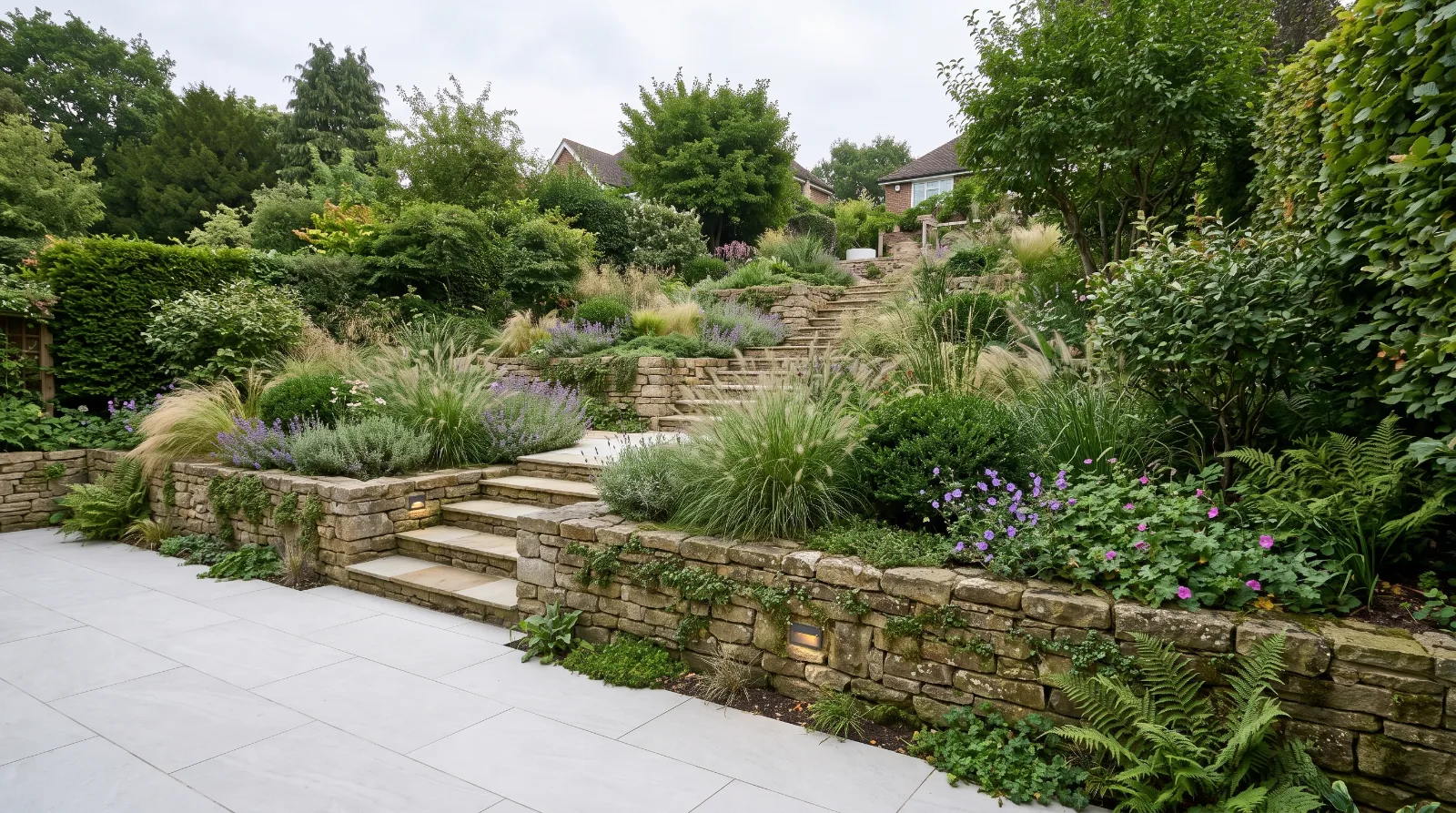
Raised beds
Timber fencing
Steps
Gravel paths
Pergolas
Built-in seating
Garden rooms
Using the same materials in different parts of the garden can also help connect separate areas and make the space feel more considered.
Use Lighting to Extend the Garden Into the Evening
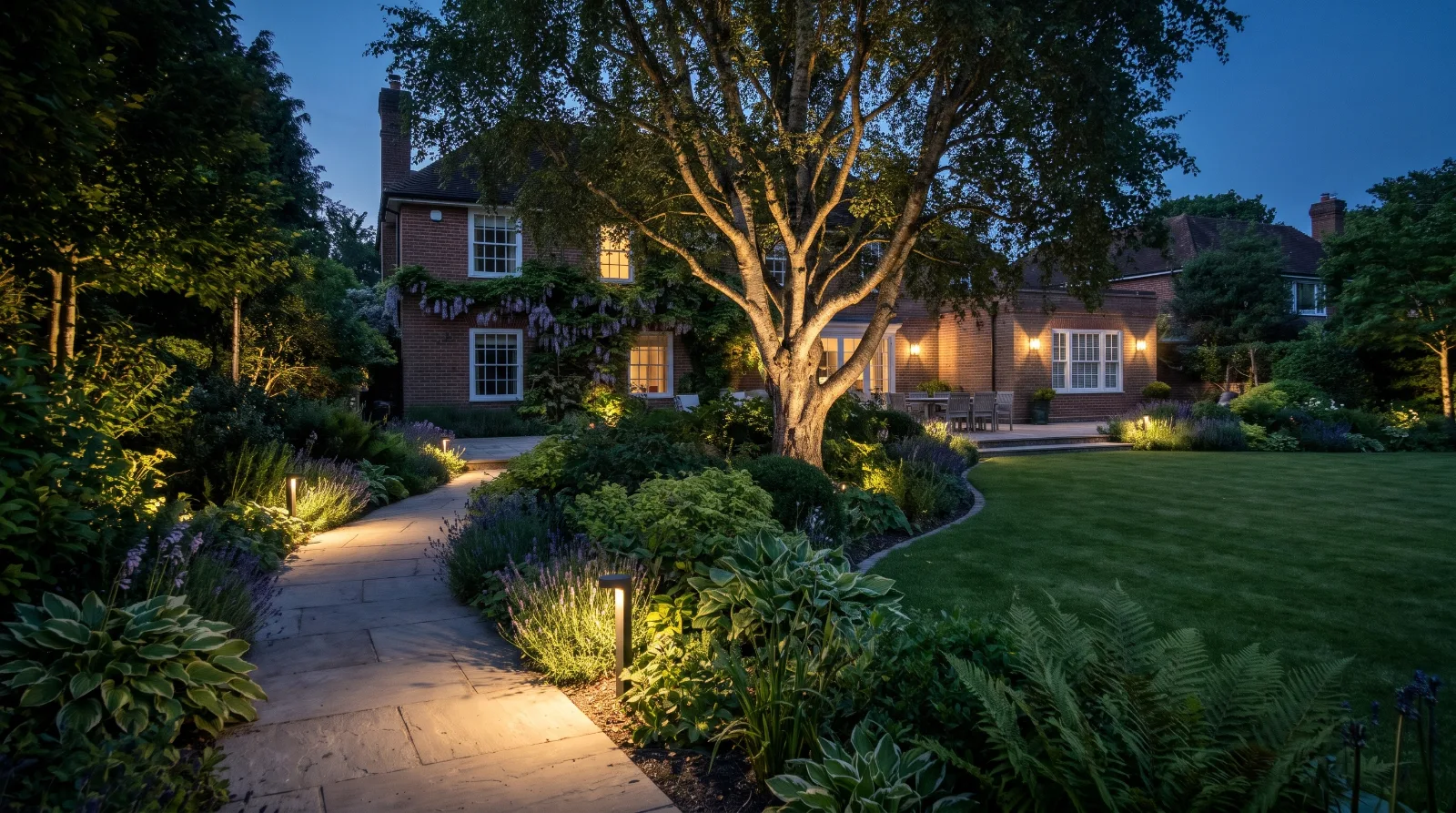
Garden lighting can be particularly effective in a north-facing garden because it allows the space to have another layer of interest after dark.
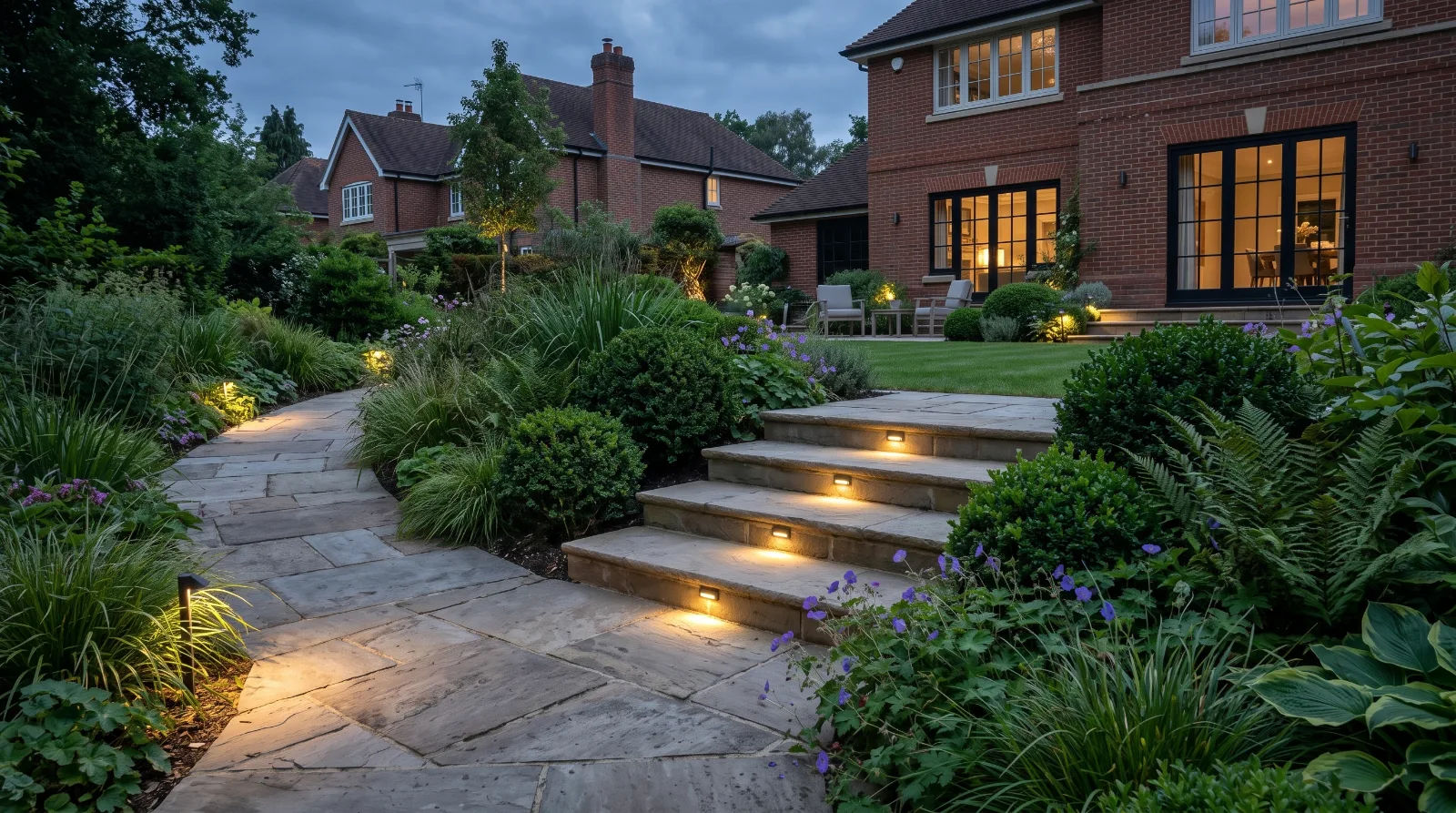
Rather than simply installing bright floodlighting, consider using a mixture of subtle lighting:
Path lighting for circulation
Uplighting for trees and architectural plants
Wall lighting around patios
Feature lighting for specimen plants
Low-level lighting around steps
Warm, carefully positioned lighting can highlight planting and hard landscaping without making the garden feel overly bright.
Common Mistakes to Avoid
A few design decisions can make a north-facing garden feel darker and less usable than it needs to be.
Choosing plants purely for their appearance
A plant may look perfect at the garden centre but struggle if it needs several hours of direct sunlight.
Always consider the conditions in the exact part of the garden where it will be planted.
Putting the patio in the darkest area
The area immediately outside the house is convenient, but it may not be the warmest or brightest location.
Check the movement of sunlight before deciding where the main seating area should go.
Filling boundaries with dense planting
Tall hedges and large evergreen shrubs can make an already shaded garden feel even darker.
Use boundary planting selectively and consider how mature plants will affect light levels in the future.
Trying to make the garden look like a south-facing garden
A north-facing garden has its own strengths. Trying to fill it with plants and features designed for full sun can create unnecessary maintenance and disappointing results.
Instead, embrace foliage, texture, structure and the cooler atmosphere that shade can provide.
Can a North-Facing Garden Still Look Good?
Absolutely.
The most successful north-facing gardens usually work with the available light rather than fighting it.
Use the brighter areas for seating and plants that need more light, while using the shadier parts for foliage plants, paths, structures and features that suit lower light levels.
With thoughtful planting and a well-planned layout, even a relatively enclosed north-facing garden in Surrey can become a comfortable and attractive outdoor space.
Need Help Designing Your Surrey Garden?
If you're struggling to make the most of a north-facing garden, a well-planned design can make a significant difference. From planting and paving to patios, fencing and complete garden transformations, the layout can be designed around the conditions of your individual space.
Looking to transform your garden in Surrey? Get in touch with Surrey Oak Landscapes for a free, no-obligation quote.
About the author