How to Landscape Around a Swimming Pool
Planning a swimming pool garden? Discover how to choose the right paving, planting, privacy screening, lighting and landscaping features for a practical and beautiful pool area.
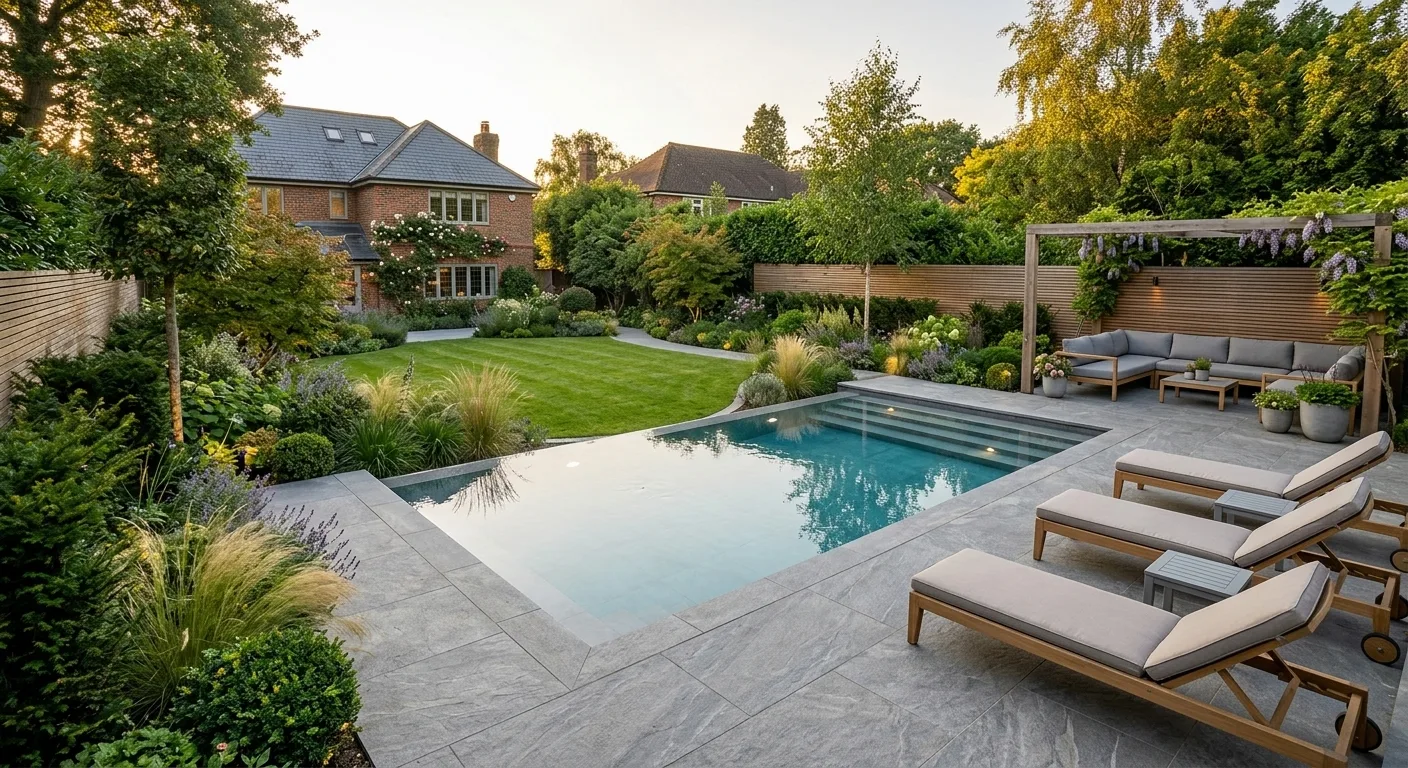
A swimming pool can become the centrepiece of a garden, but the pool itself is only part of the finished space.
The paving, planting, privacy, lighting and surrounding layout all have a big impact on how the area looks and how easy it is to use. Get those details right and the pool feels like a natural part of the garden rather than something simply dropped into it.
Whether you are planning a new pool or improving the landscaping around an existing one, there are several important things to consider.
Start With How You Want to Use the Space
Before choosing plants or paving, think about how the pool area will actually be used.
Is it mainly for swimming, or will it also be used for entertaining, dining and relaxing?
You may need space for:
Sun loungers
Outdoor seating
A dining table
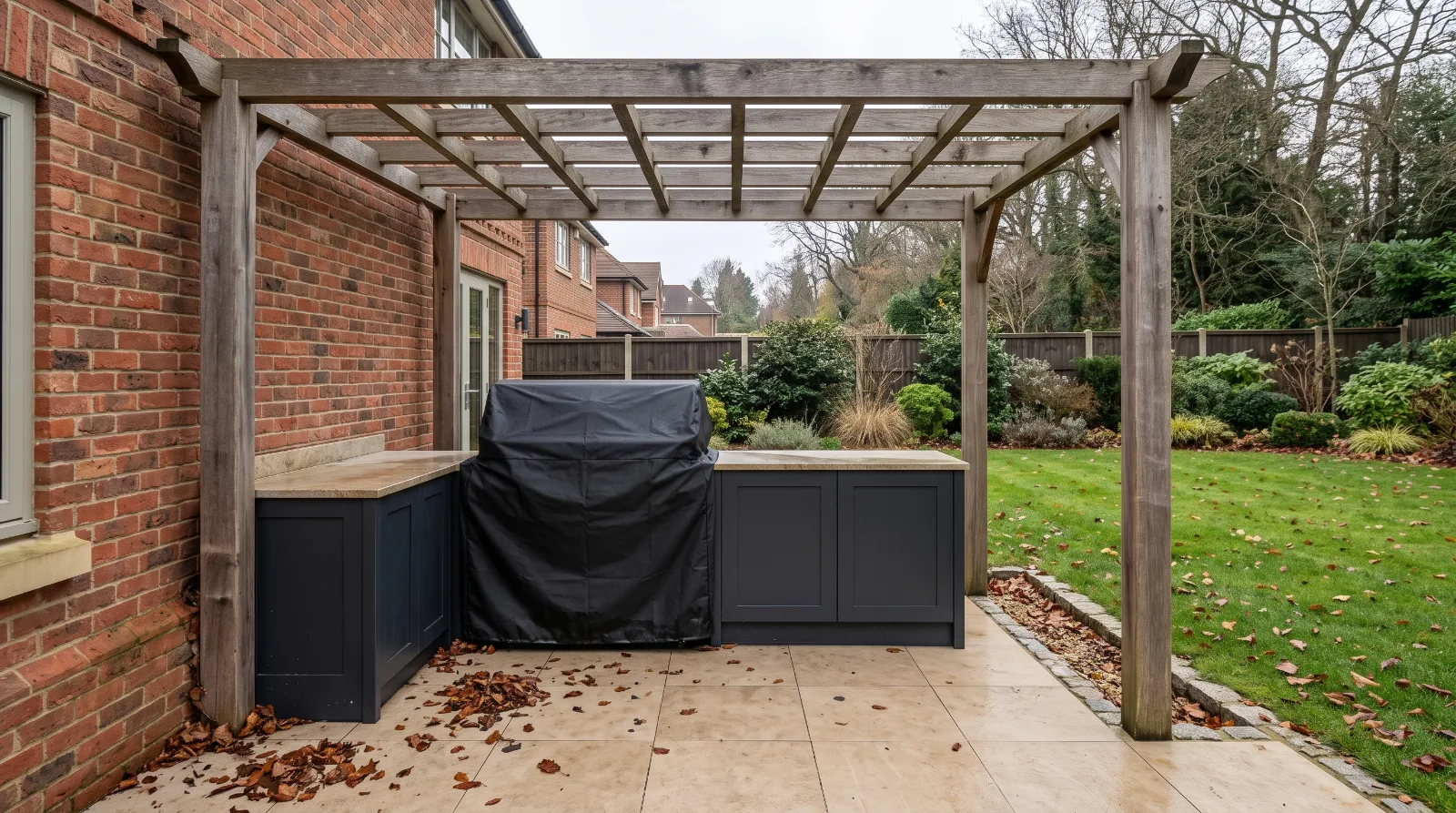
An outdoor kitchen or barbecue
Pool equipment
Storage
Access around the pool
Leaving enough space around the pool is important. A design that looks good from above can quickly become impractical if there is nowhere comfortable to walk, sit or move equipment.
It is also worth considering the view from the house. The pool may be visible from several rooms, so the surrounding landscaping should look good even when the pool is not being used.
Choose the Right Pool Surround
The paving or decking around the pool will probably be one of the largest visual elements in the space.
It also needs to cope with regular exposure to water, foot traffic and outdoor weather.
Porcelain Paving
Porcelain is a popular option for contemporary pool areas because it offers a clean, consistent appearance and is available in a wide range of colours and textures.
It can work particularly well with modern Surrey garden designs, especially when the same paving is carried through to a wider patio or entertaining area.
The important thing is to choose an appropriate external product and installation system rather than treating indoor and outdoor porcelain as interchangeable.
Natural Stone
Natural stone can give a pool area a softer, more established character.
Sandstone, limestone and other natural stones can work well with planting and traditional properties, while sawn stone can create a more contemporary finish.
Stone varies considerably in texture, porosity, colour and maintenance requirements, so the particular material should be selected with the pool environment in mind.
Other Options
Depending on the garden, other materials such as concrete paving or decking may also be suitable.
The decision should come down to the style of the house, the rest of the garden, maintenance requirements and how the surface performs when wet.
Whatever material you choose, slip resistance should be treated as a priority for areas around a pool. Wet surfaces and poorly designed drainage can increase the risk of slips, so paving should provide suitable grip and drainage should not create trip hazards.
Get the Drainage Right
Drainage is one of the least glamorous parts of garden design, but around a swimming pool it is extremely important.
Rainwater and water splashed from the pool need somewhere to go without creating puddles across the surrounding paving.
The pool surround should therefore be designed with suitable falls and drainage rather than relying on water simply disappearing naturally.
Depending on the garden, this might involve:
Linear drainage channels
Surface drains
Gravel drainage areas
Carefully designed falls
Appropriate connections to the property's drainage system
The exact solution will depend on the site, existing drainage and ground conditions.
Drainage also matters where planting borders sit close to the pool. Giving planting areas enough separation and controlling runoff can help prevent excess water and chemically treated splash water from becoming a problem for plants.
Choose Poolside Planting Carefully
Planting is what can turn a pool from a hard, built feature into a garden.
However, the plants closest to the pool need to be chosen with a little more care than a normal border.
The main things to consider are leaf litter, maintenance, mature size, root growth and how much sun or shade the area receives.
Deciduous trees directly beside a pool may look beautiful, but their leaves can create considerably more cleaning work when they fall into the water. Smaller plants and grasses can often create the same feeling with less debris.
For a Surrey garden, planting could include combinations of:
Ornamental grasses for movement and texture
Lavender for colour and scent
Nepeta and other compact perennials
Evergreen shrubs for year-round structure
Clipped topiary for a more formal look
Carefully positioned screening plants
The choice should still be based on the individual site. Sun exposure, soil, wind and available space all affect which plants will perform well.
Think About Mature Size
A common landscaping mistake is designing around how large a plant looks when it is installed rather than how large it will eventually become.
A shrub that looks appropriately sized beside a new pool can eventually block views, overhang the paving or drop large amounts of debris into the water.
Planting should therefore be planned around mature dimensions, not just the appearance on installation day.
Avoid High-Mess Planting Close to the Pool
You do not have to avoid trees and planting altogether.
Instead, think about where they are positioned.
More heavily shedding plants can be placed further away from the water, while lower-maintenance planting can be used closer to the pool edge. This creates a layered garden without creating unnecessary cleaning work.
Create Privacy Without Making the Pool Feel Enclosed
Privacy is often one of the biggest considerations for a residential swimming pool.
You may want to screen neighbouring gardens, nearby windows or overlooked boundaries, but covering every boundary with tall hedging can make the space feel enclosed.
A better approach can be to create layers of privacy.
For example, taller evergreen planting can provide the main screen, with smaller shrubs and ornamental grasses in front.
Fencing and screening panels can also be incorporated into the design where appropriate.
The goal is to block unwanted views while still allowing the garden to feel open.
Consider the direction people will actually be looking from. A narrow strip of screening in the right position can be much more effective than surrounding the entire pool with tall planting.
Add Shade Where You Need It
A pool area is naturally associated with sunny weather, but too much direct sun can make the surrounding space uncomfortable.
Consider where you are most likely to sit and whether those areas need some shade.
Shade can come from:
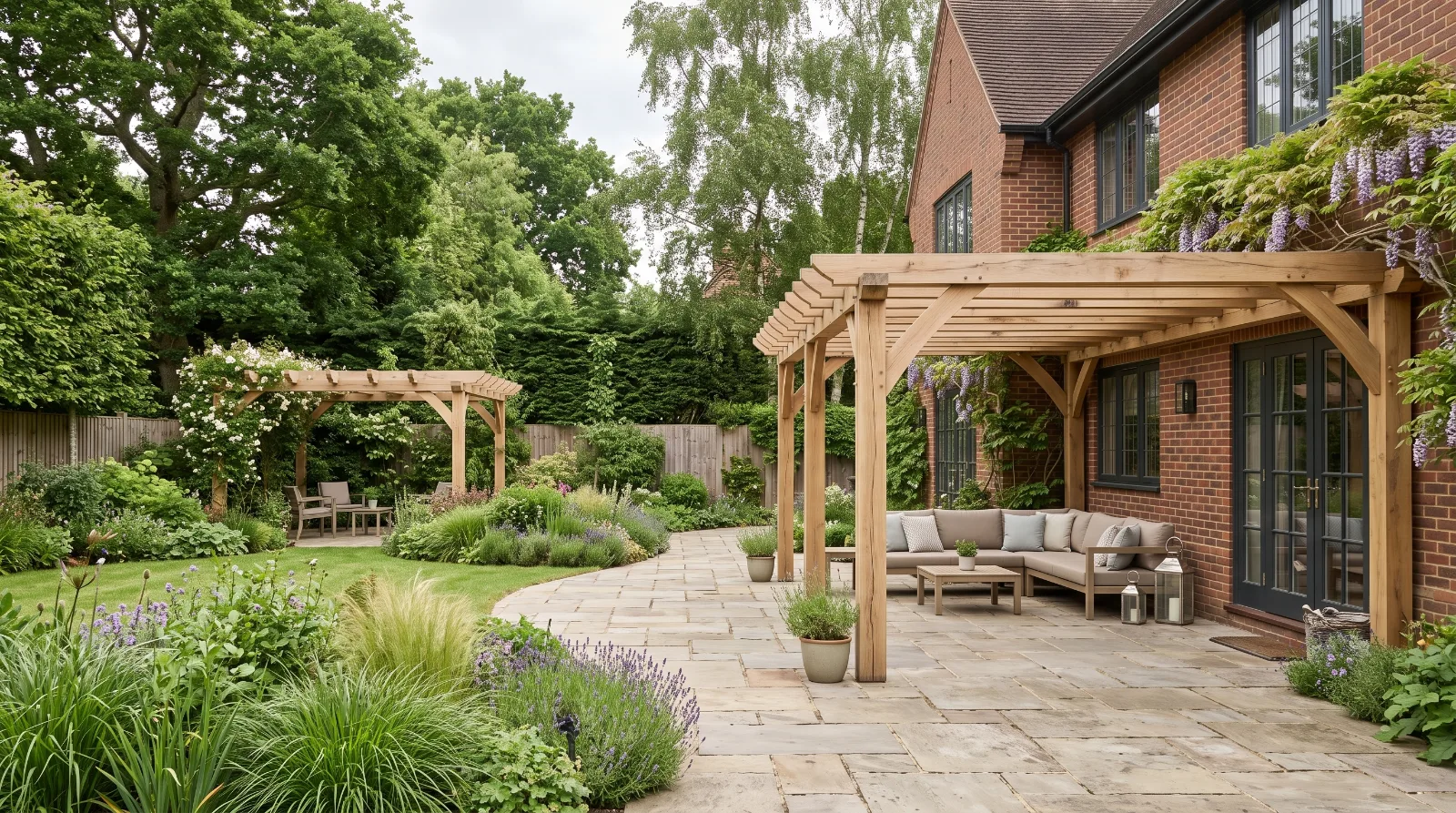
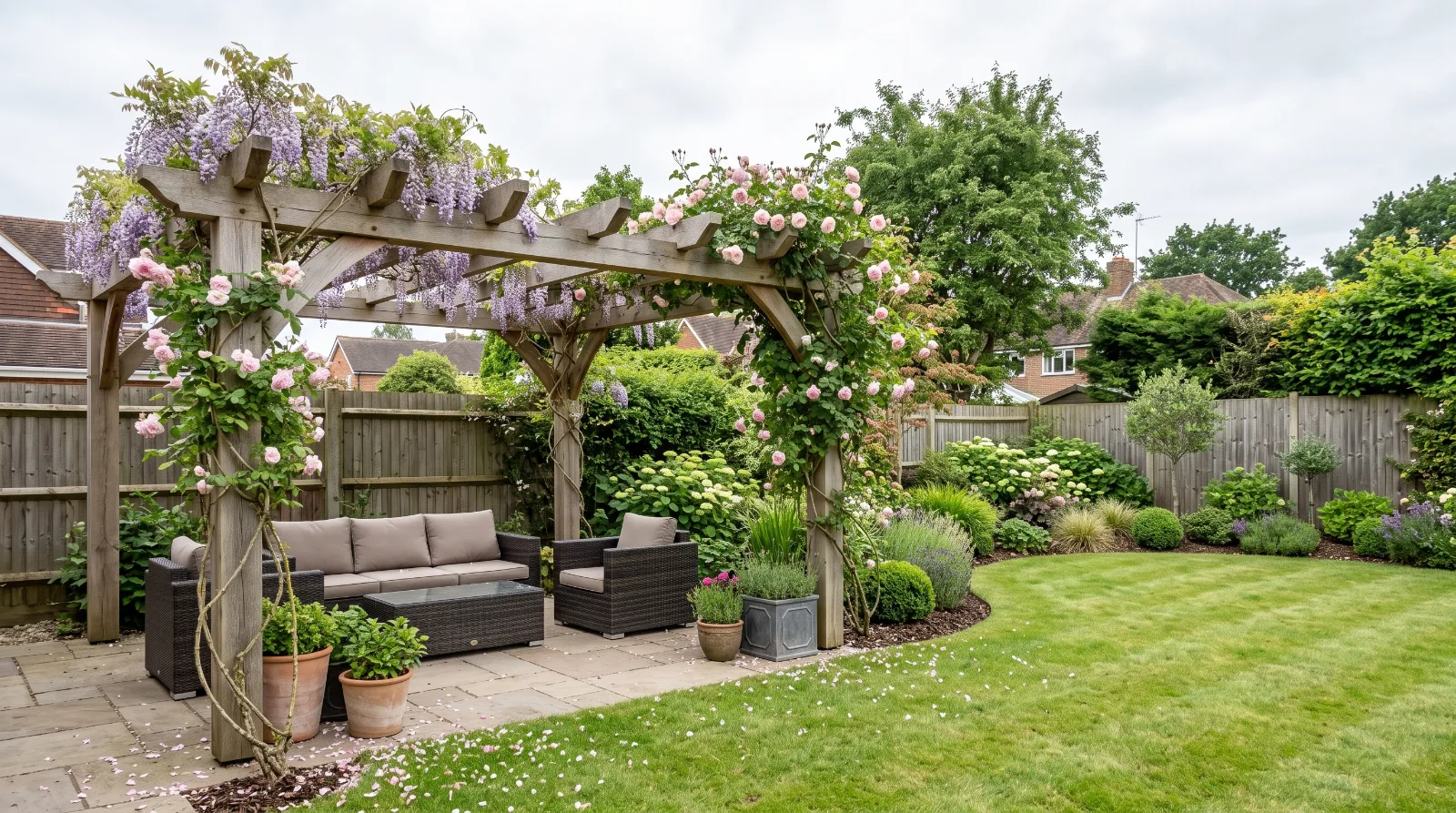
A pergola
A covered seating area
Carefully positioned trees
Outdoor umbrellas
Architectural screening
The important thing is to position shade according to how the space will be used.
Planting can also provide a softer alternative to a completely built structure, although larger trees should be carefully considered in relation to leaf fall, roots and the position of the pool.
Create a Proper Entertaining Area
A pool can be much more than somewhere to swim.
For many homeowners, the surrounding area becomes an outdoor entertaining space, so it makes sense to design for that from the beginning.
A larger paved terrace can provide room for dining and seating, while a pergola or outdoor kitchen can create another destination within the garden.
Zoning is particularly useful here.
Rather than having one large expanse of paving surrounding the entire pool, different areas can be given different purposes:
Pool zone — swimming, access and loungers.
Dining zone — table and chairs for meals.
Relaxation zone — softer seating and a quieter position in the garden.
Planting zone — greenery and screening to soften the hard landscaping.
This creates a more interesting garden and prevents the pool from dominating every part of the space.
Use Lighting to Extend the Space Into the Evening
Pool landscaping should not only be designed for daytime.
Once the sun goes down, good lighting can completely change the atmosphere.
Instead of brightly illuminating everything, use layers of subtle lighting.
Path lights can guide movement around the garden, while feature lighting can highlight trees, planting or architectural details.
Low-level lighting around seating areas can make them feel comfortable without competing with the pool itself.
For a contemporary Surrey garden, discreet architectural lighting can also highlight paving edges, steps, raised beds and other structural elements.
The aim is to make the garden feel naturally illuminated rather than covered in visible light fittings.
Think About the Pool From Inside the House
One detail that is often overlooked is how the garden looks from indoors.
If the pool is visible through large windows or bi-fold doors, the landscaping becomes part of the home's everyday view.
Think about what will be visible throughout the year.
Evergreen structure can maintain interest during winter, while ornamental grasses, shrubs and seasonal planting can provide movement and colour through spring and summer.
This also helps the garden feel connected to the house instead of separating the pool into its own isolated zone.
Keep Maintenance in Mind
A beautiful pool garden still needs to be practical.
Before choosing materials and planting, consider how much maintenance you are realistically prepared to do.
A high-maintenance planting scheme directly beside the pool can mean:
More leaves in the water
More sweeping
More pruning
More cleaning around the paving
More time spent maintaining the garden
That does not mean a pool area needs to be sparse.
It simply means the planting should be deliberate.
A combination of evergreen structure, lower-maintenance perennials and ornamental grasses can provide plenty of interest without filling the immediate pool edge with high-maintenance plants.
Consider Irrigation
Poolside planting still needs water, particularly during the establishment period and periods of dry weather.
An irrigation system can make this easier, especially where a garden has extensive borders, hedging or newly planted trees.
Drip and micro-irrigation can be incorporated discreetly into planting beds, while separate zones can allow different parts of the garden to receive the amount of water they need.
Ideally, irrigation should be planned at the same time as the planting and hard landscaping rather than added after everything is finished.
Landscaping an Existing Pool
You do not necessarily need to replace the pool itself to completely change the surrounding garden.
An existing pool can often be transformed by rethinking the areas around it.
This could include:
Replacing dated paving
Improving drainage
Creating new planting borders
Adding privacy screening
Introducing a better seating area
Installing garden lighting
Reworking surrounding lawns and paths
Adding irrigation
Connecting the pool area to the rest of the garden
Even relatively simple changes can make an older pool feel much more integrated with the property.
Planning a New Pool Landscape
If the pool has not yet been installed, the landscaping should be considered at the same time as the pool design.
This makes it easier to coordinate:
Pool positioning
Finished levels
Drainage
Paving
Access
Planting
Pool equipment
Lighting
Irrigation
Seating areas
Planning everything together can also prevent awkward compromises later.
For example, deciding where a pool will sit before considering access, planting and drainage can leave very little room to create the surrounding garden properly.
A Pool Should Feel Like Part of the Garden
The best pool landscapes do not necessarily have the most paving, the largest pool or the most elaborate planting.
They are the ones where everything feels connected.
The pool works with the patio. The planting softens the hard surfaces. Screening creates privacy without making the garden feel closed in. Lighting brings the space to life after dark, while drainage and access make the whole area practical to use.
For Surrey homes, the design should also respond to the character of the property and the wider garden rather than following a one-size-fits-all formula.
At Surrey Oak Landscapes, we design and create outdoor spaces where patios, planting, lawns, lighting, irrigation and outdoor living areas work together as part of one considered landscape.
Create a Pool Area You'll Enjoy All Year
A swimming pool can be one of the biggest investments in a garden, so the landscaping around it deserves just as much attention as the pool itself.
With the right combination of paving, planting, privacy, lighting and outdoor living space, the pool can become a natural extension of the garden and a place that works well for more than just swimming.
Planning a new pool landscape or looking to transform the garden around an existing pool?
About the author