How Do You Improve Heavy Clay Soil?
Heavy clay soil can be difficult to work with, but it can be improved. Learn how organic matter, mulching, drainage and planting choices can transform your garden soil.
How Do You Improve Heavy Clay Soil?
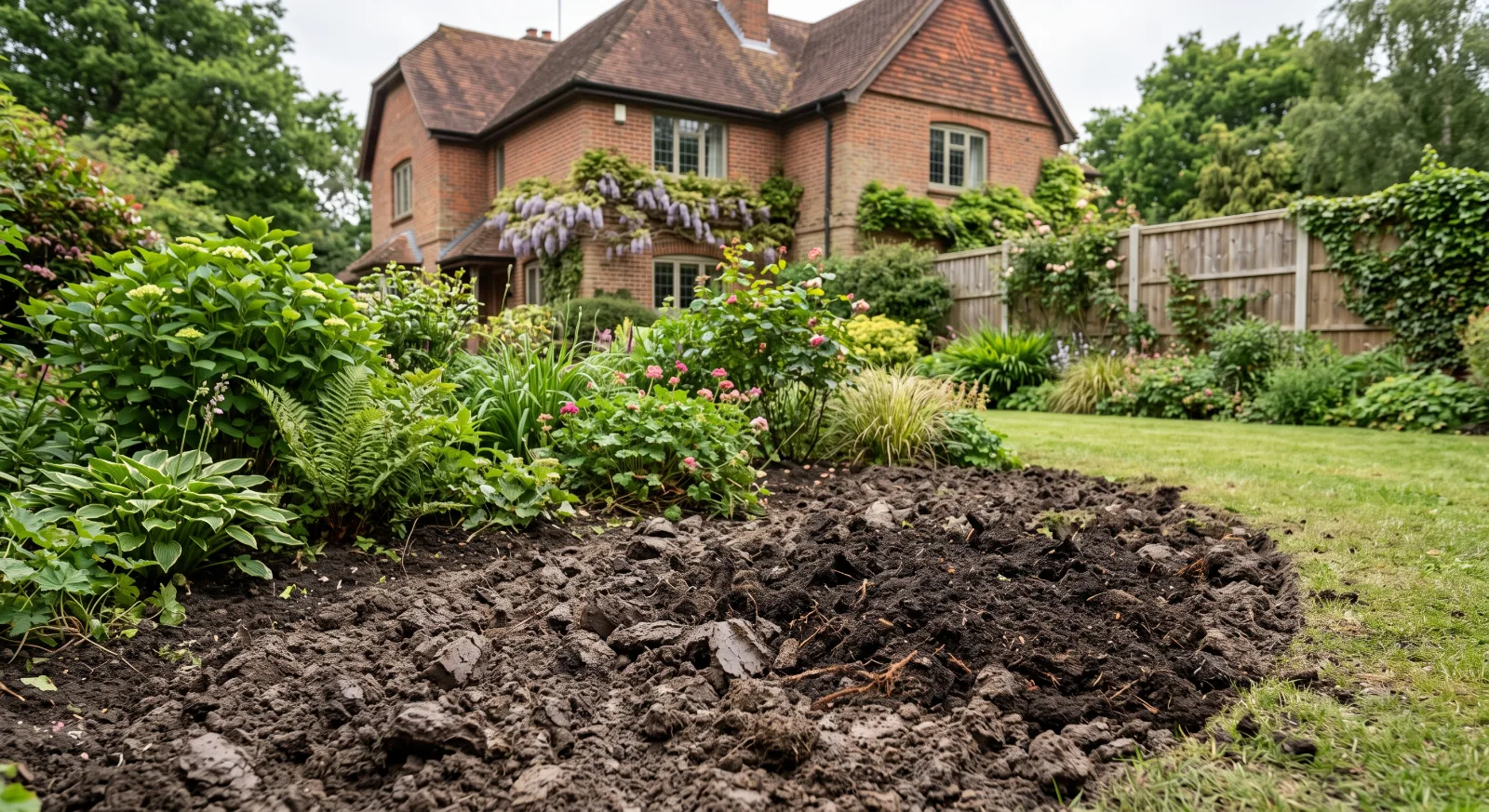
Heavy clay soil can be one of the more frustrating conditions to work with. It can become sticky and difficult to dig after rain, then dry into hard, compacted ground during warmer weather. However, clay soil is not necessarily bad soil. It can hold water and nutrients well, and with the right improvements it can support a wide range of plants.
The key is to improve the structure of the soil, rather than trying to completely change what type of soil you have.
Whether you're preparing a new planting border, improving a lawn or planning a larger landscaping project, there are several practical ways to make heavy clay easier to work with.
What Is Heavy Clay Soil?
Clay soil contains a high proportion of very fine mineral particles. These particles fit closely together, creating small spaces within the soil.
This gives clay some useful characteristics, but it can also create problems.
Heavy clay soil commonly:
Drains slowly after rainfall
Becomes sticky when wet
Hardens and cracks when very dry
Compacts easily when walked on while wet
Takes longer to warm up in spring
Holds water and nutrients relatively well
The same characteristics that make clay difficult to work with can also make it fertile. The goal is therefore not to remove the clay, but to create a more open and workable soil structure.
How Can You Tell If You Have Clay Soil?
You can often identify clay soil simply by handling it.
Take a small amount of moist soil and squeeze it in your hand. Clay-heavy soil tends to feel smooth and sticky rather than gritty. If you can roll it into a long sausage shape without it immediately falling apart, you likely have a significant amount of clay.
You may also notice that water remains on the surface after rain or that the ground becomes extremely hard during dry periods.
For a more detailed understanding, a soil test can provide information about characteristics such as pH and nutrient levels.
Add Plenty of Organic Matter
One of the most effective ways to improve heavy clay is to add organic matter.
Well-rotted garden compost, composted bark, leafmould and well-rotted manure can all help improve soil structure. As organic matter is incorporated, it helps create more stable crumbs within the soil, improving the balance between air, water and soil particles.
For a new border, a substantial layer can be incorporated into the existing soil before planting.
The important part is consistency. Adding organic matter once can help, but continuing to mulch and improve the soil over time can produce much better long-term results.
Useful organic materials
Material | Main benefit |
|---|---|
Garden compost | Improves structure and adds organic matter |
Well-rotted manure | Adds organic matter and nutrients |
Composted bark | Helps improve the structure of heavy soil |
Leafmould | Adds organic matter and improves soil texture |
Organic mulch | Protects the surface and gradually adds organic matter |
Avoid using fresh manure or other materials that have not properly decomposed, particularly directly around plants.
Mulch the Surface Regularly
You don't always need to dig everything into the ground.
Applying a layer of organic mulch over the surface of borders can gradually improve the soil as it breaks down. It can also help suppress weeds and reduce moisture loss during dry weather.
A layer of around 5cm or more is commonly used, depending on the material.
Keep mulch away from the stems and trunks of plants rather than piling it directly against them.
Regular mulching is particularly useful in established gardens where completely digging over large areas would be disruptive.
Avoid Working Clay When It Is Too Wet
This is one of the most important things to remember when dealing with heavy clay.
Working or walking on wet clay can destroy its structure and cause compaction. Instead of opening the soil up, you can end up squeezing the air spaces out of it and creating an even harder surface.
If soil sticks heavily to your boots or tools, it is usually better to wait.
Clay is generally easier to work when it has dried enough to crumble rather than smear. The exact timing depends on the weather and the particular soil.
Don't Assume Adding Sand Will Fix Clay
Adding sand or grit to clay soil is a commonly suggested solution, but it isn't always practical.
A small quantity of sand mixed into heavy clay is unlikely to transform the soil. Very large quantities would be needed to significantly change the overall texture, making the approach impractical for most gardens. In some situations, adding the wrong amount of material can actually make the soil more difficult to manage.
For most domestic gardens, improving the soil with organic matter is a more practical starting point.
Improve Drainage Where Necessary
Sometimes the problem isn't simply that the soil is clay. Compaction or an underlying drainage issue may also be contributing to standing water.
Look for areas where puddles remain long after rainfall. If water consistently sits in one part of the garden, investigate the cause before simply adding more soil improver.
Organic matter can improve drainage where the problem is related to soil structure, but it won't solve every drainage problem. If there is a dense impermeable layer beneath the topsoil, or another source of persistent water, a different drainage solution may be needed.
For particularly wet areas, options can include:
Improving the existing soil structure
Creating raised planting beds
Planting on a slight mound
Installing suitable drainage
Redirecting surface water where appropriate
The right solution depends on why the area is staying wet.
Consider Raised Beds
Raised beds can be particularly useful where heavy clay makes ground-level planting difficult.
Instead of trying to improve the entire garden, you can create a better growing environment within a defined area using suitable topsoil and organic matter.
This can be useful for:
Planting borders
Vegetable gardens
Areas with persistent wetness
Gardens with heavily compacted ground
Creating different levels within a landscape design
Raised beds also reduce the amount of foot traffic directly on the soil, helping to protect its structure.
Choose Plants That Suit Clay Soil
Improving the soil doesn't mean you have to make it suitable for every possible plant.
Some plants naturally perform well in clay, particularly once the soil structure has been improved. Trees, shrubs and many herbaceous plants can thrive in these conditions.
Examples that can work well in clay include:
Hydrangeas
Roses
Viburnum
Hardy geraniums
Mahonia
Some ornamental trees and shrubs
However, plant selection should still take into account sunlight, moisture levels, soil pH and the specific conditions of the garden. (RHS)
Choosing plants that suit the existing conditions can often be much easier than trying to completely change the soil.
How Long Does It Take to Improve Clay Soil?
Improving heavy clay is generally a gradual process rather than a one-off job.
You may notice that the soil becomes easier to dig after incorporating a good amount of organic matter, but long-term improvement comes from continuing to add organic material and avoiding compaction.
A useful approach is to:
Improve the soil before planting.
Add organic mulch regularly.
Avoid walking on wet borders.
Monitor drainage.
Add further organic matter as the soil requires it.
Choose plants suited to the conditions.
Over time, this can produce a much more workable and productive garden.
What Should You Avoid When Improving Clay Soil?
Some approaches can make the problem worse rather than better.
Avoid working the soil when it is saturated. This can cause serious compaction.
Don't rely on small quantities of sand or grit. They are unlikely to make a meaningful difference to heavy clay on a typical garden scale.
Don't dig unnecessarily. Repeated cultivation can disturb soil structure, while established borders may benefit more from surface mulching.
Don't ignore persistent standing water. If water remains for long periods, investigate whether there is an underlying drainage problem.
Can Heavy Clay Soil Be Good for a Garden?
Yes. Heavy clay has its disadvantages, but it also has useful properties.
It can hold moisture and nutrients well, and once its structure is improved, it can provide an excellent growing environment for many garden plants.
The best approach is usually to work with the soil rather than trying to completely replace it.
For a Surrey garden, this can be particularly important when planning planting areas, lawns and hard landscaping together. Improving the soil before planting can help create better conditions for plants while also making future garden maintenance easier.
Need Help Improving Your Garden Soil?
If heavy clay is making your garden difficult to plant, drain or maintain, improving the soil can be incorporated into a wider garden design or landscaping project.
Planning a new planting scheme or garden transformation in Surrey? Get in touch with Surrey Oak Landscapes for a free, no-obligation quote.
About the author