How to Design a Garden for Outdoor Entertaining
Planning a garden for entertaining? Discover how to combine seating, patios, planting, lighting and outdoor features to create a practical space for hosting guests.
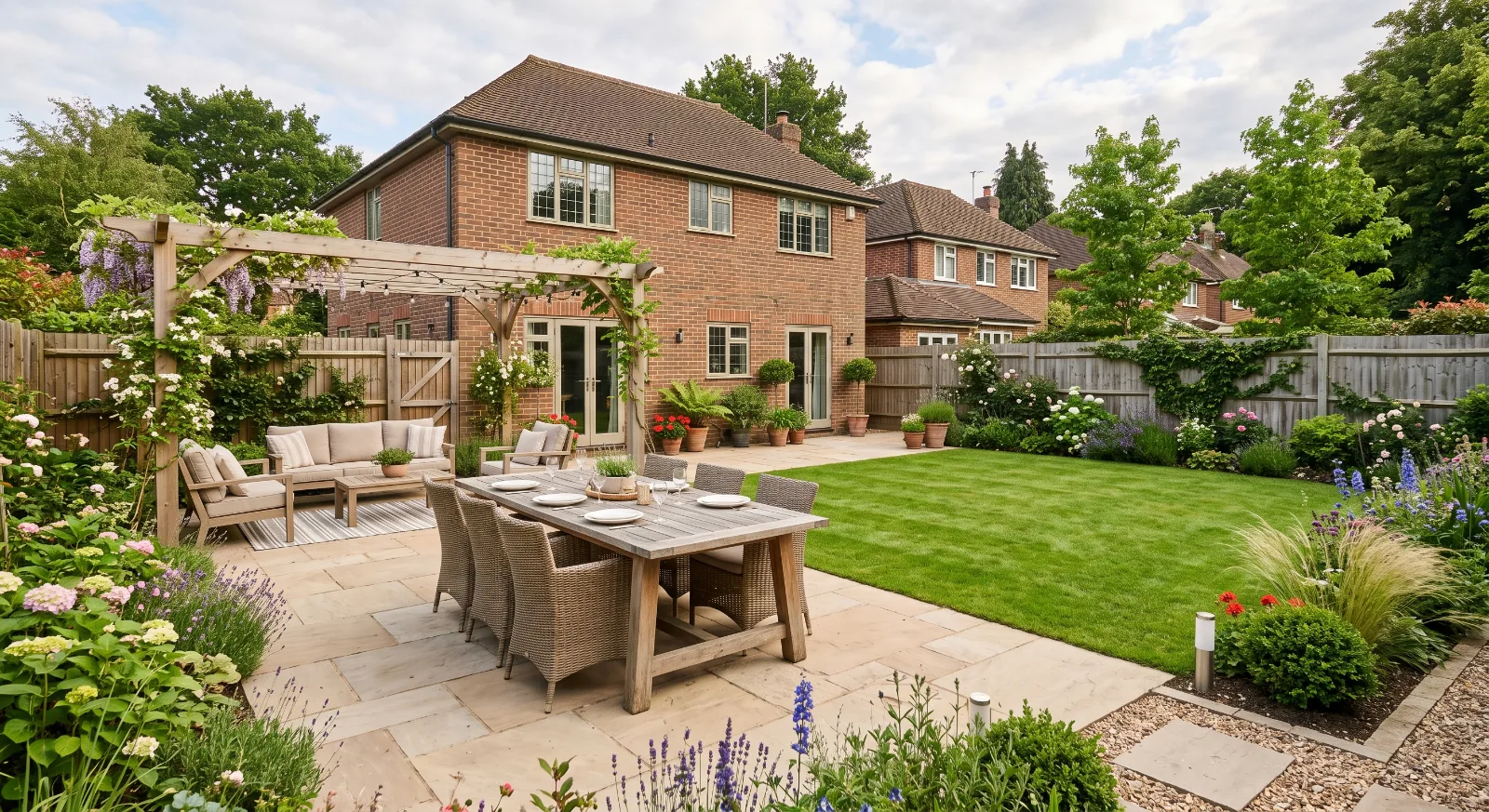
A garden can be much more than a lawn with a patio at the back. When it is designed around the way you actually use it, an outdoor space can become somewhere to eat, relax, socialise and spend time with family and friends.
Designing a garden for entertaining does not necessarily mean filling it with expensive features. The most important things are usually much simpler: getting the layout right, creating comfortable places to sit, making movement around the garden easy and making sure the space still works when you are not hosting a large gathering.
From patios and outdoor kitchens to pergolas, planting and lighting, each element should work together rather than feeling like a collection of separate additions.
So, how do you design a garden that is genuinely enjoyable for entertaining?
Start With How You Actually Use Your Garden
Before deciding on materials or features, think about how you normally entertain.
A family that regularly has large summer gatherings will have different requirements from a couple who mainly want somewhere to have dinner outside or sit with friends in the evening.
Think about:
How many people you normally entertain
Whether you prefer dining or relaxed seating
Whether you cook outdoors regularly
Whether children will be using the garden
How often you entertain in the evening
Whether you need some protection from sun or rain
It is also important to design for everyday life. A garden might occasionally need to accommodate 15 or 20 people, but it should not feel oversized and empty when only two or three people are using it.
A good entertaining garden should be flexible enough to handle both.
Create a Clear Outdoor Layout
The layout is one of the most important parts of the design.
Rather than putting every feature into one large paved area, consider creating different zones with their own purpose.
For example:
Garden zone | Main purpose |
|---|---|
Dining area | Meals and larger gatherings |
Lounge area | Relaxing and conversation |
Cooking area | BBQ or outdoor kitchen |
Lawn | Children, games and open space |
Planting areas | Softening the garden and adding colour |
Covered area | Shade and shelter |
These areas do not need to be completely separated. They can flow into one another through paving, planting, paths and changes in level.
Good zoning can make a garden feel more spacious because each area has a clear function.
Position the Main Seating Area Carefully
Where people sit will often determine how the rest of the garden works.
A dining area close to the house can be particularly practical because food and drinks can be carried outside more easily. A second seating area further into the garden can create a quieter destination.
Think about the view from the seating area as well.
You may want guests to look towards attractive planting, a specimen tree, a water feature or the wider garden rather than facing a boundary or blank wall.
The position of the sun is another consideration. A seating area that looks perfect on a plan may become uncomfortable if it receives strong afternoon sun with no shade.
Choose the Right Surface for Entertaining
The main entertaining area needs to be practical as well as attractive.
A patio is often the natural choice for dining furniture because it provides a stable, level surface. Porcelain paving, natural stone and other hard landscaping materials can all work depending on the style of the garden.
Decking can create a warmer appearance and can also work particularly well where the garden has changes in level.
When choosing a surface, think about:
Durability
Slip resistance
Maintenance
Appearance
Drainage
How furniture will sit on the surface
How the material works with the house
The best material is not necessarily the most expensive one. It should suit the garden, the property and the way the space will be used.
Plan Enough Space Around Furniture
One common design mistake is focusing on the size of the patio instead of the space required to use it.
A dining table may physically fit onto a terrace, but people still need enough room to pull chairs out and walk around them.
The same applies to lounge furniture, barbecues and outdoor kitchens.
When planning the layout, allow for people moving between:
House → Kitchen → Dining → Seating → Garden
This makes the space feel more comfortable and prevents busy areas from becoming bottlenecks.
An outdoor entertaining garden should work when people are moving around, carrying food and talking rather than only when everything is neatly arranged for a photograph. Current garden-design guidance and examples continue to place strong emphasis on circulation and the relationship between cooking, dining and seating areas.
Consider an Outdoor Kitchen
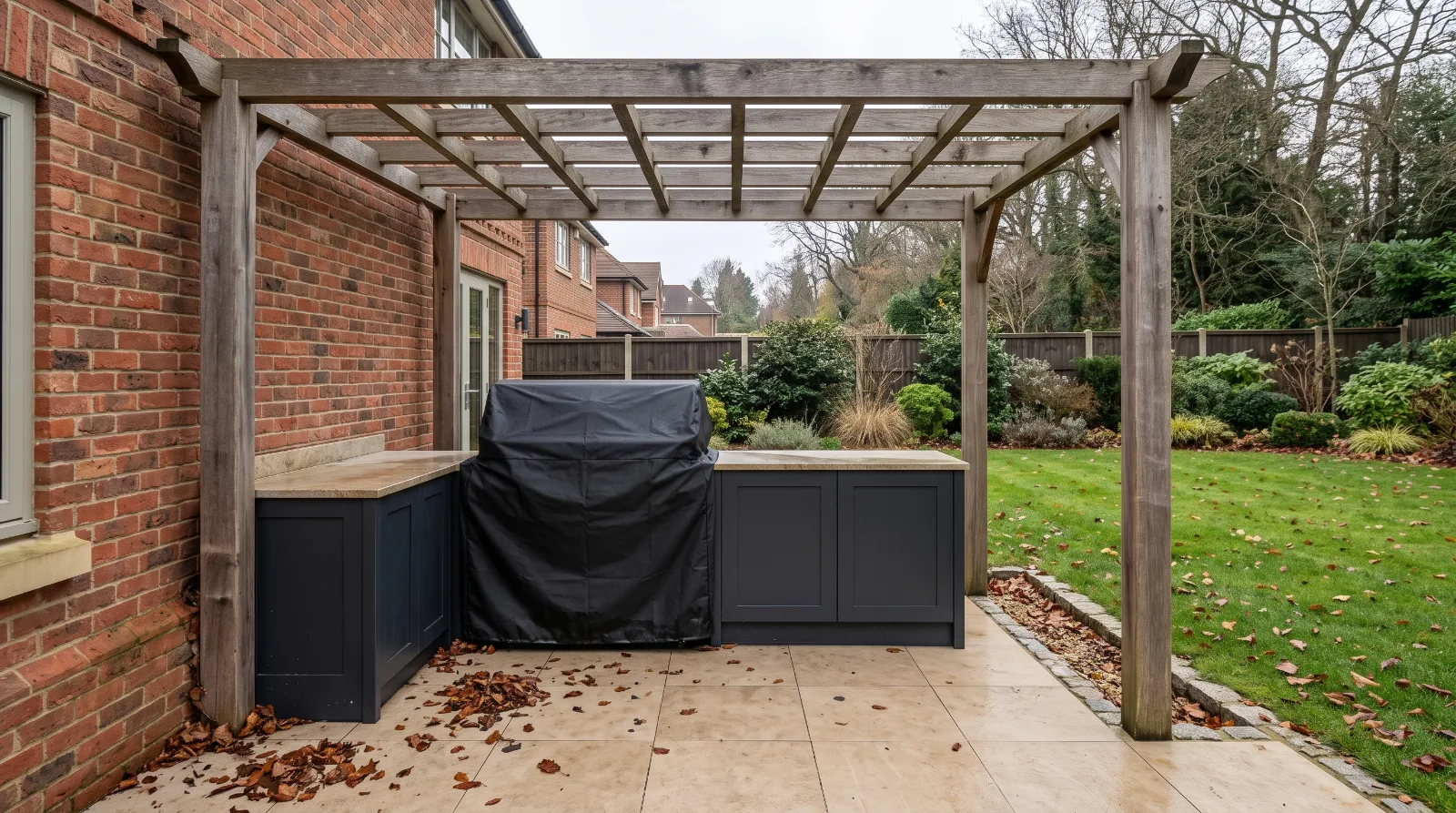
An outdoor kitchen can make entertaining much easier for homeowners who regularly cook outside.
Depending on the garden and budget, this could be anything from a dedicated BBQ area with a worktop to a larger setup with preparation space, storage and other cooking facilities.
The important part is its position.
An outdoor kitchen should be close enough to the dining area to make serving food easy, while still leaving enough room around the cooking area for people to move safely.
It is also worth considering how the kitchen will be protected from the weather and how its materials will cope with being outside.
Outdoor kitchens are increasingly being treated as part of the wider garden layout rather than standalone features, with their position, circulation and surrounding shelter playing a major role in how practical they are.
Add Shade and Shelter
British weather is not always predictable, so some form of shelter can make an entertaining space more useful.
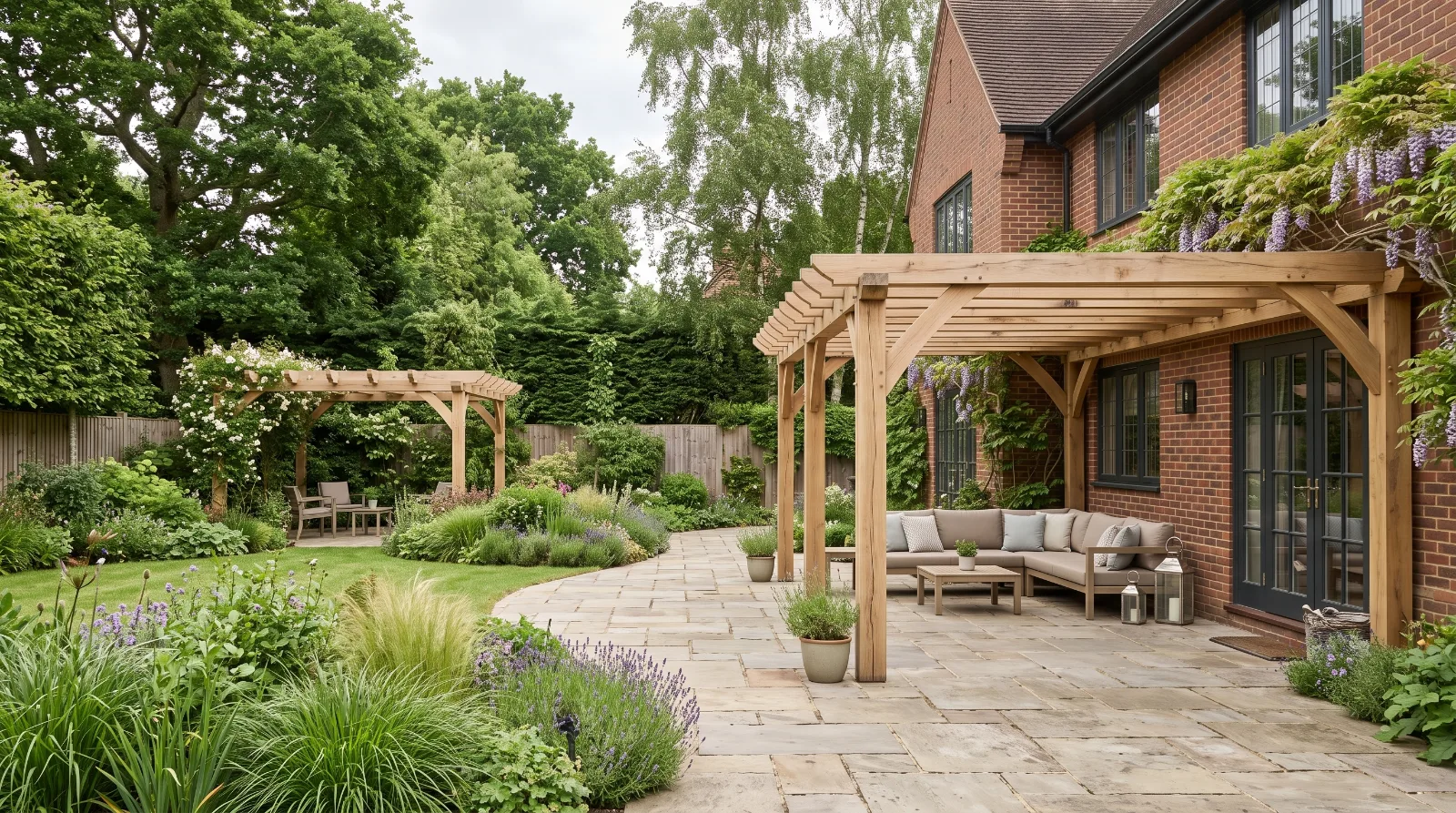
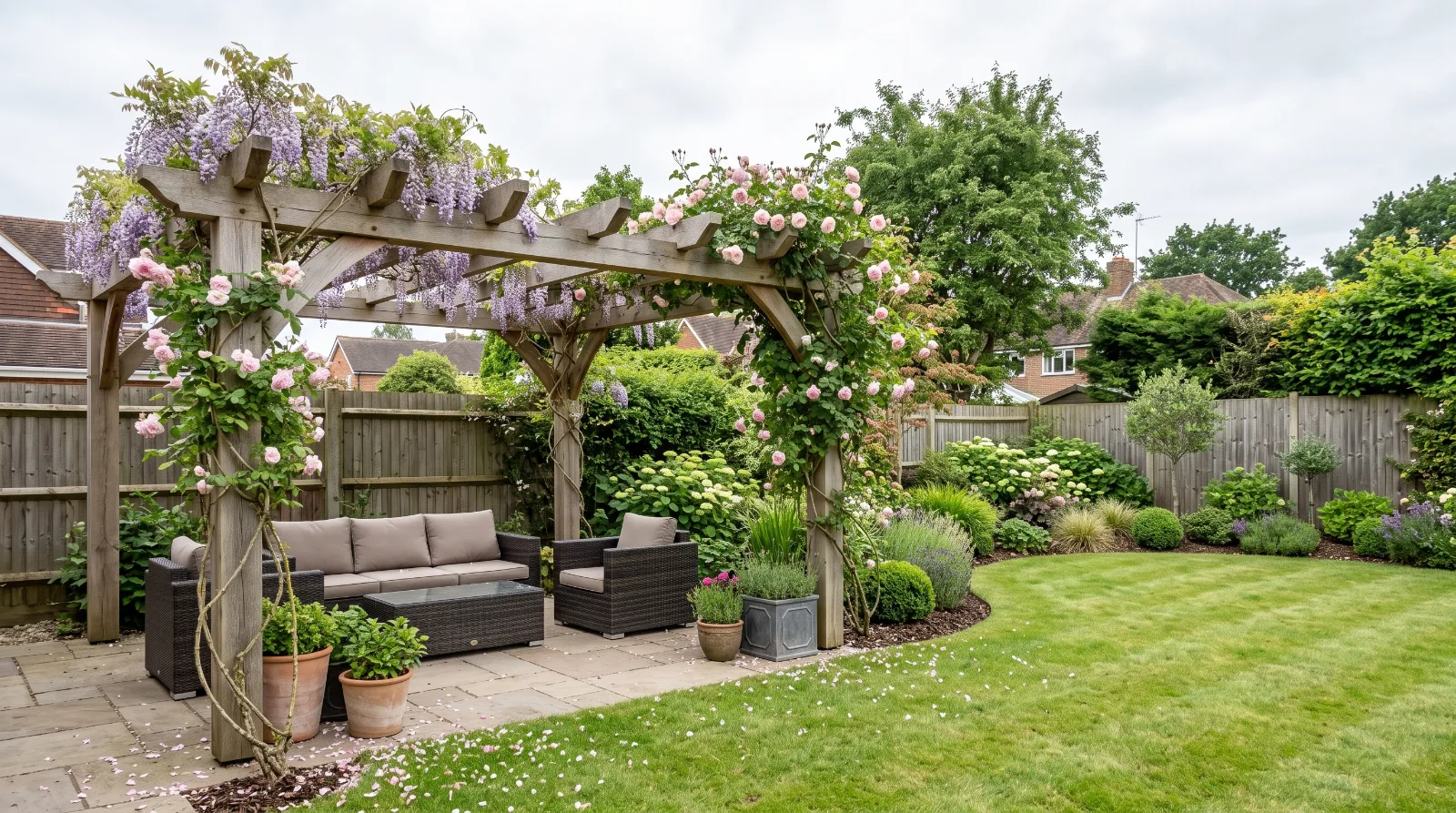
A pergola can provide structure and shade while also creating a stronger sense of an outdoor room. Depending on its design, it can also provide a framework for lighting, climbing plants or screening.
Not every garden needs a covered structure.
A mature tree, existing wall or naturally sheltered area may already provide some protection. The important thing is to consider how comfortable the entertaining space will be during the conditions in which you are most likely to use it.
A pergola should improve the garden rather than simply be included because it is fashionable.
Use Planting to Soften the Space
Large areas of paving can sometimes make an entertaining garden feel hard or overly built-up.
Planting can soften those edges and make the outdoor space feel more connected to the rest of the garden.
Consider using:
Shrubs around the patio
Grasses for movement and texture
Small trees for height
Flowering plants for seasonal colour
Evergreen plants for structure
Climbers around pergolas or screening
Planting can also help define different zones without the need for walls or solid barriers.
For example, a planting border could separate a dining terrace from the lawn while still keeping both areas visually connected.
Think About Privacy
Privacy becomes particularly important when the garden is being used for entertaining.
You want guests to feel comfortable without turning the garden into an enclosed box.
Depending on the site, privacy can be improved through:
Fencing
Trees
Shrubs
Screening
Pergolas
Layered planting
The best solution will depend on where the neighbouring properties are positioned and which parts of the garden are overlooked.
Planting can be especially useful because it creates screening while also adding greenery and visual interest.
Design for Evening Entertaining
A garden can feel completely different after dark.
Good lighting makes it possible to continue using the space into the evening while also adding atmosphere.
Rather than lighting every part of the garden equally, think about different types of lighting for different purposes.
Practical lighting
Paths, steps and cooking areas need enough light for people to move around comfortably and use the space.
Ambient lighting
Lower-level lighting around seating and dining areas can create a softer atmosphere.
Feature lighting
Trees, planting, walls and other features can be highlighted to create depth beyond the main entertaining area.
A layered approach generally works better than relying on one bright light source. Garden designers are increasingly treating lighting as part of the overall entertaining experience, with practical, ambient and feature lighting working together.
Connect the Garden to the House
One of the best ways to make an outdoor entertaining space feel natural is to create a strong relationship between the house and garden.
This might involve positioning the main patio close to the kitchen or dining area, using similar colours and materials, or creating a clear visual route between indoor and outdoor spaces.
Large doors can also make the transition feel more seamless, but even without extensive glazing, the garden layout can still create that connection.
Think about where you naturally walk when carrying food outside. The easiest route is usually the one that should influence the layout.
Don't Forget Storage
Storage may not be the most exciting part of garden design, but it becomes particularly useful when you are entertaining.
Outdoor cushions, BBQ equipment, garden furniture, games and other items can quickly make a garden feel cluttered.
Storage can be incorporated into a garden room, outdoor kitchen, shed or purpose-built structure depending on the space available.
Planning storage into the design means the entertaining areas can remain clear and usable.
Choose Materials That Work Together
An entertaining garden can contain several different materials, including paving, timber, brick, fencing, planting and garden structures.
The result can look disjointed if every element is chosen independently.
Try to create some visual consistency by repeating colours, textures or materials across different parts of the garden.
For example, the colour of the paving might complement the brickwork of the house, while timber features could be repeated through the fencing and pergola.
You do not need every material to match exactly. They simply need to work together.
Make the Garden Flexible
The best entertaining gardens can adapt to different occasions.
A large dining table may work for a family meal, while movable chairs can create more flexible seating when guests arrive.
A lawn can provide open space for children during the day and become part of the wider entertaining area during an evening gathering.
Modular or flexible furniture can also make it easier to rearrange the garden depending on how the space is being used. Current outdoor-living trends are increasingly emphasising adaptable seating and spaces that can change between everyday use and larger gatherings.
What Features Should You Include?
There is no need to include everything.
A good entertaining garden might only need a few carefully planned features:
Feature | What it can add |
|---|---|
Patio | Stable space for dining and seating |
Pergola | Shade, structure and shelter |
Outdoor kitchen | Easier outdoor cooking |
Lighting | Evening use and atmosphere |
Planting | Colour, privacy and softness |
Fencing | Privacy and defined boundaries |
Garden room | Additional enclosed space |
Lawn | Flexible open space |
The right combination depends on the size of the garden and how you actually spend time outdoors.
Avoid Designing Only for Summer Parties
It is easy to create a garden that looks fantastic on a warm summer afternoon but offers little practical value for the rest of the year.
Think about how the space will be used outside peak summer.
Covered seating, suitable lighting, evergreen planting and comfortable furniture can all help extend the usefulness of the garden.
At the same time, you do not need to design an outdoor space as though it were an indoor room. The garden should still feel natural and seasonal.
How Much Does an Entertaining Garden Cost?
There is no standard price because the scope of work can vary enormously.
A relatively simple project might involve redesigning a patio and planting areas, while a larger transformation could include extensive groundworks, multiple terraces, an outdoor kitchen, pergola, lighting and new planting.
The biggest factors affecting cost include:
Garden size
Access
Ground conditions
Amount of excavation
Paving or decking choice
Structures and features
Planting
Lighting
Drainage
Existing landscaping that needs removing
It is usually more useful to establish what you actually want the garden to achieve before setting a budget.
Design the Garden Around People, Not Just Features
An outdoor entertaining garden does not need to be enormous or packed with expensive additions.
What matters is how naturally the space works.
People should be able to move between the house, dining area, kitchen and seating without awkward routes. There should be enough space around furniture, somewhere comfortable to sit, suitable shade when needed and lighting that makes the garden enjoyable after dark.
Planting and materials should then tie everything together.
The strongest entertaining gardens are designed around how people gather, move, eat and relax, with the individual features supporting that experience rather than becoming the focus themselves. This people-first approach is also reflected in current garden-design work across the UK, including Surrey.
Need Help Designing an Entertaining Garden in Surrey?
Whether you want a simple outdoor dining area or a complete entertaining garden with patios, planting, lighting, a pergola or outdoor kitchen, good design starts with understanding how you want to use the space.
Surrey Oak Landscapes can help bring the different elements together as part of a considered garden design.
Planning an outdoor entertaining space in Surrey?
About the author