How to Choose the Right Paving for Your Garden
Choosing the right paving can transform a garden. Compare porcelain, natural stone and concrete while considering style, maintenance, drainage and use.
Choosing paving for a garden is about more than finding a colour you like. The right material needs to suit how you use the space, the style of your property, the amount of maintenance you are prepared to do and the conditions in the garden.
Porcelain, natural stone and concrete paving can all work well, but they offer different combinations of appearance, durability, maintenance and cost.
For Surrey homeowners planning a new patio, path or entertaining area, choosing the right paving at the design stage can make a significant difference to the finished garden.
Start With How You Will Use the Space
Before comparing paving materials, think about what the area actually needs to do.
A patio used for outdoor dining will have different requirements from a small garden path. A family garden may need a hard-wearing surface that is easy to clean, while a traditional cottage-style garden may benefit from the natural variation of stone.
Consider:
How often the area will be used
Whether you will regularly move garden furniture across it
Whether it will be used for outdoor dining
How exposed it is to rain and falling leaves
How much maintenance you want to do
Whether the paving needs to connect with existing paths or driveways
This immediately helps narrow down the materials worth considering.
Compare the Main Paving Options
The most common choices for garden patios in the UK include porcelain, natural stone and concrete. Natural stone itself includes several different materials, such as sandstone, limestone, slate and granite, so its performance can vary considerably.
Paving type | Appearance | Maintenance | Typical character | Best suited to |
|---|---|---|---|---|
Porcelain | Consistent and contemporary | Low | Clean, modern | Modern patios and entertaining areas |
Sandstone | Naturally varied | Moderate | Warm and traditional | Classic and informal gardens |
Limestone | Subtle and refined | Moderate | Softer, understated | Contemporary and traditional gardens |
Granite | Hard-wearing and distinctive | Low to moderate | Strong, premium look | High-use areas |
Concrete | Wide range of styles | Moderate | Versatile | Budget-conscious and practical projects |
There is no single material that is right for every garden. The important thing is matching the paving to the property and how the space will be used.
Porcelain Paving
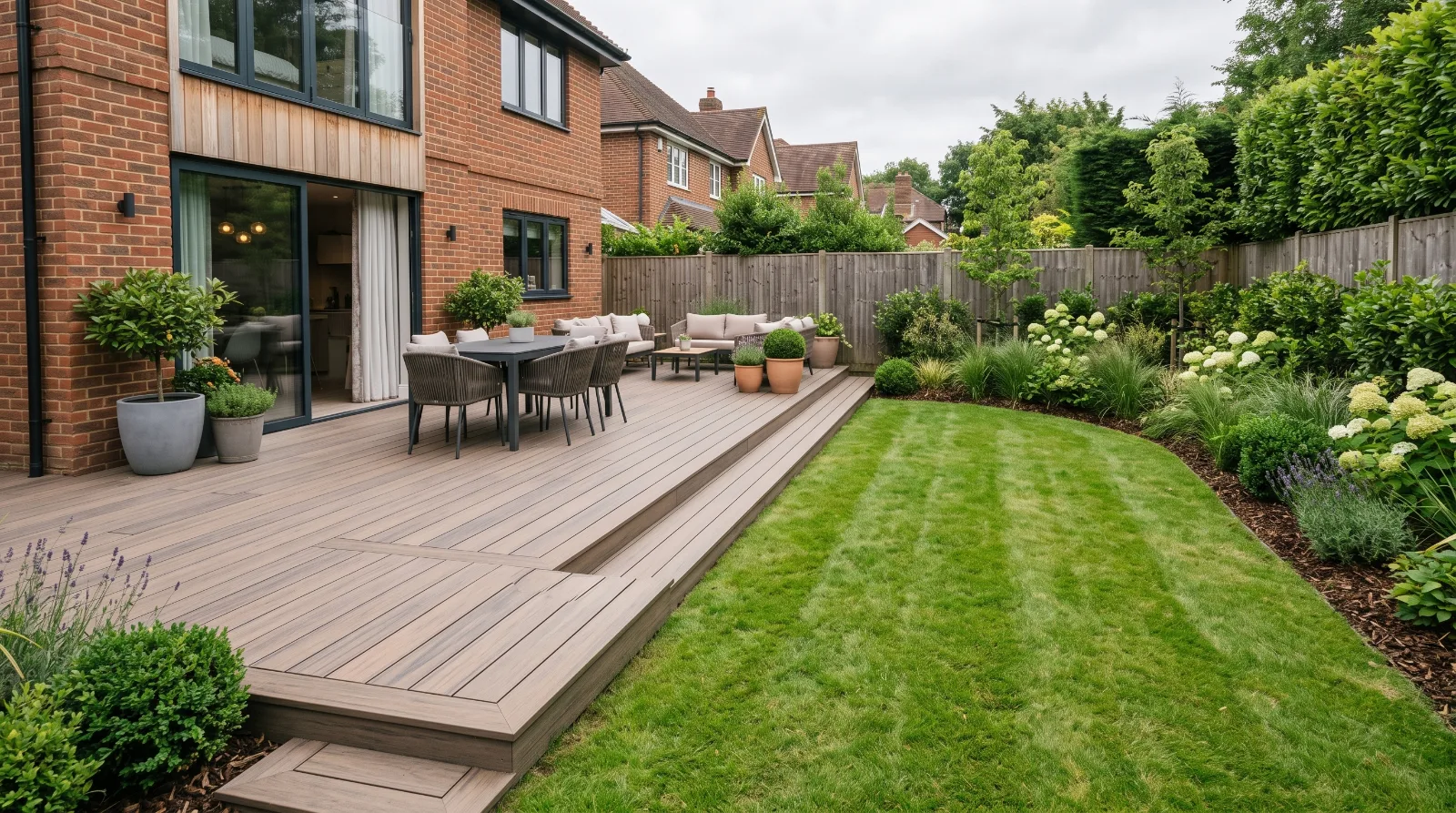
Porcelain is a popular choice for contemporary gardens because it offers a consistent appearance and a wide range of colours, textures and stone-effect finishes.
It is also very low porosity, meaning it absorbs very little water compared with more porous paving materials. This makes the surface relatively easy to clean and resistant to many everyday stains.
Porcelain can work particularly well where you want:
A clean, contemporary finish
Consistent colouring
Low day-to-day maintenance
Large-format paving
A surface that complements modern architecture
It is worth paying attention to the texture and finish rather than choosing purely based on colour. Outdoor paving needs to provide an appropriate level of grip, particularly in areas exposed to rain.
Porcelain also needs to be installed correctly. Its appearance can make uneven installation particularly noticeable, and the preparation, bedding and jointing system all need to be suitable for the paving being used.
Natural Stone Paving
Natural stone is a popular option for homeowners who want more variation and character.
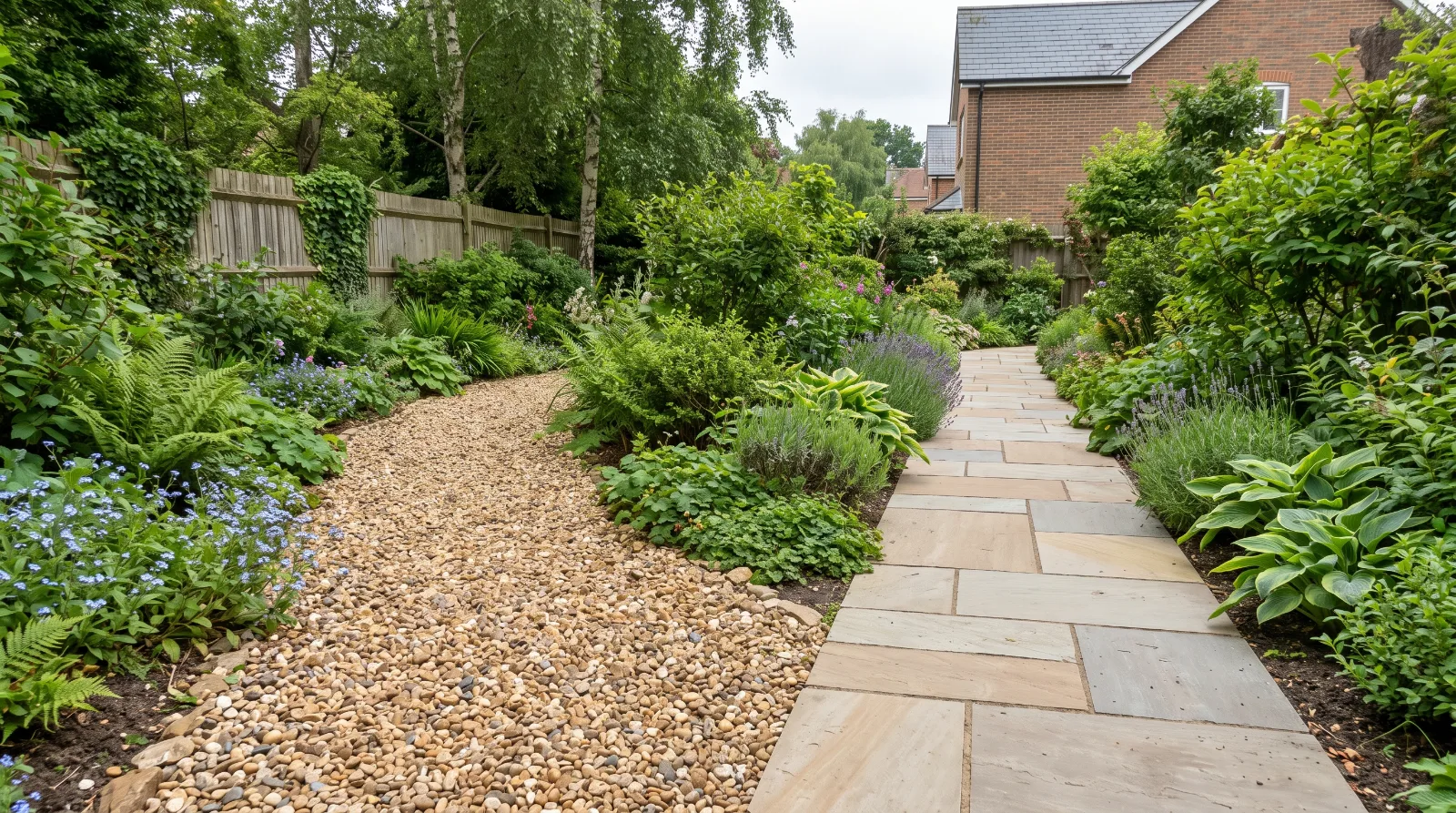
Unlike manufactured paving, every natural stone slab can have differences in colour, texture and markings. Sandstone, for example, is available in a wide range of tones and can have riven or more refined finishes.
Sandstone
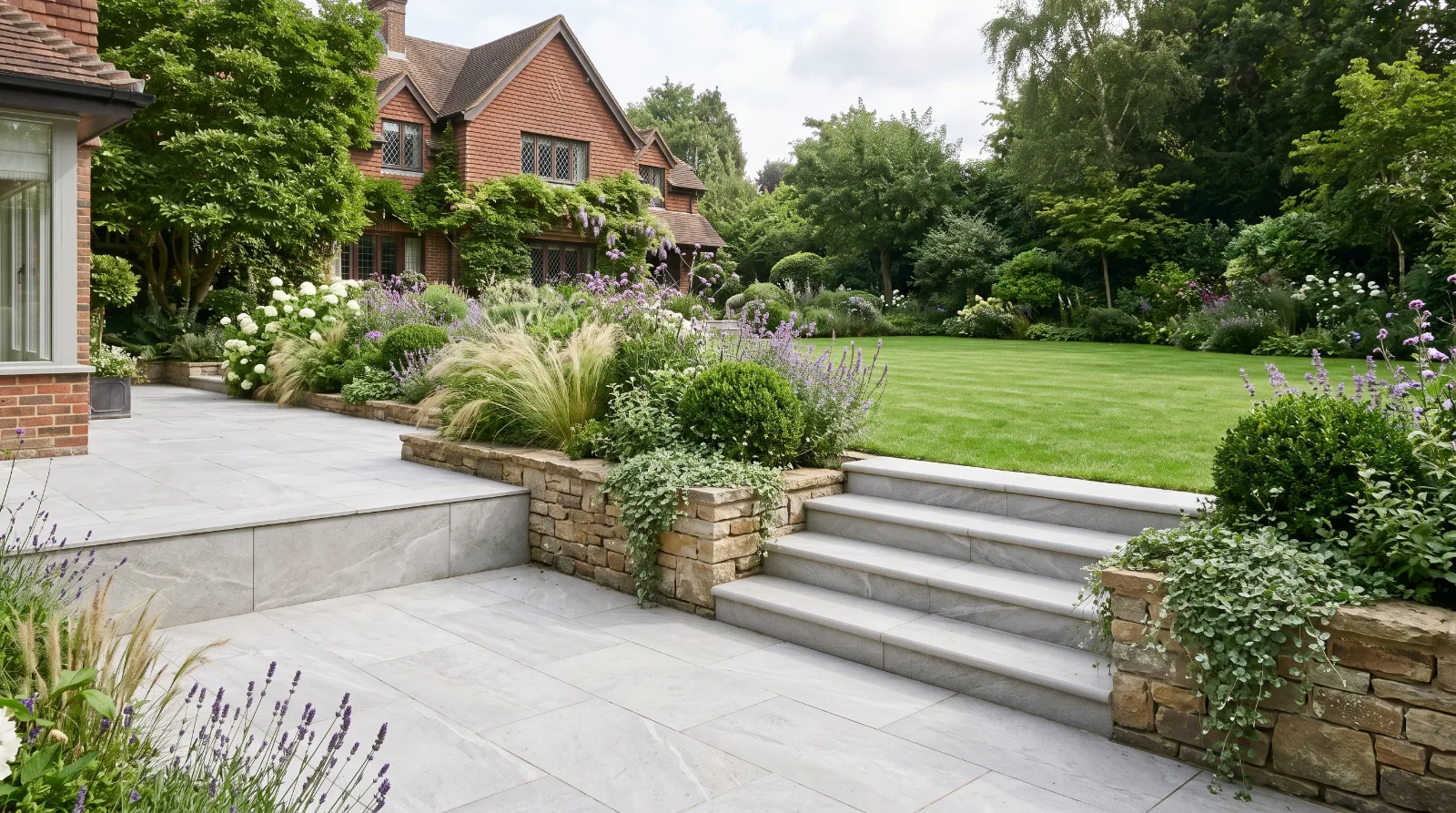
Sandstone is one of the most familiar choices for UK gardens. Its warmer colours and natural variation work particularly well with lawns, planting and traditional properties.
It is a good option when you want the patio to feel integrated with the landscape rather than looking overly uniform.
Limestone
Limestone can provide a more restrained appearance, with grey, blue, yellow and other muted tones available depending on the stone.
It can suit both traditional and contemporary gardens, particularly where you want the paving to sit quietly alongside planting and other materials.
Granite
Granite is dense and hard-wearing, making it suitable for areas where durability is important. It tends to have a stronger, more structured appearance than sandstone or limestone.
Natural stone does require some consideration of maintenance and long-term appearance. Some stones are more porous or weather differently from others, so the specific stone should be considered rather than treating all natural paving as the same.
Don't Choose Paving Based on Colour Alone
A sample can look completely different in a showroom compared with a finished garden.
Outdoor light, surrounding brickwork, planting, fencing and the size of the paved area can all affect how the colour looks.
Before making a final choice, look at paving samples outdoors if possible. Compare them against the house, existing walls and planting rather than viewing the paving in isolation. Paving suppliers also recommend checking samples in natural light because colours can change depending on lighting and surroundings.
It is also worth thinking about how the material will look when wet, dirty or shaded, rather than only when it is freshly cleaned.
Think About Paving Size and Layout
The individual paving material is only part of the design.
The size and layout of the slabs can dramatically change how a garden feels.
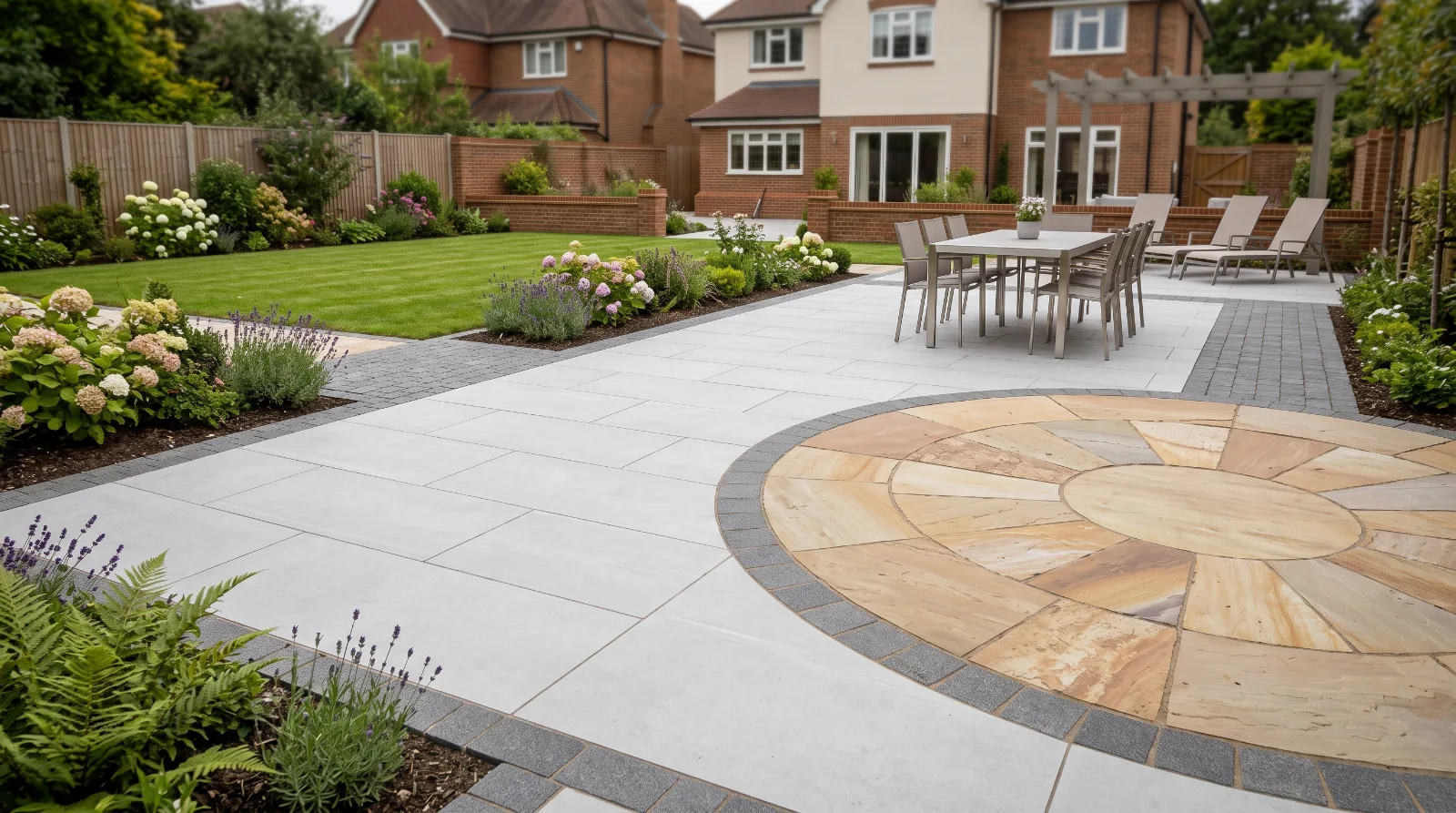
Large-format paving can create a cleaner, more spacious appearance and reduce the number of visible joints. Smaller or mixed-size paving can create a more traditional character and introduce more visual detail.
For smaller gardens, larger consistent paving can sometimes help create a less fragmented appearance. In larger gardens, mixed sizes, borders or contrasting bands can be used to define different areas.
The laying pattern should be considered alongside the shape of the patio, position of furniture and direction of movement through the garden.
Consider Drainage Before Choosing the Finish
Good paving is not simply about what sits on top. The construction underneath and the way water leaves the surface are equally important.
A patio should have an appropriate fall so rainwater can move towards its intended drainage point rather than sitting on the surface. One commonly used approach is a fall of approximately 1:80, although the appropriate arrangement depends on the site and drainage design.
The finished patio also needs to work with existing door thresholds, garden levels and surrounding ground.
This is particularly important when replacing an old patio or landscaping a sloping garden, where changing one level can affect the areas around it.
Think About Maintenance
Different paving materials require different levels of care.
Porcelain is generally easier to keep clean because of its low porosity. Natural stone can develop weathering and surface variation over time, which some homeowners see as part of its character rather than a problem.
Ask yourself how much maintenance you actually want.
If you want... | Consider... |
|---|---|
A contemporary appearance | Porcelain |
Minimal day-to-day cleaning | Porcelain |
Natural colour variation | Sandstone |
A softer, understated appearance | Limestone |
A particularly hard-wearing surface | Granite |
A practical, potentially lower-cost option | Concrete |
These are general comparisons rather than strict rules. The quality of the individual product and, importantly, the installation can make a significant difference.
Don't Forget the Installation
The paving slabs are only one part of a patio.
Proper preparation can include excavation, a suitable compacted sub-base, the correct bedding method, appropriate falls and suitable jointing. A typical patio construction includes a prepared sub-base beneath the paving rather than simply laying slabs directly onto existing soil.
This is why the cheapest paving material does not necessarily produce the cheapest finished patio.
Installation can account for a substantial part of the overall project cost because excavation, ground preparation, sub-base, bedding, cutting, jointing and labour all form part of the finished work.
How to Choose the Right Paving
A useful way to narrow down your options is to consider the following five questions:
1. What style of garden do you want?
Modern, traditional, informal or somewhere in between?
2. How much maintenance are you comfortable with?
Think beyond the first few months and consider how the paving will look after several years.
3. How will the space be used?
Dining, entertaining, relaxing, walking between areas or a combination?
4. What does your property already look like?
Your paving should complement the brickwork, architecture, fencing and planting.
5. What does the site require?
Existing levels, drainage, access and ground conditions can all influence which materials and installation methods are suitable.
Choosing Paving for a Surrey Garden
There is no universal “best” paving material. A porcelain patio might be ideal for one Surrey home, while natural sandstone or limestone could create a better result elsewhere.
The strongest garden designs consider the paving as part of the wider landscape. The material should work with the house, planting, garden layout, drainage and the way you intend to use the space.
Choosing the right paving is therefore not simply about picking the most attractive slab. It is about finding a material, layout and installation approach that will continue to work as the garden develops.
If you are planning a new patio, path or paved area in Surrey, Surrey Oak Landscapes can help you select suitable materials and create a finished design that works with the rest of your garden.
About the author