How Long Does a New Driveway Take to Install?
Planning a new driveway in Surrey? Find out how long installation can take and how groundwork, drainage, access, weather, size and your chosen surface affect the timeline.
A new driveway can make a dramatic difference to the appearance and practicality of your home, but before work begins, one question usually comes up:
How long will it take?
For a typical residential driveway, installation can often be completed within a few working days. However, the actual timeframe depends on much more than the surface you choose.
The size of the driveway, existing materials, ground conditions, drainage, access, weather and additional landscaping can all affect how long the project takes.
A driveway that looks straightforward from the outside may involve several stages of preparation before the finished surface is installed.
Typical Driveway Installation Times
The following gives a general idea for a standard residential driveway with reasonable access and no major ground complications:
Driveway Surface | Typical Installation Time | Main Factors Affecting Time |
|---|---|---|
Gravel | 1–3 days | Excavation, sub-base and edging |
Tarmac | 1–3 days | Ground preparation, drainage and surfacing |
Resin-bound | 2–4 days | Base preparation and curing |
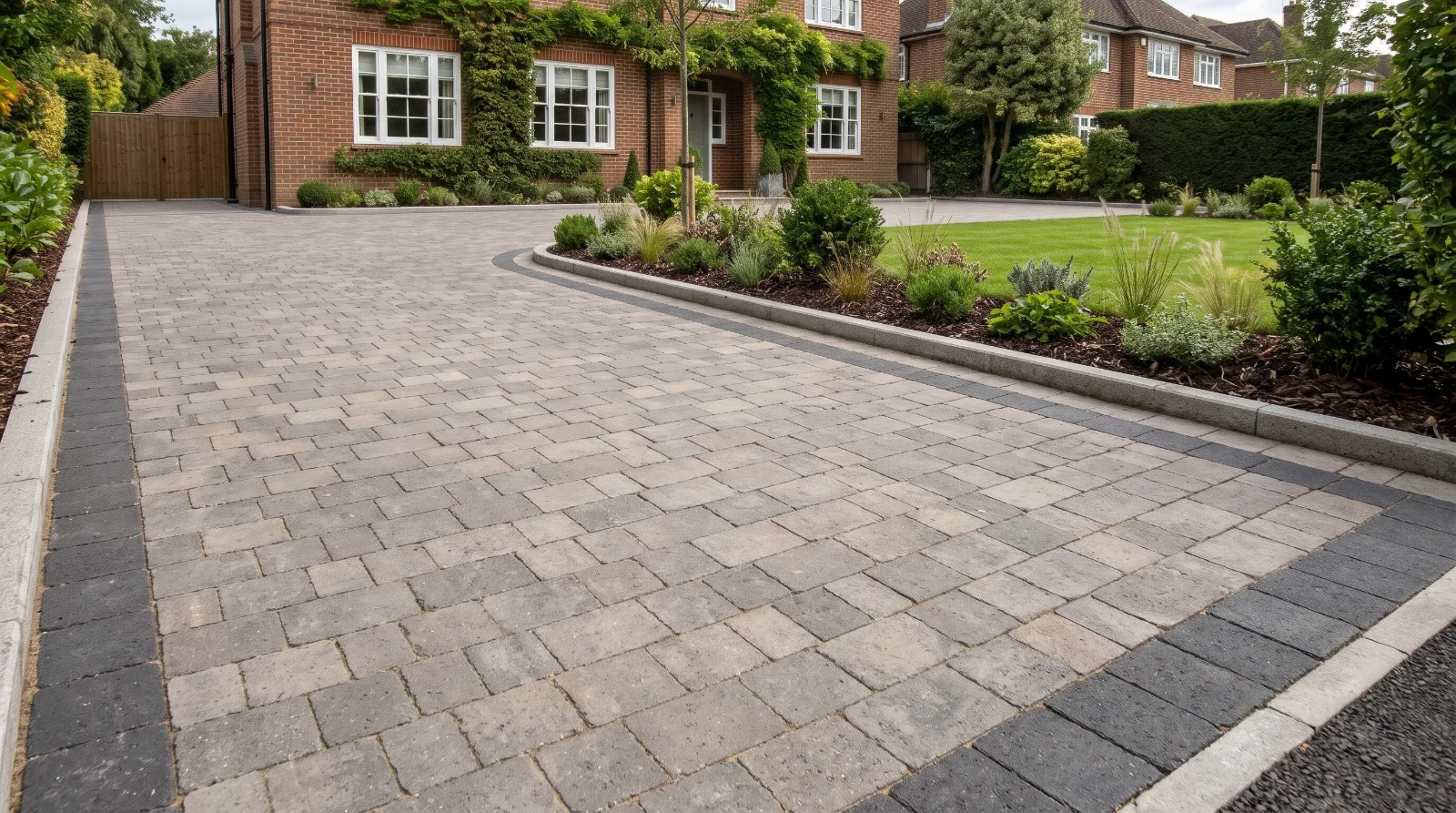
Block paving | 3–5 days | Excavation, sub-base, laying and jointing |
Complex driveway projects | 5+ days | Drainage, walls, difficult access, levels or additional landscaping |
These are general installation periods rather than guaranteed project times.
The important thing to remember is that the finished surface is only one part of the job.
What Happens During a Driveway Installation?
A professional driveway installation is normally completed in several stages.
1. Clearing the Existing Area
The first stage is preparing the site.
Depending on the project, this could involve removing:
An existing driveway
Old paving
Concrete
Grass and topsoil
Plants or small trees
Existing edging
Other unwanted materials
Everything removed from the site also needs to be dealt with, which can add time to larger projects.
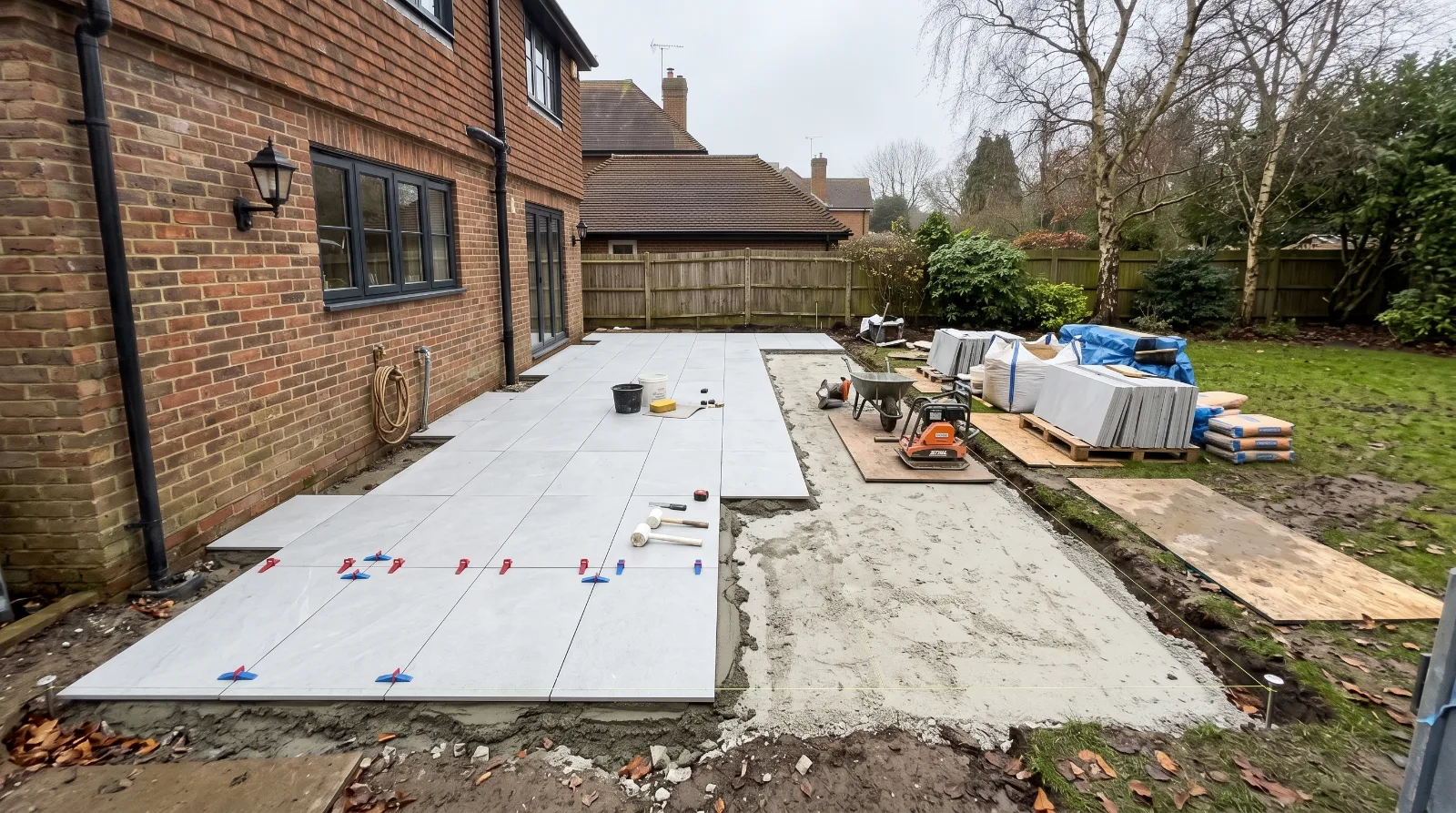
A new driveway being installed over a prepared area may progress much faster than a complete replacement requiring substantial excavation.
2. Excavation
Once the area has been cleared, the ground is excavated to create sufficient depth for the driveway construction.
The excavation needs to allow for the foundation, any required drainage, the laying or base layer and the final surface.
The exact depth depends on the surface being installed, the condition of the ground and the expected vehicle loading.
3. Ground Preparation
The exposed ground is checked before the foundation is installed.
If soft or unsuitable sections are found, they may need to be removed and replaced with appropriate material.
This is one of the reasons it is difficult to give a fixed timeframe before seeing the property.
A driveway can look simple from the surface while the ground underneath requires considerably more preparation than expected.
4. Drainage
Drainage should be considered before the driveway surface is installed.
The finished levels and falls need to be established so that rainwater can be directed appropriately rather than collecting against the house or creating standing water across the driveway.
Depending on the property, this could involve drainage channels, gullies, permeable surfacing or directing water towards a suitable permeable area.
Where additional drainage is required, this can add to the installation programme.
5. Sub-Base Installation
Once the ground has been prepared, the structural sub-base can be installed.
This is the foundation that supports the driveway above and distributes vehicle loads across the ground.
For many domestic driveways, a properly compacted aggregate sub-base forms a substantial part of the construction. The exact depth depends on the ground conditions, loading and chosen system.
The material should be installed and compacted correctly rather than simply spread across the site.
6. Edging and Surface Preparation
Before the final surface is installed, the driveway may require edge restraints, laying materials or other preparation depending on the chosen finish.
Getting these stages right helps establish the correct levels and keeps the finished driveway stable.
7. Installing the Final Surface
The final stage is installing the visible driveway.
This is where installation times can vary considerably between materials.
How Long Does Block Paving Take?
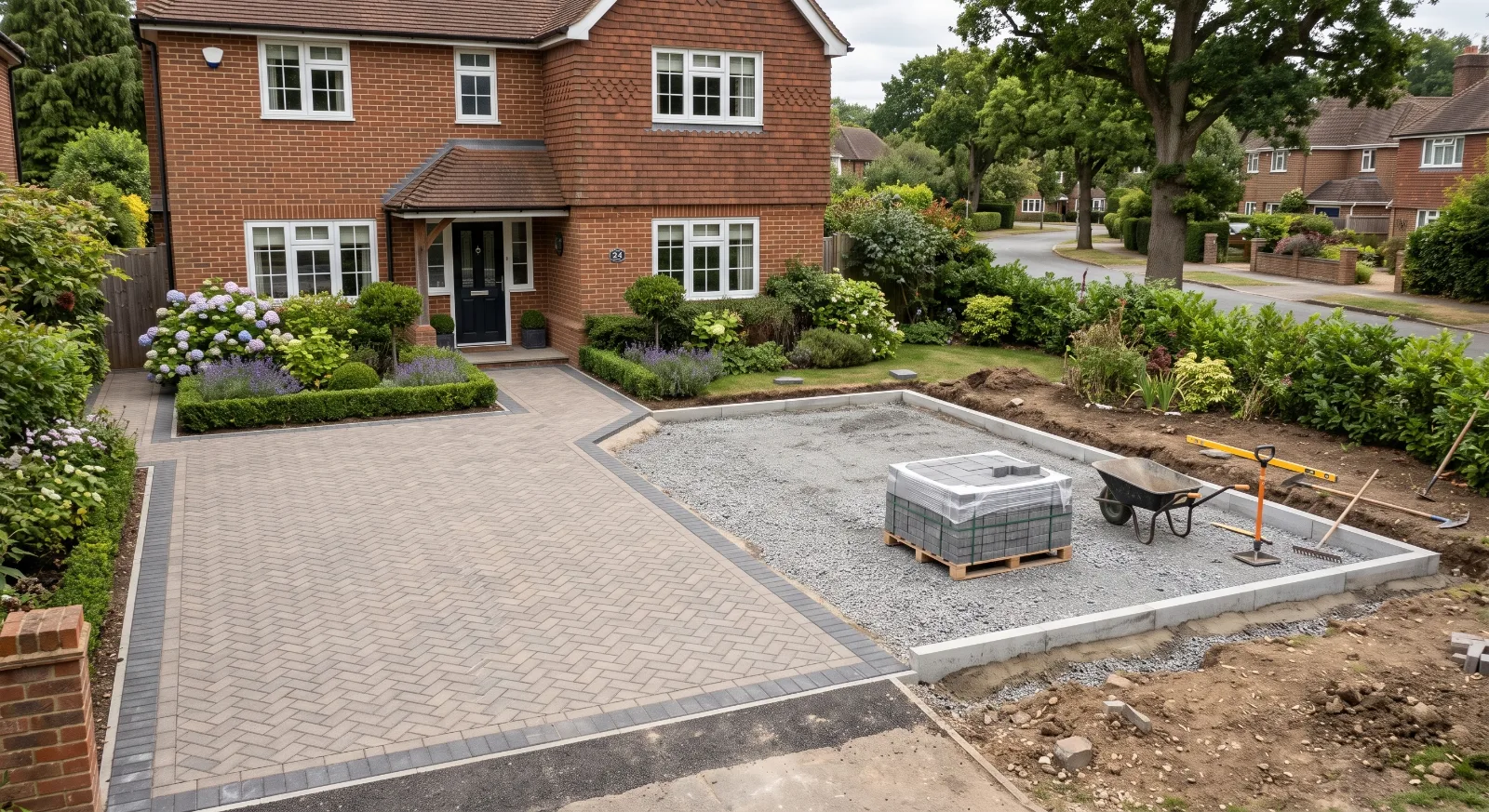
Block paving is one of the more labour-intensive driveway options because individual blocks need to be laid, aligned and cut around edges, corners, drainage points and other features.
For a standard residential driveway, around 3–5 working days is a reasonable general guide when the groundwork is straightforward.
A typical project might involve:
Stage | Approximate Time |
|---|---|
Clearance and excavation | 1 day |
Sub-base preparation | 1 day |
Edging and laying preparation | Part day – 1 day |
Block laying and cutting | 1–2 days |
Jointing and finishing | Part day – 1 day |
The actual programme can be shorter or longer.
A simple rectangular driveway can progress much faster than a large area featuring curves, contrasting borders, intricate patterns or multiple parking spaces.
Block paving also requires careful finishing, so rushing the laying process simply to reduce the number of days on site is rarely worthwhile.
How Long Does a Resin-Bound Driveway Take?
Resin-bound driveways can usually be installed relatively quickly once the foundation is ready.
A straightforward residential installation may take around 2–4 working days, although significant excavation or drainage work can increase this.
The resin itself is generally not the part that determines the whole project.
The preparation underneath can take just as much time.
If a suitable existing base can be retained, the installation may be relatively quick. If the old driveway needs to be removed and a completely new base constructed, the groundwork will add to the programme.
When Can You Drive on Resin?
Resin-bound surfacing needs time to cure before normal vehicle traffic is allowed.
The exact period depends on the product, installation conditions and weather, so your contractor should provide specific instructions for the system being used.
This means that the day installation finishes may not be the day the driveway is ready for normal vehicle use.
How Long Does a Tarmac Driveway Take?
Tarmac is often one of the quicker driveway surfaces to install.
A standard residential driveway can sometimes be completed in around 1–3 working days, assuming the groundwork and drainage are straightforward.
The process may include:
Day 1: Excavation and foundation preparation
Day 2: Base preparation and tarmac installation
Additional time: Edging, drainage or other landscaping where required
Larger driveways and sites requiring substantial excavation can take longer.
Weather conditions also need to be suitable for the work, so a contractor may need to adjust the programme when conditions are particularly poor.
How Long Does a Gravel Driveway Take?
Gravel can be one of the quickest surfaces to install once the site has been properly prepared.
For a straightforward driveway, the finished gravel surface may be installed within one or two days, although full excavation and foundation preparation can extend the overall project.
A gravel driveway still needs a properly prepared base and appropriate edging.
The fact that the surface itself is quick to install does not mean the entire driveway can necessarily be completed in a single day.
Why Groundwork Can Take Longer Than the Surface
This is one of the biggest misconceptions about driveway installation.
Homeowners often compare materials by asking how quickly the surface can be laid.
But the more important question is:
What condition is the site in before the surface is installed?
Consider two driveways of exactly the same size.
Driveway A
The existing surface is removed easily, the ground is stable, drainage is straightforward and machinery has good access.
Driveway B
The existing driveway is heavily reinforced, the ground contains soft areas, access is restricted and new drainage is required.
Both driveways may use the same final paving.
Yet the second project could take several days longer.
That is why a professional quote should be based on an assessment of the site rather than simply the square metreage.
How the Existing Driveway Affects the Timeline
Replacing an old driveway does not always mean starting from exactly the same point.
The existing surface could be:
Block paving
Tarmac
Concrete
Gravel
Loose aggregate
A mixture of previous surfaces
Removing some materials is considerably easier than others.
For example, breaking out thick concrete can require additional machinery and waste removal, while lifting existing paving may be more straightforward.
The condition of the existing foundation also matters.
A suitable existing base may sometimes be incorporated into a new driveway system, depending on the surface and its condition. In other situations, the existing construction needs to be removed completely.
The contractor should establish this before confirming the final programme.
How Weather Can Affect Driveway Installation
British weather can be unpredictable, and it can have a noticeable effect on outdoor construction.
Rain can make excavation and ground preparation more difficult, particularly where the soil becomes saturated.
Cold temperatures can affect certain materials and curing times, while heavy rain can prevent some surface treatments from being installed correctly.
This is particularly relevant to resin systems, where installation conditions need to be suitable.
A professional contractor should therefore allow some flexibility in the programme.
A short weather delay is often preferable to rushing an important stage of the installation and compromising the finished driveway.
Does Driveway Size Affect Installation Time?
Yes.
A small single-car driveway will naturally require less excavation, aggregate, paving and labour than a large double driveway.
Larger driveways also involve more material deliveries, more waste removal and more time spent preparing and finishing the area.
A driveway with multiple parking spaces or a wide turning area may therefore take considerably longer than a small front entrance, even when both use the same surface material.
The shape of the driveway matters too.
A simple rectangular layout is generally more straightforward than a design with curves, intricate borders or multiple changes in direction.
Access Can Make a Big Difference
Access is one of the first things that should be assessed during a driveway project.
Good access allows machinery, aggregate and other materials to be moved efficiently.
Restricted access can mean:
Smaller machinery is required
Materials have to be moved further by hand
Waste removal becomes more complicated
Deliveries require additional planning
Excavation takes longer
This is particularly relevant to properties where the driveway sits behind a narrow entrance or where surrounding walls, buildings or landscaping restrict access.
Two driveways with identical dimensions can therefore have very different installation programmes.
What If You're Adding Other Landscaping?
A driveway is often only part of a front garden transformation.
Homeowners may also want to add:
New planting
Garden walls
Gates
Steps
Pathways
Lighting
Raised beds
Additional parking
New drainage
When these elements are included, the overall project naturally takes longer.
However, completing everything together can have a major advantage.
The driveway, paths, planting and boundaries can all be designed as one coordinated space rather than having separate contractors working around one another.
A Typical Residential Driveway Programme
For a straightforward medium-sized driveway, a project could broadly follow this sequence:
Day 1 — Clearance and excavation
The existing surface is removed and the area is excavated.
Day 2 — Ground preparation and sub-base
The ground is prepared and the structural foundation is installed and compacted.
Day 3 — Edging and preparation
Edges, drainage and the layer required beneath the final surface are completed.
Day 4 — Surface installation
The chosen driveway material is installed.
Day 5 — Finishing and inspection
Jointing, cleaning, final adjustments and checks are completed.
This is only an example.
A straightforward tarmac or gravel project could take less time, while a detailed block-paved driveway or a project involving drainage, difficult access or additional landscaping could take longer.
When Can You Use a New Driveway?
Installation being complete does not always mean the driveway can immediately be used normally.
Different surfaces have different requirements.
Surface | After Installation |
|---|---|
Gravel | Generally usable once properly installed and settled |
Block paving | Usually available for foot traffic quickly, with vehicle use following final preparation and compaction |
Resin-bound | Requires curing before vehicle traffic |
Tarmac | Needs time to cool and strengthen before normal use |
Your installer should always tell you when the driveway can safely be used.
It is particularly important not to park on a newly installed surface simply because the main installation work has finished.
How to Keep Your Driveway Project on Schedule
A little preparation from the homeowner can make the installation process considerably smoother.
Decide on the design before work begins
Choosing the surface, edging and general layout early helps avoid changes during construction.
Make sure access is available
Move vehicles, bins, planters and other obstacles away from the working area before the installation team arrives.
Discuss drainage early
Any drainage requirements should be identified before excavation begins.
Check what the quotation includes
Make sure the quote clearly covers excavation, waste removal, sub-base preparation, edging, drainage and the final surface.
Allow for weather
Outdoor construction cannot always follow an exact calendar. Building a little flexibility into the programme is sensible.
Questions to Ask Your Driveway Contractor
Before accepting a quotation, it is useful to ask:
How long do you expect the project to take?
What groundwork is required?
Will the existing driveway need to be completely removed?
How will drainage be dealt with?
What type of sub-base will be used?
Is waste removal included?
When will the driveway be ready for vehicles?
Are there any additional landscaping works that could affect the timeline?
These questions give you a much clearer picture of what you are paying for and why the installation may take a particular amount of time.
Why a Proper Installation Takes Time
A driveway is not simply a surface that is placed over the ground.
The excavation, foundation, drainage, edging and preparation beneath the finished material are all part of the installation.
Taking the time to complete these stages properly can help create a more stable and longer-lasting result.
Trying to make a project artificially faster by skipping preparation or rushing the foundation is unlikely to be a worthwhile saving in the long run.
How Long Should You Expect Your New Driveway to Take?
For most straightforward residential projects, a few working days is a realistic starting point.
Block paving will usually take longer than gravel or tarmac because it involves more detailed installation, while resin-bound surfacing sits somewhere in between depending on the groundwork required.
However, the surface is only part of the story.
Ground conditions, excavation, drainage, access, weather, driveway size and additional landscaping can all change the programme.
The most accurate timeframe comes from assessing the property and understanding exactly what needs to happen from the existing ground through to the finished driveway.
Planning a New Driveway in Surrey?
At Surrey Oak Landscapes, we look at the entire driveway project rather than focusing only on the finished surface.
We consider the existing ground, access, levels, drainage, foundation requirements and chosen material before work begins. This allows the installation to be planned properly and gives homeowners a clearer understanding of what is involved.
Whether you're considering block paving, resin-bound surfacing, tarmac or another driveway solution, we can help create a practical and attractive entrance designed around your Surrey home.
Ready to Start Your Driveway Project?
A well-planned driveway should not only look good when it is finished. It should be properly prepared beneath the surface so it can stand up to everyday use and changing weather for years to come.
Planning a new driveway or completely redesigning your front garden?
About the author