How Deep Should Fence Posts Be?
How deep should fence posts be? Find out how far to bury fence posts, what affects the required depth and how to get a stable, long-lasting fence in Surrey.
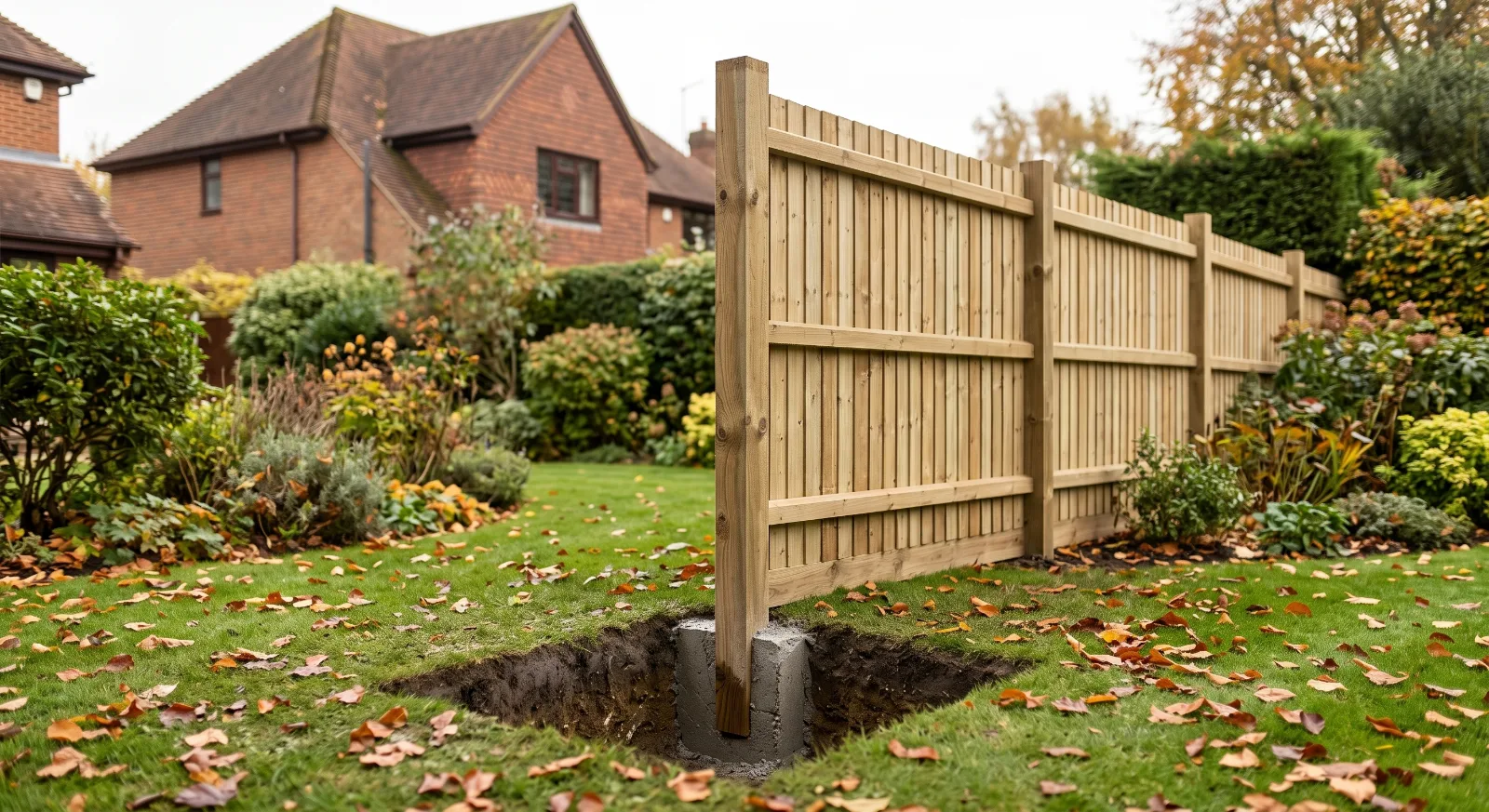
Fence posts are the foundation of any garden fence. Get the depth right and the fence has a much better chance of staying straight, secure and stable for years. Get it wrong, and you can end up with leaning posts, loose panels or a fence that starts moving after strong winds.
So, how deep should fence posts be?
For many standard domestic fences in the UK, around 600mm (2ft) below ground is a sensible starting point. A commonly used rule of thumb is to allow roughly one-third of the post length below ground, although the right depth depends on the height of the fence, the type of ground and how exposed the garden is.
How Deep Should a Fence Post Be?
For a typical 1.8m (6ft) garden fence, a post hole around 600mm deep is commonly used. This usually means using a post approximately 2.4m (8ft) long, leaving enough timber above ground for the fence while providing a solid footing below.
However, 600mm should not be treated as a fixed measurement for every fencing project. Taller fences, heavy panels, loose soil, slopes and exposed locations can all increase the amount of support required.
A practical guide to fence post depth
Fence height | Typical post depth | Suitable post length to consider |
|---|---|---|
900mm (3ft) | Around 450–600mm | 1.5m |
1.2m (4ft) | Around 600mm | 1.8m |
1.5m (5ft) | Around 600mm | 2.1m |
1.8m (6ft) | Around 600–750mm | 2.4m |
2.1m (7ft) | Around 750–900mm | 2.7m or longer |
These figures are practical starting points rather than a universal specification. Ground conditions and the type of fence being installed should always be taken into account.
Why Does Fence Post Depth Matter?
A fence is constantly exposed to forces from wind and movement in the ground. The taller and more solid the fence, the more pressure can be transferred to the posts.
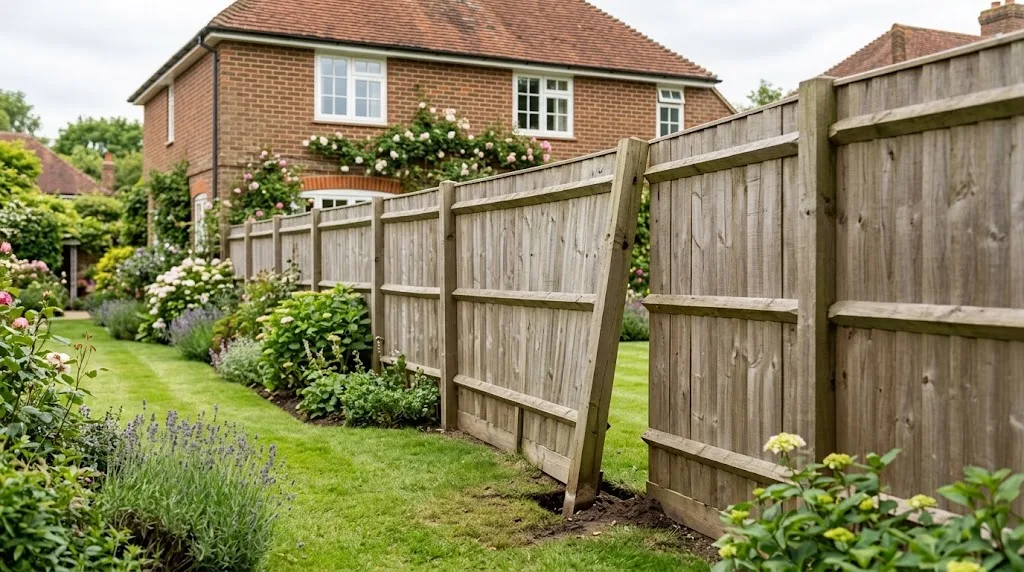
A shallow post has less support below ground, making it easier for the post to move. Once one post starts to lean, the movement can affect the adjoining panels and posts.
Getting the depth right helps to:
Keep the fence line straight
Reduce movement in strong winds
Give fence panels a stable base
Reduce the chance of posts leaning over time
Provide better support for heavier fencing
This is particularly important with solid privacy fencing, which presents a larger surface area to the wind than more open styles.
What Is the One-Third Rule?
The one-third rule is a useful way of estimating how much of a fence post should sit below ground.
The basic idea is that roughly one-third of the post should be below ground, with the remaining two-thirds above ground. It is a rule of thumb rather than a precise structural calculation, so it should be adjusted where site conditions require additional support.
For example, a 2.4m post used for a 1.8m fence leaves approximately 600mm below ground.
It is important to remember that the finished height of the fence is not the same as the length of the post. The post needs additional length to provide its underground footing.
When Should Fence Posts Be Installed Deeper?
Some fencing projects require more support than a straightforward garden fence.
Soft or loose ground
Sandy, loose or recently disturbed soil may not provide as much resistance around the post. In these conditions, increasing the depth and ensuring the post is properly secured can help improve stability.
Exposed gardens
A fence in an open or particularly windy location can experience considerably more pressure than one surrounded by buildings, trees or other sheltered features.
Going deeper can provide additional stability, particularly with tall or solid panels.
Sloping gardens
Fencing on a slope needs extra care because the ground level can change considerably from one post to the next. Each post needs to be positioned according to the finished fence line rather than simply digging every hole to the same visual depth.
Heavy fence panels
Some fencing systems are heavier than standard timber panels. The posts and foundations need to be suitable for the additional weight and forces involved.
Do Gate Posts Need to Be Deeper?
Usually, yes.
Gate posts have a different job from ordinary intermediate fence posts. Every time a gate opens and closes, the hinge post experiences additional movement and loading. Larger or heavier gates can put even more strain on the post.
For this reason, gate posts often need a wider and deeper footing than standard fence posts.
The same principle applies to corner and end posts. These positions can experience additional forces because they support changes in direction or the end of a fence run.
A gate should therefore not simply be treated as another fence panel when deciding how much support is required.
How Wide Should a Fence Post Hole Be?
Depth is important, but the width of the hole also matters.
The hole needs to provide enough space around the post for the chosen fixing material to properly secure it. A commonly used practical guide is to make the hole roughly three times the width of the post, although the exact size depends on the post and installation method.
For example, a 75mm-wide timber post could require a hole around 225mm wide.
There is little benefit in digging an unnecessarily large hole, as this uses more concrete or post-mix without necessarily providing a better installation. The aim is to create a stable footing around the post without wasting material.
What Should Go Around a Fence Post?
For traditional timber fencing, posts are commonly secured using a suitable concrete or post-mix product.
The post should be positioned vertically and supported while the fixing material sets. The surrounding material then provides resistance against movement and helps keep the post in position.
With timber posts, drainage is also worth considering. Water sitting around timber for prolonged periods can contribute to deterioration, so the installation should avoid creating a situation where moisture remains trapped against the post.
The exact installation method can vary depending on the post material, fixing system and ground conditions.
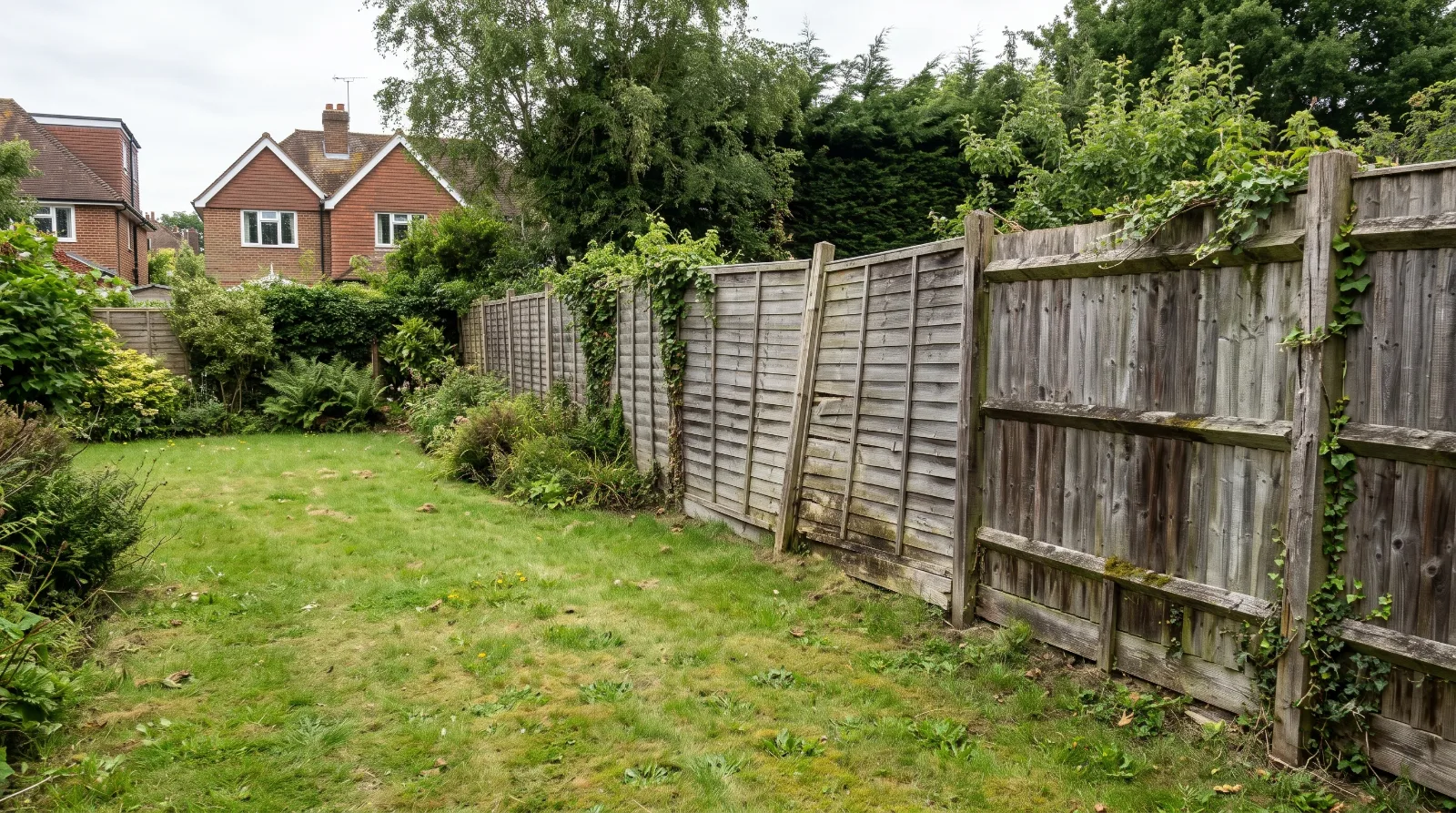
What Happens If Fence Posts Are Too Shallow?
Installing posts too shallow can cause problems that may not be immediately obvious.
A newly installed fence can look perfectly straight, only for movement to become noticeable after repeated exposure to wind and wet weather.
Common signs of inadequate support include:
Posts beginning to lean
Fence panels becoming loose
Gaps appearing between panels and posts
Movement when the fence is pushed
Sections of fencing becoming uneven
Gates dropping or becoming difficult to close
Repairing individual posts can sometimes solve the problem, but if several posts have been installed incorrectly, replacing the affected section may be the more practical solution.
Should All Fence Posts Be the Same Depth?
Not necessarily.
For a straightforward domestic fence on reasonably firm ground, keeping the posts at a consistent depth helps create a neat and stable fence line.
However, different parts of a fence can have different requirements. A gate post, corner post or post installed in particularly soft ground may need additional support compared with a standard intermediate post.
The finished fence should be considered as a complete system rather than assuming every post needs exactly the same treatment.
Getting Fence Post Depth Right
There is no single depth that works for every fence.
For a typical Surrey garden fence, 600mm is a useful starting point for many standard installations, while taller fences, gates, exposed locations and difficult ground may require deeper or more substantial foundations.
The important thing is to consider the complete installation: fence height, post length, soil conditions, exposure, panel weight and the amount of support required at gates and corners.
A well-installed fence starts below ground. Taking the time to get the posts right can make a significant difference to how straight, secure and durable the finished fence remains.
Need New Fencing in Surrey?
If your garden needs new fencing, replacing damaged panels or a complete fencing upgrade, Surrey Oak Landscapes can help. We can advise on the right fencing option for your garden, including the post depth and foundation needed for the site.
Looking for a fencing quote in Surrey? Get in touch with Surrey Oak Landscapes for a free, no-obligation quote.
About the author