Garden Zoning: How to Divide Your Outdoor Space
Planning a garden in Surrey? Discover how garden zoning can create practical spaces for dining, relaxing, entertaining, planting and everyday family life.
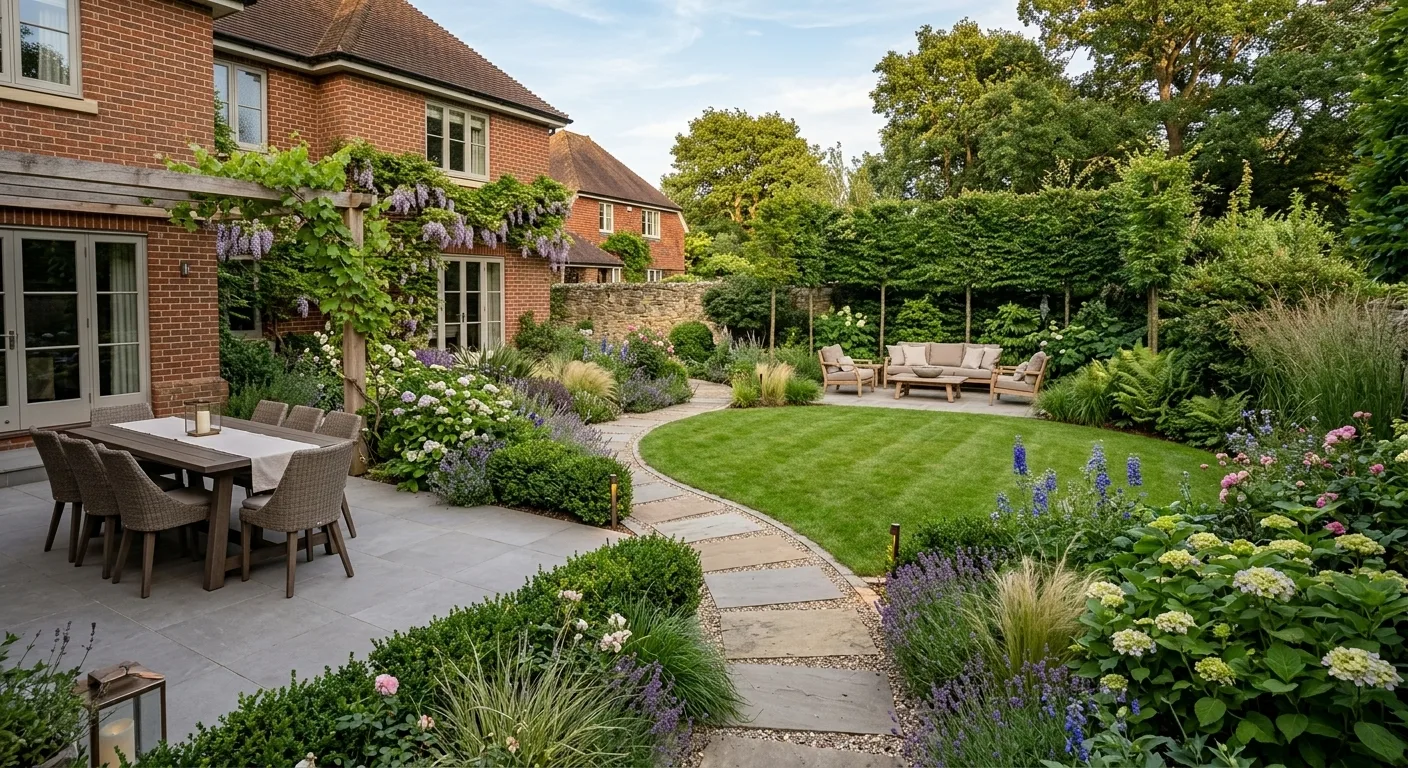
A garden works best when it is designed around how you actually use it. A place to eat, somewhere to relax, an open area for the family and quieter corners for enjoying the planting can all have their own space without making the garden feel divided.
This is where garden zoning can make a real difference.
By using changes in paving, planting, levels, screening and pathways, one garden can be shaped into several connected areas, each with a clear purpose. A well-positioned patio can become an outdoor dining space, while a lawn provides room for everyday use and a more private seating area creates somewhere to unwind.
For Surrey homeowners, thoughtful zoning can be especially effective in making the most of both compact and larger gardens. Whether you're working with a narrow suburban plot in Woking or a more spacious garden in Guildford, Cobham or Weybridge, the right layout can make the entire space feel more practical, balanced and inviting.
What Is Garden Zoning?
Garden zoning means dividing an outdoor space into separate areas based on how you want to use it.
The zones do not necessarily need walls or physical barriers. Changes in paving, planting, levels, furniture, screening and pathways can be enough to give each area its own identity.
A typical garden might include:
Garden Zone | Main Purpose | Possible Features |
|---|---|---|
Dining area | Outdoor meals and entertaining | Patio, dining table, lighting, pergola |
Relaxation area | Sitting, reading and relaxing | Sofas, planting, screening, fire feature |
Lawn area | Open space and family use | Lawn, planting borders |
Outdoor living area | Cooking and entertaining | Outdoor kitchen, barbecue, seating |
Planting zone | Softening the garden and adding structure | Borders, shrubs, trees, grasses |
Utility zone | Storage and practical tasks | Shed, bin storage, composting area |
Play area | Family activities | Open lawn, play equipment, flexible space |
Not every garden needs all of these.
The objective is to identify what your garden needs and give those uses enough space to work comfortably together.
Start With How You Actually Use Your Garden
The best garden layouts begin with how the space needs to function rather than which features look attractive individually.
Think about your normal routine.
Do you eat outside regularly? Do the children need an open area to play? Do you entertain friends? Would you use a quiet seating area? Do you need space for a shed or garden office?
It is also worth considering how the garden is currently used.
You may discover that one part of the garden is rarely used because it feels disconnected from the house, while another area is constantly busy.
A good landscape design can redistribute the space so that the garden works harder without necessarily making it feel more crowded.
Create a Natural Connection From the House
The area closest to the house often becomes the main outdoor living zone because it is the easiest place to access.
This can make it a natural position for a patio, dining area or seating area, particularly where large doors or bi-fold doors open directly onto the garden.
From there, other zones can lead further into the garden.
For example:
House → dining terrace → lawn → planting → quiet seating area
This creates a sense of progression instead of one large space with no clear purpose.
A properly planned garden also considers fixed features such as doors, windows, existing trees, boundaries, drains and buildings before deciding where new features should go. Creating a measured plan helps establish proportions and avoid expensive changes once construction has started.
Use the Right Surface to Define Each Area
One of the simplest ways to create separate zones is by changing the ground surface.
You do not necessarily need physical walls or fencing.
A large porcelain patio can establish an outdoor dining area, while a lawn immediately beyond it creates a softer open space.
A gravel path might then lead towards a tucked-away seating area surrounded by planting.
Different materials can therefore act almost like rooms within the garden.
For example
Dining zone: porcelain or natural stone paving
Main garden: lawn and planting
Secondary seating area: timber decking or another complementary surface
Pathways: matching paving, gravel or stepping stones
The key is to keep the materials visually connected. Using too many unrelated surfaces can make the garden feel fragmented rather than intentionally zoned.
Use Planting to Separate Spaces
Planting is one of the most effective ways to divide a garden without making it feel closed in.
A border can separate a lawn from a patio. A row of shrubs can create a subtle screen between seating areas. Taller planting can draw the eye away from neighbouring properties, while lower planting can maintain views across the garden.
Planting also adds softness to areas dominated by hard landscaping.
When designing borders, consider the conditions of the individual part of the garden. Soil, aspect, available light and exposure all affect which plants are likely to thrive. Planting should also be considered at its mature size rather than simply how it looks when first installed.
For a professional finish, repeating a small number of key plants throughout different zones can help tie the garden together.
Think About Privacy Without Closing Everything In
Garden zoning can be especially useful where privacy is an issue.
Rather than surrounding the entire garden with tall screening, consider where privacy is actually needed.
A seating area overlooked by neighbouring windows may benefit from taller planting, slatted screening or strategically positioned trees.
Meanwhile, the main lawn might remain relatively open.
This creates privacy where it matters without making the whole garden feel enclosed.
Screening can also be used to control views between different parts of your own garden. A simple screen might hide a utility area, shed or bin storage while keeping the main garden looking tidy.
The most effective screening often provides some separation while still allowing light and views to pass through.
Make Pathways Part of the Design
A garden can have beautiful individual areas and still feel awkward if there is no clear way to move between them.
Pathways should therefore be considered as part of the zoning rather than added afterwards.
Think about the routes you will actually take:
From the kitchen to the dining area
From the house to the lawn
From the patio to a garden room
From the house to the shed or side access
From one seating area to another
The main route should feel natural and easy to follow.
Secondary paths can then lead towards quieter corners, planting areas or less frequently used parts of the garden.
Changing the direction or width of a path can also make a long garden more interesting by revealing different views as you move through it.
Use Levels to Create Distinct Zones
Where the garden has changes in height, different levels can become an advantage rather than a problem.
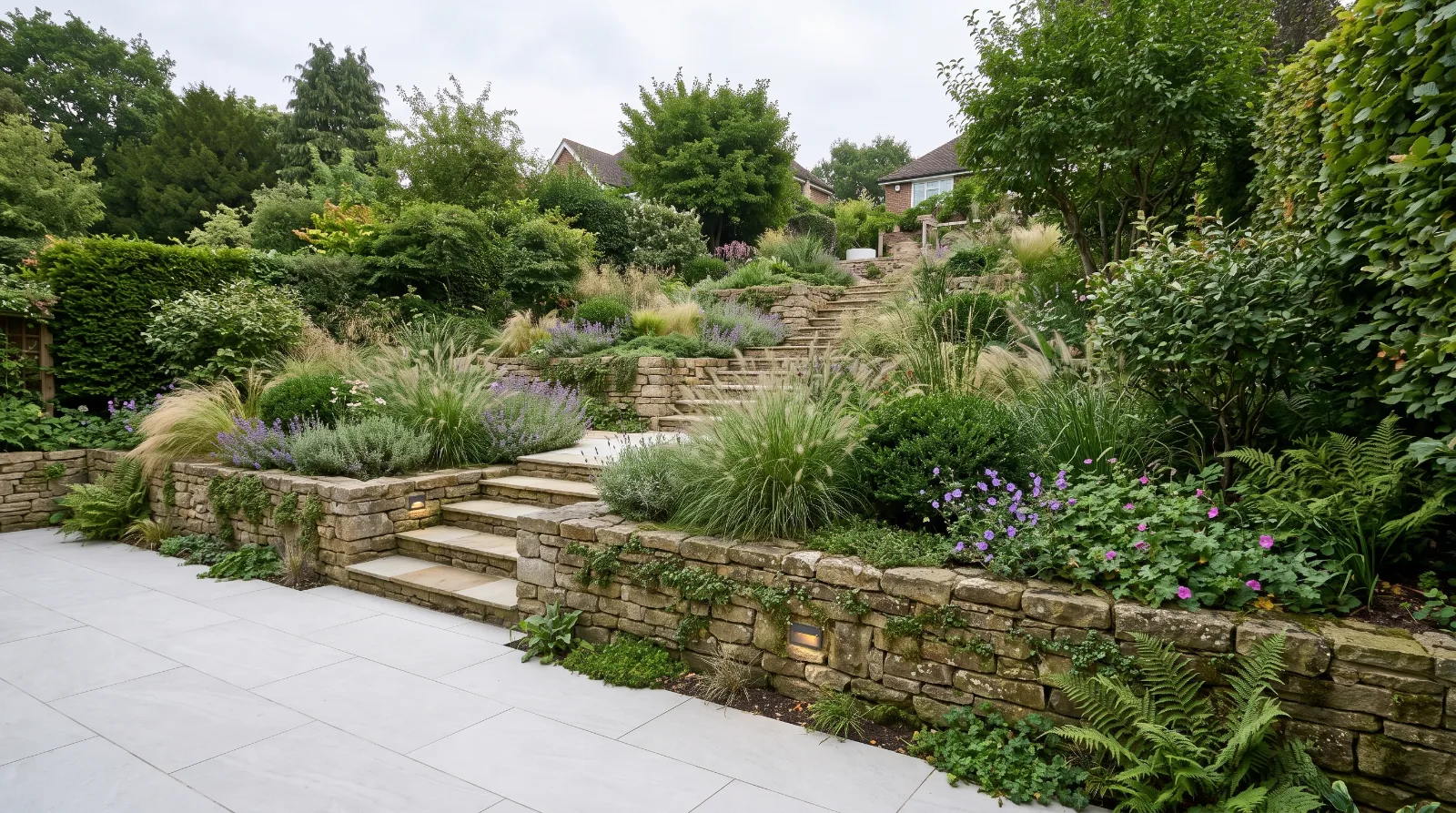
A raised terrace can create a defined dining area, while a lower lawn provides an open family space.
Steps, retaining walls and planting can then connect the levels while giving each one a clear identity.
This approach can be particularly effective in Surrey gardens where a change in level already exists.
However, level changes need to be designed carefully. Retaining structures, drainage, steps and finished levels all need to work together rather than being treated as separate elements.
Give Larger Gardens a Sense of Destination
Large gardens can sometimes feel surprisingly empty.
Simply adding more lawn does not necessarily make a large outdoor space more useful.
Instead, create destinations.
A long garden might have:
Zone 1: dining terrace close to the house
Zone 2: central lawn and planting
Zone 3: pergola with outdoor seating
Zone 4: quieter planting area or garden feature
The further you move through the garden, the more there is a reason to keep going.
This can make a large garden feel more engaging without filling every available area with features.
Make Small Gardens Feel Bigger
Zoning is not only for large gardens.
In a smaller space, it can actually make the garden feel more organised and spacious.
The trick is to avoid trying to create too many separate areas.
Instead, combine functions.
For example, one well-designed patio could provide:
Outdoor dining
Relaxation seating
Space for entertaining
Planting can then form the edges of the space while a narrow lawn or pathway provides contrast.
Keeping materials and colours relatively consistent can also prevent the garden from feeling visually cluttered.
A smaller garden usually benefits from having fewer, more deliberate elements rather than lots of separate features.
Consider Sunlight When Positioning Each Zone
A garden can feel completely different at different times of day.
An area that is sunny at lunchtime may be shaded by late afternoon, while another part of the garden may receive evening sun.
Think about when each space will actually be used.
A dining terrace might work best where it receives afternoon or evening sun, while a relaxing seating area could benefit from a cooler, more sheltered position.
The direction a garden faces, nearby buildings, walls and existing trees can all affect sunlight and shade, so these should be considered before fixing the position of patios, seating and planting.
Design for Evening Use
A garden does not stop being useful when the sun goes down.
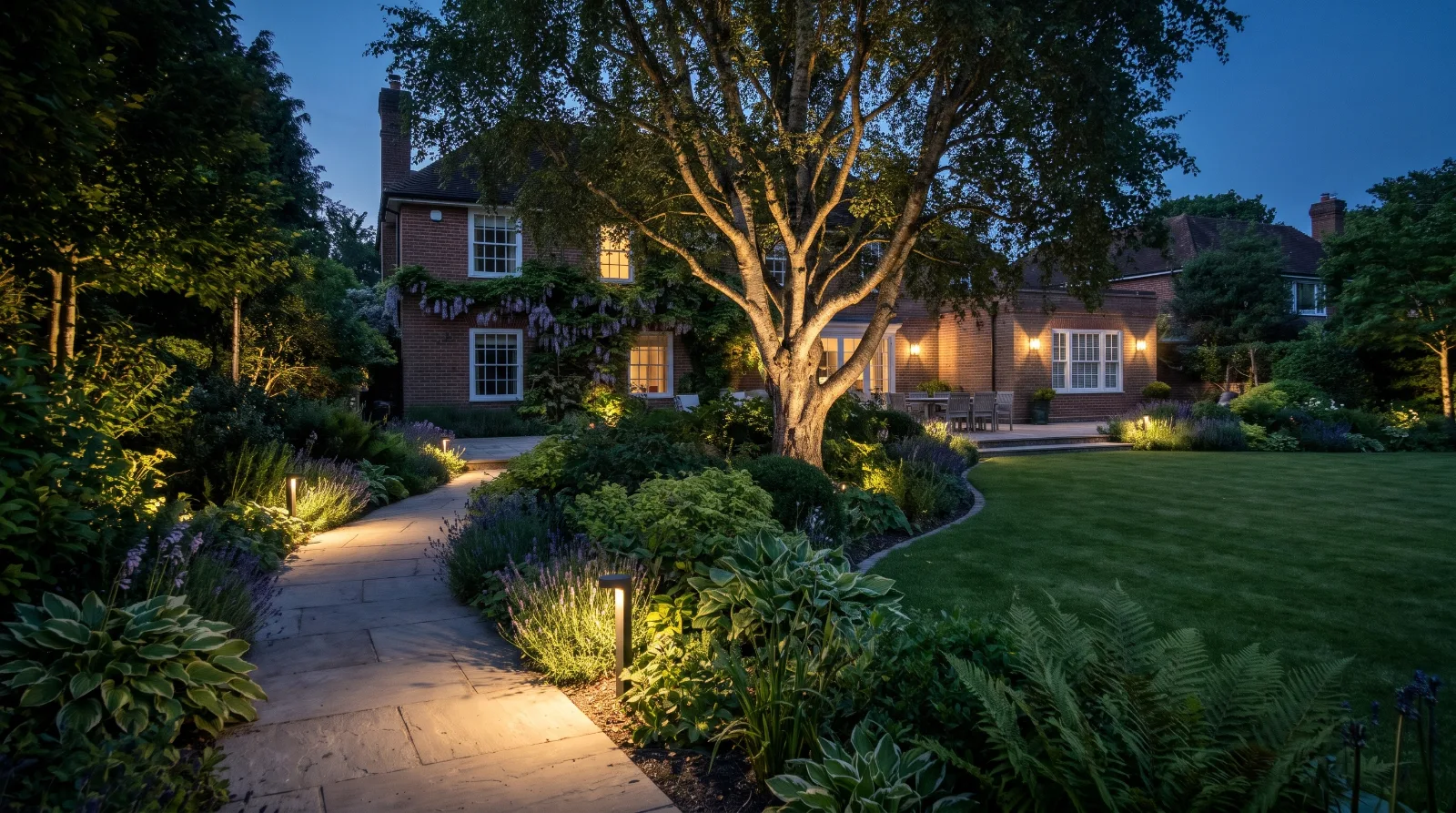
Lighting can help separate and connect zones after dark.
For example:
Dining area: subtle overhead or surrounding lighting
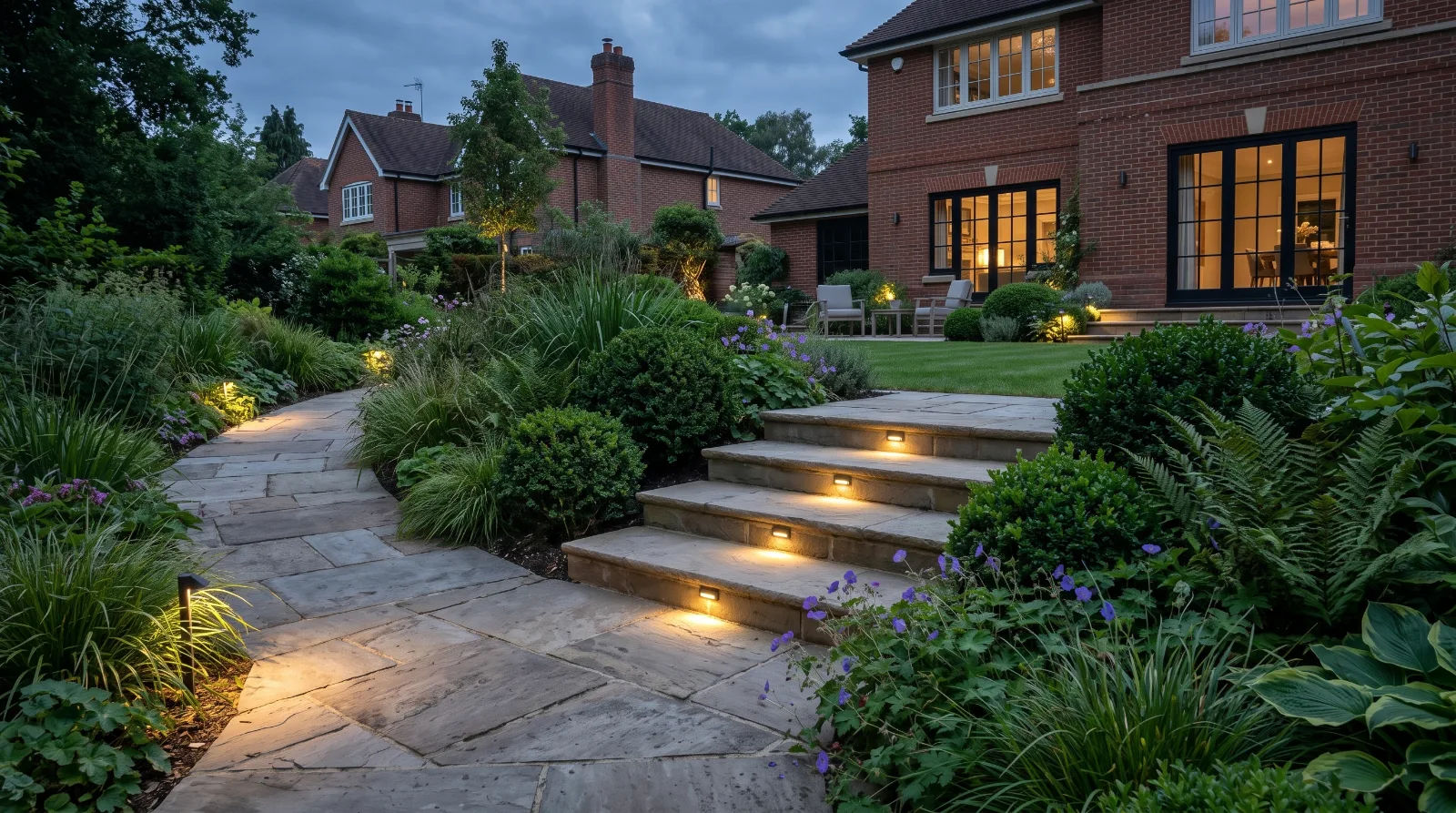
Paths: low-level lights to guide movement
Planting: feature lighting for trees or architectural planting
Seating area: softer ambient lighting
Steps: discreet lighting for visibility
The aim should not be to illuminate every corner equally.
A mixture of light and shadow can create depth and make the garden feel more atmospheric in the evening.
Don't Forget Practical Zones
Beautiful landscaping still needs to accommodate the less glamorous parts of garden life.
Bins, sheds, outdoor equipment and maintenance areas all need somewhere to go.
Rather than allowing them to become visually disconnected from the main garden, they can be incorporated into the design.
Screening can hide storage areas, while paths can provide practical access without cutting through the main entertaining space.
Irrigation points, drainage access and other maintenance requirements should also be considered during planning rather than being added as an afterthought.
How to Make the Zones Feel Like One Garden
One of the biggest mistakes with garden zoning is creating several areas that look completely unrelated.
The answer is to repeat elements.
You might use the same paving around the house and in a smaller seating area further down the garden.
The same planting palette can appear in different borders.
A consistent timber finish can be repeated through a pergola and screening.
Lighting can use the same style of fitting throughout the space.
These small connections make separate zones feel like parts of one complete garden.
Three Garden Zoning Ideas for Surrey Homes
The Entertaining Garden
Ideal for homeowners who regularly host family and friends.
Layout:
Patio → outdoor dining → lawn → seating area
Key features:
Large paved terrace, pergola, outdoor kitchen, lawn and atmospheric lighting.
The Family Garden
Designed to balance entertaining with everyday use.
Layout:
Patio → lawn → planting → play or activity area
Key features:
Durable surfaces, open lawn, practical paths, structured planting and hidden storage.
The Relaxation Garden
Focused more on calm, privacy and enjoying the garden.
Layout:
Terrace → planted transition → secluded seating area
Key features:
Evergreen screening, layered planting, comfortable seating, subtle lighting and a quieter destination towards the end of the garden.
Garden Zoning Mistakes to Avoid
Creating too many zones
More zones do not automatically mean a better garden. Too many separate areas can make the space feel busy and disconnected.
Making every zone the same size
Different activities require different amounts of space. A dining area may need generous room around furniture, while a planting zone can take up a narrower part of the garden.
Ignoring the main route through the garden
A garden should feel easy to move through. Paths and transitions need to connect the zones naturally.
Choosing materials independently
Using a different paving material, colour and style in every section can make the garden feel chaotic.
Forgetting how the garden changes throughout the day
Sun, shade and evening use should all influence the layout.
Designing only for the present
Trees and shrubs grow, families change and gardens evolve. The layout should have enough flexibility to remain useful over time.
Garden Zoning Works Best When It Is Planned From the Start
Garden zoning is not about dividing a garden into as many sections as possible.
It is about giving each part of the space a purpose.
A successful layout should make the route from the house feel natural, provide places to eat and relax, allow enough open space for everyday use and use planting and materials to connect everything together.
For larger Surrey gardens, zoning can also help transform an underused plot into a series of spaces that feel purposeful without sacrificing the sense of openness.
At Surrey Oak Landscapes, we consider how each part of the garden will be used before bringing the design together. Patios, lawns, planting, pergolas, pathways, lighting, irrigation and screening can all be coordinated to create a garden that feels cohesive from the house to the furthest boundary.
Create a Garden That Works for You
The best garden is not necessarily the one with the most features. It is the one where every part has a reason to be there.
Whether you want a dedicated dining terrace, a private seating area, more space for the family or simply a better way to make use of a long or awkward garden, thoughtful zoning can completely change how the space feels.
Planning a new garden or looking to make better use of your existing outdoor space?
About the author