Garden Path Ideas for Surrey Gardens
Discover garden path ideas to suit traditional and contemporary Surrey gardens. Compare paving materials, explore layout options and learn how to create a practical, attractive path that complements your outdoor space.
A well-designed garden path does more than connect one part of the garden to another. It guides movement, creates structure and helps different areas feel connected. Whether leading from the patio to a seating area or providing a practical route to the shed, the right path can make a garden more attractive and easier to use throughout the year.
For homeowners exploring garden path ideas in Surrey, there are plenty of options to suit different properties, from traditional country gardens to contemporary outdoor spaces. The key is to choose a design that complements the house, works with the existing landscape and stands up to everyday use.
1. Choose a Garden Path Style That Suits Your Space
Before choosing materials, consider how the path will fit into the overall garden design. Its shape, position and proportions can influence how the entire space looks and feels.
Straight Paths for a Clean, Structured Look
A straight path creates a clear route between two points and works particularly well in contemporary gardens, formal layouts and smaller outdoor spaces. It can also make a narrow garden feel more organised by establishing a strong visual line.
Large-format paving, brick edging or neatly arranged rectangular slabs can reinforce this effect. Repeating colours or materials already used on the patio or around the house helps create a consistent finish.
Straight paths are especially practical for frequently used routes to gates, garden rooms and storage areas.
Curved Paths for a Softer, More Natural Appearance
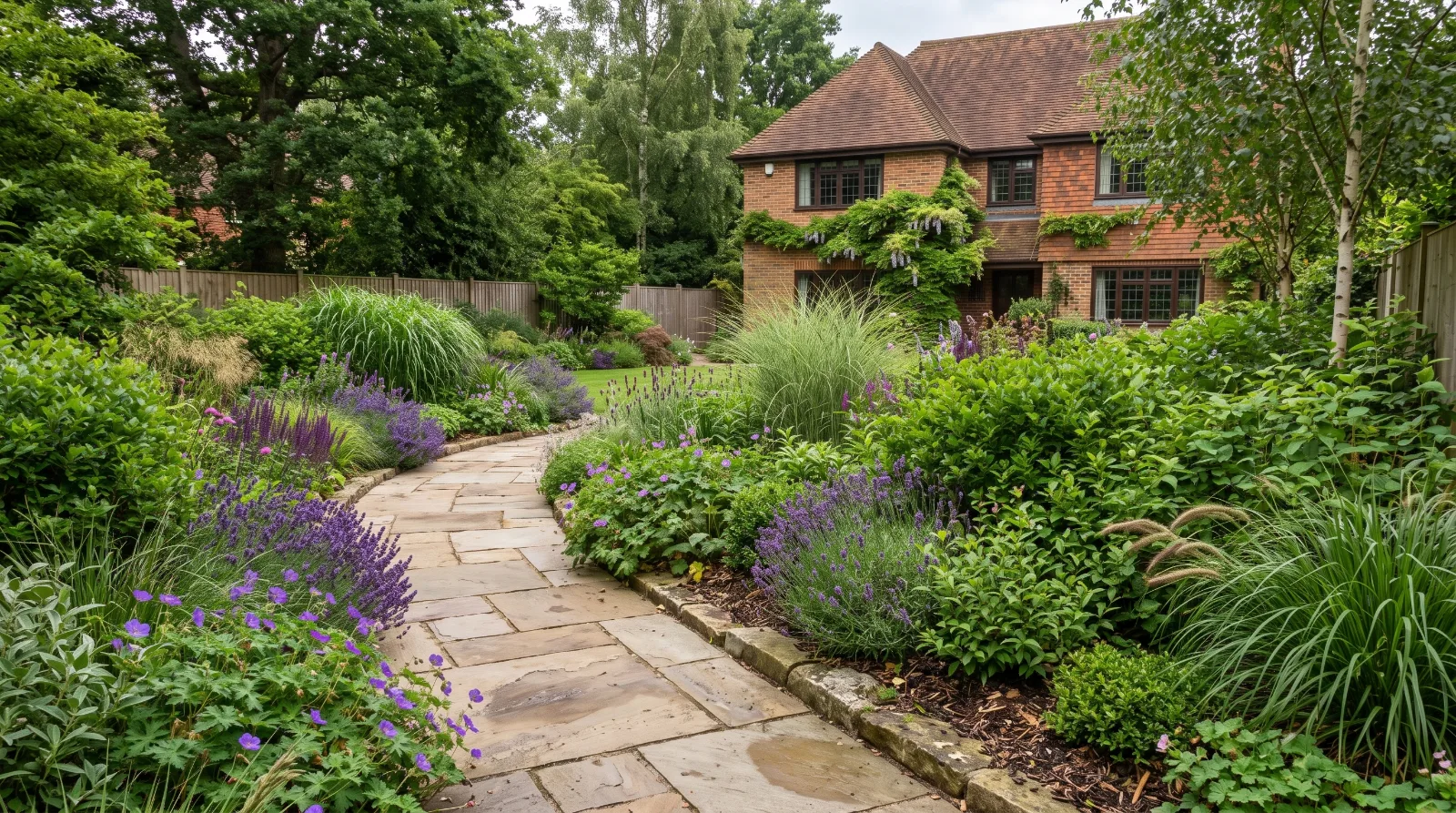
Curved paths introduce movement and can make a garden feel more relaxed. They work particularly well in larger gardens, cottage-style landscapes and areas with generous planting.
A gentle curve can lead visitors past flowering borders or a specimen tree before revealing a seating area further into the garden. This creates a sense of discovery without making the route unnecessarily complicated.
The most successful curves have a purpose. Allowing the path to follow the shape of a border, work around an established tree or accommodate changes in level will generally look more natural than adding bends simply for decoration.
Stepping-Stone Paths for Informal Gardens
Stepping stones offer a lighter alternative to a continuous paved surface. They can be set into gravel, lawn or low-growing planting to create a route that feels integrated with the garden.
This approach works well in relaxed planting schemes, smaller gardens and spaces where maintaining a larger area of paving would feel excessive.
For everyday access, however, the stones should be stable, evenly positioned and large enough to provide comfortable footing. A lawn route may also become muddy or difficult to use during wet weather, so the intended use should determine where stepping stones are appropriate.
2. Compare the Best Materials for Garden Paths
The material you choose affects the appearance, maintenance requirements, durability and practicality of the finished path. There is no single option that suits every garden.
Path material | Best suited to | Main consideration |
|---|---|---|
Natural stone | Traditional, country and premium gardens | Stone colour, texture and finish influence appearance and grip |
Porcelain paving | Contemporary gardens and modern homes | Requires careful installation and a suitable outdoor, slip-resistant finish |
Brick paving | Period properties and classic garden designs | Creates character and works well with straight or curved layouts |
Gravel | Informal paths and cottage gardens | Needs suitable edging and occasional replenishment |
Stepping stones | Informal routes through lawns or planting | Placement and stability are important for comfortable use |
Block paving | Practical paths and frequently used routes | The base and edge restraints need to be properly installed |
Bark or woodchip | Woodland-style gardens and occasional-use paths | Breaks down over time and requires topping up |
Natural Stone for a Timeless Finish
Natural stone can bring warmth, texture and character to a garden. Sandstone, limestone and other suitable paving stones offer different colours and finishes, making it possible to coordinate the path with existing patios, walls and planting.
For traditional Surrey properties, natural stone can sit comfortably alongside brickwork, mature trees and established borders. Textured finishes are generally preferable to very smooth surfaces in areas exposed to rain or shade.
Porcelain for Contemporary Gardens
Porcelain paving suits gardens with clean lines, restrained planting and modern outdoor living areas. Its consistent colour and precise edges can create a crisp, well-defined route, particularly when the path matches an adjoining patio.
Outdoor porcelain is also valued for its resistance to staining and relatively straightforward routine cleaning. However, the finish matters: choose paving designed for outdoor use, with appropriate slip resistance for the conditions in which it will be installed.
Brick for Traditional Character
Brick paths complement red-brick houses, period properties and cottage-style gardens. They can be laid in different patterns, including herringbone and stretcher bond, to create either a decorative feature or a simple, understated route.
Brick paving is also useful for edging a gravel path or framing a section of planting. Using compatible tones from the house or nearby structures helps the finished design feel established rather than added as an afterthought.
3. Use Gravel and Planting to Create a Softer Look
Not every garden path needs to be paved from edge to edge. Combining a simple walking surface with carefully chosen planting can create a more relaxed appearance while maintaining a clear route through the garden.
Gravel Paths with Defined Edges
Gravel is a versatile option for informal and traditional gardens. Its colour can be selected to complement nearby paving, brickwork or foliage, while a curved layout can sit naturally within a planted landscape.
Good edging is essential. Brick, stone or suitable metal edging helps prevent gravel from spreading into the lawn and keeps the path looking tidy.
Gravel can be less convenient for wheelbarrows, pushchairs and wheeled bins, particularly when the surface is loose. For frequently used routes, a firmer surface or a suitable stabilisation system may be more practical.
Planting Along the Path
Planting can soften hard landscaping and make a path feel like part of the garden rather than simply a walkway.
For a traditional look, consider lavender, hardy geraniums, catmint and ornamental grasses, choosing varieties that suit the site's soil and light conditions. More contemporary schemes can use repeated groups of grasses and restrained evergreen planting to create a cleaner, more structured appearance.
Leave enough room for plants to mature without obstructing the walking surface. Overhanging foliage may look attractive, but it can make narrow paths difficult to use and trap moisture against paving.
4. Plan for Drainage, Levels and Year-Round Use
A garden path should work as well in November as it does on a dry summer afternoon. Its construction is just as important as the surface material.
Consider the Ground Conditions
Gardens across Surrey vary considerably in their soil and ground conditions. Some sites have heavier clay soils that hold moisture, while others have chalkier or more free-draining ground.
This affects how water moves through the garden and how the path should be constructed. A surface that performs well in one garden may not be suitable for another without adjustments to the foundation or drainage arrangements.
Where possible, consider permeable materials and allow water to drain into appropriate areas within the garden. Avoid creating a path that directs runoff towards the house, neighbouring properties or parts of the garden that already suffer from standing water.
Get the Foundation Right
Uneven slabs, sinking sections and loose paving often indicate problems beneath the surface. Proper excavation, a suitable compacted sub-base, stable edging and appropriate bedding materials help reduce the risk of movement over time.
The construction method should reflect the material, ground conditions and expected use. A lightly used stepping-stone route will not need exactly the same specification as a main paved walkway carrying wheelbarrows regularly.
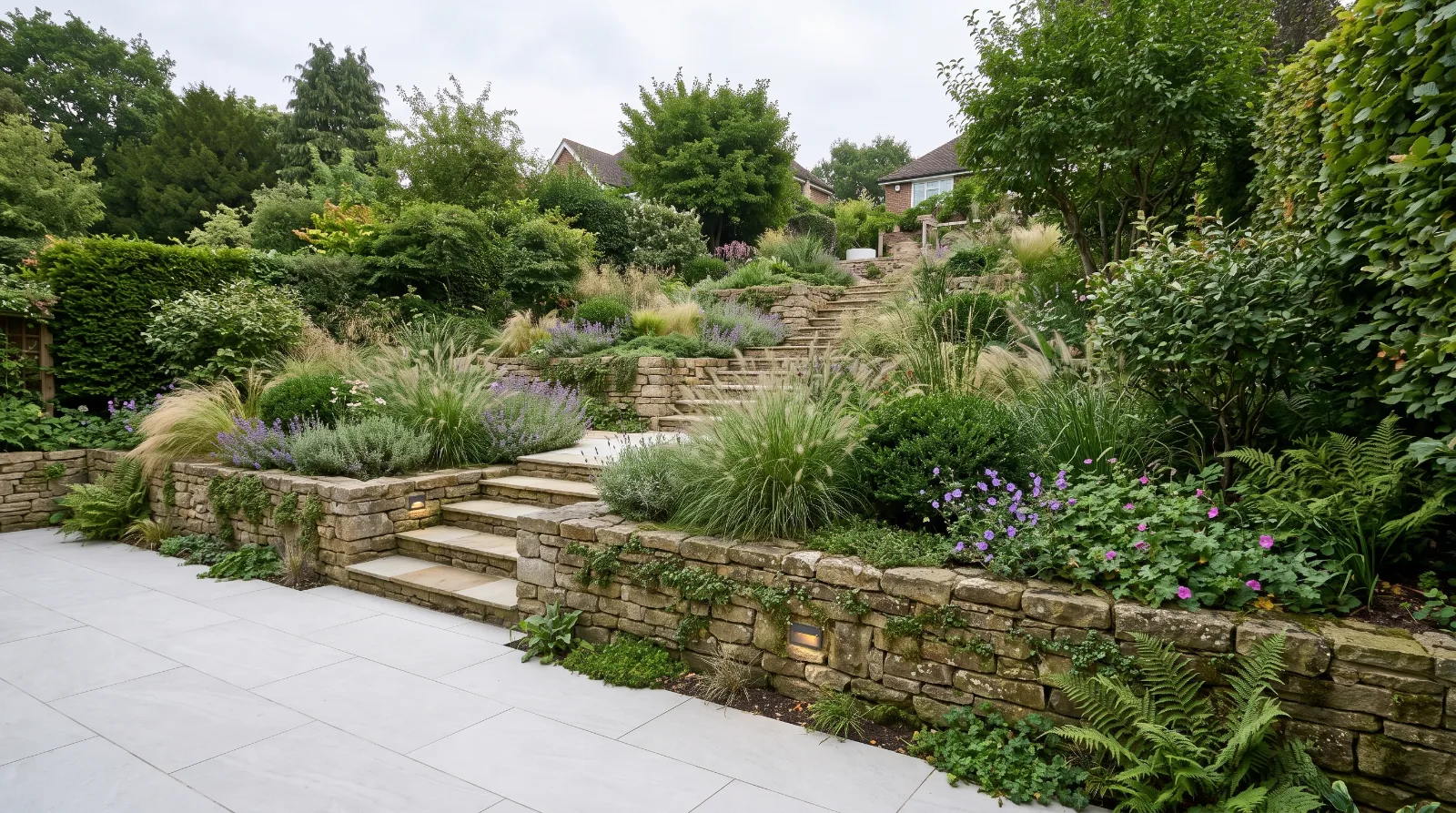
Paths crossing sloping ground may also need carefully designed steps, level changes or retaining features. These should feel like a natural part of the garden rather than an obstacle added after the path has been laid.
Think About Wet Weather and Lighting
Shaded paths can remain damp for longer, allowing algae to develop on paving and making surfaces slippery. Choosing an appropriate texture and allowing for routine maintenance helps keep the route safer.
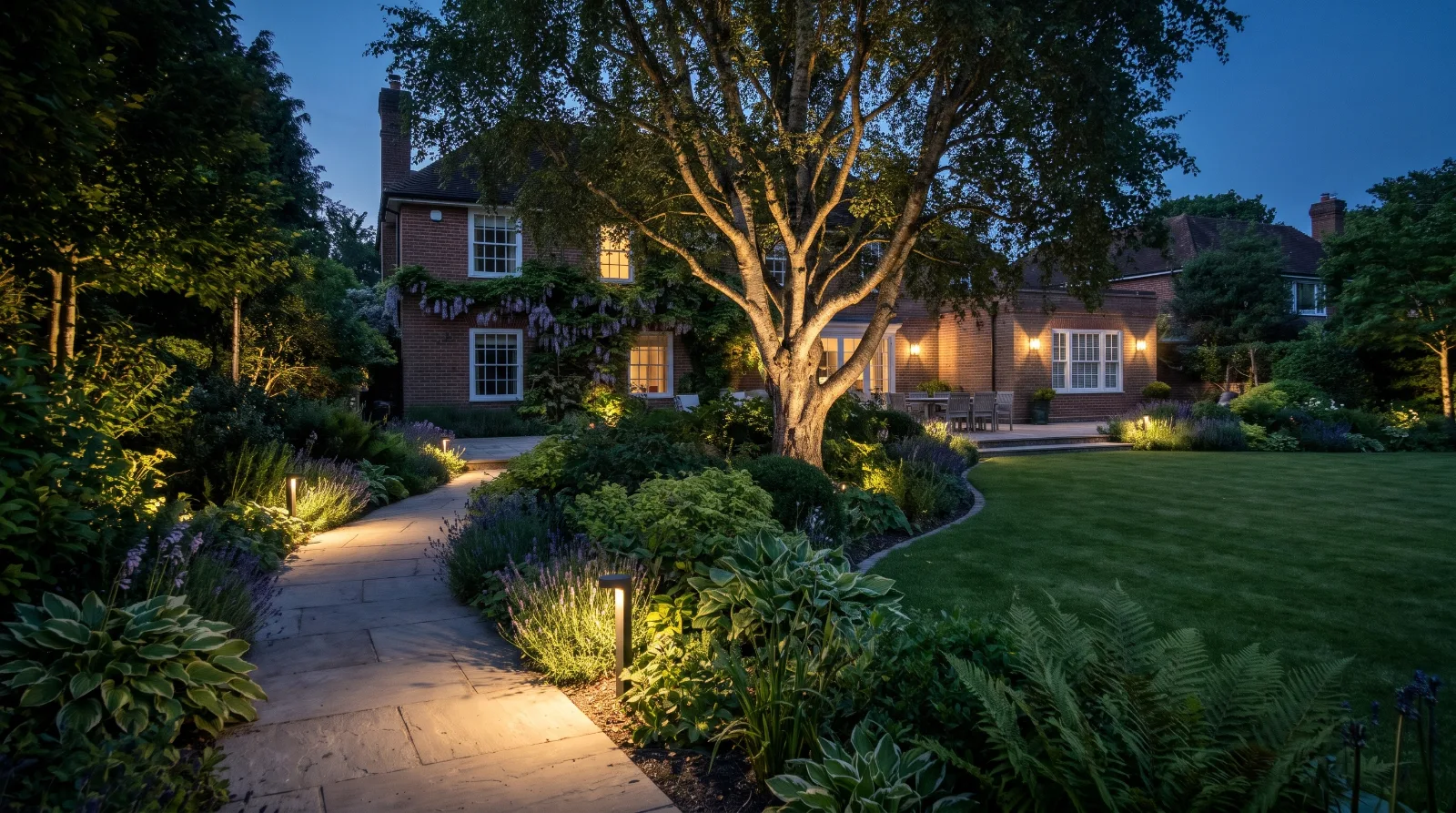
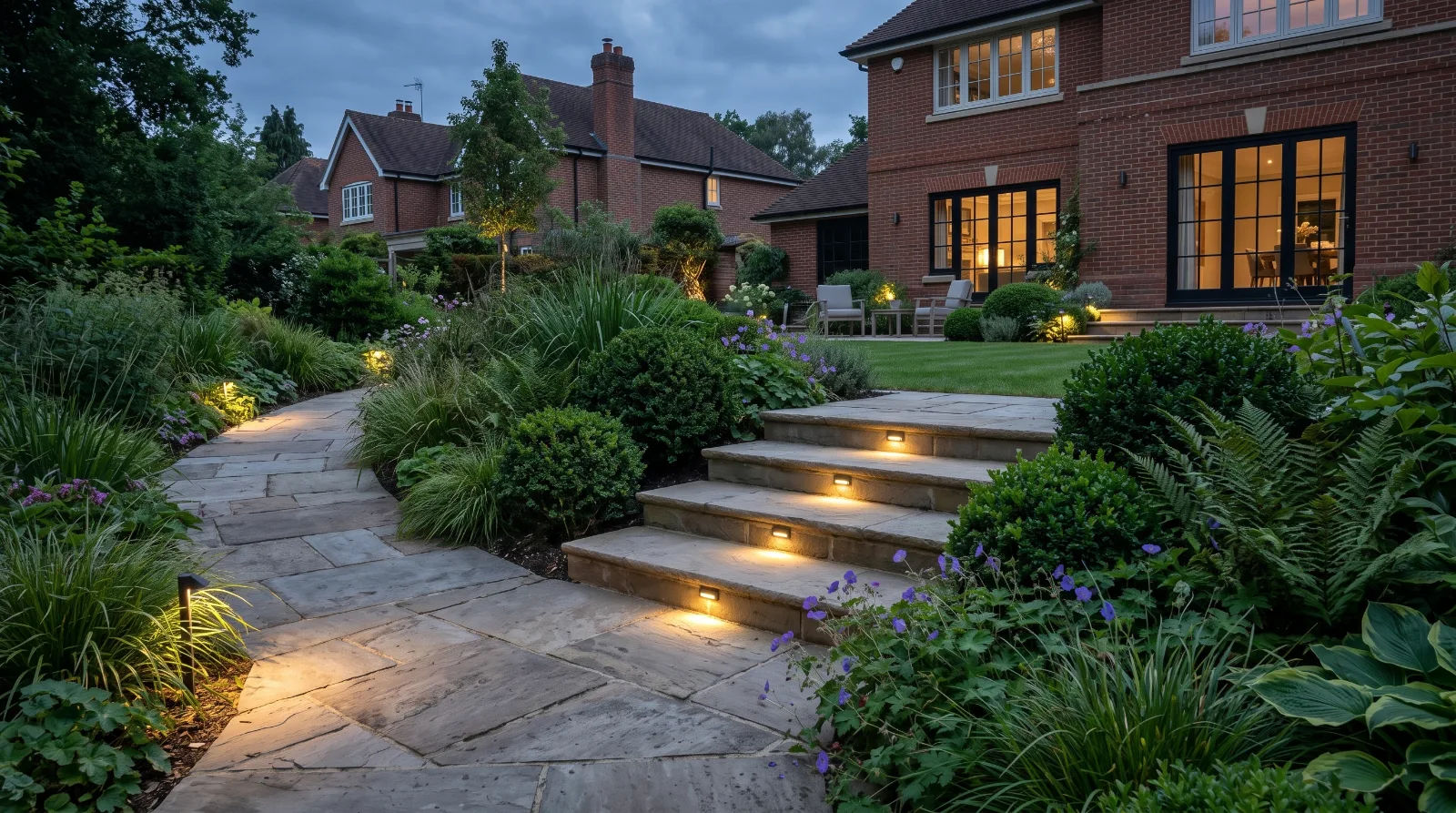
Garden lighting can improve visibility after dark while highlighting the path's shape and surrounding planting. Low-level lights along key sections, discreet step lighting and carefully positioned fittings near entrances can all be effective without overwhelming the garden.
5. Garden Path Ideas for Small and Large Gardens
The best layout depends on the available space and what you want the garden to achieve.
For small gardens: Keep the route simple and avoid dividing the space into too many separate sections. Large-format paving can create a sense of continuity, while a narrow stepping-stone path may suit a more informal layout. Using a consistent palette of materials can help the garden feel more spacious.
For long, narrow gardens: A direct route can improve everyday access, while carefully placed planting and a destination such as a bench or seating area can make the space more inviting. Breaking up an uninterrupted view with planting may also help the garden feel more considered.
For larger gardens: A network of paths can connect different areas, such as a patio, lawn, garden room or secluded seating space. Secondary routes can be more informal than the main path, creating a balance between practical access and exploration.
For sloping gardens: The path should follow the landscape in a way that feels comfortable and visually balanced. Depending on the gradient, this could involve broad steps, intermediate landings or a carefully designed route between terraces.
Whatever the size of the garden, allow enough width for the way the path will be used. A main route generally benefits from around 900mm to 1.2m of clear width where space permits, with wider paths providing more comfortable access for two people walking together.
6. Common Garden Path Design Mistakes to Avoid
Even attractive materials can disappoint if the layout and installation are poorly planned. A few common mistakes are worth avoiding:
Choosing appearance over practicality: Consider how often the path will be used and whether it needs to accommodate bins, wheelbarrows or other wheeled equipment.
Using unsuitable paving finishes: Smooth surfaces in shaded, damp areas may become slippery, so material selection should account for exposure and maintenance.
Neglecting drainage: Water should not collect on the path or be channelled towards buildings and neighbouring gardens.
Making the route too narrow: Allow room for comfortable movement and account for plants that may spread over the edges.
Overcomplicating the design: Too many paving materials, patterns and curves can make a garden feel disjointed. A small, coordinated palette usually produces a more unified result.
Good garden path design brings all these considerations together, ensuring the finished route looks appropriate and performs reliably.
Create a Garden Path That Complements Your Surrey Home
A well-planned garden path can transform how an outdoor space looks and functions. From natural stone and traditional brick to contemporary porcelain and informal gravel, the right choice depends on the property's character, the garden's layout and the demands of everyday use.
At Surrey Oak Landscapes, we consider paths as part of the wider garden design, taking account of surrounding patios, planting, levels and drainage to create a cohesive finish.
Whether you are updating an existing walkway or planning a complete garden transformation, our team can help you explore suitable materials and layouts for your space.
About the author