Garden Lighting Ideas for Surrey Homes
Explore practical garden lighting ideas for Surrey homes, including path lighting, feature trees, planting, patios and outdoor entertaining areas.
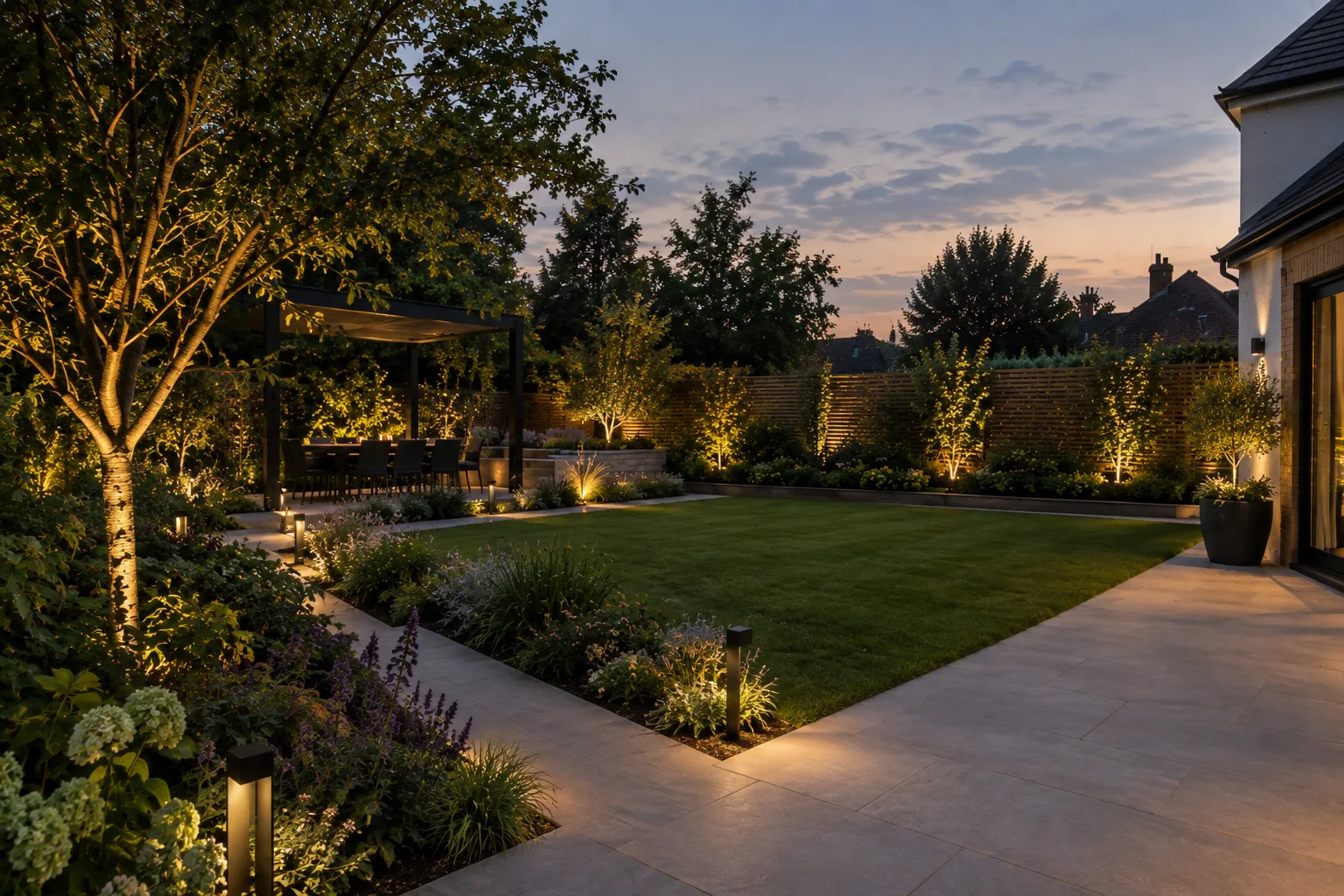
A garden can feel completely different once the sun goes down.
During the day, planting, paving, trees and garden structures naturally provide shape and character. At night, thoughtful lighting can bring those same features back into view, create a more comfortable atmosphere and make outdoor areas more enjoyable to use.
For Surrey homeowners, garden lighting can be particularly effective when it is designed around the existing landscape rather than added as an afterthought. The aim is not to make the whole garden bright. It is to highlight the right areas, create depth and provide useful light exactly where it is needed.
Why Garden Lighting Makes Such a Difference
Garden lighting can serve several purposes at once.
It can help illuminate paths and steps, highlight planting and trees, create a more inviting entertaining area and improve the view of the garden from inside the house.
Outdoor lighting is also increasingly being treated as part of the overall garden design. Current design guidance places emphasis on layered lighting, careful positioning and using only as much light as the space actually needs.
A good scheme should therefore work during the day as well as at night, with fittings that remain discreet while switched off and effective once darkness falls.
1. Use Path Lighting to Guide the Way
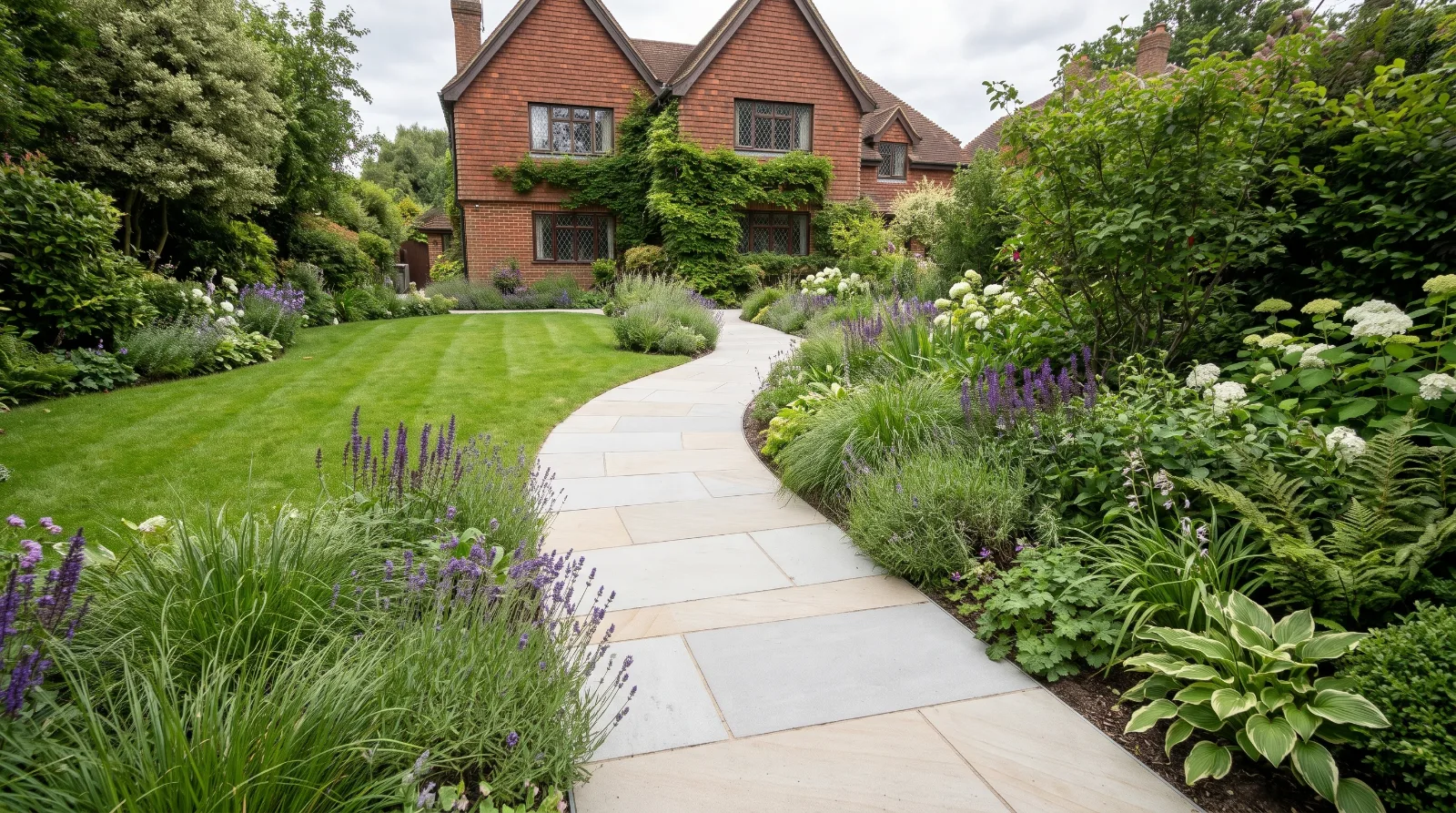
Paths, steps and changes in level are some of the most practical places to introduce garden lighting.
Low-level path lights can create a gentle route through the garden without overpowering the surrounding planting. They can also make steps and transitions easier to see in the evening.
Rather than placing identical lights at regular intervals throughout the garden, consider where light is genuinely needed and how the path is naturally used.
For example, lighting might be concentrated around:
Garden entrances
Steps and changes in level
Main paths
Patio access
Routes between different garden areas
This creates a more natural effect than simply illuminating every metre of paving.
2. Highlight Trees and Feature Planting
Trees can become some of the most striking elements in a garden after dark.
A carefully positioned light can emphasize the trunk, branching structure or shape of a mature tree. Feature lighting can also be used to bring out interesting foliage, grasses, shrubs and specimen planting.
The key is selectivity.
You don't need to light every plant. Choosing one or two important features can create focal points and make the garden feel deeper.
Lights can also be positioned within or behind planting so that the effect is visible without the fitting becoming the main feature.
3. Create a Better Evening Patio
For many homeowners, the patio or terrace becomes the main focus of the garden in the evening.
This is where lighting can help turn an outdoor seating area into a comfortable extension of the home.
Consider a combination of:
Subtle architectural lighting
Low-level planting lights
Lighting around seating areas
Feature lighting near walls or structures
Carefully positioned ambient lighting
The objective is to provide enough light for people to relax, dine and move around comfortably without creating harsh glare.
Warm, layered lighting is widely used in contemporary garden design because it creates a softer atmosphere than a space filled with strong, uniformly bright fittings.
4. Use Walls and Structures to Add Depth
Garden walls, fences, pergolas and other structures can become useful lighting surfaces.
A wall wash can reveal texture in brick or stone, while lighting beneath or alongside a pergola can help define the structure after dark.
These techniques work particularly well when a garden has several levels or distinct zones. Instead of seeing one large dark space, the eye picks up different layers across the garden.
Architectural lighting can also help connect the house and garden visually, particularly where patios or entertaining areas sit directly outside the property.
5. Think in Layers Rather Than One Bright Light
One of the easiest ways to improve a garden lighting scheme is to stop thinking about a single light source.
Instead, consider several layers working together.
Background lighting creates a gentle sense of depth.
Path lighting helps with movement and navigation.
Feature lighting draws attention to trees, planting or architectural details.
Entertaining-area lighting provides practical illumination where people actually spend time.
Using different levels and positions gives the garden more depth and allows some areas to remain darker. Recent garden-lighting design guidance similarly recommends layered schemes rather than trying to illuminate everything equally.
6. Don't Over-Light the Garden
More lighting does not necessarily create a better result.
A garden that is illuminated from every direction can lose the contrast between light and shadow that gives evening landscapes their atmosphere.
Excessive or poorly directed light can also spill into neighboring properties or beyond the area that actually needs to be lit. UK government guidance recommends considering where light falls, how much is used and when it operates, with careful positioning helping to reduce glare, nuisance and ecological impact.
For residential gardens, restraint is often more effective.
A few carefully positioned fittings can have considerably more impact than covering the entire garden in bright light.
7. Choose Lighting That Complements the Garden
The fittings themselves should suit the character of the space.
Contemporary gardens may suit clean, minimal fittings, while more traditional landscapes can work well with discreet fixtures that blend into planting and stonework.
Material selection matters too. Outdoor fittings are exposed to rain, moisture and changing temperatures, so they need to be suitable for exterior use and installed correctly.
The visual appearance during daylight should also be considered. Ideally, you notice the garden first and the lighting equipment second.
8. Use Warm Light for a Softer Atmosphere
The colour of the light can dramatically change the feel of a garden.
Warm lighting generally creates a more relaxed appearance and works particularly well with natural materials such as timber, stone, brick and planting.
Cooler white light can produce a sharper, more contemporary effect, but it needs to be used carefully to avoid making a residential garden feel overly harsh.
For most relaxing outdoor spaces, a warm and controlled approach tends to work well. The exact colour temperature should still be chosen according to the garden, materials and intended atmosphere.
9. Consider the View From Inside the House
Garden lighting isn't only experienced when you're standing outside.
During autumn and winter, you may spend more evenings indoors, meaning the garden is often viewed through windows rather than from the patio.
Positioning feature lighting with those sightlines in mind can create attractive views from kitchens, dining rooms and living spaces.
A mature tree, planting bed, wall or water feature can become an evening focal point even when you're indoors.
This is one reason lighting should be considered as part of the overall garden design rather than added only around areas where people sit.
10. Plan Lighting During the Landscaping Process
The best time to think about garden lighting is often before the landscaping is finished.
When lighting is designed alongside paving, planting, structures and pathways, it becomes much easier to plan discreet cable routes and place fittings where they will have the greatest effect.
This is particularly useful during a complete garden transformation, where lighting can be coordinated with:
Patios and paving
Planting schemes
Trees and hedging
Garden walls
Steps and pathways
Pergolas and other structures
Outdoor entertaining areas
Retrofitting is still possible in an established garden, but planning ahead can reduce disruption and give you more flexibility with the finished scheme.
11. Think About How the Garden Will Actually Be Used
A lighting plan should reflect your lifestyle.
A family garden used mainly for evening dining will have different requirements from a large landscaped garden designed around mature planting and quiet seating areas.
Think about where you:
Enter the garden
Sit and relax
Eat outdoors
Walk after dark
Spend time with friends
Look out from inside the house
The lighting should support those activities rather than simply following the shape of the garden.
12. Keep Outdoor Lighting Safe and Well Planned
Garden lighting involves electrical equipment in an outdoor environment, so installation needs to be approached carefully.
Outdoor electrical equipment should be suitable for external conditions, and RCD protection is recommended for outdoor electrical equipment. Care should also be taken when installing or digging around buried electrical cables and other services.
For a permanent garden lighting scheme, professional planning and installation can help ensure that the equipment, connections, cable routes and controls are appropriate for the space.
Garden Lighting Ideas for Different Areas
Different sections of a Surrey garden can benefit from different lighting approaches.
Front Gardens
Use subtle lighting around paths, entrances, planting and architectural features to create a welcoming approach to the property.
Back Gardens
Combine feature, path and ambient lighting to create depth and make the garden more enjoyable after dark.
Entertaining Areas
Focus on comfortable, controlled lighting around dining and seating areas rather than relying on a single bright source.
Planting Borders
Use discreet feature lights to pick out interesting plants, textures and seasonal structure.
Trees
Highlight distinctive trunks, branches or canopies with carefully positioned feature lighting.
Steps and Pathways
Use low-level illumination to make changes in level and routes easier to navigate.
Bringing Your Garden to Life After Dark
The best garden lighting is rarely the brightest.
It is the lighting that makes a path feel natural to walk along, draws attention to a beautiful tree, gives a patio a welcoming atmosphere and creates views that still look good from inside the house.
For Surrey homes, a carefully planned lighting scheme can add another dimension to the garden and make better use of the space throughout the year.
The starting point should always be the garden itself: its planting, architecture, layout and the way you want to use it after dark.
Planning garden lighting for your Surrey home?
About the author